

1920s Pocket Watch Chain
A 1920s pocket watch chain brings together period metalwork and timepieces for daily wear.
1920s Pocket Watch Chain
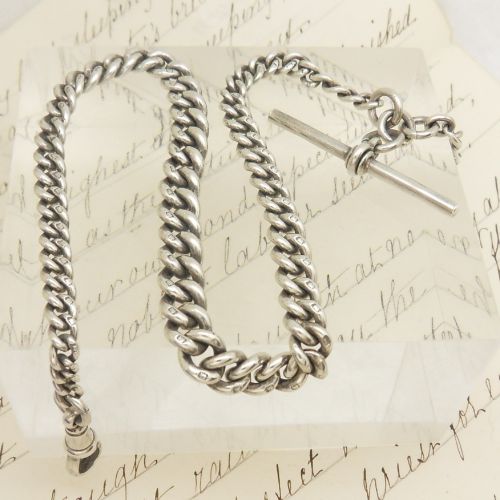
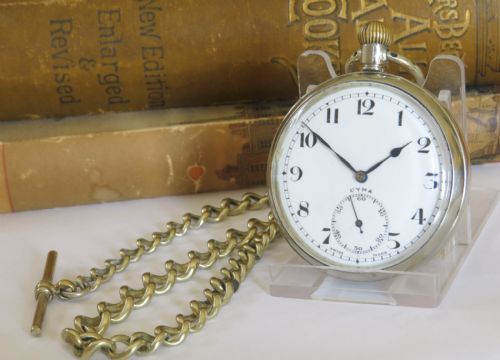
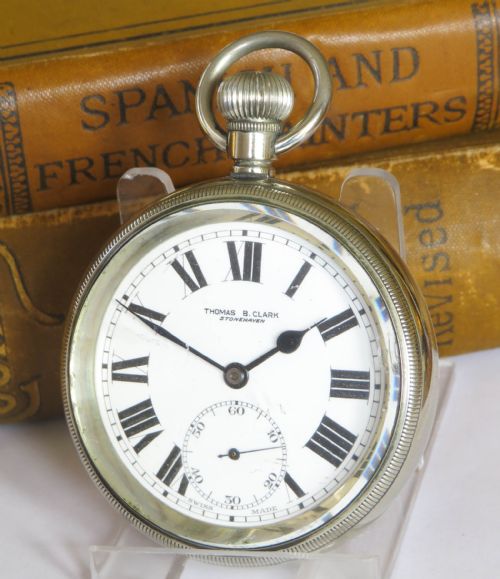
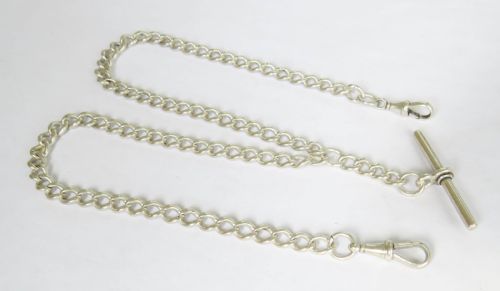
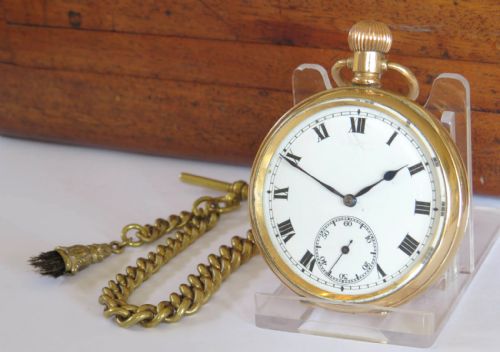
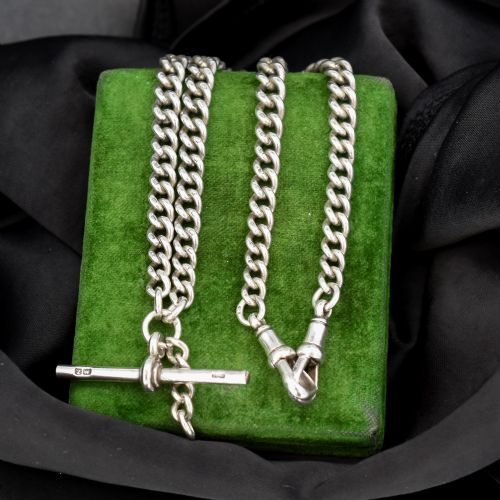
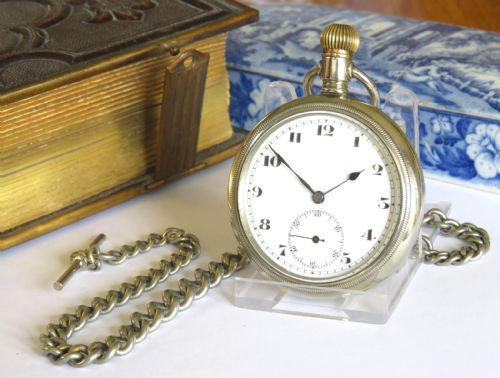
A 1920s pocket watch chain forms part of a tradition of functional jewellery designed to secure a timepiece to a waistcoat or lapel. Collectors browsing this selection encounter single and double albert chains, often paired with pocket watches from makers like Cyma and Limit.
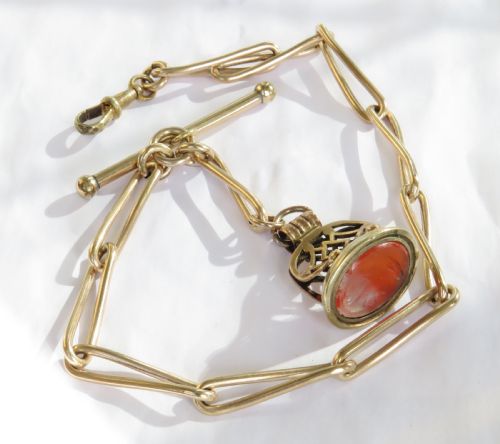
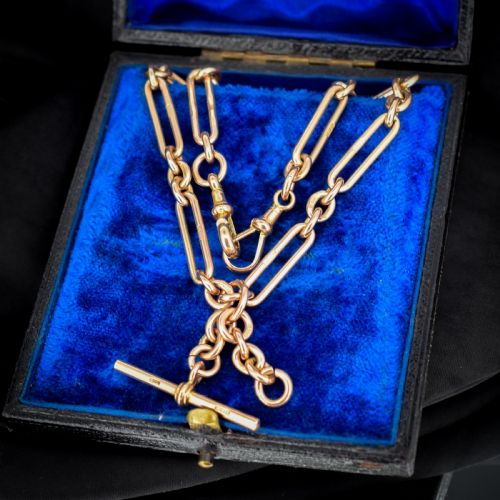
The material range spans silver, 9ct gold, rolled gold, nickel and steel, frequently styled with curb or trombone links. Many examples survive alongside mechanical watches, maintaining their original pairing from the Art Deco era.
The most common formats on this page are silver and gold albert chains, sometimes adapted for modern wear as necklaces. They offer a tangible link to 1920s accessorising habits.
How they were made
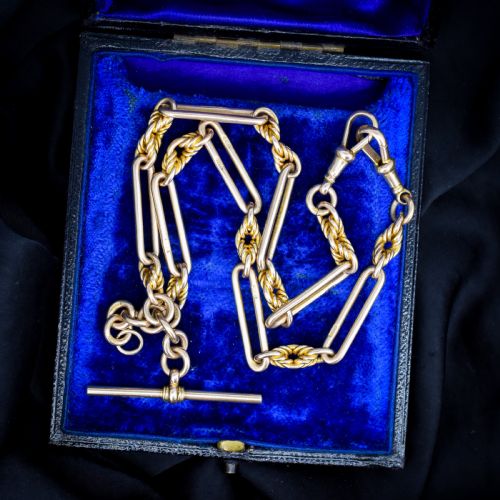
Metals such as sterling silver and 9ct gold were drawn into wire, formed into links, and soldered by hand to create durable curb, trombone or love knot patterns. Rolled gold combined a base metal core with a gold outer layer for longevity.
Enamel, glass and carnelian elements occasionally appear as decorative fobs or drops attached to the main strand. Mechanical pocket watches accompanying these chains relied on precision brass gear trains housed in steel or nickel cases.
Several chains arrive accompanied by unexpected companions like tennis fobs and stirrup cups.
What varies in quality
Quality rests upon the weight of the metal, the rigidity of the link construction, and the preservation of hallmarks or maker marks. Substantial 9ct gold or thick silver albert chains display crisp definition in each link without thinning from decades of friction.
The distinction between a standard production piece and a finer example lies in the complexity of the link design, such as alternating trombone and love knot patterns, and whether the accompanying pocket watch remains in working order.
Cyma·Revue·Syren·Horos·Pioneer·Satisfaction·Polhem·Junghans·Limit·Omega·Lonville·Doxa·Thiel·Kays Standard Lever·Minerva·Elkington·Craven·Rival·Ralco·Nerny
The 1920s Pocket Watch Chain Glossary
- Albert chain
- A pocket watch chain named after Prince Albert, designed to stretch across a waistcoat buttonhole with a T-bar at one end.
- Trombone link
- A watch chain link shaped like a musical trombone, featuring long rectangular bars connected by smaller circular links.
- Rolled gold
- A manufacturing technique fusing a layer of solid gold to a base metal core, offering durability without solid precious metal costs.
- Curb link
- A type of chain design where the oval links are twisted to lie flat against the body.
- Open faced
- A pocket watch design lacking a hinged metal cover over the dial glass, allowing the time to be read instantly.
1920s Pocket Watch Chain: Frequently Asked Questions
How do I wear a pocket watch chain today?
Many collectors adapt silver and gold albert chains to be worn as necklaces or secure them through buttonholes in modern waistcoats.
The T-bar can be threaded through fabric while the attached pocket watch rests safely in a pocket.
Are these chains made of solid gold?
The evidence shows a mix of solid 9ct gold alongside rolled gold, sterling silver, nickel and steel examples.
Hallmarks on the links typically confirm the specific precious metal standard used.
Can I still use the pocket watches with these chains?
Many listings pair the chains directly with period mechanical pocket watches from makers like Omega and Cyma.
These timepieces are stem winding and reflect the manufacturing standards of the 1920s.