

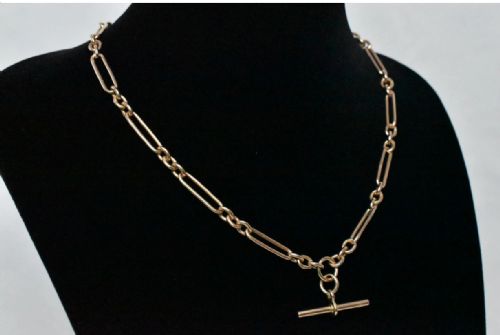


Gold Trombone Chain
A gold trombone chain offers a distinctive tubular link profile derived from Victorian watchkeeping, prized for both utility and presence.
Gold Trombone Chain
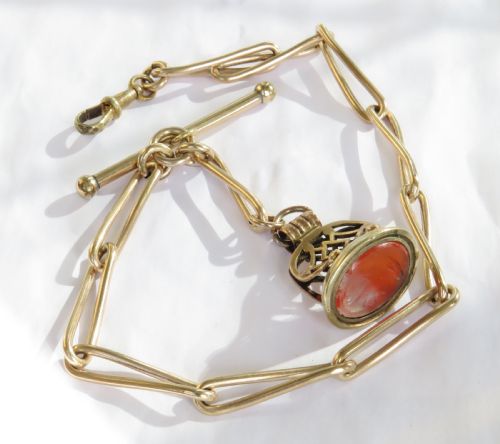
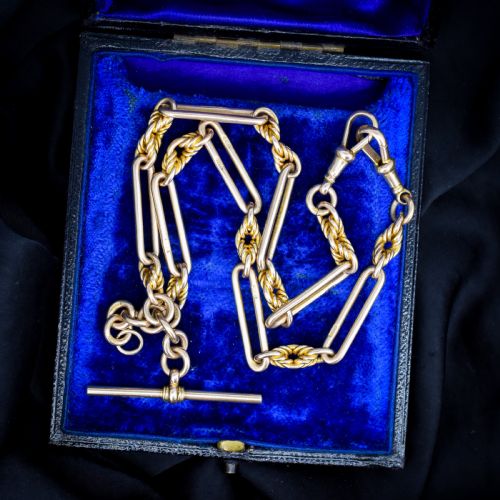
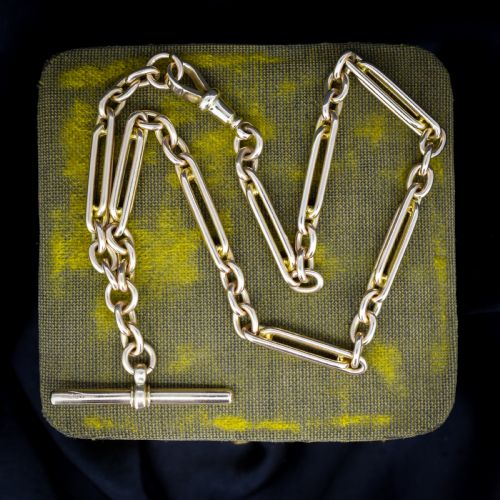
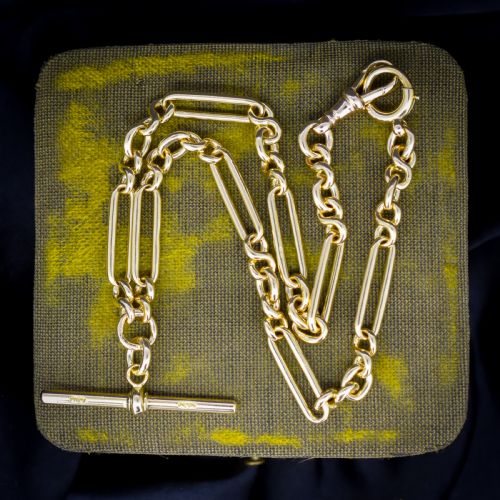
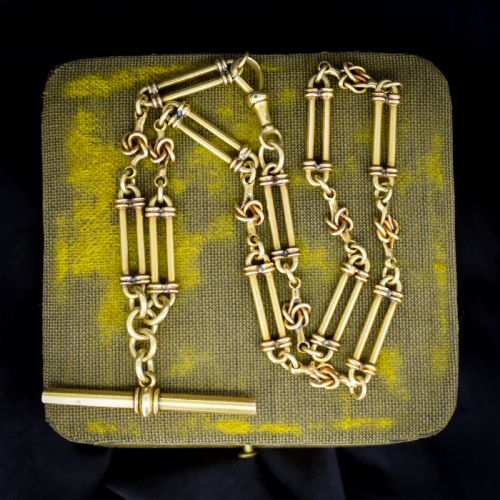
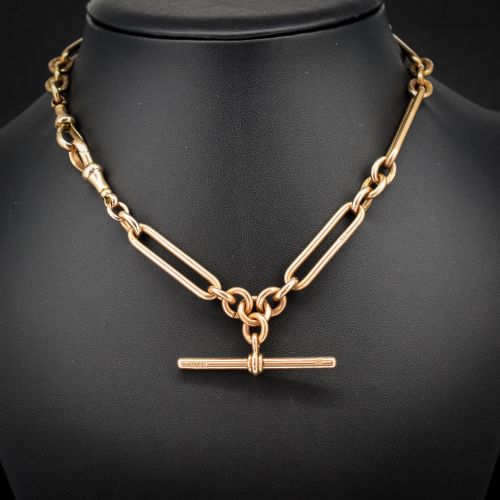
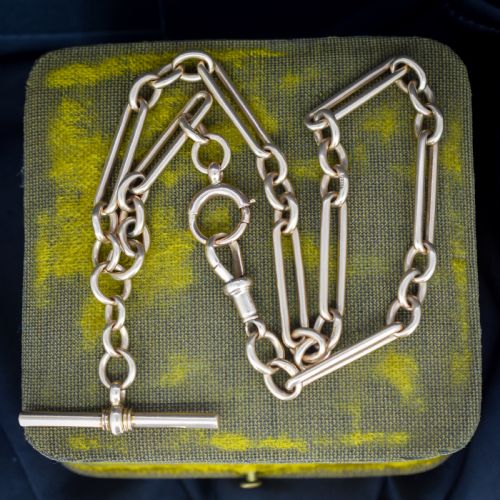
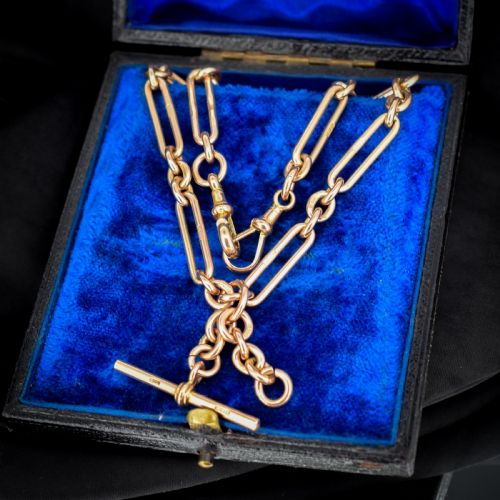
A gold trombone chain is a necklace or pocket watch chain characterised by elongated rectangular links alternating with smaller connecting rings, originating from the Victorian era and extending through the Edwardian and Art Deco periods. Buyers search for these pieces to wear as standalone necklaces or to secure pocket watches using traditional dog clips and T-bars.
The versions most commonly met on this page span the late nineteenth century into the nineteen-twenties, incorporating forms such as single and double albert chains alongside long guard chains. These items frequently appear paired with love knot links, fetter links, fob pendants, or hardstone elements like carnelian and turquoise.
Originating primarily as functional accessories for timepieces, these chains now serve predominantly as distinctive neckwear. Their survival across multiple decades demonstrates a durable appeal rooted in solid metal craftsmanship and geometric link variation.
Materials and construction
Construction relies heavily on solid golds including nine carat, ten carat, fifteen carat, and eighteen carat variations, alongside rolled gold alternatives and platinum accents. These metals provide the structural integrity required for heavy daily use as watch chains and long necklaces.
Techniques involve the careful joining of elongated tubular trombone links to smaller connector rings, often interspersed with decorative elements like love knots or fetter patterns. Individual components are hand-assembled and finished with functional clasps such as dog clips, bolt rings, and barrel clasps.
Object forms recorded in the inventory include pocket watch chains, guard chains, and necklaces embellished with carnelian and turquoise.
Factors of quality
Quality varies according to the weight and purity of the gold utilised, with higher carat thresholds and heavier gram weights marking superior examples. Solid metal construction commands greater regard than rolled gold variants due to material longevity.
The complexity of the link arrangement and the inclusion of original components like T-bars, dog clips, and fob pendants elevate an item's standing. Intricate combinations involving love knots or mixed metals such as gold and platinum demonstrate advanced manufacturing skill.
W H Wilmot
The Gold Trombone Chain Glossary
- Trombone link
- An elongated rectangular metal link shaped like the slide of a musical instrument. This link forms the primary repeating motif of the chain.
- Albert chain
- A pocket watch chain designed to attach to a waistcoat. Named after Prince Albert, these chains frequently feature a T-bar at one end.
- Dog clip
- A spring-loaded swivel hook used to secure a pocket watch or pendant. This fastener allows the attached item to rotate freely without twisting the chain.
- Love knot
- A decorative motif formed from intertwined metal wire representing affection. These knots frequently alternate with trombone links.
- Fetter link
- A small round or oval link used to connect larger pattern links in a chain. They provide flexibility and contrast along the length.
Gold Trombone Chain: Frequently Asked Questions
What is a gold trombone chain?
A gold trombone chain is a historic piece of jewellery featuring elongated rectangular links connected by smaller rings. These chains were originally designed to secure pocket watches in the nineteenth and early twentieth centuries.
Today, they are widely worn as necklaces due to their robust construction and distinct geometric appearance. They frequently incorporate functional components such as dog clips and T-bars.
How do you wear a watch chain as a necklace?
Wearing a watch chain as a necklace involves utilising the existing dog clip and spring ring fasteners to secure the ends together at the desired length. The integrated T-bar can be left to hang as a decorative pendant drop.
Many pieces from the Victorian and Edwardian periods function exceptionally well in this role because their original lengths suit modern neckwear preferences.
How do I date an antique gold chain?
Dating an antique gold chain involves examining hallmarks stamped onto the links, T-bars, or dog clips, which indicate assay offices like Chester or Birmingham alongside specific date letters. Stylistic indicators such as the presence of platinum accents or Art Deco geometry also help narrow the period.
Additionally, the choice of gold purity, from Victorian fifteen carat standards to later nine carat alloys, provides reliable chronological markers.