

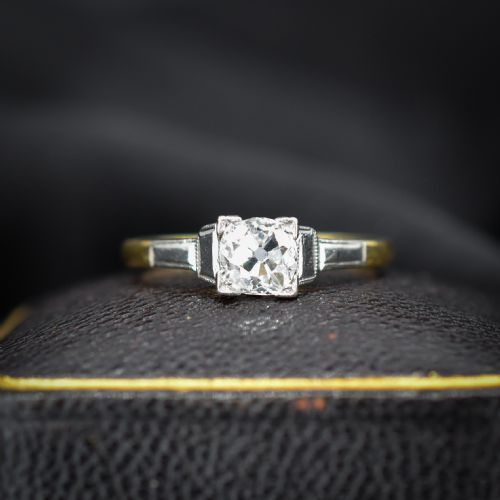
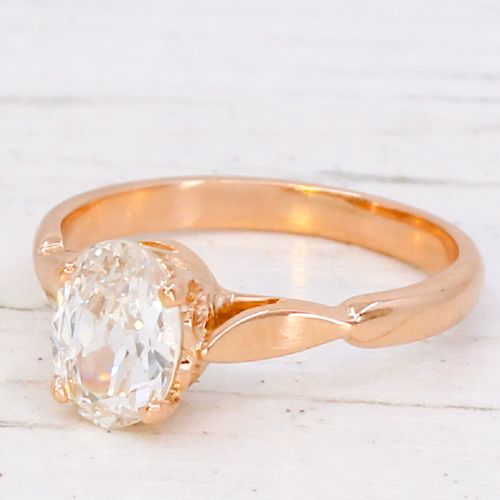
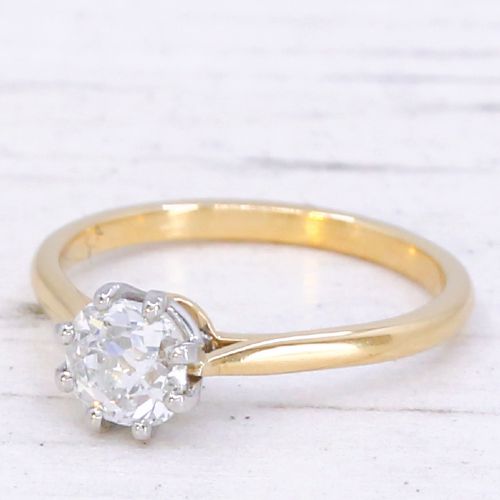
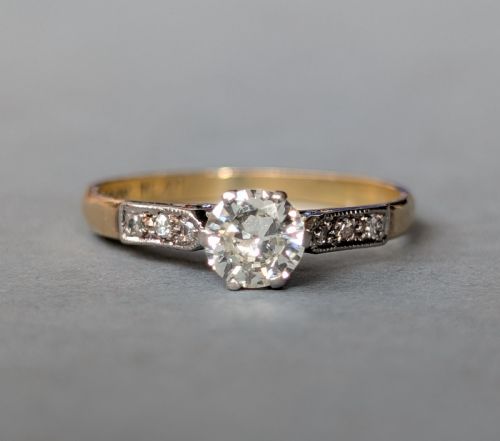


1920s Old Cut Solitaire
A 1920s old cut solitaire brings together hand-faceted stones and geometric platinum or gold settings that catch candlelight with a distinct, quiet warmth.
1920s Old Cut Solitaire
A 1920s old cut solitaire centres on a single hand-cut diamond set into an engagement ring, most commonly reflecting Art Deco or Edwardian aesthetics.
The selection here draws heavily from the 1920s and 1930s periods, alongside Edwardian examples, taking the form of rings designed to highlight a prominent central stone.
Makers of the era favoured platinum and various tones of gold, often pairing the diamond with geometric shoulders or sapphire accents.
Materials and construction
Goldsmiths utilised platinum and 18ct gold, including yellow, white, and rose variations, to build robust yet delicate settings for fragile stones.
Diamonds were shaped by hand into old European, transitional, or old mine cuts, resulting in deeper pavilions and broader facets than modern machinery produces.
Listings span platinum, yellow gold, and rose gold, featuring diamonds paired with sapphire accents across Art Deco and Edwardian periods.
Distinctions in quality
The standard of a ring rests upon the symmetry of the hand-cut diamond and the crispness of the metalwork surrounding it.
Settings that retain their original geometric precision and secure claw work demonstrate superior craftsmanship from the period.
The 1920s Old Cut Solitaire Glossary
- Old cut
- A diamond faceted by hand before modern symmetrical standards were established, possessing a smaller table and wider facets. This cut produces a softer, more intimate flash of light than contemporary stones.
- Solitaire
- A ring featuring a single gemstone as its primary focus. This design places the entirety of the visual weight upon the central diamond.
- Platinum
- A dense, white precious metal frequently chosen for jewellery during the early twentieth century. Its strength permitted delicate claw settings that maximised light entry into the stone.
- Transition cut
- A diamond facet style bridging old cuts and modern brilliants, appearing during the early twentieth century. It combines a smaller table with increased brilliance.
- Art Deco
- A design movement spanning the 1920s and 1930s characterised by geometric lines, symmetry, and stylised motifs. Rings from this period often incorporate sharp angles alongside traditional stones.
1920s Old Cut Solitaire: Frequently Asked Questions
How do I identify an old cut diamond?
An old cut diamond typically exhibits a smaller top table, a visible culet at the base, and larger facets that create a softer pattern of light.
These stones were shaped by hand rather than with automated precision, giving each gem a distinct character under low light.
What metals were used in 1920s rings?
Platinum was the predominant choice for fine rings during this decade, valued for its strength and bright white finish.
Yellow gold, white gold, and rose gold also appear frequently, often used for the band while platinum secured the diamond.
Are these rings suitable for daily wear?
These antique rings were built for everyday engagement wear, though the delicate settings benefit from careful handling during manual tasks.
Regular checks by a jeweller help ensure the hand-formed claws remain secure around the central stone.
How do Art Deco and Edwardian styles differ?
Edwardian designs lean towards lacy, garland-like platinum work with delicate millgrain detailing.
Art Deco pieces introduce bold geometric shapes, straight lines, and occasional contrasting sapphire accents.