
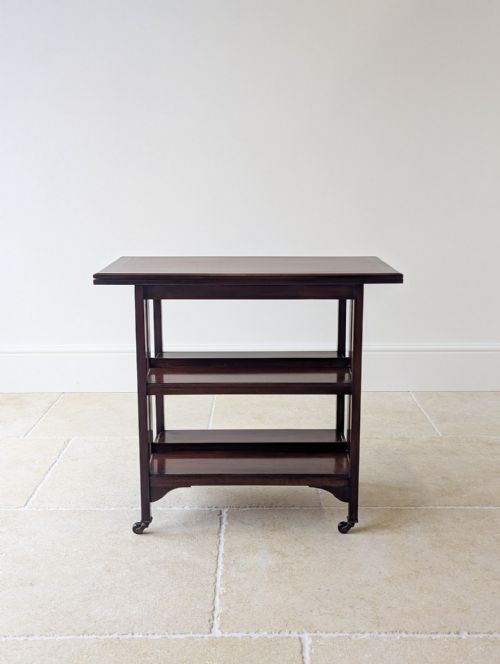


1920s Folding Table
A 1920s folding table offers clever space-saving design with period character, providing a practical surface that folds away neatly when not in use.
1920s Folding Table
When you search for a 1920s folding table, you encounter a surprisingly varied group of furnishings built for compact living and entertaining in the early twentieth century. These pieces span dining, games, and card tables alongside drop-leaf designs and multi-purpose reading tables.
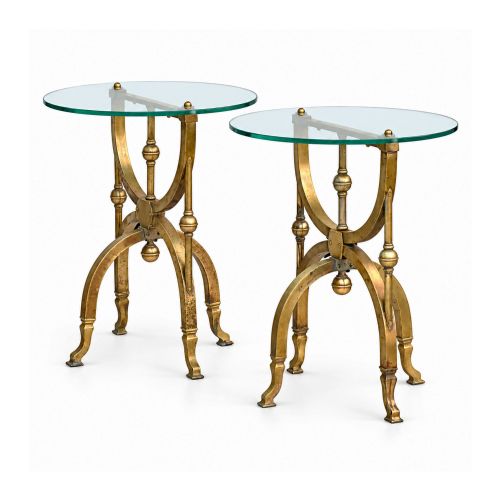
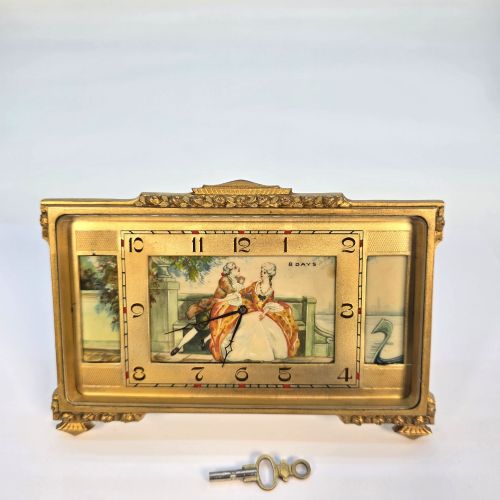
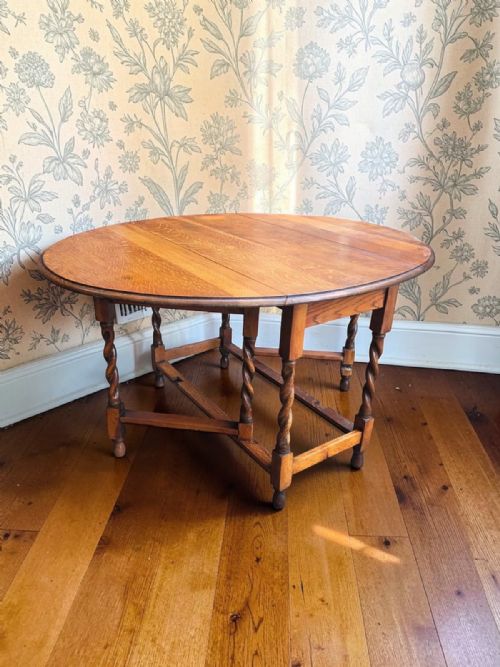
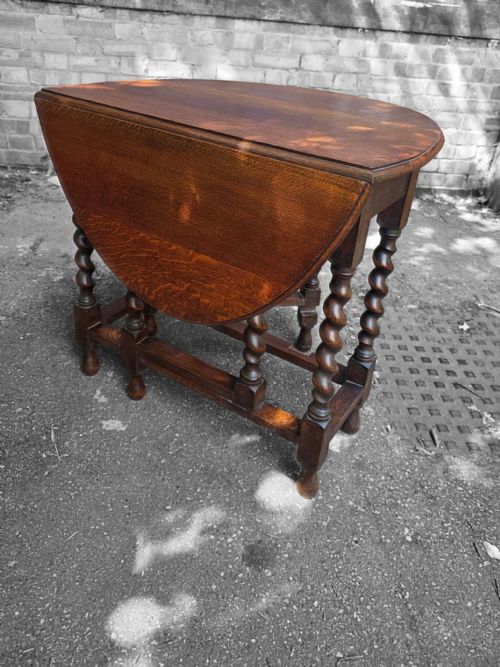
The versions you are most likely to meet on this page include oak gateleg tables with barley twist legs, alongside walnut card tables dressed in Queen Anne or Art Deco styles. Alongside standard English oak and mahogany items, the selection takes in Burmese colonial pieces, French metalwork, and brass-mounted games surfaces.
Makers of the period adapted earlier Georgian, Queen Anne, and Jacobean revivals into functional folding formats suited to smaller rooms. Whether utilising a drop leaf, a gateleg mechanism, or a fold-over top, each piece prioritises versatility without sacrificing traditional timber character.
Materials and construction
Makers relied primarily on solid oak, mahogany, and walnut, often employing walnut veneer and burr walnut for decorative effect on top surfaces. Timber frames were frequently shaped with turned legs, such as barley twists, or carved in revival styles.
Metals and lacquered finishes appear where industrial or colonial influences met domestic furniture production, seen in brass mounts and painted folding metalwork. Hinges, gateleg pivots, and fold-over mechanisms were engineered into the woodwork to support daily opening and closing.
Current listings feature pieces spanning the 1920 and 1930 periods, alongside an 18th-century gateleg table and Edwardian oak drop-leaf items.
Markers of quality
The distinction between ordinary and superior pieces rests on the choice of timber and the precision of the folding mechanism. Finer examples display carefully selected burr walnut veneers or dense oak grain, matched with solid, dependable hinges and joints that move without binding.
Proportion and carving detail also separate the range, with better tables exhibiting crisp turning on the legs and balanced proportions when fully extended or closed. Lesser pieces rely on simpler construction and plainer timber stocks intended strictly for utility.
The 1920s Folding Table Glossary
- Gateleg table
- A table with hinged leaves supported by legs that swing outward like a gate. This construction provides robust support for drop leaves when extended.
- Demi-lune
- Half-moon shaped, frequently used to describe folding card tables with a straight back edge that sits flat against a wall.
- Barley twist
- A spiral turning carved into furniture legs, popular in oak furnishings from the seventeenth century onward and revived in the interwar period.
- Drop leaf
- A table top featuring hinged flaps that fold down at the sides to reduce the overall footprint of the piece when not in use.
- Metamorphic
- Furniture designed to transform from one form or function into another, such as a gaming surface that expands into a larger table.
1920s Folding Table: Frequently Asked Questions
How do I use a 1920s folding table today?
These tables adapt easily to modern rooms as occasional side surfaces, dining desks for two, or hallway consoles when folded down.
Opening the leaves provides extra surface area for suppers or card games when guests visit, then folds flat to reclaim floor space.
Are 1920s folding tables sturdy enough for daily use?
Solid oak and mahogany versions with sound gateleg frames handle everyday dining and writing tasks without difficulty.
Lighter metalwork or veneered card tables suit decorative display and occasional entertaining better than heavy, constant meals.
What styles are common in 1920s tables?
Jacobean and Queen Anne revivals dominate the oak and walnut selections, bringing traditional turned legs and shaped edges into the twentieth century.
Art Deco examples introduce cleaner walnut veneers and geometric forms, while French metalwork and Burmese pieces offer distinct global influences.
How do I care for wood and veneer surfaces?
Dust regularly with a soft cloth and feed polished timber occasionally with a quality beeswax to maintain the finish.
Keep these tables away from direct heat sources and strong sunlight to prevent the walnut veneer from drying or cracking.