

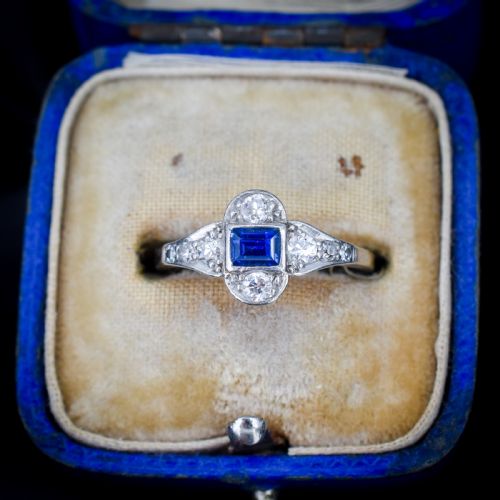


1920s Emerald Ring
A 1920s emerald ring brings the sharp geometry and vibrant green stones of the Art Deco period directly to the hand.
1920s Emerald Ring
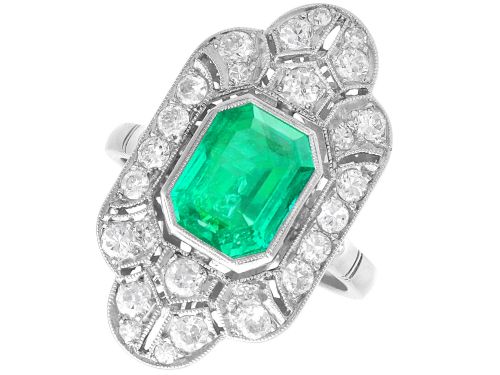
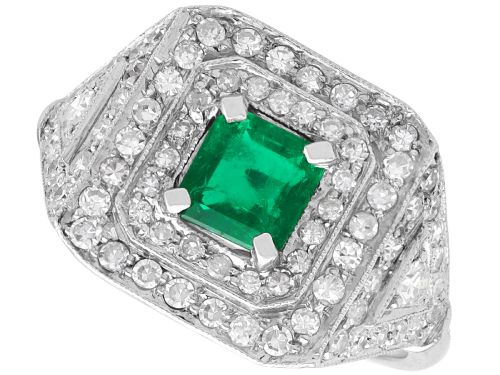
A 1920s emerald ring embodies the distinct design language of the Art Deco period, combining sharp lines with striking green beryl. These pieces appear primarily in forms such as solitaire, cluster, and multi-stone configurations that highlight the central emerald.
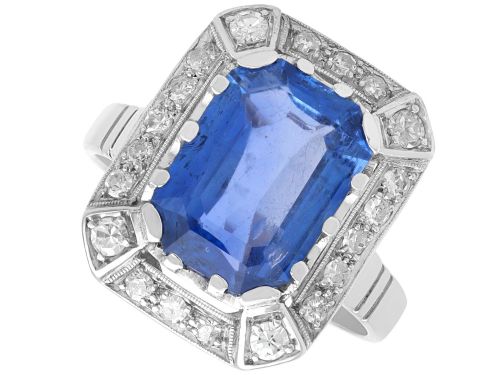
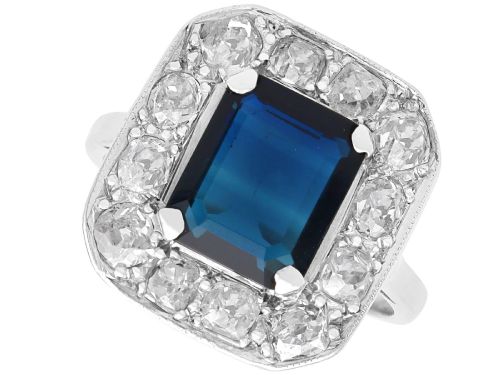
The version most commonly met on this page is the platinum or 18ct white gold cluster ring, often framed by contrasting diamonds. Alongside emeralds, the listings reveal variations incorporating blue sapphire, spinel, onyx, aquamarine, and tourmaline within the same geometric aesthetic.
How they were made
Makers of the period utilised platinum and white gold as the primary metal foundations for mounting stones securely while maintaining delicate visual lines. These metals allowed intricate gallery work and channel or pave settings that complemented the angular forms of Art Deco design.
Emeralds were paired extensively with diamonds, utilising step-cut and brilliant-cut stones to create contrast against the rich green beryl. Yellow gold and 14ct or 15ct gold variations also appear, providing a warmer metal tone for cluster and five-stone arrangements.
1920s Emerald Ring Retail Price Guide 2026
Typical asking prices for 1920s emerald ring among the pieces listed under this phrase on Sellingantiques today, from the lower quarter to the upper quarter. They describe what is for sale here now, not the wider market.
Listings span periods from 1920 to 1940, uniting emeralds with diamonds in platinum and white gold settings.
What varies in quality
The distinction in quality rests upon the proportion and saturation of the emerald itself, alongside the precision of the surrounding metalwork. Colombian origins and specified carat weights indicate higher grades of stone selection by the original maker.
The integration of secondary diamonds and the complexity of the cluster or panel architecture further separate standard examples from finer works. Settings that exhibit careful calibration of baguette or pave diamonds reflect a higher level of artisanal execution.
The 1920s Emerald Ring Glossary
- Art Deco
- A design style emerging in the 1920s characterised by symmetry, geometric patterns, and stylised motifs. It defines the architectural aesthetic of these rings.
- Cluster ring
- A ring design featuring a central gemstone surrounded by a cluster of smaller stones, typically diamonds. This arrangement maximises visual impact on the hand.
- Platinum
- A dense, durable white metal frequently utilised in 1920s jewellery for its strength in fine settings. It allows secure mounting of delicate stones without bulky metalwork.
- Solitaire ring
- A ring set with a single gemstone, in this context highlighting a standalone emerald. It places full visual emphasis on the quality and cut of the primary stone.
1920s Emerald Ring: Frequently Asked Questions
What metal is most common?
Platinum and 18ct white gold dominate the metal choices across the listed pieces, supporting the bright white aesthetic preferred during the period.
Yellow gold and lower carat variations also appear periodically, offering an alternative warm tone for cluster and multi-stone rings.
Are all stones natural?
The listings include natural emerald references, alongside specific regional origins such as Colombian stones.
Associated gems like diamonds, sapphires, and spinel accompany the central emeralds within the Art Deco framework.
How do I identify Art Deco?
Art Deco pieces display geometric lines, symmetrical panel clusters, and sharp angles rather than the flowing curves of earlier periods.
The combination of platinum settings, calibre-cut stones, and contrasting diamond borders typically signals this design era.
Can I wear one daily?
These pieces require mindful wear due to their age and the delicate nature of emerald inclusions.
Platinum provides durable metal security, but emeralds demand gentle handling compared to harder stones like diamonds.