


1920s Diamond Jewellery
1920s diamond jewellery brings geometric elegance and refined platinum work to the hand and neckline.
1920s Diamond Jewellery
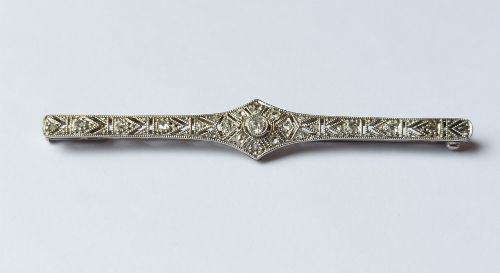
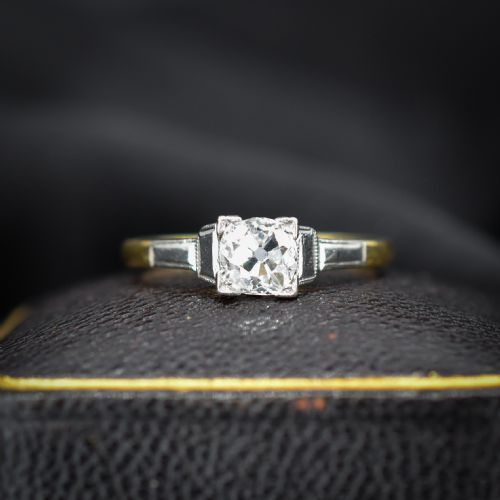
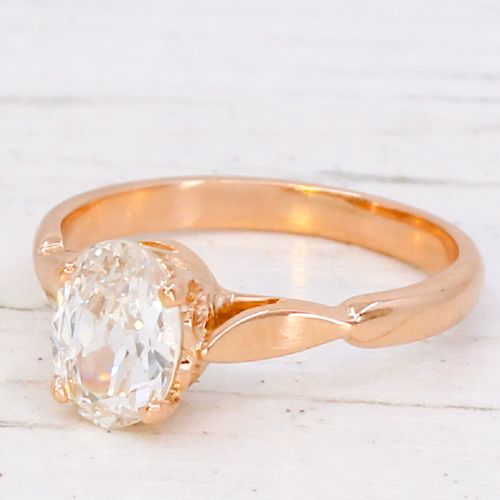
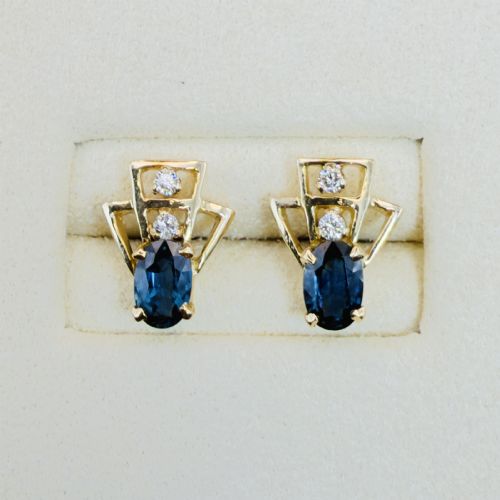
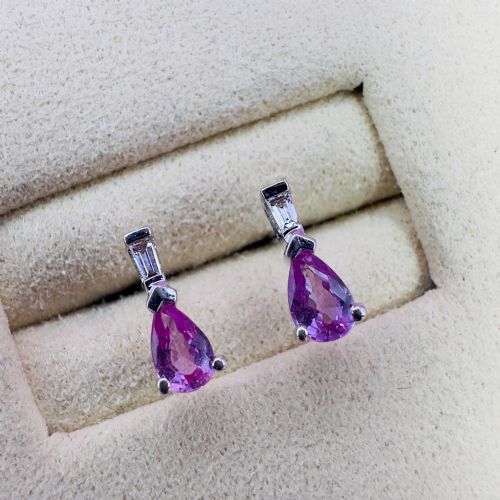
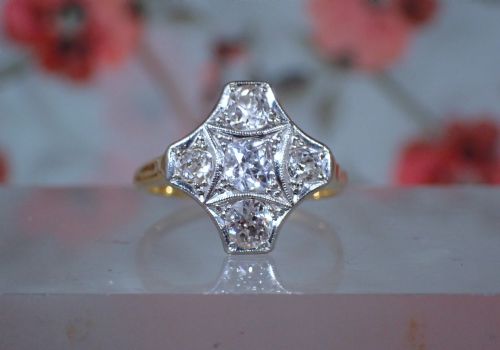
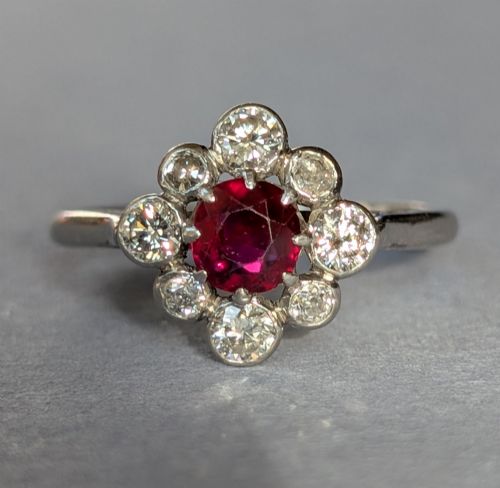
1920s diamond jewellery spans rings, brooches, necklaces, and drop earrings created during the height of the Art Deco movement. These pieces combine geometric lines with bright white diamonds set against contrasting coloured stones.
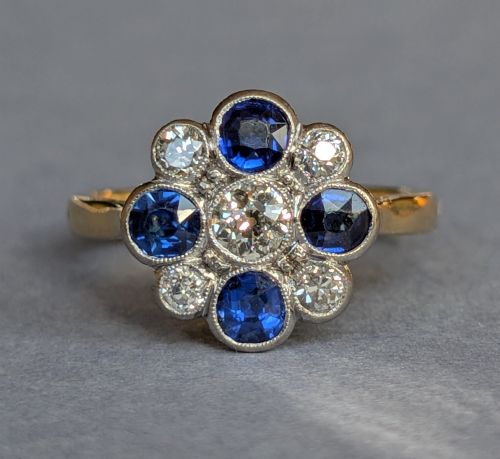
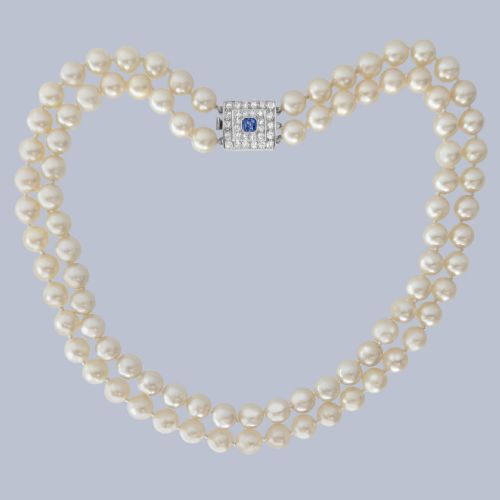
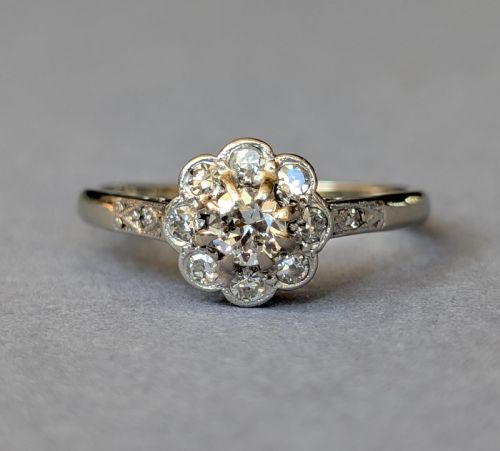
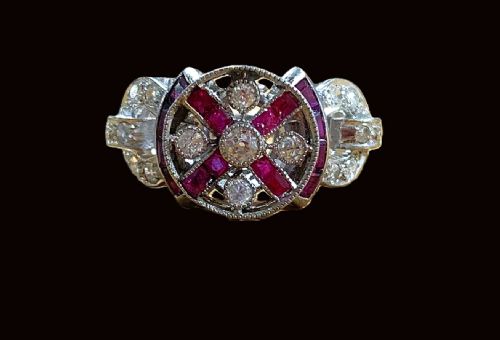
Engagement rings and cluster rings dominate the selection, frequently paired with sapphires, rubies, or pearls. Most examples stem from the 1920s and 1930s, alongside occasional Edwardian survivals executed in the same prevailing style.
Materials and construction
Makers set diamonds predominantly in platinum or 18ct white gold to maximise the brilliance of old cut stones. Yellow gold and silver also appear, particularly in transitional rings and continental brooch work.
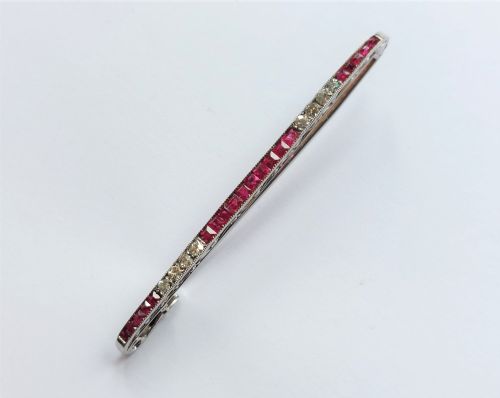
Gemstones feature distinctive cuts including old mine, old European, baguette, and calibre cuts. Pearl strands utilise secure clasps, while bar brooches and drop earrings showcase delicate milgrain edging.
Some bar brooches hide secret pin mechanisms clever enough to outsmart the most determined Edwardian theatregoer.
Distinctions in craftsmanship
Quality rests upon the precision of stone setting and the crispness of geometric mounts. Superior examples maintain intact milgrain work and matching calibrated gems without replacement stones.
The choice of metal alters the character of each piece, with platinum offering finer detail work than heavier gold castings. Original clasps, certs, and unheated coloured gemstones elevate individual pieces above standard production.
The 1920s Diamond Jewellery Glossary
- Old Cut
- A diamond cut characterised by a smaller table, higher crown, and large culet, typical of early twentieth-century stones. These cuts catch candle or gas light with a softer, broader flash than modern brilliant cuts.
- Calibre Cut
- Gemstones shaped precisely to fit geometric channel settings in Art Deco mountings. This technique requires exceptional skill from the lapidary.
- Milgrain
- A decorative beaded border along the edge of metal settings. This detail softens hard metal lines and frames the diamonds.
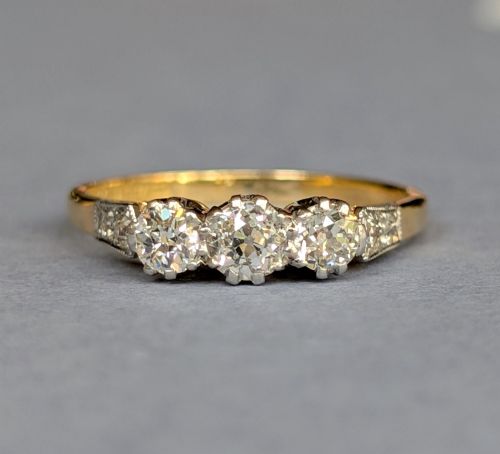
- Trilogy Ring
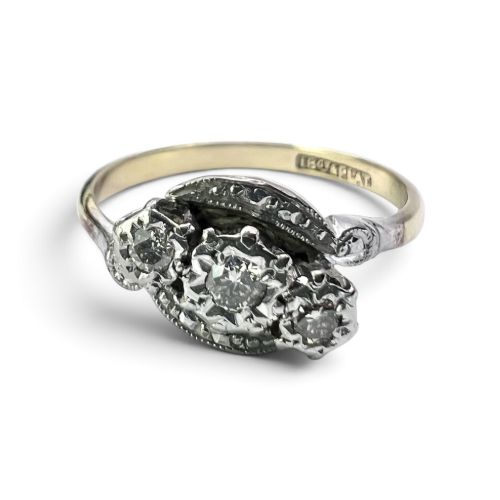
- A three-stone ring symbolising past, present, and future. In this period, such rings typically feature old cut diamonds flanked by smaller stones.
- Target Ring
- A circular cluster ring featuring a central diamond surrounded by concentric rings of contrasting gemstones. The resulting pattern resembles a bullseye.
1920s Diamond Jewellery: Frequently Asked Questions
What defines 1920s diamond jewellery?
This category is defined by geometric Art Deco styling, strong linear motifs, and the prominent use of platinum alongside white and yellow gold. Diamonds are frequently old cut and paired with calibre cut sapphires or rubies.
Items range from delicate engagement rings to substantial drop earrings and tennis bracelets. The overall aesthetic prioritises symmetry, contrast, and fine metalwork.
How do I care for antique platinum and gold rings?
Clean these pieces gently with warm soapy water and a soft brush, avoiding harsh chemical dips that can damage softer stones like pearls or emeralds. Regular inspection by a jeweller ensures that prong settings and milgrain edges remain secure.
Store items individually in padded boxes to prevent scratching between harder diamonds and softer precious metals.
Are these pieces suitable for daily wear?
Many items, particularly sturdy engagement rings and platinum settings, withstand daily wear provided they receive proper maintenance. Delicate items like pearl necklaces or antique drop earrings require more mindful handling.
Checking the security of old cut stones annually prevents accidental loss during regular use.
How can I tell genuine Art Deco pieces apart?
Authentic pieces exhibit period-correct construction techniques, such as hand-forged platinum mounts and genuine old cut diamonds rather than modern brilliant cuts. Hallmark stamps and native wear patterns offer further clues to age.
Stylistic consistency across the mount, including calibre cut side stones and milgrain detailing, confirms the era of manufacture.