
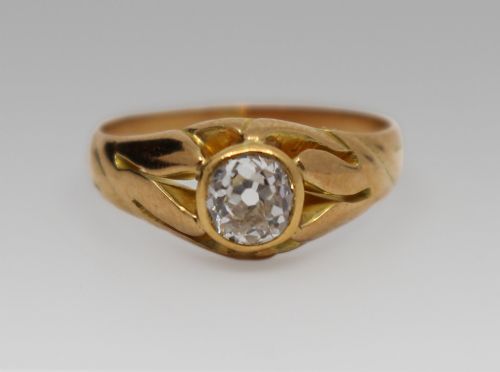
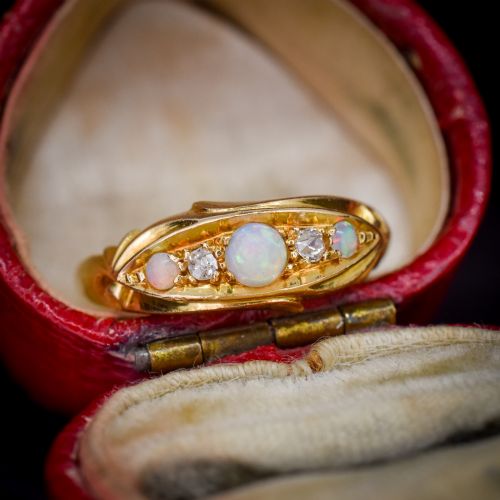
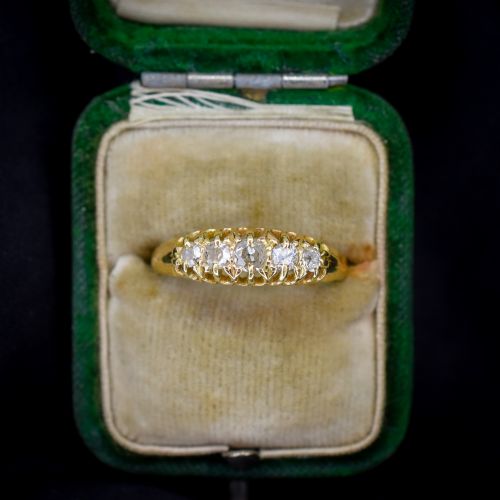

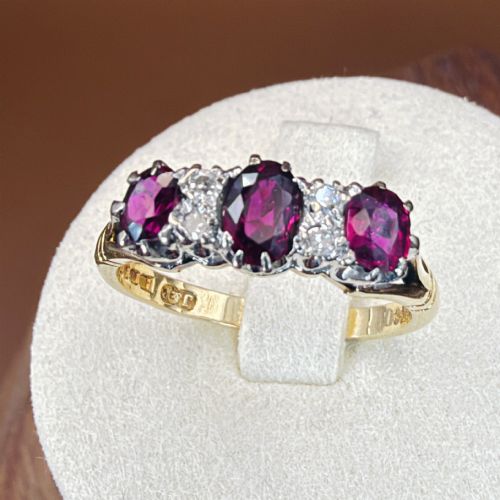


1910s Gold Dress Ring
A 1910s gold dress ring brings the refined hand of Edwardian and early George V jewellers straight to the finger.
1910s Gold Dress Ring
A 1910s gold dress ring is a delicate piece of finger adornment originating from the Edwardian period, George V reign, and the early phases of Art Nouveau and Art Deco. These pieces celebrate personal ornament through intricate stone settings and symbolic motifs.
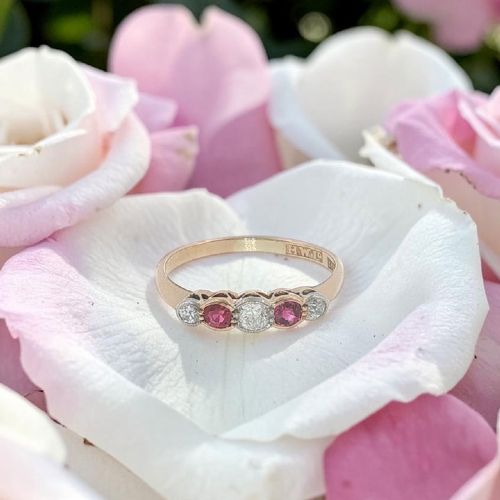
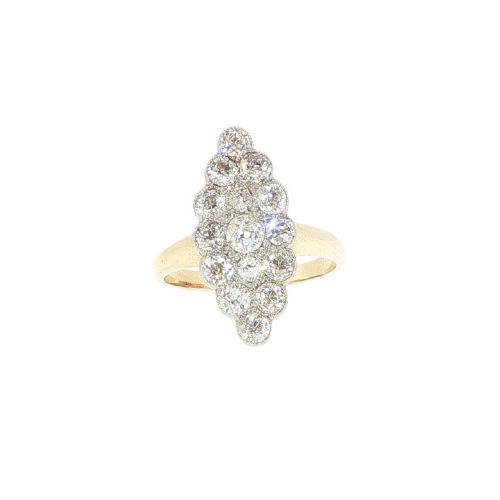
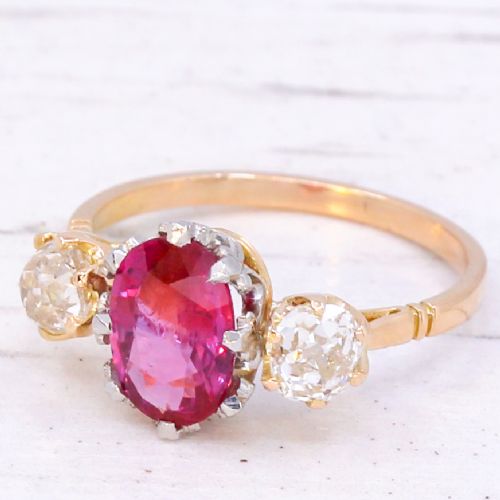
The selection centres heavily on cluster configurations, five stone bands, and boat shapes, alongside distinctive forms like the serpent ring and the Toi et Moi crossover. Stones such as diamond, sapphire, ruby, and opal dominate the creations.
Most examples appear in yellow gold or 18ct yellow gold, frequently paired with platinum to crisp up the setting work around gemstones. These rings reflect the distinct stylistic transition from late Victorian exuberance to the geometric discipline of the 1920s.
Materials and construction
Goldsmiths of this era relied primarily on 18ct gold and yellow gold for the structural bands and shanks, often casting or hand-fabricating the metal to hold substantial gemstones securely. Platinum emerged as a favoured medium for the top mounts, allowing jewellers to fashion delicate, lace-like claw settings that maximised light entry into old cut diamonds.
Gemstone selection dictates the character of these jewels, featuring old cut diamonds, unheated rubies, natural opals, and sapphires from sources like Ceylon, Kashmir, and Burma. Stone arrangements frequently utilise the navette, starburst, and floral daisy motifs to create commanding visual presence from modest proportions.
Listings feature periods spanning 1900, 1910, Edwardian, and George V alongside materials like 18ct gold, platinum, diamond, sapphire, and ruby.
Distinctions in quality
The standard of a 1910s gold dress ring rests heavily on the precision of the metalwork and the integration of platinum with gold. Superior examples display crisp claw work and fine piercing that holds stones firmly without obscuring their facets.
Gemstone selection and matching separate ordinary specimens from exceptional ones. Cohesiveness in old cut diamond pairings or the natural intensity of unheated sapphires and rubies elevates the visual harmony of cluster and multi-stone rings.
The 1910s Gold Dress Ring Glossary
- Boat ring
- A ring setting shaped like an inverted hull, curving gently across the finger to hold a row of graduated stones.
- Toi et Moi
- A French term meaning you and me, describing a crossover ring featuring two main gemstones symbolising two souls intertwined.
- Navette
- A boat-shaped or marquise setting that tapers to sharp points at either end, popular in Edwardian cluster rings.
- Old cut
- A vintage diamond cutting style with a smaller table, higher crown, and larger culet designed to sparkle under candlelight.
- Platinum
- A dense, white precious metal utilised during this decade for its strength in holding delicate diamond settings.
1910s Gold Dress Ring: Frequently Asked Questions
How do I wear a 1910s gold dress ring daily?
These antique rings suit regular wear provided you remove them during heavy physical tasks or gardening to protect the claw settings.
Pairing them with plain bands rather than stacking them directly against other diamond rings prevents unnecessary friction on the shoulders and gallery.
What styles define a 1910s gold dress ring?
The aesthetic spans Edwardian floral motifs, sinuous Art Nouveau lines, and early geometric Art Deco influences.
Common configurations include cluster designs, five stone arrangements, and serpentine bands carrying deep symbolic meaning.
How can I tell if a ring is from the 1910s?
Look for hallmarks indicating regional assay offices like Chester or Birmingham alongside specific design traits such as platinum-topped gold.
The presence of old cut diamonds and specific motifs like the boat shape or Toi et Moi crossover typically points to this decade.
Are sapphires and rubies common in these rings?
Coloured gemstones appear frequently alongside diamonds in cluster, navette, and multi-stone configurations.
Many examples feature natural, unheated sapphires or rubies set securely within yellow gold and platinum mounts.