




1910 Oak Side Table
A 1910 oak side table brings solid utility and understated Edwardian character to a room.
1910 Oak Side Table
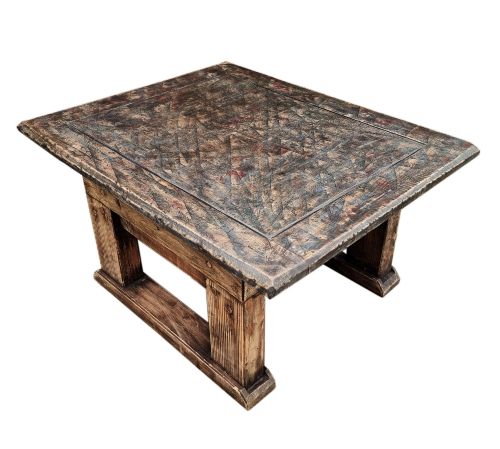
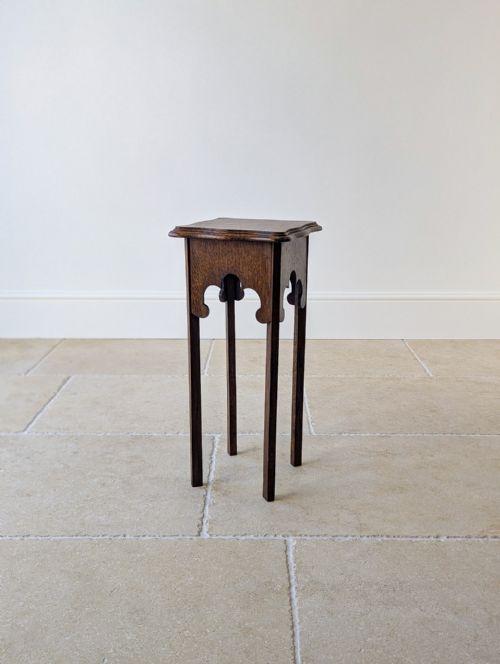
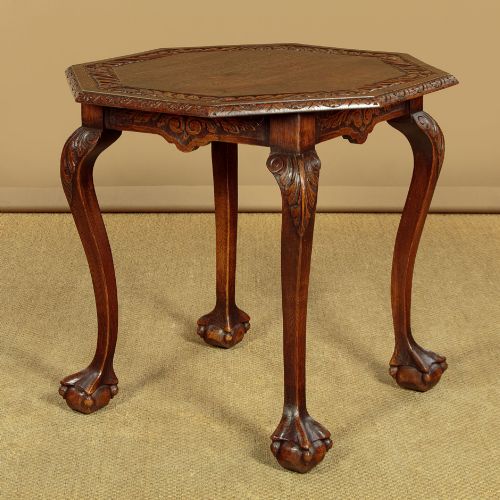
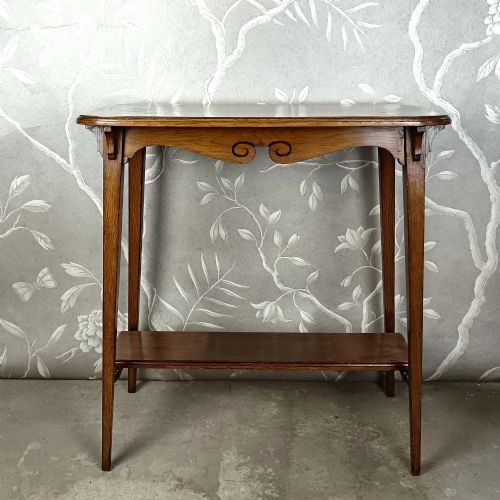
A 1910 oak side table encompasses versatile occasional furniture, plant stands, and small tables produced around the Edwardian period. Buyers searching this phrase most frequently encounter practical rectangular or square tables, alongside hexagonal forms and multi-tiered designs.
The pieces originating from this era reflect a shift toward simpler domestic furnishings while retaining traditional craftsmanship. Many examples share stylistic ties with the Arts and Crafts movement and Glasgow School aesthetics, prioritising functional form over excessive ornamentation.
Materials and construction
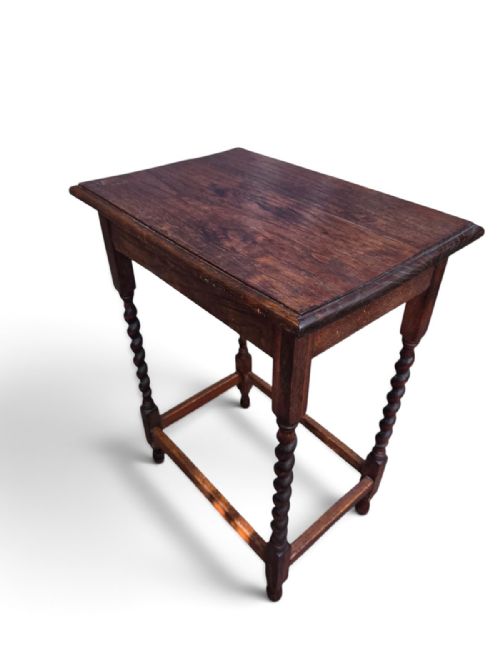
Solid oak serves as the primary material for these tables, chosen for its durability and prominent grain patterns. Workshops utilised robust construction methods, frequently incorporating stretcher bases, carved details, and distinctive turned legs such as barley twist supports.
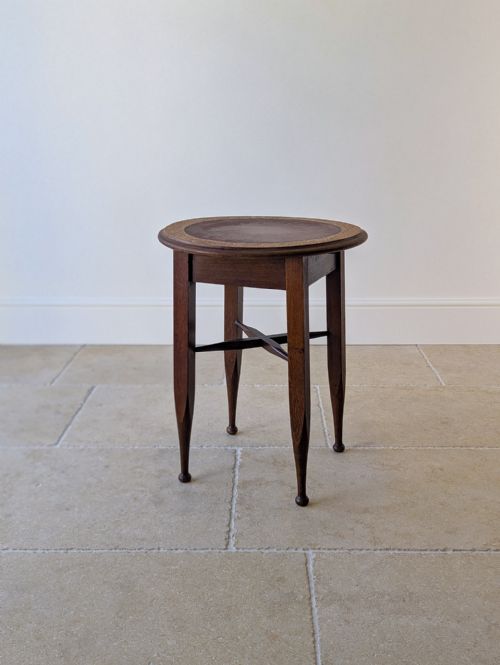
Surface finishes were kept relatively natural to highlight the character of the timber rather than masking it with heavy varnishes. Structural elements like leather inserts appear in specific multi-tier or nest configurations, adding texture and utility to the design.
1910 Oak Side Table Retail Price Guide 2026
Typical asking prices for 1910 oak side table among the pieces listed under this phrase on Sellingantiques today, from the lower quarter to the upper quarter. They describe what is for sale here now, not the wider market.
The available inventory includes diverse forms such as plant stands, hexagonal Glasgow School tables, and nested occasional sets.
Assessing quality in the range
The distinction between standard commercial production and finer work often lies in the crispness of hand-carved details and the selection of quarter-sawn oak timber. Tables associated with specific regional movements like the Glasgow School typically demonstrate more thoughtful proportions and deliberate artistic intent.
Stability and the integrity of the joints dictate longevity in everyday use. Superior examples maintain tight structural joinery without excessive hardware additions, ensuring the piece retains both its original appearance and daily functionality.
The 1910 Oak Side Table Glossary
- Edwardian
- Relating to the period spanning the reign of King Edward VII, noted for lighter furniture designs compared to heavy Victorian precedents. This era produced many of the small occasional tables found today.
- Arts and Crafts
- A design movement advocating traditional craftsmanship and simple forms, heavily influencing the construction of domestic oak furniture around nineteen ten. It rejected mass-produced industrial ornamentation in favour of honest structural expression.
- Barley Twist
- A type of woodturning resembling a spiral rope, frequently utilised for the legs of side tables and plant stands. This decorative technique added visual movement to solid timber supports.
- Hexagonal
- Having six sides and six angles, describing the unusual geometric top configuration seen on certain Glasgow School tables. This specific shape offered an alternative to standard rectangular or circular designs.
- Stretcher
- A horizontal support connecting the legs of a table to increase stability and rigidity. These wooden braces are commonly found positioned near the base of Edwardian occasional tables.
1910 Oak Side Table: Frequently Asked Questions
What is a 1910 oak side table used for?
These pieces function primarily as versatile small surfaces for lamps, plants, or books within a living space. Their compact proportions make them suitable for placement beside seating or in hallways.
Multi-tiered versions and nest arrangements provide additional surface area without occupying a large footprint. They adapt easily to contemporary interiors while fulfilling their original domestic roles.
What is a Glasgow School table?
Glasgow School tables originate from the design movement centred around Scottish institutions in the late nineteenth and early twentieth centuries. They frequently incorporate geometric forms and restrained, linear carved details.
These pieces reflect a progressive approach to domestic design that influenced British furniture production leading up to nineteen ten. Their distinct silhouettes set them apart from standard commercial output.
How do I care for antique oak furniture?
Maintaining solid oak requires keeping the timber away from direct heat sources and extreme humidity fluctuations. Regular dusting with a soft dry cloth prevents dirt buildup on the surface.
Applying occasional appropriate wax preserves the natural finish of the wood without sealing it beneath modern synthetic layers. Gentle care ensures the timber retains its depth of colour over time.