

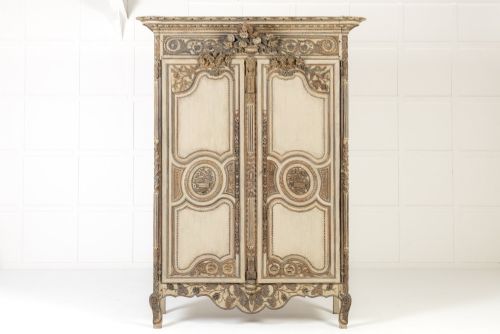
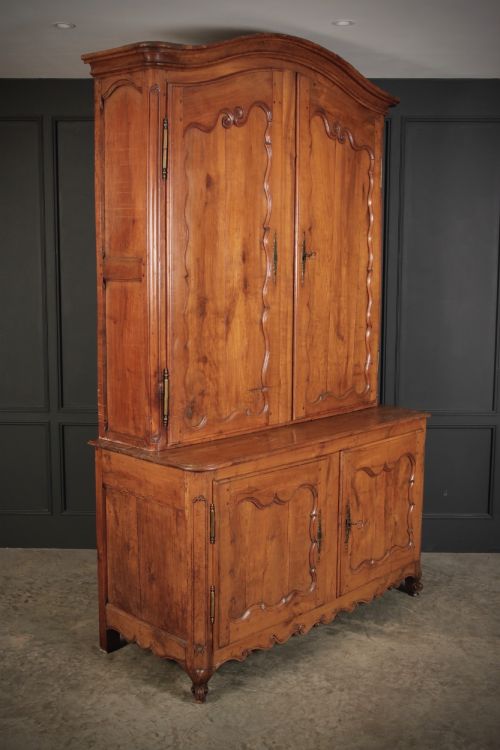
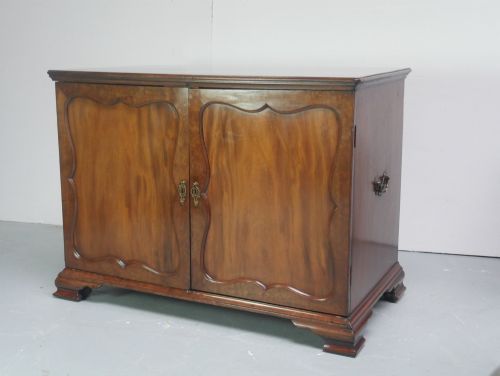
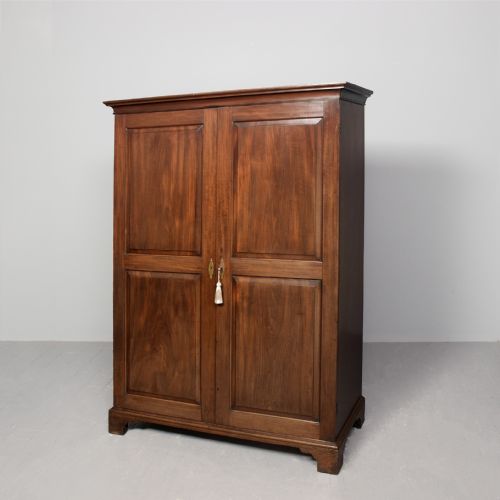

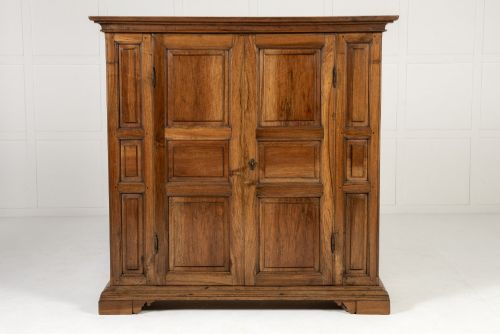

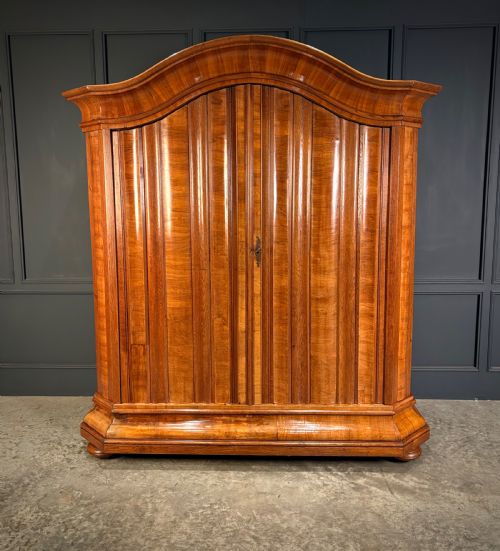
18th Century Wooden Press
An 18th century wooden press offers sturdy storage and architectural presence, built for heavy domestic service in oak, mahogany, and walnut.
18th Century Wooden Press
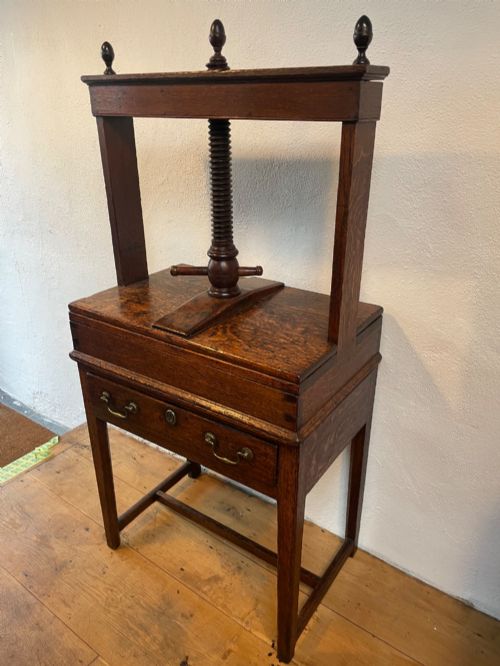
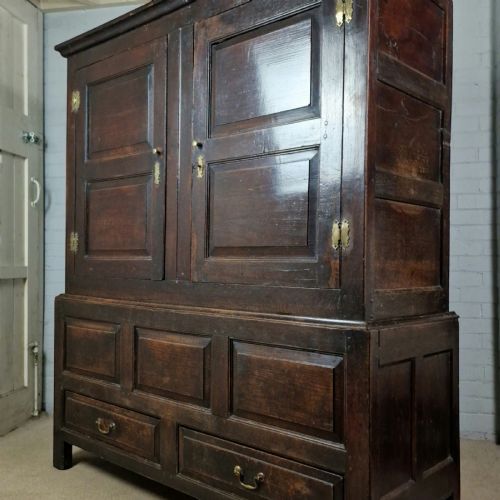
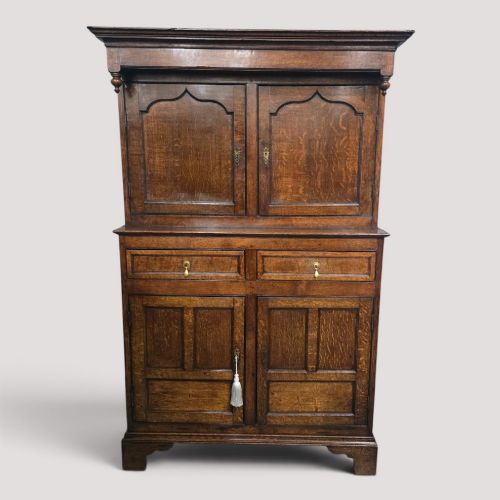
An 18th century wooden press combines large storage capacity with solid timber construction, taking the form of linen presses, wardrobes, and bookpresses. These pieces served domestic households for storing garments, household textiles, and books securely.
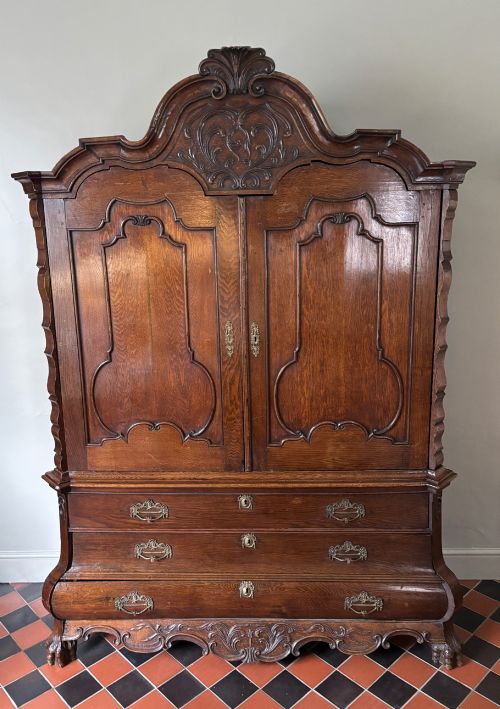
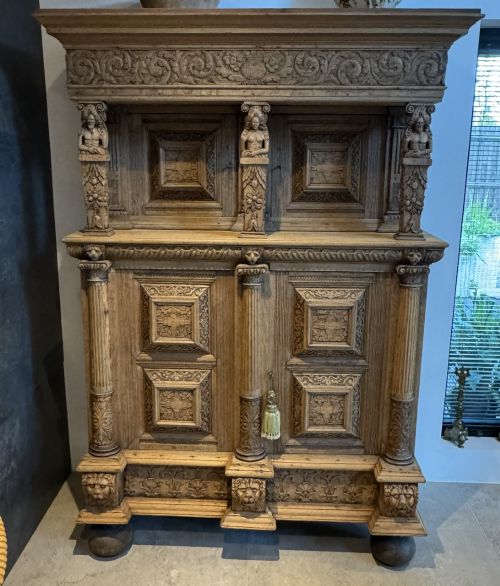
The pieces appearing here span the Georgian era, French Provincial styles, and Dutch or Flemish Baroque designs. Oak and mahogany dominate the offerings, alongside regional variations in elm, walnut, and cherry wood.
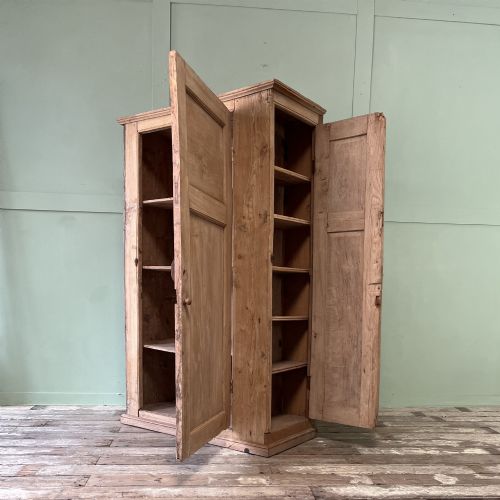
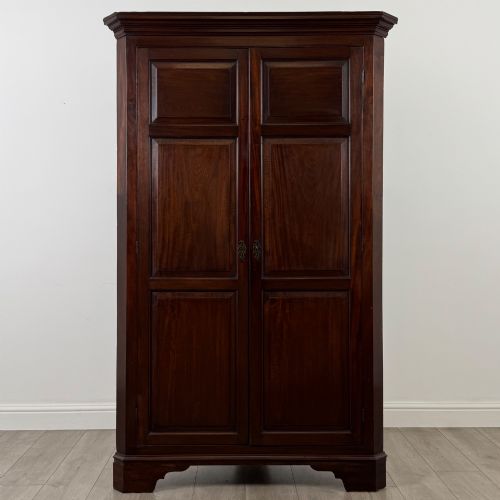
Buyers most frequently encounter large linen press cupboards and two-door cabinets from the Georgian period. These items often feature panelled doors and internal shelving or hanging space tailored for period textiles.
Materials and construction methods
Cabinetmakers constructed these pieces using dense hardwoods like oak, mahogany, and walnut, frequently selecting figured grains for prominent surfaces. Secondary timbers such as pine appear on internal drawer linings and backboards.
Joinery relied on pegged mortise and tenon frames, hand-cut dovetails for drawer construction, and panelled doors designed to accommodate seasonal wood movement. Brass hardware, including hinges and escutcheons, fastened the doors and drawers.
18th Century Wooden Press Retail Price Guide 2026
Typical asking prices for 18th century wooden press among the pieces listed under this phrase on Sellingantiques today, from the lower quarter to the upper quarter. They describe what is for sale here now, not the wider market.
Keep a spare brass key handy because eighteenth-century locks have strong opinions about which side of the channel they prefer to turn on.
Distinctions in quality
Superior examples display balanced proportions, skilful timber selection such as flame mahogany or figured walnut, and meticulous hand-cut joinery. Regional vernacular pieces show robust local character, whereas formal Georgian items demonstrate refined architectural details like breakfront cornices.
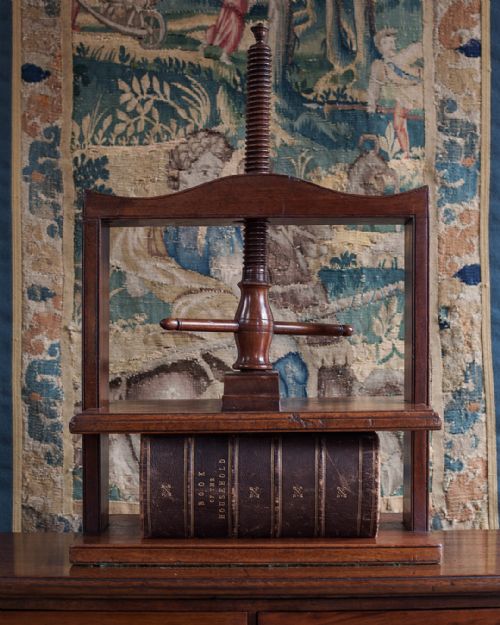
Original surface patination and minimal alteration elevate a piece above examples with heavy timber replacement or stripped finishes. The integration of mechanical elements, such as working screw mechanisms in bookpresses, influences the mechanical integrity of the item.
The 18th Century Wooden Press Glossary
- Linen press
- A large dual-purpose cupboard featuring upper sliding trays for textiles and lower drawers for bulkier garments.
- Breakfront
- A cabinet facade where the central section projects forward from the flanking outer wings.
- Escutcheon
- A protective metal plate surrounding a keyhole, commonly cast in brass.
- Cornice
- The decorative moulded projection running along the topmost edge of a cabinet or press.
- Vernacular
- Furniture built by local tradesmen using regional traditions and locally sourced timber rather than following strict metropolitan styles.
18th Century Wooden Press: Frequently Asked Questions
What is an 18th century wooden press used for?
These presses provided secure storage for household linens, folded garments, and bound books in grand houses and modest homes alike. The internal sliding trays kept textiles flat and accessible before modern wardrobe hanging spaces became standard.
Today, owners utilise these deep cupboards for modern clothing storage, linen organisation, or as prominent display cabinets in living spaces.
How do I identify a Georgian linen press?
Georgian linen presses typically combine a two-door upper cupboard enclosing sliding shelves with a chest of drawers forming the base. They often showcase mahogany timbers, formal bracket feet, and classical architectural moulding.
Regional oak versions from the same period display simpler pegged panels, heavier timber construction, and local vernacular design traits.
Where were these wooden presses made?
Makers constructed these pieces across English workshops, Welsh rural centres, and continental European regions including France, Holland, and Italy. Each geographic area utilised native woods such as English oak, continental walnut, or local fruitwoods.
Regional trade routes and local aesthetic traditions directly influenced the choice of timber and ornamental carving styles.
How do I care for antique wooden furniture?
Maintain stable indoor humidity and keep antique timber away from direct heat sources to prevent wood splitting or shrinkage. Regular dusting with a soft, dry cloth preserves the aged surface without stripping the accumulated wax patina.
Apply a microcrystalline wax sparingly once or twice a year to nourish the dry wood grain and protect the finish.