


18th Century Satirical Print
An 18th century satirical print delivers sharp social commentary and biting wit through copperplate engraving.
18th Century Satirical Print
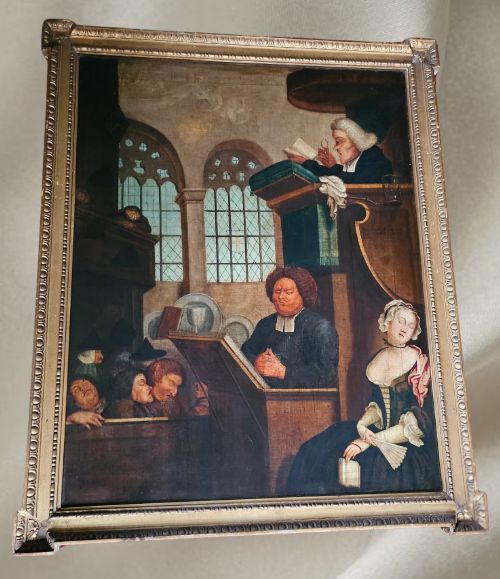
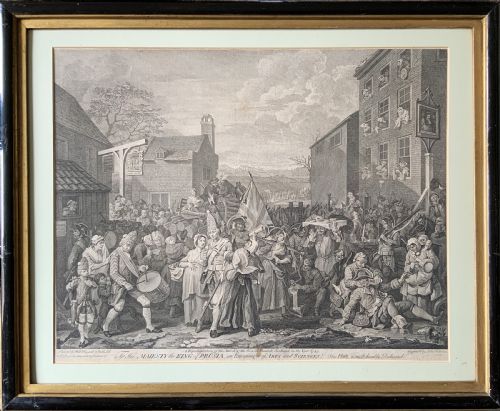
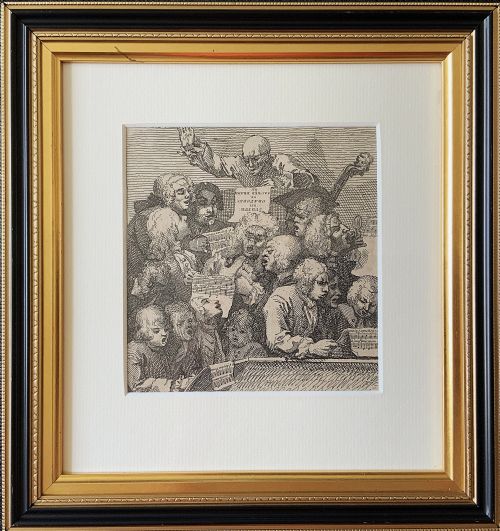
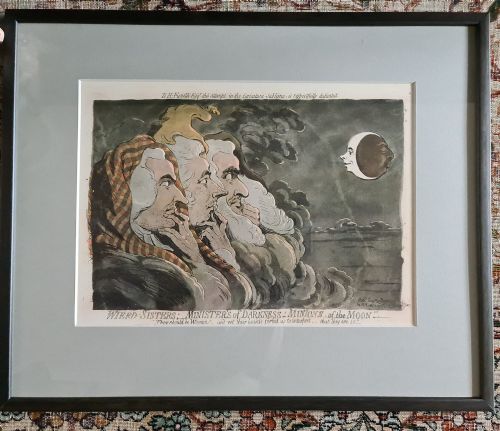
An 18th century satirical print brings together social critique, political caricature, and moral observation from the Georgian era. These works expose the vices, follies, and manners of the period through exaggerated visual storytelling.
The selections available here range from original period plates to later impressions and nineteenth-century restrikes. Common subjects include moral series, theatrical scenes, and political lampoons.
Collectors encounter works attributed to major satirical artists alongside portfolio collections of copperplate engravings. Scrapbook pages featuring caricatures also appear, preserving contemporary commentary on paper.
Materials and methods
Printmakers utilised copper plates to etch or engrave detailed lines onto paper. Some impressions received hand colouring to enhance specific details within the composition.
Finished plates frequently found protection behind glass within wooden or gilded wood frames. Portfolios gathered multiple engravings together, keeping sheets clean and intact over centuries.
Georgian audiences enjoyed poking fun at bad singing, clumsy dancing, and municipal greed just as much as modern viewers do.
Assessing the impression
The crispness of the engraved line dictates the visual strength of the impression. Early strikes from a copper plate show sharp detail, whereas later impressions lose definition as the metal wears down.
Paper condition and the presence of contemporary hand colouring influence the overall appeal of a sheet. Intact margins and clear printing indicate careful preservation over generations.
William Hogarth·Luke Sullivan·Gilray·E.L. Riepenhausen·William Bunbury·Henry William Bunbury
The 18th Century Satirical Print Glossary
- Engraving
- A printmaking technique where an artist cuts lines directly into a metal plate with a burin. This method produces clean, precise lines capable of capturing fine detail.
- Etching
- A process utilising acid to bite lines into a metal plate covered with an acid-resistant ground. Artists draw freely through the ground to expose the metal for the acid.
- Copperplate
- A flat sheet of copper used as the primary medium for intaglio printing. The soft metal allows delicate incision but wears down gradually through repeated printing.
- Stipple engraving
- A method of creating tonal gradations using dots rather than continuous lines. The technique suits flesh tones and soft drapery.
- Impression
- A single printed image pulled from an inked plate onto paper. Early impressions display superior clarity compared to later strikes.
18th Century Satirical Print: Frequently Asked Questions
How do I care for framed paper prints?
Keep prints away from direct sunlight to prevent fading of the ink and yellowing of the paper.
Maintain stable humidity levels in the room to protect both the paper and the wooden frames.
What is a copperplate engraving?
An artist cuts an image directly into a copper plate using a sharp steel tool called a burin.
Ink is applied into the carved grooves and transferred under pressure onto paper.
How are original impressions identified?
Early impressions show sharp, distinct lines without the blurring seen in worn plates.
Paper characteristics and watermark evidence often help establish the date of the printing.
Were these prints always framed?
Many prints were originally bound into portfolios or collected in scrapbooks rather than displayed on walls.
Framing often occurred later to protect the delicate paper sheets during domestic display.