



18th Century Porcelain Platters
These 18th century porcelain platters offer substantial serving surfaces and hand-painted decoration that bring period character to a dining table.
18th Century Porcelain Platters
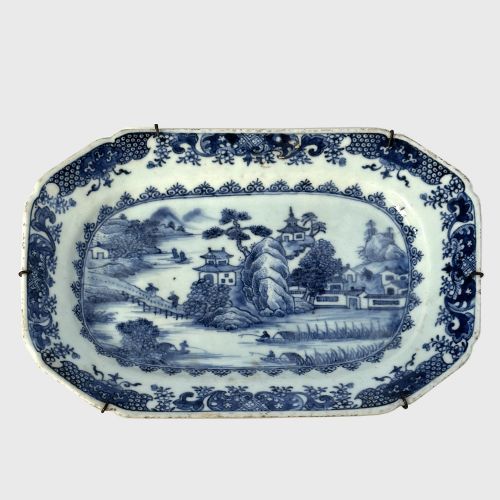
When searching for 18th century porcelain platters, buyers encounter large serving dishes, chargers, and platters created across European and Asian kilns during the Georgian era and the seventeen-hundreds. These pieces include Chinese export porcelain destined for European markets, alongside domestic British wares from factories such as Worcester, Derby, Bow, and Caughley.
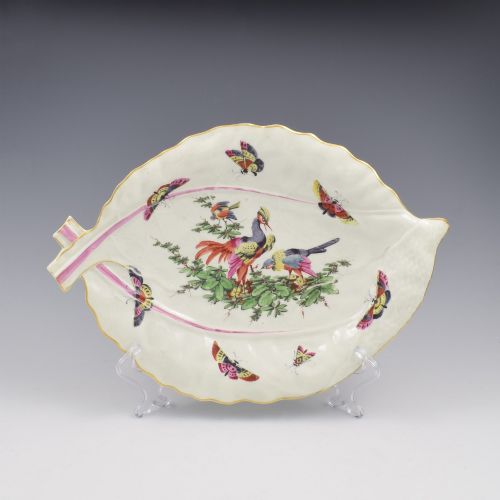
Buyers are most likely to meet Chinese export pieces decorated in blue and white or Famille Rose palettes, alongside English soft-paste porcelain leaf dishes and serving trays. These domestic and imported items reflect the dining habits and aesthetic preferences of the Georgian period.
How they were made
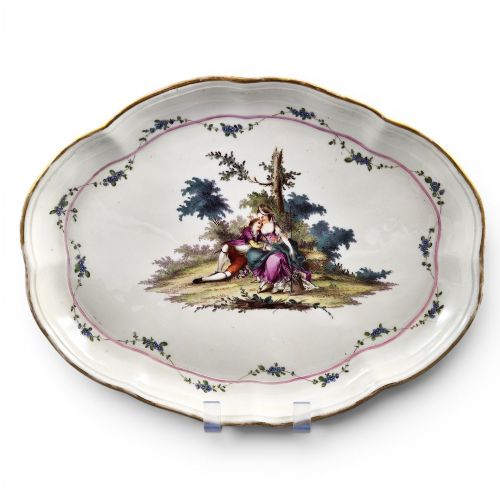
Potters utilised porcelain, soft-paste porcelain, ceramic, and tin-glazed earthenware bodies, shaping them into platters, chargers, and serving trays by hand or on the wheel. Cobalt oxide provided the blue pigment for underglaze painting, while polychrome enamel colours were applied over the glaze and fired again in kilns.
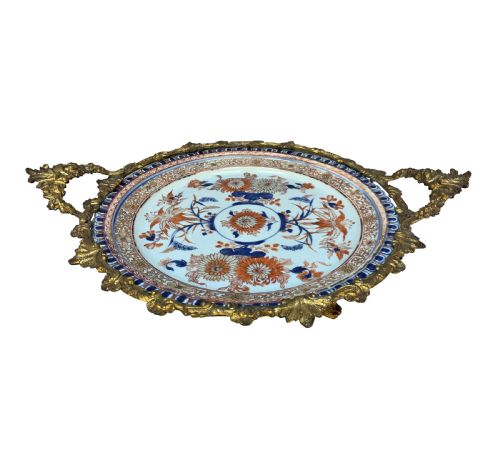
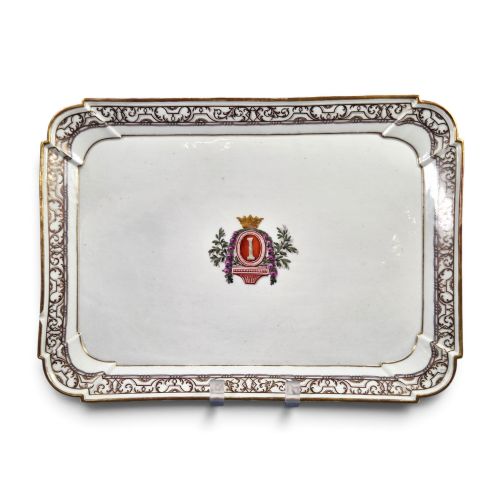
Selected pieces incorporated gold leaf details or were fitted with ormolu mounts to enhance their decorative appeal for wealthy households. Transparent glaze sealed the ceramic body, providing a smooth surface for hand-painted florals, birds, landscapes, and foliate borders.
Several eighteenth-century platters were shaped specifically as cabbage leaves, proving that even Georgian diners enjoyed leafy greens.
What varies in quality
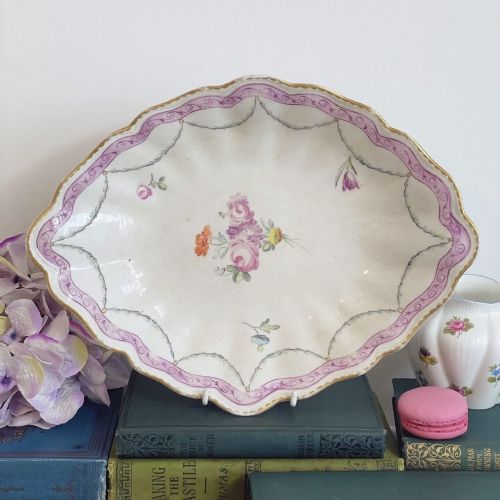
Quality in these platters rests upon the crispness of the hand-painted decoration, the complexity of the cobalt blue or polychrome enamel palette, and the condition of the ceramic body and glaze. Pieces displaying finely detailed brushwork, such as intricate floral studies or complex foliate borders, demonstrate superior workshop output.
The sophistication of the form, whether an octagonal serving dish, a moulded leaf shape, or an ormolu-mounted tray, separates standard utility wares from luxury commissions. Factory marks, well-preserved gilding, and the clarity of the porcelain body further distinguish the finest examples.
Derby·Ludwigsburg Porcelain·Caughley·Bow Porcelain·Sevres
The 18th Century Porcelain Platters Glossary
- Soft-paste porcelain
- A glassy ceramic material fired at lower temperatures than true porcelain, used extensively by eighteenth-century English factories such as Bow and Worcester. This body often has a slightly creamy tone under the glaze.
- Famille Rose
- A palette of opaque enamel colours introduced in Chinese ceramics during the Qing dynasty, dominated by pink and rose shades. It was widely used on export porcelain platters destined for European dining tables.
- Chinese Export
- Porcelain manufactured in China specifically for trade with European and American markets. These wares combined traditional Asian techniques with shapes and motifs requested by Western buyers.
- Charger
- A large decorative dish or platter typically measuring over thirty centimetres across. Originally intended for ceremonial dining, these large plates were frequently displayed upright on sideboards.
- Underglaze blue
- A decoration technique where cobalt oxide pigment is applied directly to the unfired ceramic body before glazing and firing. This method ensures the blue design remains permanently sealed beneath the glossy surface.
18th Century Porcelain Platters: Frequently Asked Questions
How were these platters used?
These platters served food at formal dining tables during the Georgian period, holding roasted meats, vegetables, and sweet courses. Large chargers were also displayed on sideboards or plate stands to demonstrate household wealth.
Over time, many of these decorative dishes transitioned from dining rooms to display cabinets, preserved for their hand-painted floral and landscape designs.
What is Chinese Imari?
Chinese Imari is export porcelain manufactured in China during the eighteenth century that imitates the distinctive Japanese Imari colour palette. It combines underglaze cobalt blue with iron red and gold leaf highlights over the glaze.
These striking colour combinations made the plates popular for mixed display schemes in European homes.
How do I care for antique porcelain platters?
Antique porcelain platters require gentle hand washing in lukewarm water with mild soap when cleaning is necessary. Dishwashers and harsh abrasives will damage the eighteenth-century glazes and fragile enamel or gold leaf decoration.
Display these pieces securely on padded plate stands or flat surfaces away from direct sunlight to preserve their hand-painted colours.