



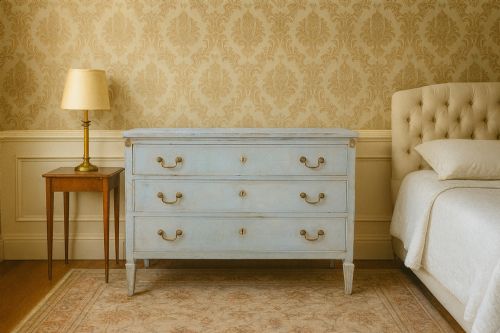


18th Century Pine Chest
An 18th century pine chest offers honest domestic storage, bringing enduring regional character and tactile warmth to an interior.
18th Century Pine Chest
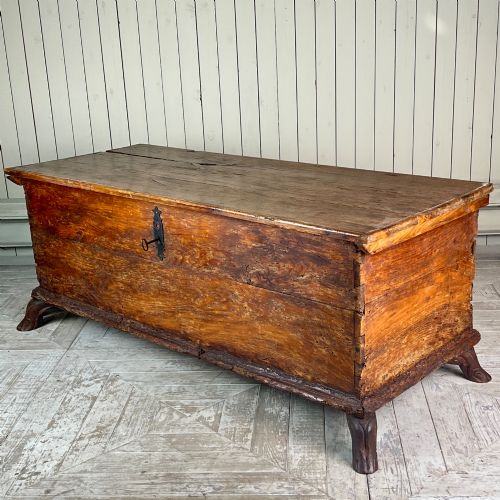
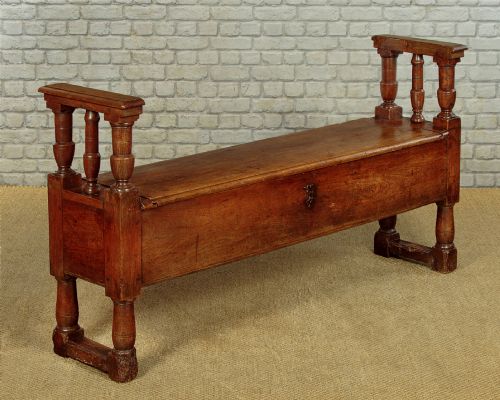
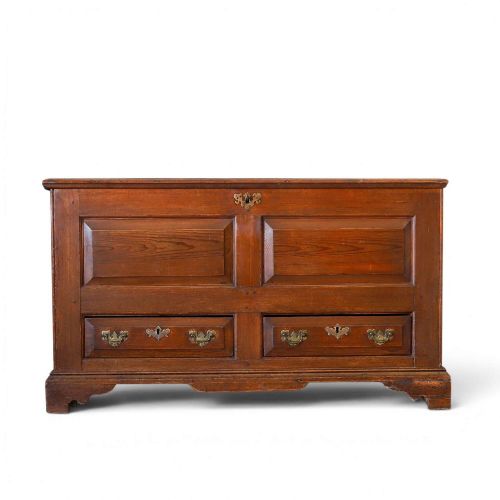
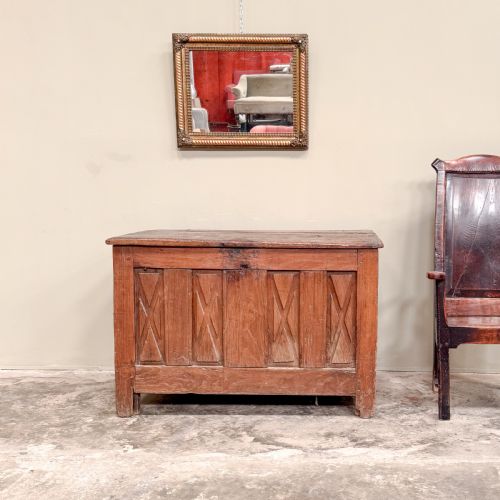
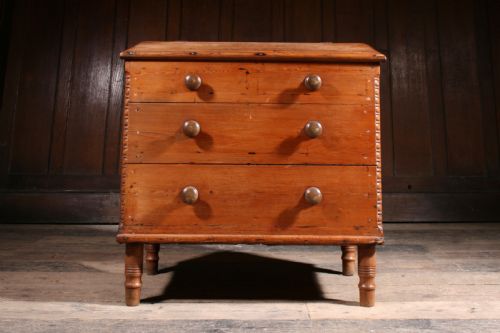
An 18th century pine chest is a utilitarian domestic container built for storing linen, blankets, and personal belongings in everyday households. These pieces encompass straightforward planked coffers, mule chests fitted with lower drawers, and refined commodes or drawer units.
The versions most frequently met on this page originate from regional British workshops, Scandinavian provinces, and French provincial centres. They span simple domestic storage trunks through to painted folk art examples carrying period decoration.
Makers constructed these sturdy items from softwood boards, frequently augmenting them with secondary timbers like elm or oak for structural stability. Surviving examples demonstrate the shift from basic boarded coffers to sophisticated multi-drawer chests of drawers.
How they were made
Carpenters constructed these pieces using solid pine boards joined by dovetails, tongue-and-groove methods, or sturdy pegged framing. Secondary woods such as elm or oak occasionally reinforce bases, framing, or internal partitions.
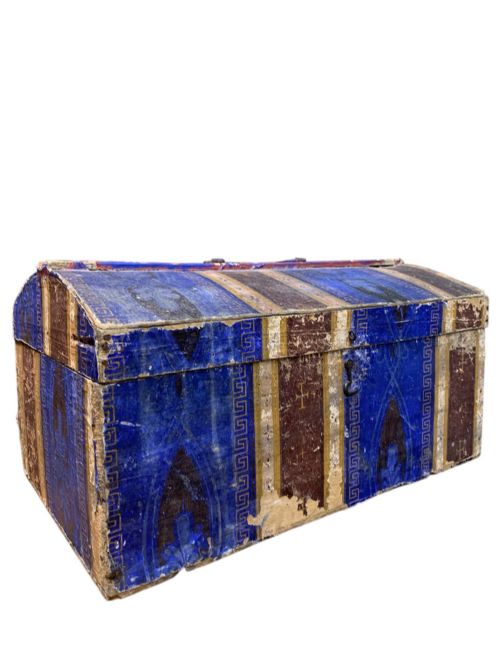
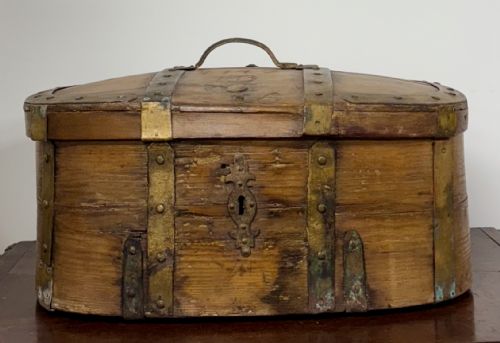
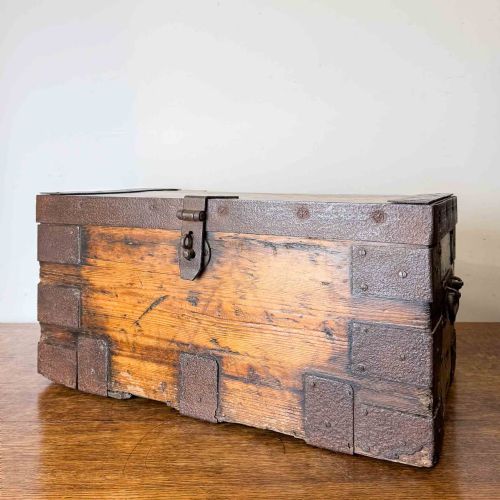
Hardware played a fundamental role in both construction and security, featuring hand-beaten iron hinges, strap work, and brass carrying handles. Many surfaces retain their original paint, layered washes, or applied decorative motifs such as labyrinths and folk art designs.
18th Century Pine Chest Retail Price Guide 2026
Typical asking prices for 18th century pine chest among the pieces listed under this phrase on Sellingantiques today, from the lower quarter to the upper quarter. They describe what is for sale here now, not the wider market.
One mid-18th century Swedish chest comes decorated with an intricate labyrinth painted directly onto the pine timber.
What varies in quality
The standard of an 18th century pine chest rests primarily in the integrity of its timber, the survival of original surface finishes, and the refinement of its joinery. Pieces retaining untouched painted schemes or early decorative hardware command greater interest than stripped or heavily altered examples.
Proportions and regional vernacular design dictate the visual success of each piece, ranging from robust rustic country boxes to sophisticated Swedish neoclassical commodes. Superior examples display thoughtful timber selection and well-executed dovetailing that ensures structural longevity.
The 18th Century Pine Chest Glossary
- Mule chest
- A storage chest featuring one or more drawers built into the base beneath the main compartment. This form bridges the gap between the traditional coffer and the modern chest of drawers.
- Coffer
- A heavy wooden box with a hinged lid, traditionally used for storing valuables or household goods. These pieces form the foundational storage format before the widespread adoption of drawer units.
- Commode
- A low chest of drawers or cabinet originating in continental Europe, often standing on distinct legs. In 18th century contexts, these pieces reflect refined regional styles such as Gustavian or French provincial design.
- Gustavian
- The Swedish interpretation of neoclassical style, characterised by lighter proportions, restrained carving, and pale painted finishes. This aesthetic emerged during the late 18th century under royal influence.
- Strongbox
- A heavily reinforced storage box fitted with iron strapping and robust locks designed for security. Elm and pine often combined in these pieces to withstand heavy domestic or travel use.
18th Century Pine Chest: Frequently Asked Questions
What is the difference between a coffer and a mule chest?
A coffer is a traditional storage box with a single top-opening lid and an open internal cavity. A mule chest incorporates one or more drawers beneath the main storage well.
This drawer addition allows access to contents without lifting the heavy top lid or disturbing items stacked inside the upper section.
How do I identify original paint on an 18th century pine chest?
Original paint surfaces show natural craquelure, subtle fading, and consistent wear patterns accumulated over centuries of domestic use. Layers build up organically without modern chemical undercoats.
Modern repainting or stripped surfaces lack this depth, often appearing flat or showing uniform brush marks inconsistent with period hand application.
Where were most of these pine chests made?
These chests originate from domestic British workshops, Scandinavian farming communities, and French provincial regions. Each area utilised locally available softwoods and distinct regional construction traits.
Scandinavian pieces frequently display folk art motifs or pale painted finishes, whereas British examples often showcase waxed pine or panelled oak-and-pine construction.
How should I care for a waxed pine chest at home?
Keep wooden storage pieces away from direct heat sources and drastic humidity shifts to prevent timber splitting or warping. Apply traditional beeswax sparingly to nourish the dry pine surface.
Avoid synthetic polishes that build up sticky residues and attract dust, opting instead for gentle dusting with a soft, dry cloth.