




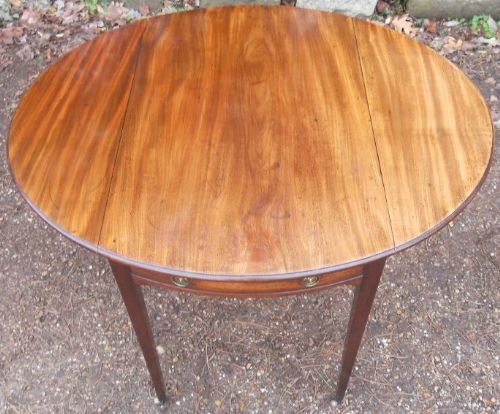

18th Century Pembroke Desk
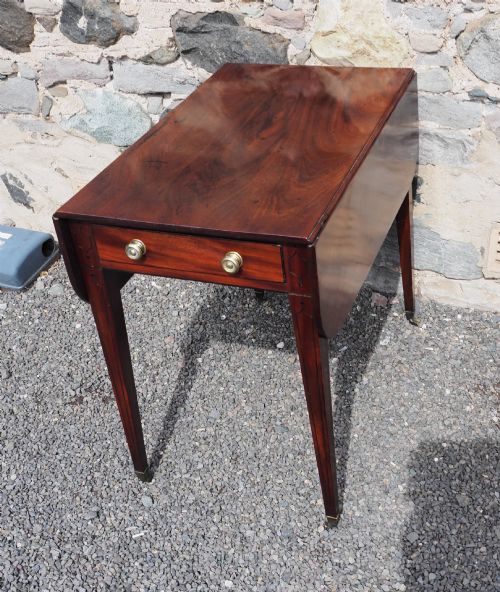
An 18th century pembroke desk brings drop-leaf versatility and refined Georgian cabinet-making directly to a small study or drawing room.
18th Century Pembroke Desk
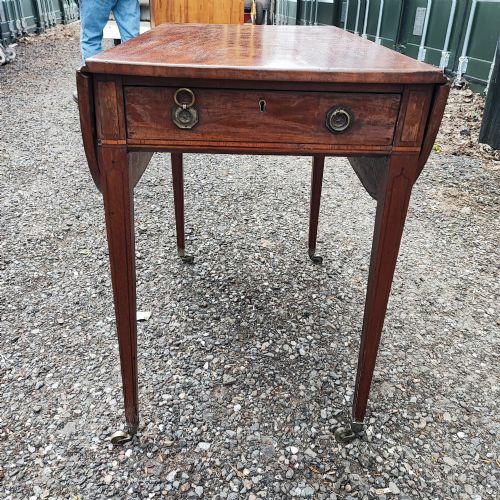
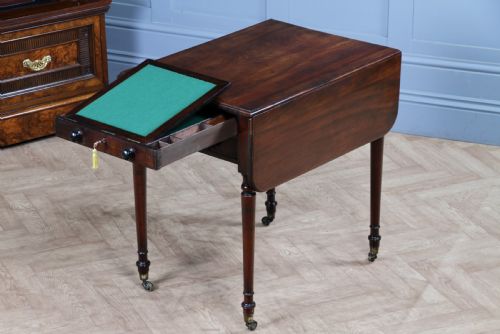
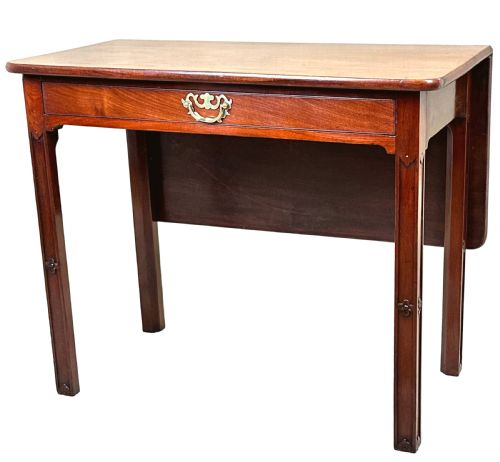
When buyers search for an 18th century pembroke desk, they encounter drop-leaf tables designed with hinged flaps that expand the surface area when needed. These pieces frequently appear in Georgian and Sheraton periods, often doubling as games tables or work tables with fitted drawers.
Mahogany dominates the evidence on this page, accompanied by satinwood and rosewood variations. Makers constructed these versatile items as occasional tables, side tables, and compact dining tables suitable for flexible domestic spaces.
Materials and construction
Cabinet-makers built these pieces primarily using solid mahogany and mahogany veneer, sometimes enhanced with delicate satinwood, boxwood, and brass hardware. Cross-banding and inlay work added decorative contrast to the timber surfaces.
Drop leaves required sturdy hinging and clever folding brackets to support the flaps when raised. Interiors often housed baize linings for games or fitted compartments for writing equipment.
Secret drawers tucked inside these tables often still contain stray pins and paperclips dropped by owners two centuries ago.
Judging quality and proportion
The refinement of the timber grain and the precision of the cross-banding distinguish standard examples from finer works. Superior pieces exhibit carefully chosen veneers and subtle inlay work rather than heavy-handed decoration.
Proportion dictates much of the appeal, with smaller, lighter forms commanding greater interest among collectors. The integrity of the drop-leaf mechanism and the neatness of the fitted drawers reveal the original maker's skill.
The 18th Century Pembroke Desk Glossary
- Pembroke table
- A small table with hinged drop flaps on either side. It usually includes one or more drawers and dates predominantly from the eighteenth century.
- Cross-banding
- A strip of veneer applied to the border of a table top running perpendicular to the grain of the central panel. This technique frames the wood and demonstrates fine cabinet-making.
- Satinwood
- A durable, yellowish timber imported from the tropics and used extensively for inlay and veneering during the late eighteenth century. It provides a bright contrast against darker woods like mahogany.
- Baize
- A coarse woollen material resembling felt, frequently used to line the tops of games tables and writing drawers. It protects cards and writing implements during use.
- Drop leaf
- A hinged flap attached to the side of a table top that lifts to increase surface area and drops down when not required. It relies on wooden or metal brackets for support.
18th Century Pembroke Desk: Frequently Asked Questions
What is an 18th century pembroke desk?
An 18th century pembroke desk is a drop-leaf table featuring hinged flaps and functional drawers, designed for writing or general use in Georgian interiors.
These compact tables provide flexible workspace that expands when the leaves are raised and contracts to save floor space when folded.
How were these tables used originally?
Original owners used these versatile tables for letter writing, needlework, and playing card games in principal rooms.
Their lightweight construction allowed servants to move them easily around the house depending on the activity of the day.
What woods should I look for?
Mahogany is the primary wood found in these listings, often accented with satinwood, boxwood, and rosewood veneers.
Cabinet-makers utilised these dense timbers to create durable surfaces and crisp decorative inlays that survive in good condition today.
How do I spot a Chippendale period piece?
Chippendale period pieces display the characteristic stylistic traits and proportions associated with mid-eighteenth-century English furniture design.
They generally feature solid mahogany construction combined with functional fitted top drawers and sturdy leg supports.