
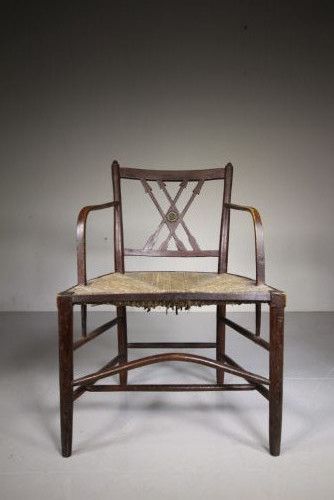
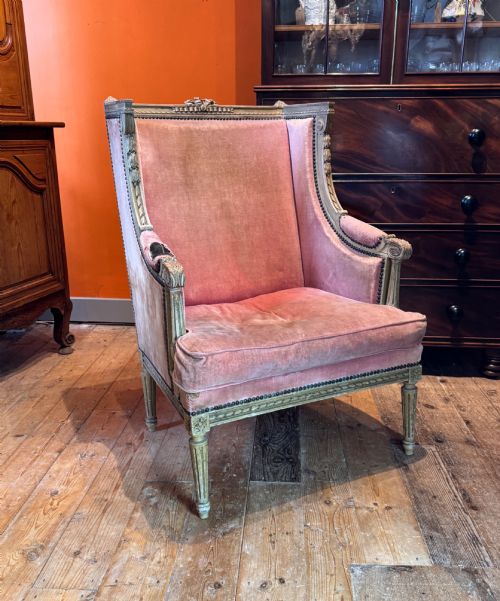
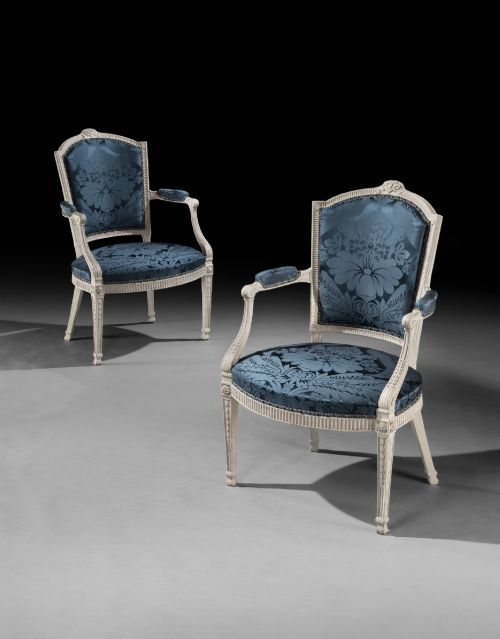
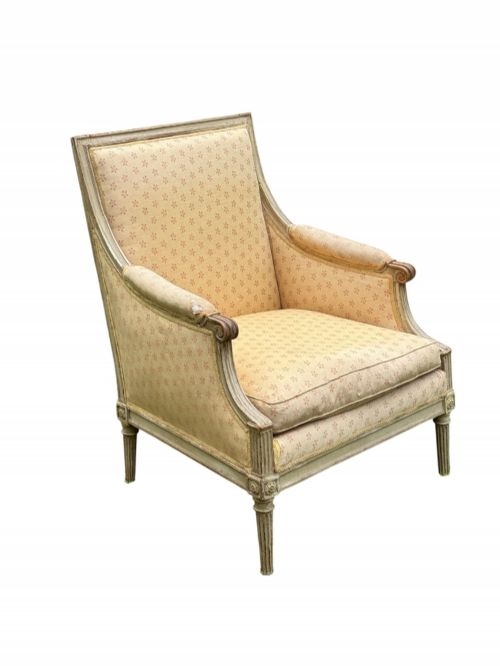


18th Century Painted Armchairs
These 18th century painted armchairs combine period forms with decorative surface finishes, offering a seat that anchors a room with historic character.
18th Century Painted Armchairs
When you search for 18th century painted armchairs, you are looking at seating that bridges functional furniture and decorative art. These pieces range from refined formal drawing-room seats to vernacular country designs shaped by local traditions.
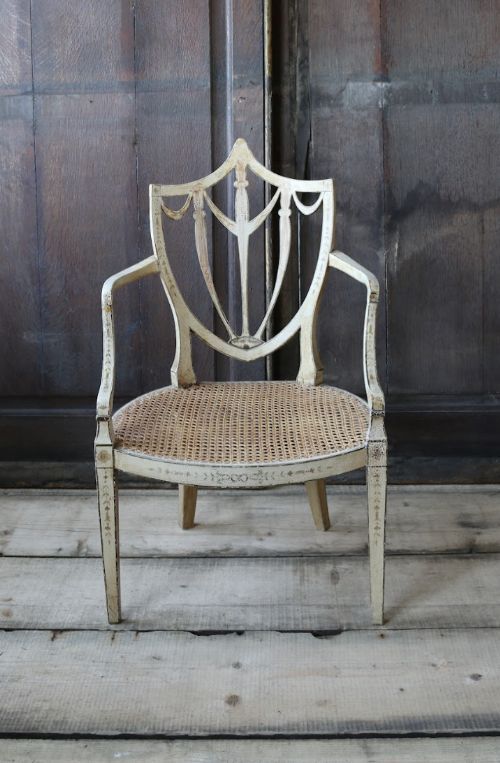
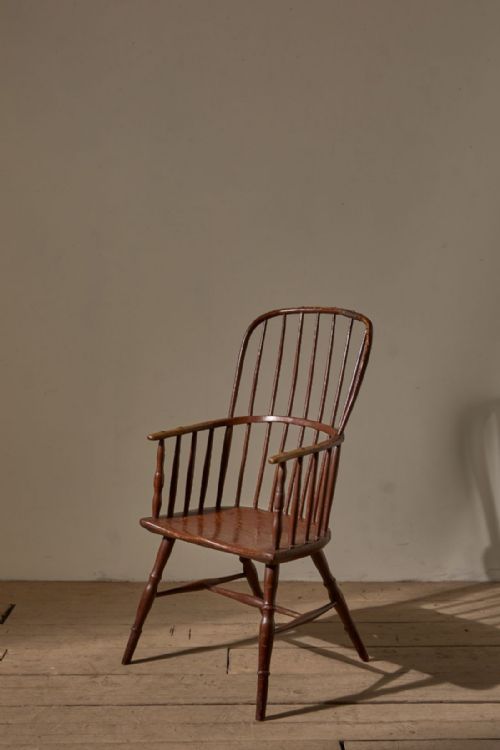
The selections on this page lean heavily towards English Georgian and French neoclassical designs, alongside regional English ladder-backs, Windsor forms, and Italian rococo or Venetian variants. They appear in diverse formats including open armchairs, shield-backs, hoop-backs, and Gainsborough chairs.
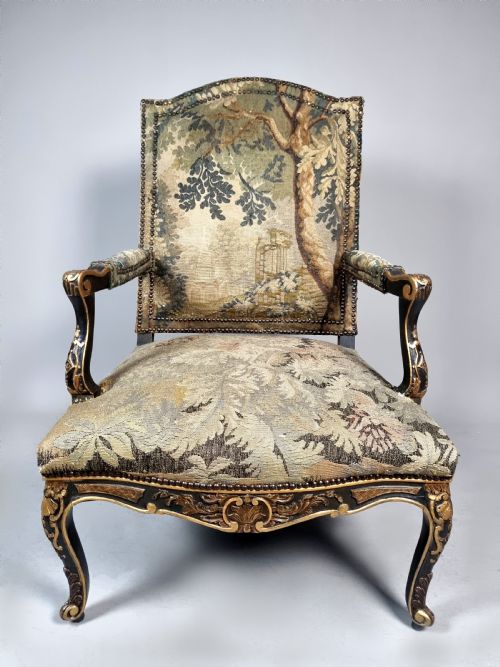
Many retain traces of early or original surface decoration, from simple monochrome pigments to polychrome florals and parcel-gilt highlights. The upholstery often spans period needlework, tapestry, silk, or modern replacement textiles chosen to suit the frame.
Materials and construction
Frames are constructed from solid timbers such as mahogany, ash, walnut, and beech, which were turned, carved, or joined to form the structural skeleton. Surface coats of paint, gesso, and sometimes gold leaf were then applied over the bare wood to provide colour and protection.
Many makers incorporated secondary materials into the design, adding cane seating for lightness, or brass tacks to secure the upholstered pads and needlework panels. Joinery techniques relied on traditional mortise and tenon joints augmented by pegged supports and hand-carved detailing.
Evaluating quality and finish
The distinction between standard and exceptional pieces rests upon the crispness of the original carving and the survival of early or untouched surface paint. Chairs with well-preserved polychrome decoration, parcel-gilt accents, or documented maker attributions command greater attention from collectors.
Proportion and structural integrity dictate the overall desirability of each frame. Pieces that retain their original upholstery webbing, harmonious proportions, and unaltered timber components offer a more authentic representation of their period than heavily restored alternatives.
Henri Jacob·Gillows
The 18th Century Painted Armchairs Glossary
- Gesso
- A plaster-like mixture applied to wood frames to create a smooth surface for painting or gilding. It provides a crisp base for fine decorative relief work.
- Parcel gilt
- A technique where selective areas of a painted or wood surface are highlighted with thin sheets of gold leaf. This method adds a touch of formal opulence to chairs.
- Fauteuil
- A traditional French open-arm chair featuring upholstered back and arm pads with exposed wooden framework. These items were designed for formal reception rooms.
- Shield-back
- A chair back shaped in the outline of a shield, popular during the late Georgian and Sheraton periods. The design often incorporates carved splats and painted floral motifs.
- Gainsborough chair
- A wide, upholstered armchair with open padded arms, designed during the mid-to-late 18th century. They were typically used at desks or as conversational seating.
18th Century Painted Armchairs: Frequently Asked Questions
How do I care for original paint?
Keep these chairs away from direct sunlight and fluctuating humidity to prevent the historic paint layers from drying out and flaking.
Dust them gently with a dry, soft cloth and avoid modern chemical polishes that can soften or strip aged pigment.
Are these chairs suitable for daily use?
Most antique seating can handle gentle everyday sitting if the frame joints remain tight and stable.
However, fragile surfaces or delicate cane panels require a more cautious approach to preserve their structural integrity.
How do I spot original paint?
Original finishes typically show natural craquelure, subtle fading, and wear patterns that align with the age of the underlying timber.
Under magnification, older pigment layers often reveal multiple historical applications rather than a single modern coat.
What is a Gainsborough chair?
This is a generous armchair featuring upholstered arm rests, a padded back, and an open wooden frame designed for comfort.
They frequently appear in refined drawing rooms or paired with period writing desks.