



18th Century Oak Highboy
An 18th century oak highboy combines vertical storage with sturdy domestic craftsmanship, offering a commanding presence for period interiors.
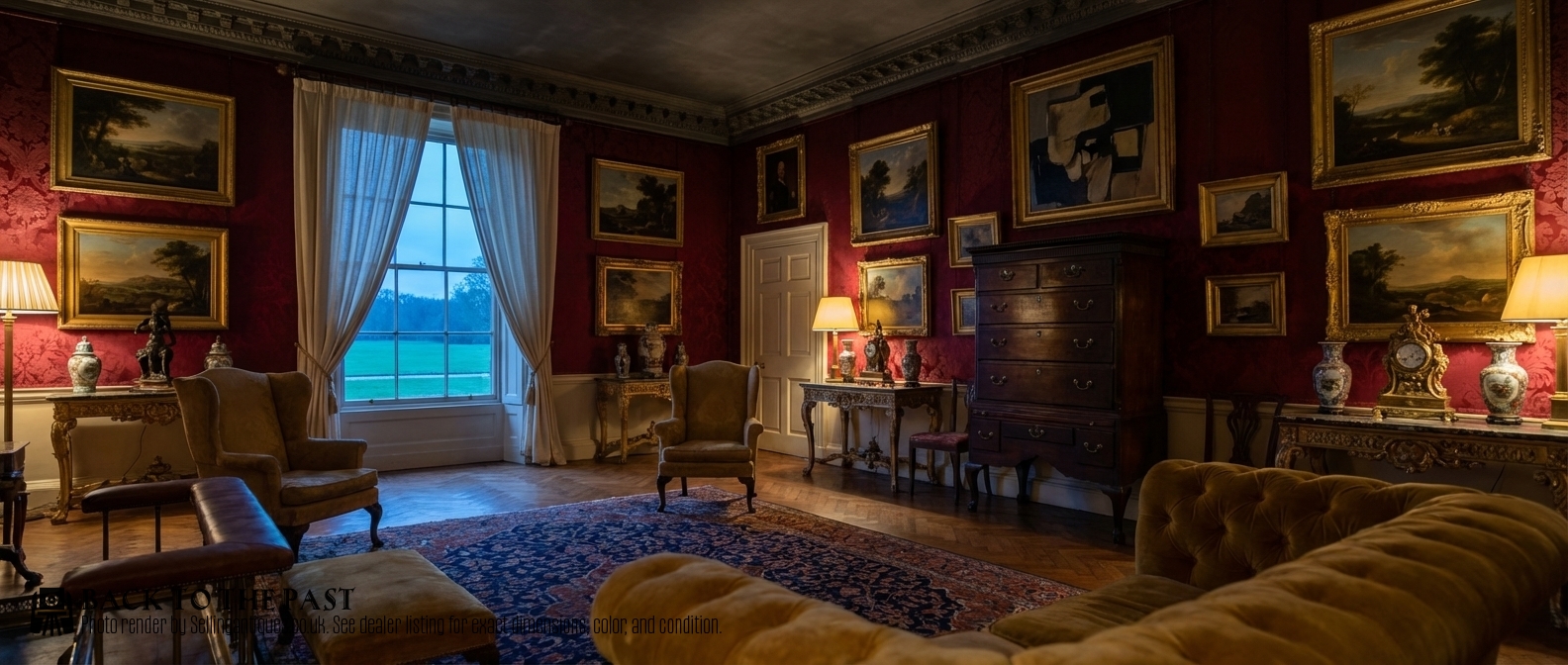
18th Century Oak Highboy
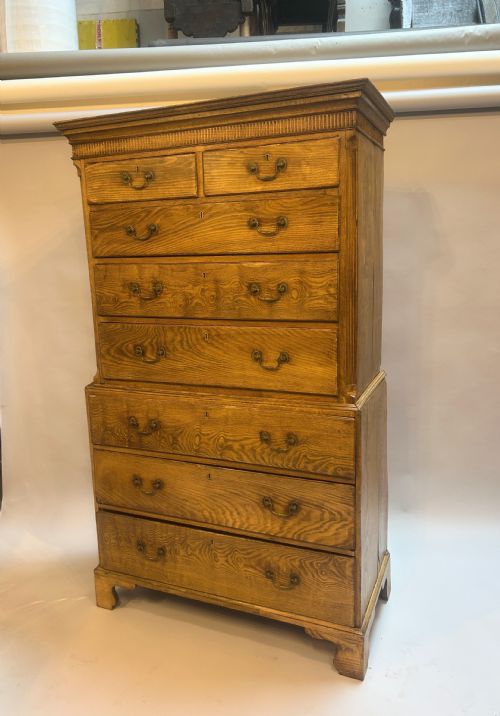
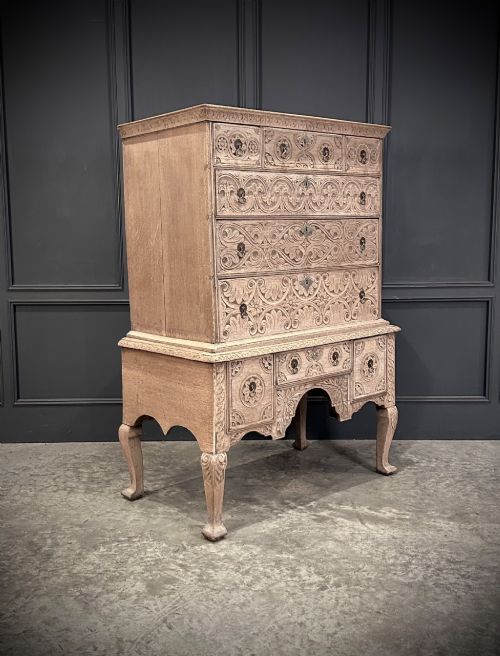
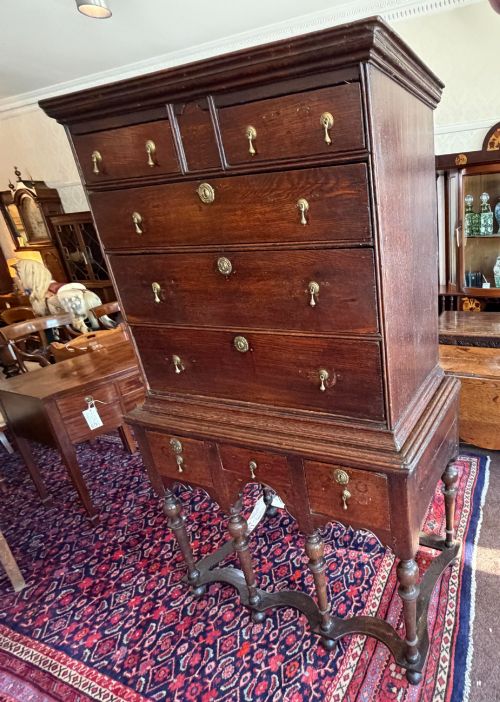
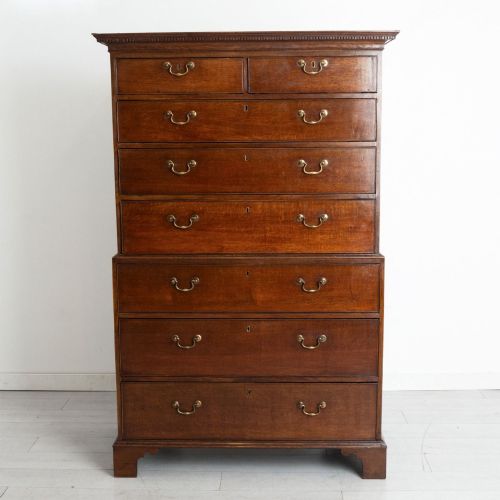
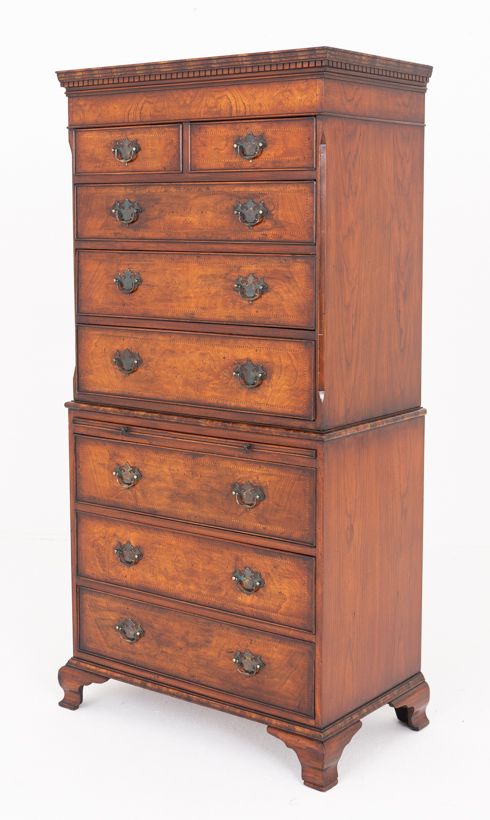
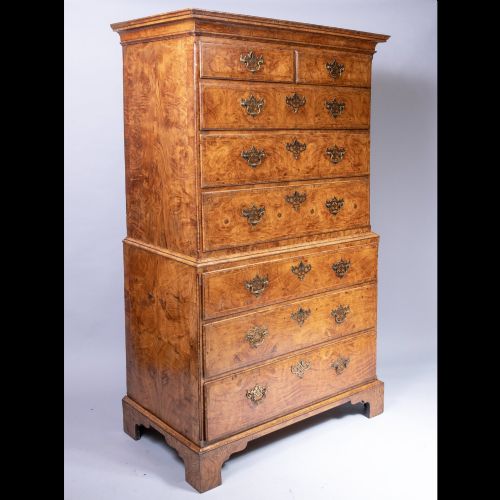
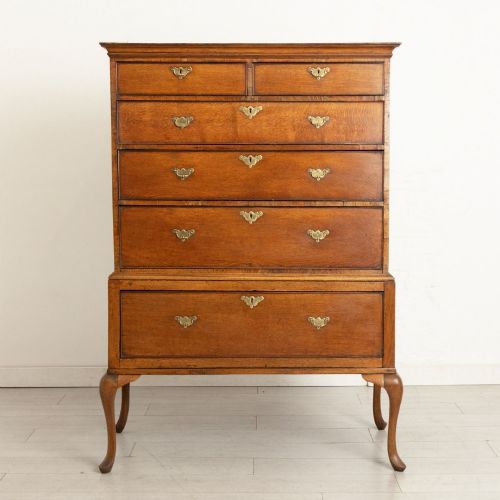
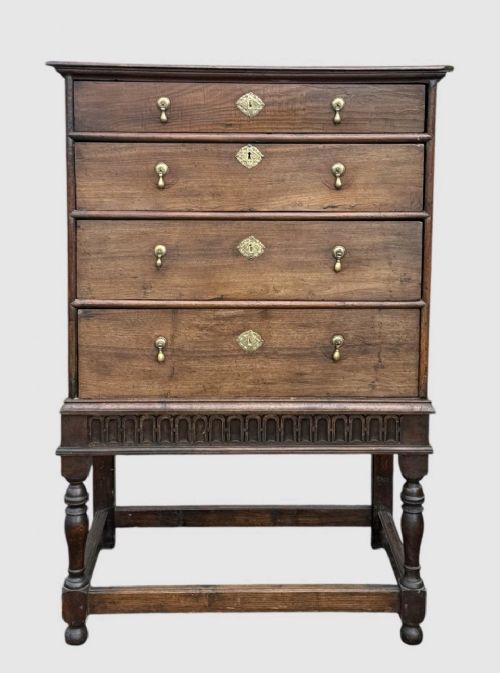
The 18th century oak highboy encompasses chest on stand, chest on chest, and tallboy forms found across Georgian and earlier periods. Buyers encounter variations featuring multiple drawer configurations, ranging from smaller pieces on elevated stands to taller two-section cabinet designs.
Originating from English and Welsh workshops, these pieces often appear in solid oak alongside walnut, elm, and burr elm. Examples date primarily through the 18th century, with occasional pieces reflecting later interpretations in oak and elm.
Materials and Construction
Cabinetmakers utilised sturdy timbers such as oak, elm, and walnut for structural stability and pronounced grain patterns. Secondary woods and banding complement the primary carcasses, while timber finishes range from bleached surfaces to painted treatments.
Hardware consists of brass handles affixed to drawer fronts designed for heavy domestic storage. Construction methods unite upper and lower sections securely, balancing tall vertical proportions with stable furniture stands and bases.
Current listings demonstrate oak, elm, walnut, and burr elm constructions spanning George I, George II, and George III periods.
Craftsmanship and Proportion
Distinction across the range rests on timber selection, surface patination, and the integrity of original drawer configurations. Pieces featuring figured elm or banded walnut show higher decorative ambition than plain surfaces.
Proportion and structural balance between the upper chest and the supporting stand dictate overall visual success. Retained surfaces, whether bleached, polished, or displaying distressed blue finishes, alter the character of each cabinet.
The 18th Century Oak Highboy Glossary
- Highboy
- A tall chest of drawers consisting of an upper section mounted on a lower frame or stand. This form provides substantial vertical storage while maintaining an elevated silhouette.
- Tallboy
- A tall chest on chest or chest on stand configuration used throughout the Georgian era. These pieces maximise drawer capacity within a compact floor footprint.
- Chest on Stand
- A cabinet form featuring a smaller chest resting upon a dedicated table-like base with legs. Early examples often date to the Queen Anne and George I periods.
- Banding
- A narrow strip of contrasting timber inlaid around drawer perimeters or borders. This technique frames the wood grain and highlights cabinetwork precision.
- Patina
- The surface sheen and colour developed by timber over centuries of handling and exposure. It serves as an indicator of age and continuous use.
18th Century Oak Highboy: Frequently Asked Questions
What is an 18th century oak highboy?
An 18th century oak highboy is a tall storage furniture piece formed of drawers stacked upon a stand or lower chest section.
These items were constructed in English and Welsh workshops during the Georgian, Queen Anne, and George periods.
How were highboys used originally?
These cabinets served to store garments and domestic linens within bedrooms and private chambers.
The elevated design kept contents away from floor drafts while providing organised drawer space.
How do I style a highboy at home?
Place the piece against a solid wall where its vertical proportions can anchor the room layout.
Keep surrounding furniture low to emphasise the height and grain of the oak or elm timber.
How do I distinguish between periods?
Early pieces from the Queen Anne and George I eras typically feature distinct stands and raised legs.
Later George III tallboys lean towards heavier chest-on-chest constructions with numerous graduated drawers.