



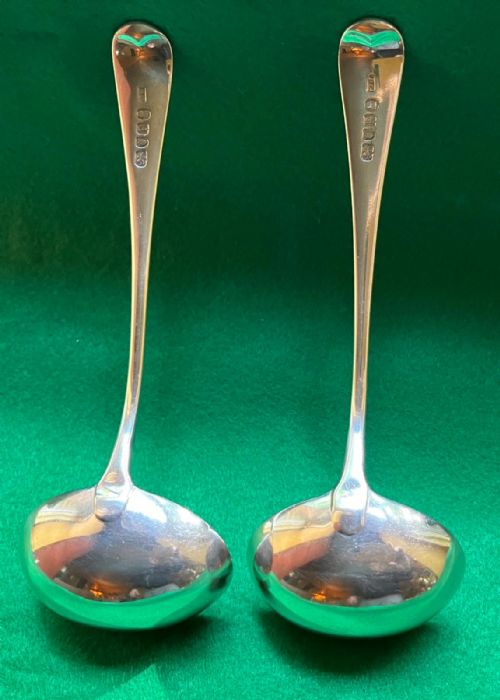
18th Century Ladle
An 18th century ladle brings the functional elegance of Georgian dining and drinking customs directly to the table.
18th Century Ladle
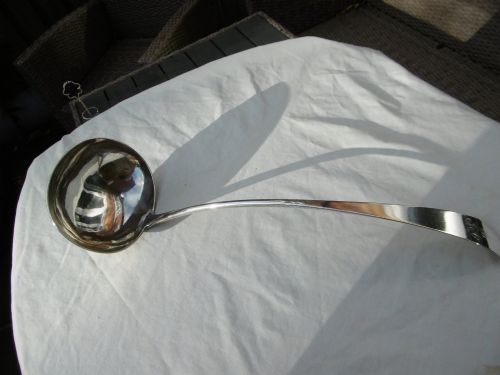
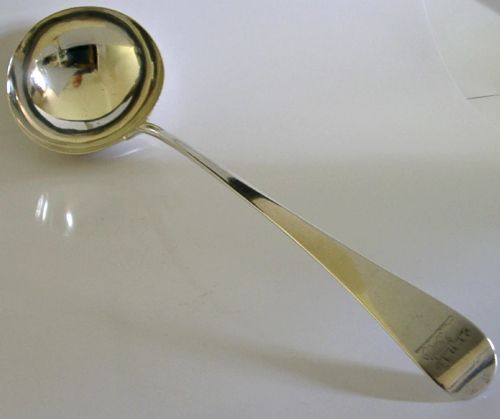
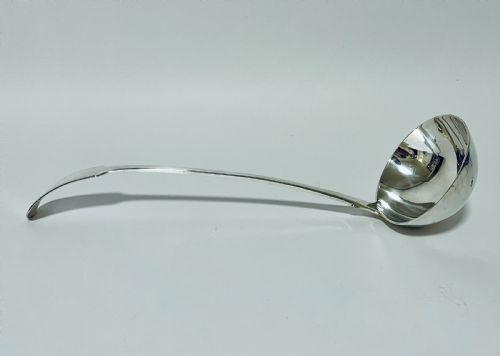
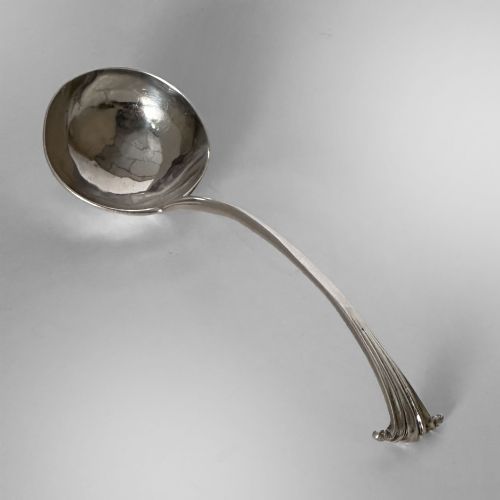
When searching for an 18th century ladle, buyers encounter a diverse range of serving utensils spanning soup ladles, punch ladles, toddy ladles, sauce ladles and caddy spoons. The most frequently met examples on this page belong to the Georgian period, often associated with Hester Bateman and other silversmiths working during the late 1700s.
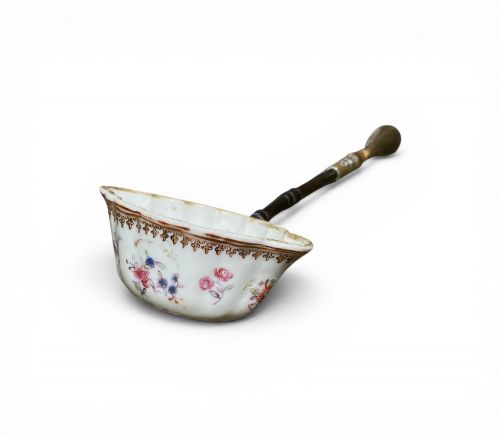
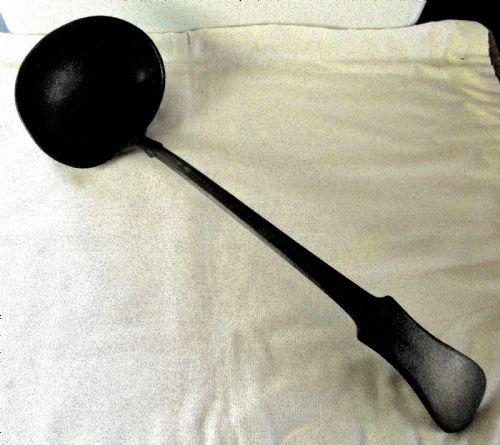
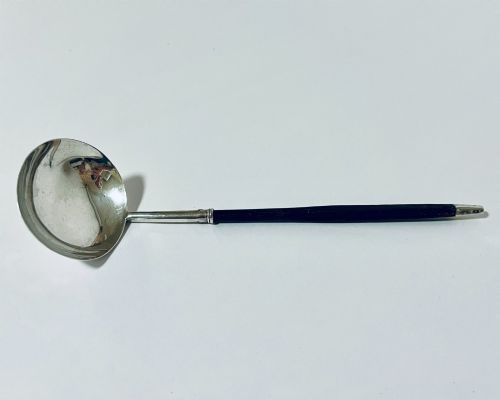
Beyond standard silver table service, these pieces encompass specialised forms designed for social drinking rituals, including punch and toddy ladles fitted with twisted whalebone, baleen, horn or wooden handles. Materials extend beyond sterling silver to encompass porcelain with famille rose decoration, pewter, enamel, and organic mediums such as coquilla nut and coconut.
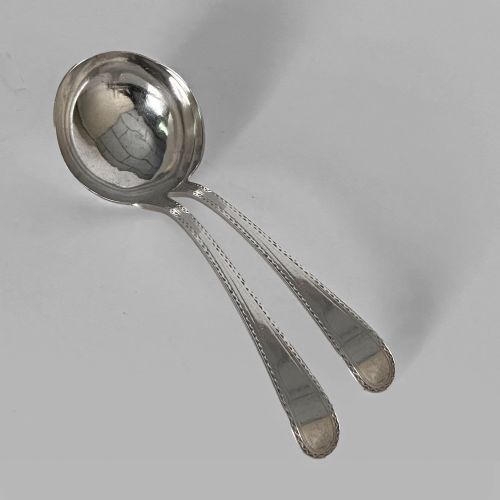
The utility of these utensils varied from large soup tureens at formal dinners to intimate punch bowls and tea caddies in domestic settings. Collectors find both plain utilitarian forms and heavily decorated examples featuring bright-cut engraving, shell bowls, and family crests.
How they were made
Silversmiths of this era typically hammered sterling silver from ingots into bowls and handles, frequently applying hallmarks to record assay office locations, date letters and maker marks. Silver components were then joined to organic materials like wood, horn, whalebone and coquilla nut using pins or metal mounts for punch and toddy ladles.
Pewter and base metal versions were cast in moulds and finished by hand, while Chinese export pieces utilised porcelain painted with famille rose enamels. Wooden and treen variations, including beechwood basting spoons and Welsh horn spoons, were shaped using traditional woodworking and heating techniques.
Whalebone handles were boiled in water so smiths could twist them into tight spirals without snapping.
What varies in quality
The calibre of a piece rests upon the weight of the metal, the clarity of the maker stamps and hallmarks, and the crispness of decorative engraving such as feather edges or bright-cut patterns. Substantial gauge silver and robust joinery between bowls and organic handles distinguish superior table pieces from lighter, purely utilitarian items.
Provenance and maker attribution elevate certain items, particularly identifiable work from known workshops like Hester Bateman, Milne and Campbell, or Michael Smith. Additionally, the preservation of fragile natural components like baleen and coconut shell without structural cracking dictates the desirability of surviving drinking vessels.
Milne and Campbell·Hester Bateman·Dixon and Son·Michael Smith
The 18th Century Ladle Glossary
- Toddy ladle
- A small drinking vessel with a bowl, often fashioned from silver, coins or shell, attached to a twisted whalebone, wood or baleen handle. These utensils were utilised for serving hot punch or spirits in eighteenth-century social settings.
- Treen
- Small handmade wooden domestic objects and utensils fashioned by turners and woodworkers. This category includes utilitarian spoons, bowls and turned handles found on mixed-media serving pieces.
- Bright-cut
- An engraved decoration technique utilising faceted angled cuts to create sparkling geometric or floral patterns on silver surfaces. It gained popularity during the late Georgian period for sauce ladles and flatware.
- Famille rose
- A palette of opaque enamels dominated by pink or rose colours, introduced to Chinese porcelain during the Qing dynasty. Pieces decorated in this style were exported to European markets alongside silver and pewter wares.
- Baleen
- The flexible keratin filtering material from the jaws of baleen whales, historically utilised for twist handles on punch ladles because it could be softened in hot water and coiled.
18th Century Ladle: Frequently Asked Questions
What is the difference between a punch ladle and a toddy ladle?
Punch ladles generally feature larger bowls and longer handles intended for serving from communal ceramic or glass punch bowls during gatherings.
Toddy ladles are typically smaller in scale, often fitted with twisted whalebone or wooden handles, designed for mixing and serving individual portions of spirits.
How do I identify a Hester Bateman ladle?
Hester Bateman pieces usually bear her distinct maker's mark, typically the initials HB in script or roman capitals, stamped alongside standard sterling silver hallmarks.
Her work frequently exhibits refined neoclassical styling, bright-cut engraving, and delicate pierced patterns on the bowl.
Are wooden and horn ladles safe to use?
Natural organic materials like beechwood, horn and coquilla nut dry out over centuries and require gentle maintenance to prevent splitting.
Most collectors preserve these items for display rather than daily culinary service to protect fragile organic handles and historic patination.
Why do some silver ladles have coins set into the bowl?
Georgian silversmiths occasionally incorporated circulating silver coins, such as George II shillings, directly into the base of punch ladle bowls.
This practice added weight to the utensil and served as a patriotic or conversational element during social drinking customs.