



18th Century Glass Chalice
An 18th century glass chalice brings heavy lead metal and deep engraving to the table, offering a tangible link to Georgian dining.
18th Century Glass Chalice
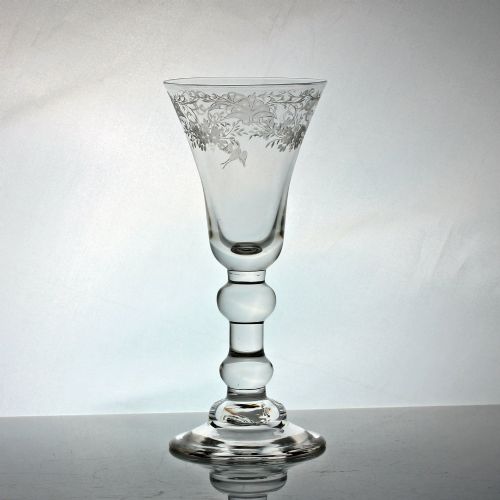
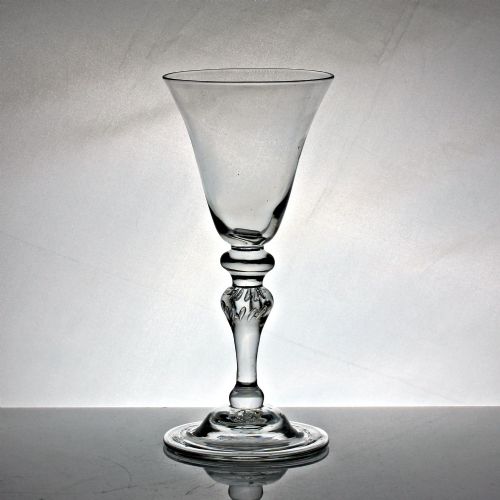
An 18th century glass chalice or goblet serves as a heavy drinking vessel from the Georgian period, often featuring engraved bowls and sturdy stems. These pieces include large ovoid bowls, plain stems, and balustroid forms that reflect the drinking customs of the era.
The pieces listed on this page span from the early 18th century up to 1800, originating from English workshops as well as continental centres such as Liege. Collectors encounter variants like light baluster marriage wine goblets, green wine glasses, and honeycomb moulded vessels.
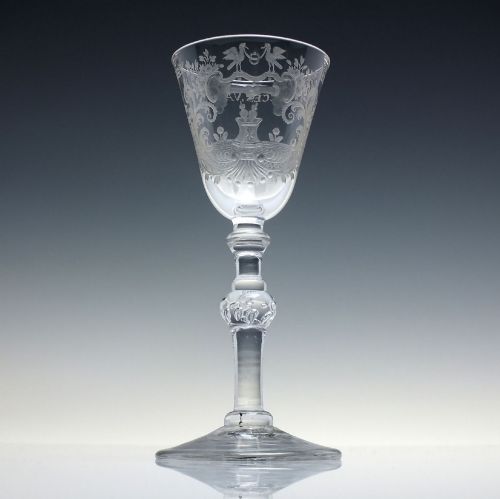
Most items grouped under this phrase are substantial wine glasses and goblets rather than delicate modern stemware. They display hand-blown characteristics, including thick feet, heavy metal composition, and occasionally monograms or floral and heraldic engravings.
How They Were Made
Makers shaped these vessels using hand-blown techniques in lead glass, clear lead glass, soda glass, and green glass. The addition of lead oxide gave the metal a heavier weight and a brilliant clarity that suited deep wheel engraving.
Stems were formed in several distinct configurations, ranging from plain stems and balustroid profiles to complex corkscrew two-ply twists. Mouding techniques created specific surface textures, such as honeycomb moulding and nut moulding on continental examples.
18th Century Glass Chalice Retail Price Guide 2026
Typical asking prices for 18th century glass chalice among the pieces listed under this phrase on Sellingantiques today, from the lower quarter to the upper quarter. They describe what is for sale here now, not the wider market.
Listings span the Georgian period from the early 18th century up to 1800, featuring lead glass, soda glass, and green glass.
What Varies in Quality
Quality in an 18th century glass chalice rests on the crispness of the engraving and the balance of the metal. Finer pieces exhibit deeply cut details like monograms or floral motifs that retain sharp edges across the bowl.
The weight and purity of the lead glass also separate standard domestic vessels from exhibition pieces. Clearer metal without excessive bubbles or cloudiness indicates superior raw materials and more skilled furnace work.
The 18th Century Glass Chalice Glossary
- Baluster
- A heavy, swelling stem form derived from architectural pillars. It provides a tactile grip and substantial weight to early drinking vessels.
- Balustroid
- A slender variation of the baluster stem, popular in mid-century glass. It retains the swelling profile in a lighter proportion.
- Lead glass
- A heavy glass composition containing lead oxide developed to increase brilliance and workability. It defines the superior weight of English table glass.
- Nut moulded
- A patterned surface created by blowing the glass into a small ribbed or panelled mould. This technique leaves distinct raised facets resembling nutshells.
- Light baluster
- A refined stem type featuring nodes and knops on a thinner profile than earlier heavy balusters. It marks a transition towards lighter mid-century forms.
18th Century Glass Chalice: Frequently Asked Questions
Were these chalices used for wine?
These vessels served primarily as wine glasses, goblets, and marriage toasts during formal Georgian dining.
Their substantial size and capacity accommodated the heavier drinks and formal toasts of the period.
How do I tell an early stem from a later one?
Early stems from the opening decades of the century tend to be heavy balusters with distinct knops and thick metal.
As the century progressed, makers favoured lighter profiles, plain stems, and intricate air or opaque twists.
Can I use an 18th century chalice daily?
Daily use remains possible for sturdy lead glass goblets, provided handlers wash them by hand in warm water.
Their heavy metal composition is surprisingly robust, though collectors often restrict them to special occasions.
What does Liege mean on a glass listing?
Liege refers to continental production from workshops in modern-day Belgium. These pieces often show distinct moulding styles like honeycomb patterns.
Continental glass makers used different soda and potash formulas compared to English lead glass houses.
Why do some glasses have engraved monograms?
Engraved monograms and dates marked specific life events such as marriages, alliances, or family milestones.
Specialist glass engravers applied these decorative details to plain bowls using diamond-point or wheel-cutting techniques.