
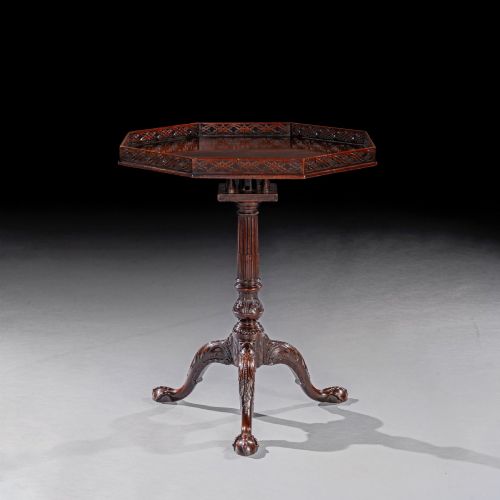
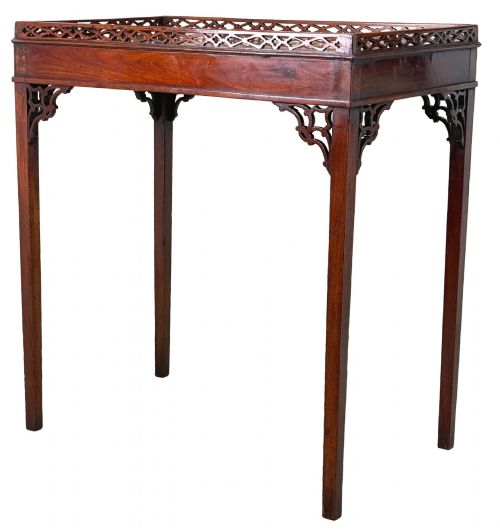
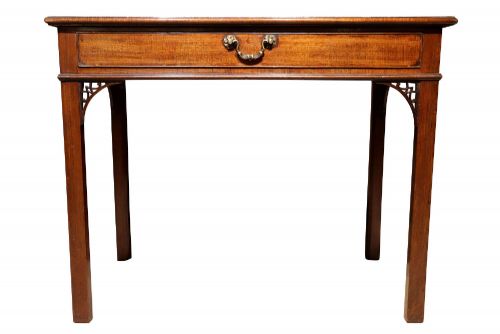
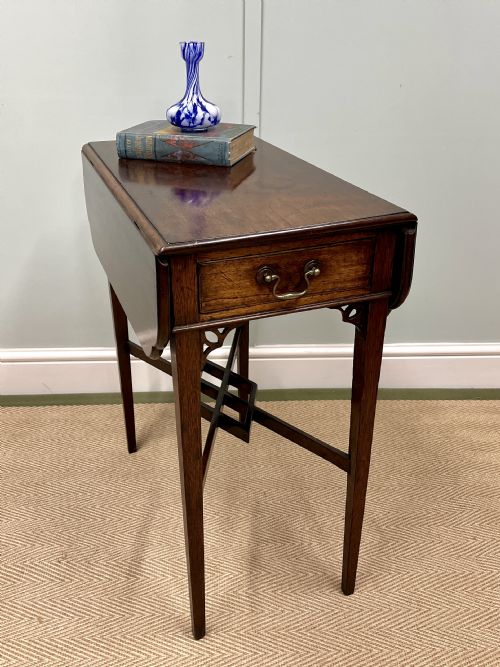


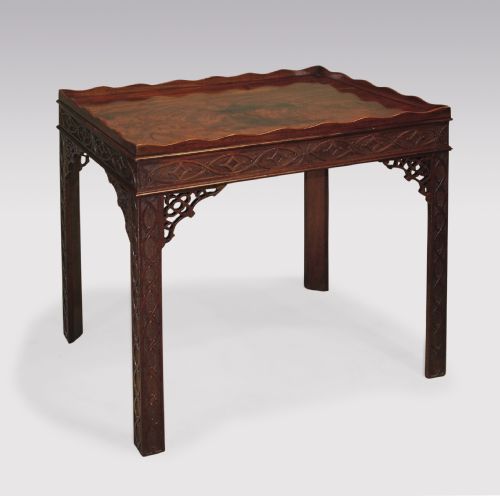

18th Century Fretwork Table
These pieces known as an 18th century fretwork table combine dense timber with intricate pierced carving, offering collectors a striking centrepiece.
18th Century Fretwork Table
Buyers seeking an 18th century fretwork table encounter forms ranging from side tables and silver tables to card tables, pembroke tables, lowboys, and occasional tables, spanning periods from the mid eighteenth century into the nineteenth century.
The evidence shows examples built in forms such as tripod tables, tea tables, supper tables, and desks, reflecting the diverse domestic functions these wooden pieces served in period interiors.
Originating largely within Georgian, George III, and Chippendale styles, along with Chinese Chippendale and Qing Dynasty influences, the selection combines British cabinetmaking traditions with exotic decorative motifs.
Materials and construction
Makers constructed these pieces predominantly using mahogany and walnut, complemented occasionally by oak, elm, giltwood, brass, glass, and leather for functional or decorative effect.
Craftsmen applied intricate pierced brackets, fretwork patterns, and concertina actions to tables, silver tables, and lowboys, uniting structural timber with detailed surface carving.
Object forms on this page span from silver tables and pembroke tables to altar tables, toilet mirrors, and candle stands.
Assessing quality and craftsmanship
The standard of an 18th century fretwork table rests upon the crispness of the pierced carving and the selection of dense, richly figured timber such as mahogany or walnut.
Superior examples demonstrate refined proportions and sophisticated joinery, whereas simpler pieces rely on plain surfaces with minimal decorative detailing.
The 18th Century Fretwork Table Glossary
- Fretwork
- Ornamental design created by piercing timber with a fretsaw to form intricate geometric or interlaced patterns. This technique defines the visual character of many eighteenth century tables.
- Pembroke table
- A small, versatile table featuring two hinged drop leaves and a central drawer. It gained popularity during the Georgian period for breakfast or writing use.
- Lowboy
- A small kneehole dressing table or side table standing on four tall legs, typically fitted with one or more drawers. Walnut and oak examples appear frequently in eighteenth century rooms.
- Concertina action
- An expanding frame mechanism used primarily on card tables to support a folding top when opened. It allows the rear legs to move outwards symmetrically.
- Tripod table
- A freestanding small table supported by a pillar on three spreading feet. These versatile pieces served as candle stands or tea tables.
18th Century Fretwork Table: Frequently Asked Questions
What is a fretwork table?
An 18th century fretwork table is a wooden furnishing characterised by pierced or openwork carved decoration on brackets, aprons, or gallery rails. These pieces include silver tables, card tables, and side tables.
Craftsmen built them primarily in mahogany and walnut during the Georgian and Chippendale periods, utilising intricate fret patterns influenced by English and Chinese designs.
How were silver tables used?
Silver tables served as display surfaces for expensive silver tea services and porcelain during the eighteenth century. Their raised edges and pierced galleries prevented items from sliding off.
In prosperous households, these tables occupied prominent positions in reception rooms to demonstrate the host's wealth and refined taste.
What is a Pembroke table?
A Pembroke table is a compact drop-leaf table designed for versatile daily use in Georgian interiors. The hinged flaps on either side allow the table to expand or contract easily.
They frequently feature a single drawer and stood in parlours or bedrooms for writing, needlework, or serving small meals.
How do I identify a Chippendale piece?
Chippendale style furniture is identified by its adherence to the design vocabulary published by Thomas Chippendale, featuring Gothic, Rococo, and Chinese carved motifs. Look for detailed fretwork brackets and solid mahogany construction.
Many pieces date from the mid-eighteenth century through to later nineteenth-century revival periods inspired by the original designs.