
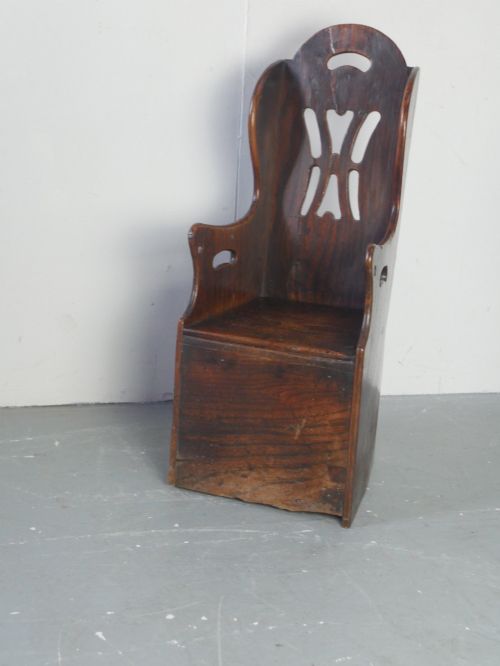


18th Century Child Seat
These 18th century child seat examples offer genuine domestic history, combining robust regional carpentry with miniature forms designed for the youngest household members.
18th Century Child Seat
When you search for an 18th century child seat, you encounter practical domestic seating produced across the Georgian era, ranging from simple vernacular forms to scaled-down versions of adult furniture. These survivals span high chairs, armchairs, rocking chairs, and stick-back windsors made to accommodate children in historic homes.
The most common examples on this page hail from the Georgian period and English country traditions, utilising local timbers like elm, ash, and oak alongside finer woods such as mahogany and walnut. Makers built these chairs with sturdy proportions, sometimes incorporating table attachments or floor stands to keep youngsters secure during meals and lessons.
Regional variations appear frequently, connecting specific pieces to Welsh country workshops, rustic farmhouse aesthetics, or continental examples like Dutch folk art. Alongside full-sized infant seating, the category occasionally includes doll furniture and related portraiture documenting how these objects were used in period interiors.
How they were made
Joiners and country craftsmen constructed these seats using solid native hardwoods, shaping elm, ash, oak, and yew into durable frames that could withstand daily nursery use. Windsor designs relied on steam-bent members and turned spindles, while formal mahogany and walnut pieces employed traditional mortise and tenon joinery.
Seating surfaces often featured woven rush or plain wooden planks, occasionally complemented by upholstered elements in fabric or tapestry. Metal components like brass fixings appeared on high chairs and transforming table combinations to secure moving parts safely.
Listings feature periods spanning the eighteenth century, including specific dates from the seventeen-hundreds through the early Georgian era.
What varies in quality
The distinction between ordinary utility items and superior examples lies in the choice of timber and the sophistication of the turning. Master turners working in yew or figured mahogany produced refined spindle backs and elegant arm supports, whereas basic vernacular pieces relied on straightforward, unadorned construction.
Proportion and originality dictate the standing of a piece within this category, as chairs retaining their original stands, table attachments, or early surfaces hold greater historical integrity. Skilled regional craftsmanship elevates simpler country items into compelling works of folk art.
Francis Alleyne·John Russell
The 18th Century Child Seat Glossary
- Windsor chair
- A chair built with a solid wooden seat into which the legs and back spindles are directement inserted. These stick-back designs often feature curved backbows shaped from steam-bent ash or yew.
- High chair
- A raised seat elevated on long legs or a separate wooden stand to bring a child up to table height. Many include fixed trays or wooden safety bars.
- Spindle back
- A chair back constructed from a series of slender turned vertical rods fitted between a top rail and the seat. This method provided lightweight strength for vernacular seating.
- Rush seat
- A seating platform woven from dried marsh grasses twisted into cords. Country makers utilised this flexible material for comfort before the introduction of upholstered pads.
- Vernacular furniture
- Objects built by local tradesmen using regional traditions rather than metropolitan academic designs. These pieces prioritise practical function and available local timbers.
18th Century Child Seat: Frequently Asked Questions
How were these child seats used daily?
Families employed these miniature chairs around the dining table, nursery, and hearth, often utilising high chairs or chair-and-table combinations to keep young children contained during meals.
Rocking chairs and low armchairs provided comfort for resting or playing, serving as central pieces of domestic furniture within the historic home.
How do I live with an 18th century child seat?
These compact pieces integrate easily into modern rooms as decorative accents, side displays, or stands for small plants and books.
Place them away from direct heat sources and strong sunlight to protect historic timber surfaces, dry joints, and original rush or fabric elements.
How can I tell the regional styles apart?
Regional pieces display distinct characteristics tied to local materials, such as Welsh oak construction or English country use of elm and ash.
Continental examples, including Dutch folk art pieces, often feature specific carved decoration and painted finishes that differentiate them from standard British vernacular work.
What woods were used for these chairs?
Makers selected timbers based on availability and the intended formality of the seating, employing sturdy regional woods like elm, ash, oak, and yew for country Windsor and spindle chairs.
Finer urban workshops favoured imported mahogany and walnut for formal high chairs and miniature armchairs destined for wealthier households.