




18th Century Brassware
These pieces of 18th century brassware bring genuine period warmth and practical utility to a room through heavy cast and seamed metal.
18th Century Brassware
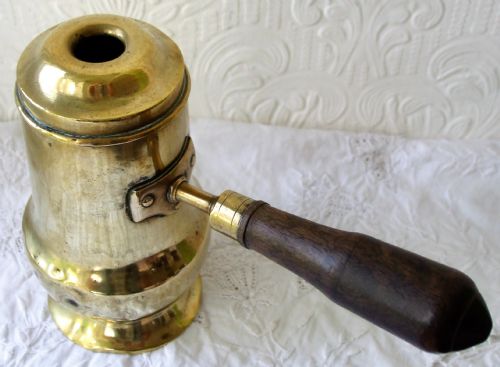
When you search for 18th century brassware, you are looking at domestic metalwork used for lighting, hearth management, and food preparation in Georgian homes. Candlesticks dominate the selection, appearing alongside fireplace footmen, chocolate pots, and apothecary mortars with pestles.
The versions you are most likely to meet on this page date from the 18th century and the Georgian period, with occasional pieces from the Low Countries or styled to Queen Anne and George II aesthetics. These items were built for daily household service rather than display cabinets.
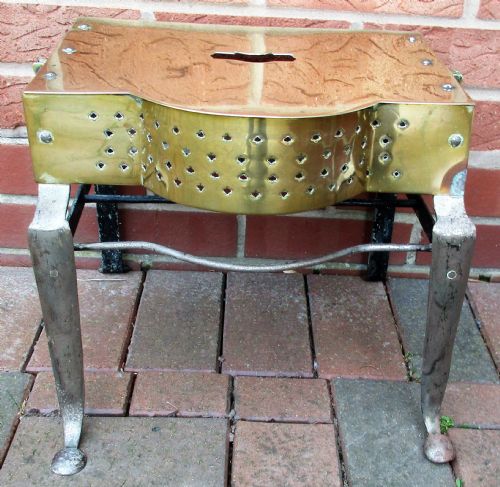
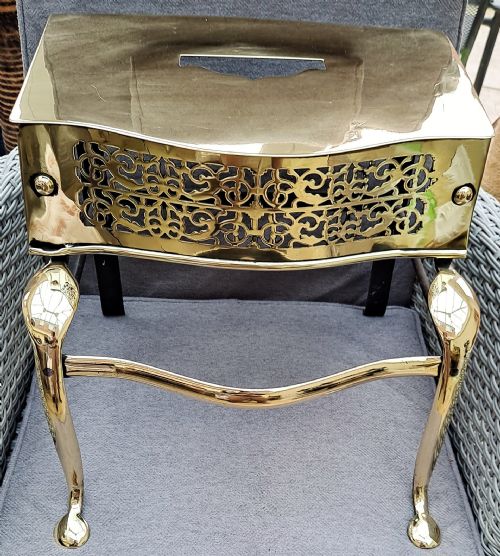
Forms range from seamed ejector candlesticks with internal mechanisms to heavy bell metal vessels and pierced brass and steel hearth footmen. Each object reflects the utilitarian needs of its era, shaped by contemporary domestic habits.
How they were made
Makers utilised cast brass, seamed sheet brass, and bell metal to form the body of each object, frequently combining iron and steel for structural strength in hearth accessories like footmen. Casting allowed for sturdy sockets and heavy bases on candlesticks, while seamed construction involved rolling and joining sheet metal.
Bell metal provided a harder, more resonant alloy for mortars and certain candlesticks, offering durability for grinding and daily handling. Iron and steel components were integrated into footmen to withstand the direct heat of the coal fire.
18th Century Brassware Retail Price Guide 2026
Typical asking prices for 18th century brassware among the pieces listed under this phrase on Sellingantiques today, from the lower quarter to the upper quarter. They describe what is for sale here now, not the wider market.
Listings feature items from the 18th century, 19th century, and specific years such as 1700 and 1750, spanning Georgian and Queen Anne styles.
What varies in quality
The distinction between standard domestic items and finer examples rests on the crispness of the casting and the integrity of the original construction. Heavy gauge metal and well-defined mouldings distinguish superior candlesticks and footmen from simpler utility pieces.
Proportion and balance also govern quality, particularly in pairs of candlesticks where matching heights and uniform turnings indicate careful workshop practices. The survival of original operational parts, such as internal ejector mechanisms, elevates the merit of a piece.
The 18th Century Brassware Glossary
- Bell metal
- A hard alloy of copper and tin that produces a resonant sound when struck. It was frequently used for mortars and durable candlesticks.
- Ejector candlestick
- A lighting device featuring an internal sliding mechanism to push out the remaining wax stump. This design aided in cleaning and candle maintenance.
- Footman
- A metal stand placed in front of a fireplace to keep food or kettles warm. These pieces typically combine a brass top with iron or steel legs.
- Mortar and pestle
- A heavy bowl and club-shaped tool used for grinding and crushing ingredients. Apothecary and domestic versions appear in brass and bell metal.
18th Century Brassware: Frequently Asked Questions
How do I clean antique brass?
Dust gently with a soft dry cloth to preserve the natural oxidation and accumulated patina. Avoid harsh chemical polishes that strip away the aged surface.
Active scrubbing destroys the historical character built up over centuries. Leave the metal to age naturally in its environment.
Were these pieces made in pairs?
Many lighting items were produced as matching pairs for mantelpieces or dining tables. Single pieces also survive from larger sets.
Matching pairs command higher interest from collectors seeking symmetry. Check the proportions and base turnings to confirm they started together.
What is bell metal?
Bell metal is a specific bronze alloy containing higher copper and tin content than standard brass. It yields a harder and more sonorous material.
This composition made it ideal for items subjected to heavy impact or friction. Mortars frequently utilised this durable alloy.
How were ejector candlesticks used?
The internal stem allowed the user to raise the remaining candle stub for removal. This prevented stuck wax from accumulating inside the socket.
It represented a clever mechanical solution to a common household annoyance. The sliding bar sits flush when lowered.