


Georgian Fluted Candlesticks
Georgian fluted candlesticks bring architectural dignity to a room, offering refined candle lighting through classical proportions and fluted column designs.
Georgian Fluted Candlesticks
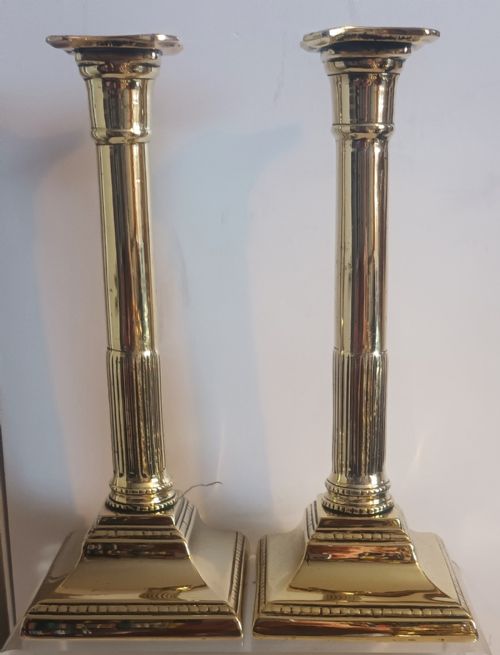
Georgian fluted candlesticks are lighting items produced across the Georgian period and subsequent eras, drawing on classical architectural motifs like columns and fluting. You will encounter pairs and single pieces cast or turned in various metals and timbers.
The materials span brass, bell metal, copper, sterling silver, silver plate, Old Sheffield plate, and mahogany. Brass and mahogany examples feature prominently, often incorporating contrasting metal sockets or sconces.
Forms range from compact table candlesticks to tall column designs and extending mechanisms. While the core style reflects Georgian and Neoclassical design principles, pieces appearing under this search also span Regency, Victorian, and later twentieth-century revivals.
Materials and construction methods
Metal candlesticks utilise casting techniques for brass, bell metal, and silver, forming structural columns and weighted bases. Sheffield plate and silver plate apply thin layers of silver over copper or base metal cores.
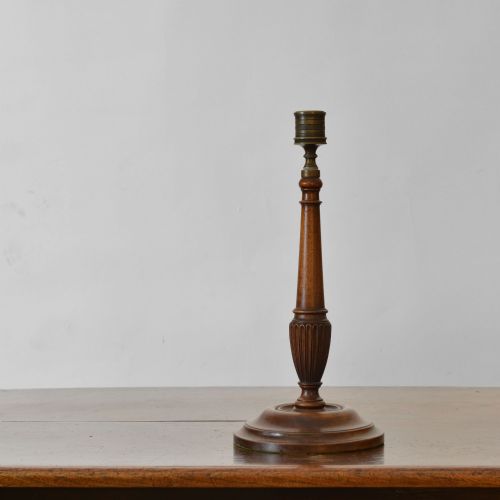
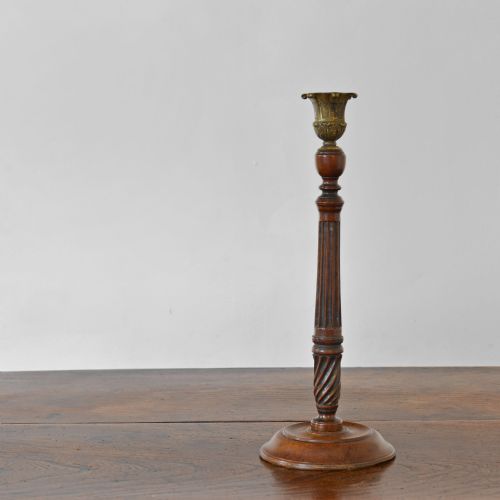
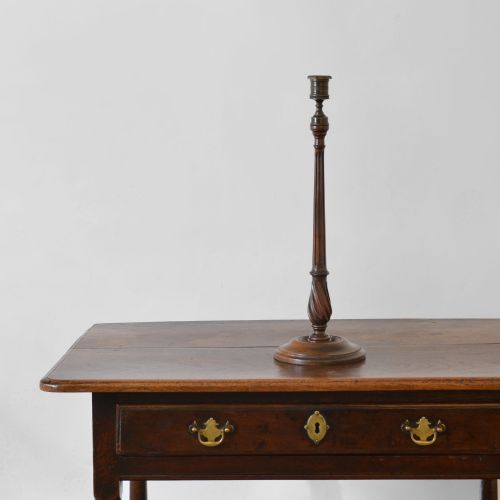
Timber examples employ mahogany turned on a lathe to create the column shaft, frequently paired with cast brass sockets and weighted bases for stability.
Listings feature candlesticks spanning brass, sterling silver, bell metal, Old Sheffield plate, and mahogany.
Evaluating quality and execution
Quality rests in the crispness of the fluting and the proportional balance between the base, column, and sconce. Finer metal castings display sharp architectural detail without softening from wear or recasting.
In plated and composite pieces, the integrity of the junctions between timber and metal, alongside the preservation of original removable sconces, determines the standing of the piece.
The Georgian Fluted Candlesticks Glossary
- Sconce
- The detachable top pan or nozzle fitted into the socket to catch melting wax drips. It protects the main body of the candlestick.
- Bell metal
- An alloy of copper and tin traditionally used for bells, yielding a resonant bronze-like metal suited to durable casting. It appears in several early candlestick forms.
- Old Sheffield plate
- A composite material formed by fusing a sheet of silver to a copper ingot, developed in the eighteenth century. Items made this way show characteristic thin seams where the metals join.
- Neoclassical
- A style dominating late eighteenth-century design, drawing inspiration from classical Greek and Roman architecture. It introduces straight columns and geometric fluting.
- Extending candlestick
- A mechanical design featuring an internal screw or slide mechanism to adjust the height of the candle. This allows the column to alter for different lighting requirements.
Georgian Fluted Candlesticks: Frequently Asked Questions
What metals are these candlesticks made from?
The selection includes cast brass, bell metal, copper, sterling silver, and silver plate. Old Sheffield plate also appears among the listed items.
Some pieces combine turned mahogany with brass components, creating a contrasting two-tone appearance.
Are removable sconces standard on these pieces?
Many examples include matching removable sconces fitted into the top socket. These small pans catch melting wax during use.
Surviving with their original sconces adds considerably to the completeness of an antique candlestick.
How do I distinguish mahogany candlesticks from metal ones?
Mahogany versions utilise turned timber shafts for the main column body, often paired with brass sockets at the top and weighted bases below. Metal versions are cast entirely in brass, bell metal, or silver.
Timber pieces rely on carpentry and lathe work rather than foundry casting.
Do these pieces date strictly to the Georgian era?
While many originate from the Georgian period, the selection also spans nineteenth-century production, Regency styles, and twentieth-century silver and metalwork.
Revival pieces from later periods frequently replicate earlier Georgian architectural forms.