



18th Century Bocage Figures
These 18th century bocage figures combine soft-paste porcelain with leafy foliage to create decorative table centrepieces that collectors prize for their intricate sculptural detail.
18th Century Bocage Figures
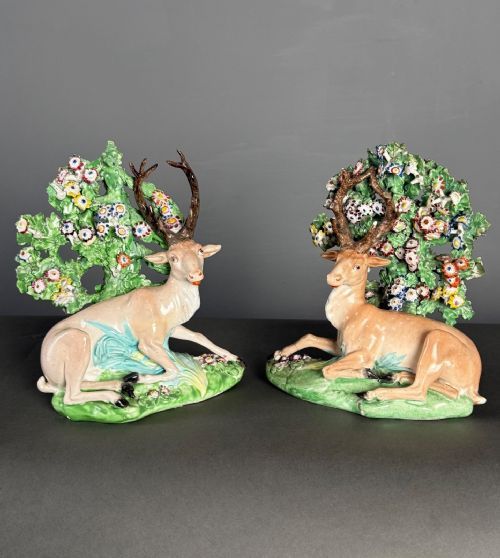
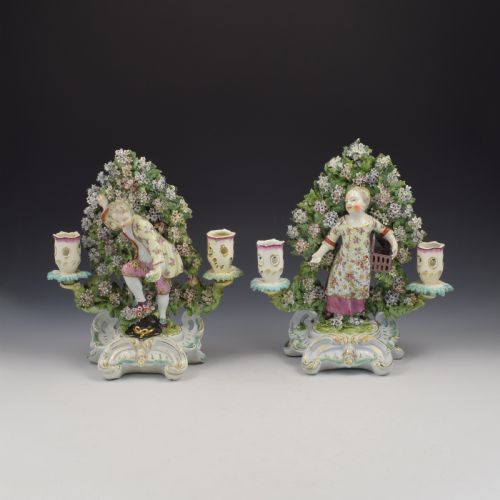
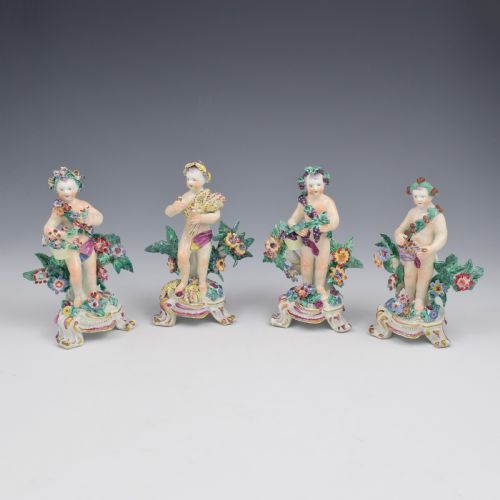
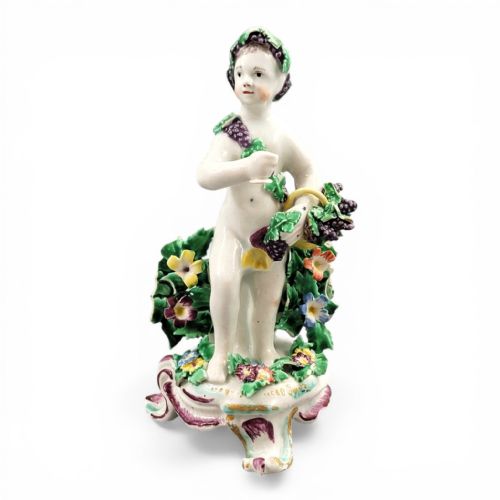
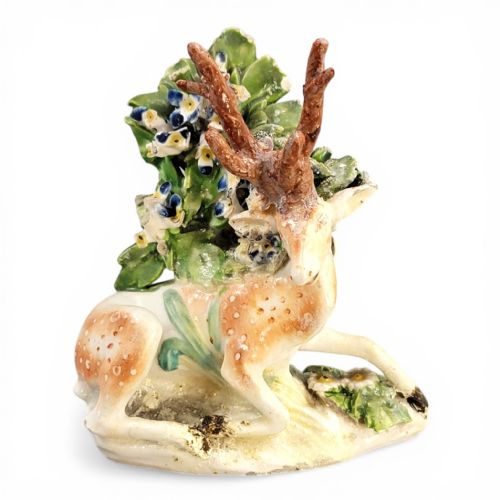
When you search for 18th century bocage figures, you encounter porcelain figurines entwined with applied leafy bowering, often functioning as candlesticks or candelabra. The forms on this page include allegorical children, musicians, and animals such as stags.
The objects stem from the Georgian period, specifically the middle and later decades of the eighteenth century. Factories such as Derby and Bow dominate the offerings, occasionally joined by continental works like Meissen.
Many of these pieces serve as practical lighting devices alongside their sculptural value. Candlestick variants incorporate sockets supported by or mounted amidst the porcelain foliage.
What Varies in Quality
The crispness of the modelled foliage and the delicacy of the applied flowers distinguish finer examples from heavier, less detailed work. Skilled modellers achieved realistic depth within the leafy background.
The precision of the overglaze enamel painting and the vibrancy of the gilding affect the overall visual impact. Superior pieces retain clear, well-defined facial expressions and carefully shaded garments.
Stags with leafy headgear gaze serenely from porcelain thickets, defying any practical notion of household illumination.
Derby Porcelain·Bow Porcelain·Meissen
The 18th Century Bocage Figures Glossary
- Bocage
- A decorative background of applied leaves and branches made from porcelain. This leafy screen wraps behind or around the main figures.
- Soft-Paste Porcelain
- A vitreous ceramic composition fired at lower temperatures than hard-paste porcelain. It exhibits a warm tone under glaze.
- Patch Period
- A phase in Derby porcelain manufacturing characterised by three unglazed kiln-support marks on the base. This helps date pieces to the mid-eighteenth century.
- Overglaze Enamel
- Pigments fused onto the fired glaze surface in a second, lower-temperature firing. This technique permits a wide palette of pastel hues.
18th Century Bocage Figures: Frequently Asked Questions
What is a bocage figure?
A bocage figure is an eighteenth-century porcelain sculpture featuring a background of applied leafy foliage. These pieces often depict mythological scenes, musicians, or animals.
Many examples double as functional candlesticks, integrating sconces into the leafy ceramic branches.
How do I date an 18th century figure?
Dating relies on examining the porcelain body, paste consistency, and any factory marks present on the base. Patch marks on Derby pieces, for instance, point to specific mid-century production phases.
Stylistic cues such as Rococo curves and the presence of early enamel palettes also help narrow down the period of creation.
Where were these figures made?
English factories such as Derby and Bow produced the majority of the examples found in this category. These workshops led early English porcelain manufacturing during the Georgian era.
Continental factories like Meissen also exported similar sculptural and candelabra pieces to British buyers.
How should I display them?
Display these delicate porcelain objects on secure mantelpieces or within enclosed cabinets away from heavy foot traffic. Their intricate leaves require careful placement to prevent accidental knocks.
Keep them away from direct sunlight to preserve the stability of the overglaze enamels and gilding over time.