


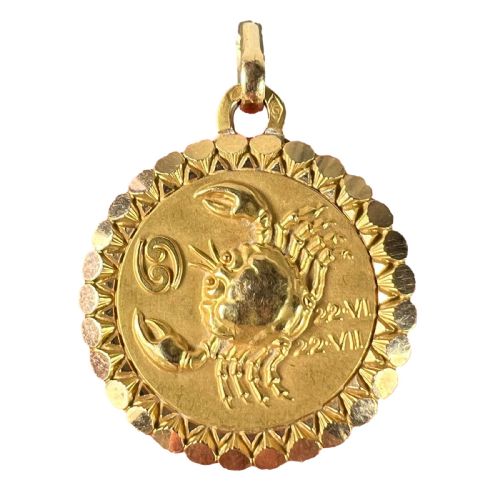


18ct Yellow Gold Medallion
An 18ct yellow gold medallion brings wearable artistry in high-carat precious metal from the late nineteenth century through the mid-twentieth century.
18ct Yellow Gold Medallion
When searching for an 18ct yellow gold medallion, collectors encounter an array of French religious medals, zodiac charms, and floral pendants. The selection spans the Edwardian era through the nineteen-fifties, capturing distinct periods of design including Art Nouveau and Mid-Century aesthetics.
Most examples originate from French workshops and feature depictions of the Virgin Mary, saints, Madonna and child, or astrological star signs. These wearable works come in various configurations, functioning equally well as standalone pendants or combined charm medals.
How they were made
The pieces rely primarily on 18ct yellow gold, sometimes paired with white gold sections, worked into detailed medallions and charms. Artisans incorporated gemstones such as diamond, ruby, pearl, and sapphire, alongside decorative touches like plique-à-jour enamel and shagreen.
Makers utilised casting and hand-carving techniques to shape floral motifs, shield outlines, and religious iconography with fine relief. Skilled hands set small stones into clusters or highlighted radiating sunburst designs and architectural window enamel.
Among the celestial charts and saintly visages, an unexpected 18ct gold dog house charm waits for a lucky owner.
What varies in quality
Quality also shows in the integration of accent materials, such as the exact alignment of pavé-set diamonds or the translucency of enamel work. Pieces bearing recognisable artist signatures generally exhibit superior execution and sculptural weight.
Perroud·Monier·Pageli Perriat·Guilbert·Emile Dropsy·Sellier·Ovide Yencesse·Becker·Charl·Grun·Augis·Serraz
The 18ct Yellow Gold Medallion Glossary
- Medallion
- A large metal pendant, typically circular or oval, struck or cast with pictorial designs on one or both sides. These objects often commemorate religious figures or significant personal motifs.
- Plique-à-jour
- An enamelling technique where enamel is applied in cells without a backing, resembling miniature stained glass that allows light to pass through. This method requires considerable skill to avoid cracking.
- Carat
- A unit measuring the purity of gold, where 18ct denotes an alloy containing seventy-five percent pure gold. This proportion provides a rich warmth while maintaining durability for daily wear.
- Zodiac
- A classification of astrological star signs depicted on decorative charms from the early to mid-twentieth century. These symbols translate celestial iconography into wearable personal statements.
- Relief
- A sculptural technique where figures project from a flat background. High relief creates strong shadows and three-dimensional depth on the face of the medal.
18ct Yellow Gold Medallion: Frequently Asked Questions
How can I tell the period of a pendant?
Dating relies on stylistic clues, such as the flowing organic lines typical of Art Nouveau pieces or the geometric restraint of mid-century design. Maker signatures and French hallmarks stamped onto the metal also provide historical context.
Examining the manufacturing technique helps narrow down the timeframe. Enamelling styles and gemstone settings often reflect the prevailing aesthetic of their decade of origin.
Were these pieces worn every day?
Many religious medals and charm pendants were designed for daily wear on chains or charm bracelets as personal talismans. The durability of 18ct gold ensured they withstood regular handling while retaining their polished finish.
Owners often accumulated multiple charms over time to mark significant life events or personal devotions. This creates a rich narrative history visible on many surviving examples.
How do I care for antique gold jewellery?
Maintenance requires gentle cleaning with warm soapy water and a soft cloth to preserve the polished gold surfaces and delicate enamel work. Harsh chemical dips should be avoided, especially on pieces containing pearls or enamel.
Storing each pendant separately prevents scratching from other items in a collection. Regular checks by a jeweller ensure that stone settings and suspension loops remain secure.