


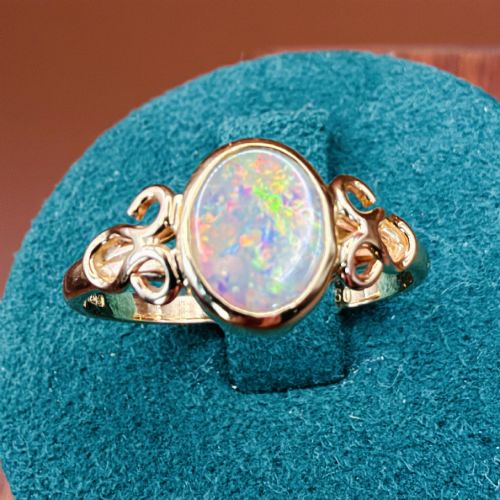
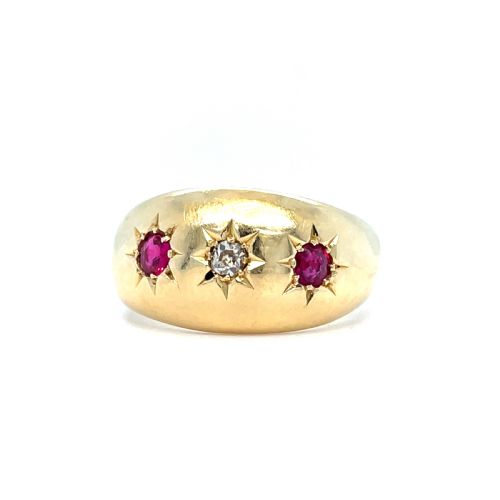
18ct Yellow Gold Dress Ring
An 18ct yellow gold dress ring brings together rich metalwork and bright stones from Victorian, Edwardian and mid-century eras for daily wear.
18ct Yellow Gold Dress Ring
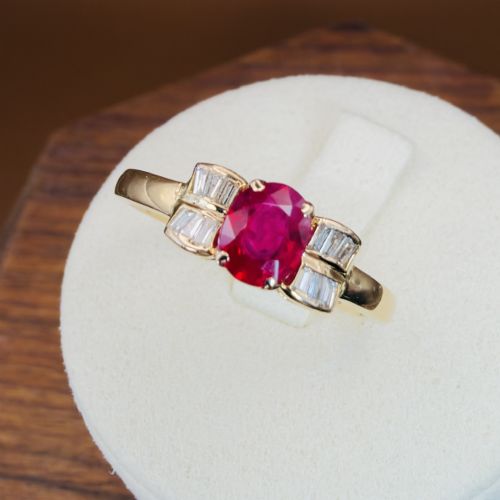
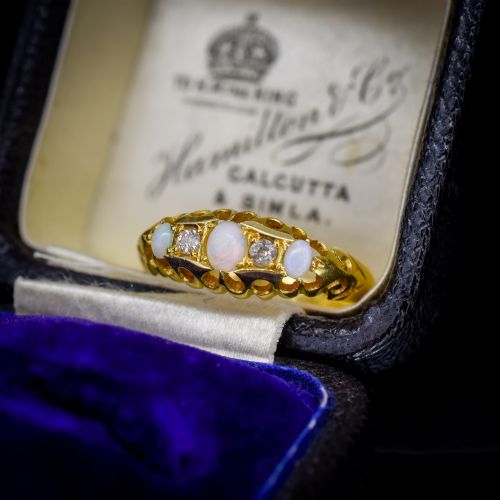
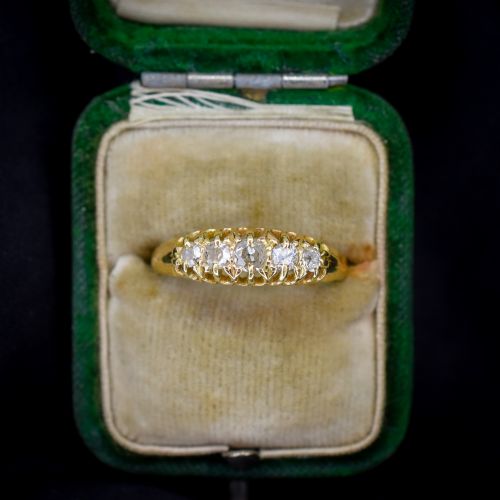
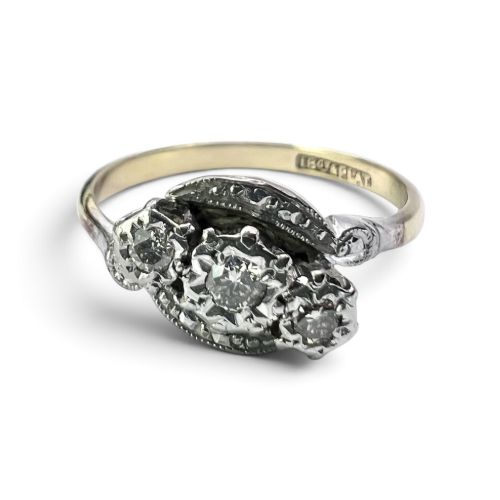
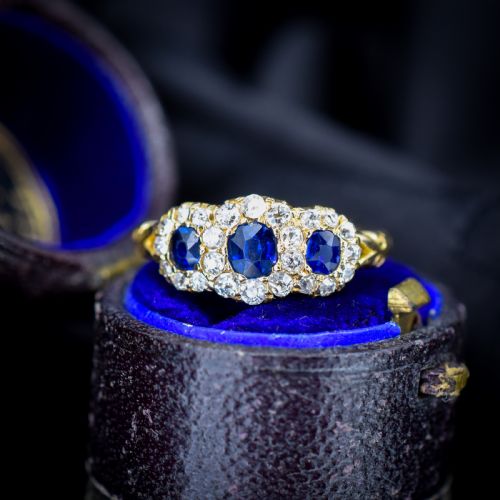
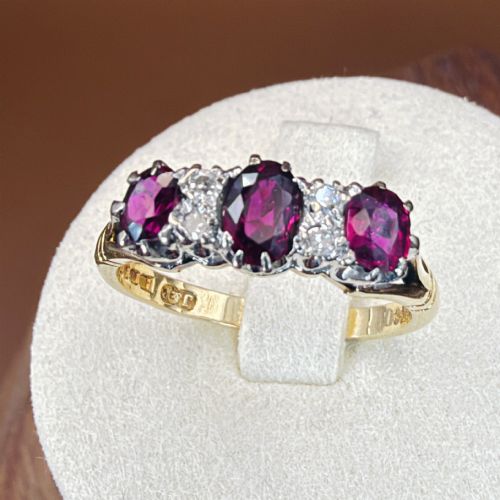
An 18ct yellow gold dress ring is a statement piece designed primarily for adornment rather than betrothal, appearing frequently in cluster, boat, navette and multi-stone configurations. The pieces on this page span the late nineteenth century through to the modern decades of the mid-twentieth century, showing distinct shifts in taste from elaborate Victorian clusters to streamlined Art Deco geometries.
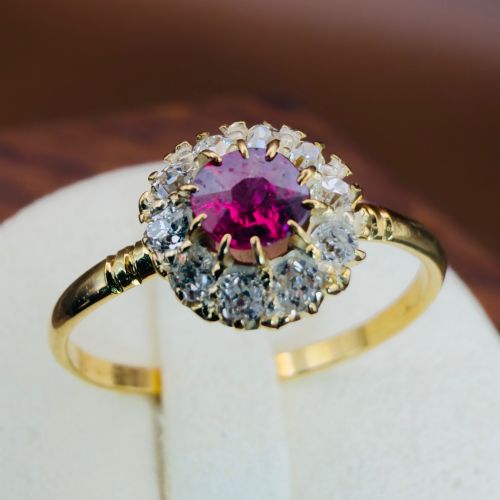
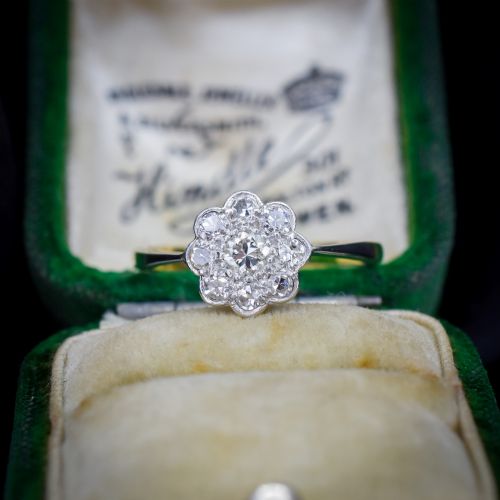
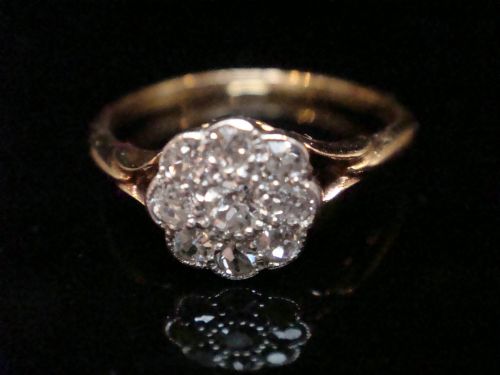
The most common form encountered here is the Edwardian or late Victorian cluster, where a central diamond, ruby, sapphire or opal is encircled by smaller gems. These arrangements utilise the warm tone of 18ct yellow gold as a foundational frame, often contrasting it with platinum settings on the face to make white diamonds appear brighter.
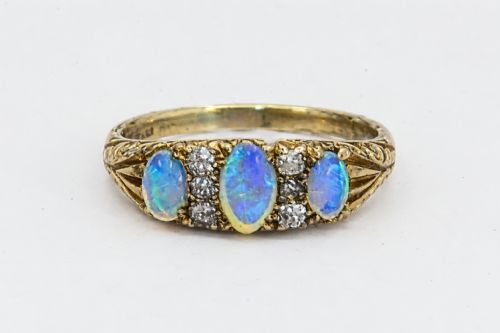
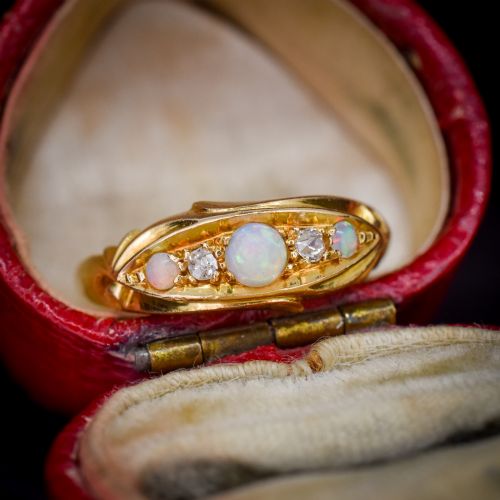
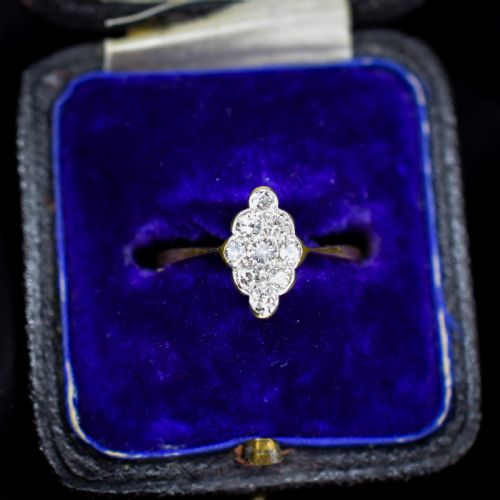
Navette and boat shapes also feature strongly among the selections, stretching horizontally across the finger with delicate milgrain edges and pierced galleries. Alongside these ornate designs, simpler three-stone, five-stone and gypsy settings provide a more restrained silhouette rooted in the same rich metal.
Materials and Construction
The primary structural metal is 18ct gold, selected for its durable balance of purity and strength, frequently paired with platinum sections on the top surface during the Edwardian period to securely hold melee stones. Stones such as old cut diamonds, natural opals, rubies, sapphires and emeralds are hand-set into claw, bezel or flush mountings that reflect the prevailing technology of their respective decades.
Makers employed casting and hand-fabrication techniques, incorporating engraved shoulders, openwork galleries and bead-set borders that require considerable bench skill. The integration of contrasting gemstones into coherent motifs demonstrates high proficiency in lapidary work and precious metal manipulation.
Several rings proudly display Chester assay office marks from an era when river trade brought bustling activity to the city's jewellers.
Distinctions in Execution
Quality in these rings rests upon the harmony of the design and the precision of the stone setting, where top-tier examples display balanced proportions and meticulous hand-finishing along the gallery. The choice and matching of secondary stones around a central gem also dictate the overall success of a cluster or multi-stone layout.
Heavier gauge shanks that retain their original thickness and crisp hallmarks provide better longevity than pieces thinned by decades of resizing and heavy wear. Superior examples maintain sharp details in engravings and secure, well-formed claws that protect the integrity of the gems.
Kutchinsky
The 18ct Yellow Gold Dress Ring Glossary
- Boat ring
- A ring featuring a curved, boat-shaped face that typically tapers towards the shoulders and houses a row of graduated gemstones. This silhouette was particularly popular during the late Victorian and Edwardian eras.
- Navette
- A boat-shaped or marquise-like design that is elongated along the finger, often detailed with intricate openwork metal and clustered stones. The shape creates a large visual presence on the hand.
- Old cut
- A diamond cutting style prevalent before modern brilliant standards were established, characterised by a smaller table, higher crown and open culet. These stones display a softer, chunkier scintillation under candlelight.
- Cluster
- An arrangement where a prominent central gemstone is surrounded by a border of smaller stones. This format maximises the visual impact and play of light across the face of the ring.
- Gypsy ring
- A style where stones are flush-set directly into a heavy, continuous band of metal that tapers towards the back. The smooth profile makes it practical for continuous wear.
18ct Yellow Gold Dress Ring: Frequently Asked Questions
How do I care for antique rings?
Caring for antique rings involves gentle handling and regular inspection of the settings to ensure stones remain secure in their original mountings. Because these pieces have survived for generations, removing them during rigorous physical activities prevents unnecessary strain on the metal.
Cleaning should be done with mild soapy water and a soft brush, avoiding harsh chemical dips that can damage softer stones like opals or pearls.
How can I tell the period of a ring?
The period of a ring can often be determined by examining the cut of the stones, the mounting style and any accompanying hallmarks stamped inside the shank. For instance, transitional and old cut diamonds combined with platinum-topped gold point firmly towards the Edwardian era.
Maker's marks, assay office symbols and specific date letters provide precise chronological markers for British pieces.
Were these rings worn daily?
Many of these rings were worn frequently by their original owners, reflecting the durability of 18ct gold as a foundational material for jewellery. Sturdier constructions like gypsy rings and heavy band clusters handled everyday life with ease.
More delicate pierced navette or multi-stone settings required greater care, a factor that influences how they are worn today.