

18ct Gold Three Stone
These historic 18ct gold three stone rings and related forms offer enduring symbolism through carefully balanced gems set in precious metal.
18ct Gold Three Stone
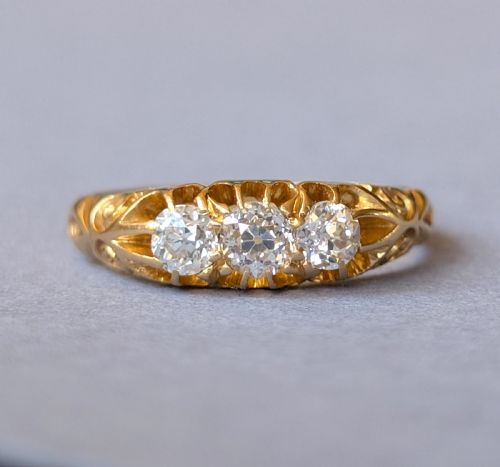
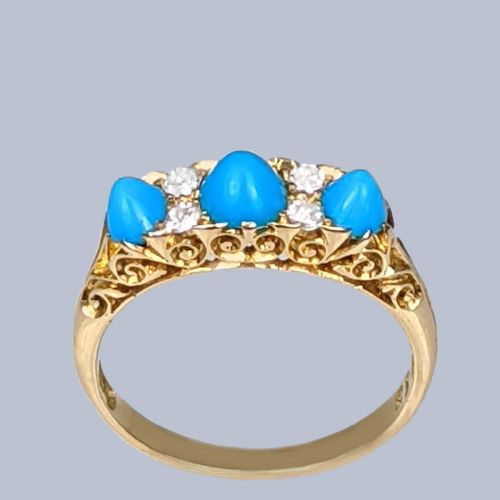
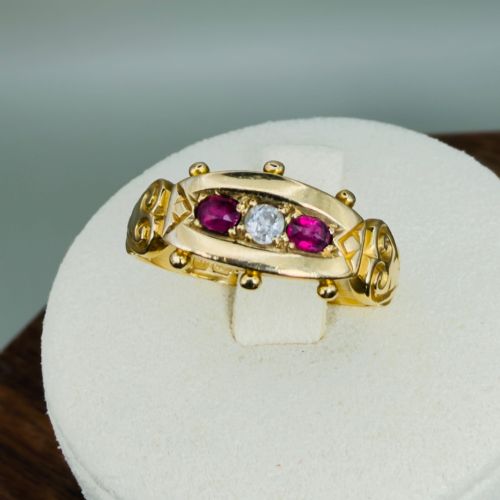
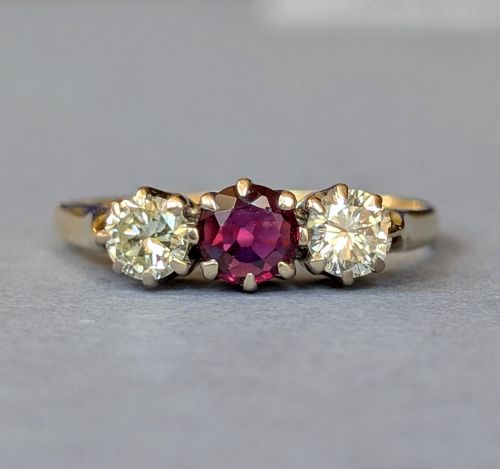
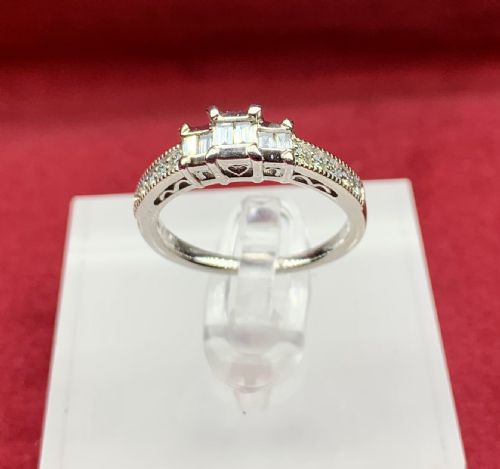
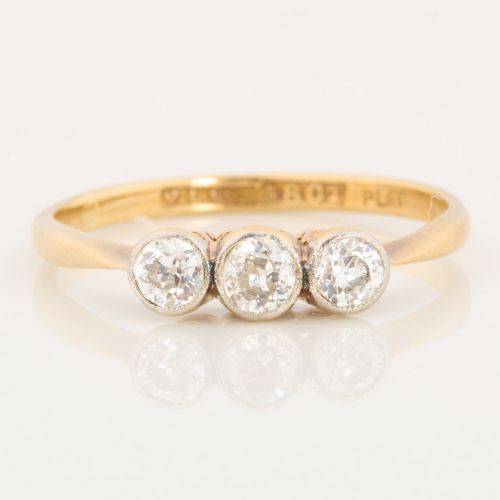
The search for 18ct gold three stone leads primarily to rings configured as traditional trilogies, where a trio of gems represents the past, present and future. These pieces span Victorian, Edwardian and Art Deco periods, alongside later mid-century examples.
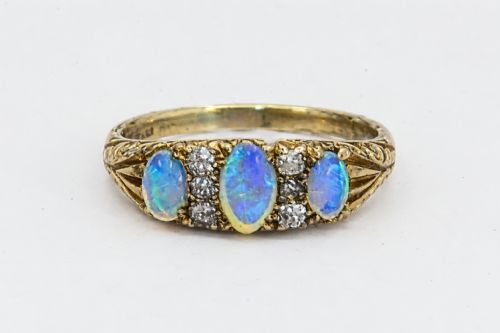
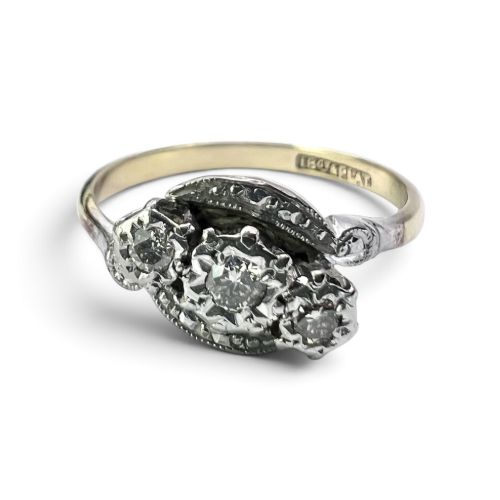
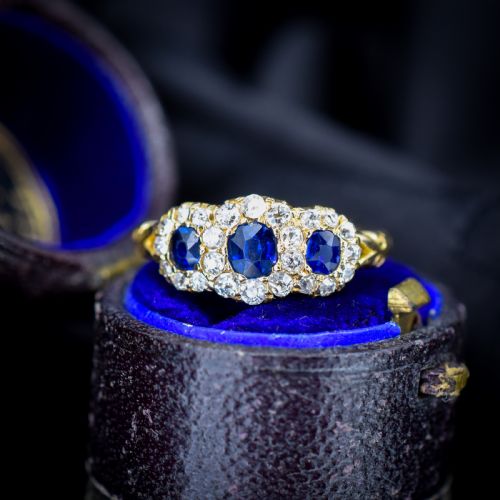
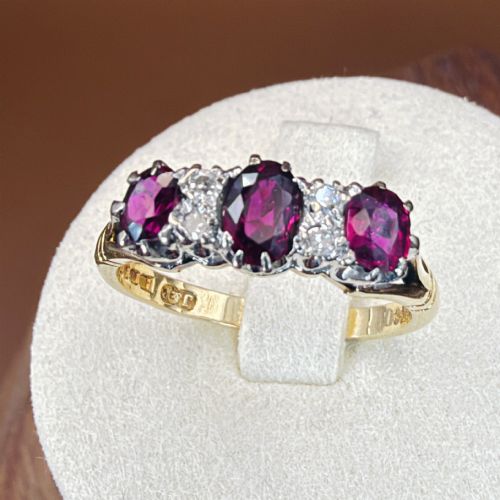
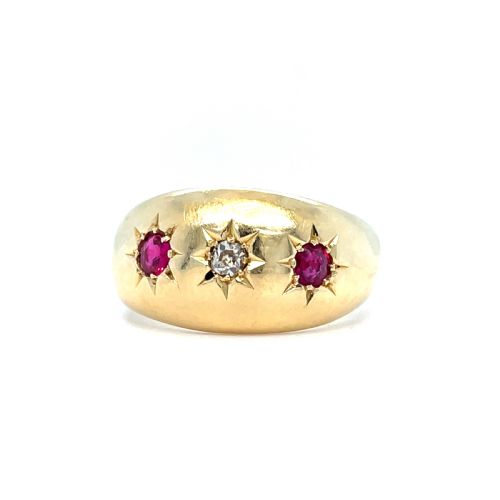
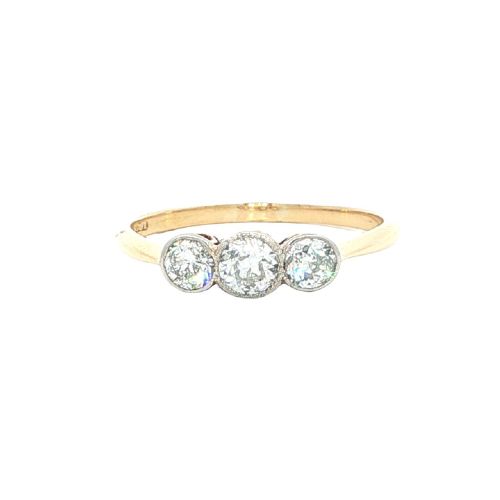
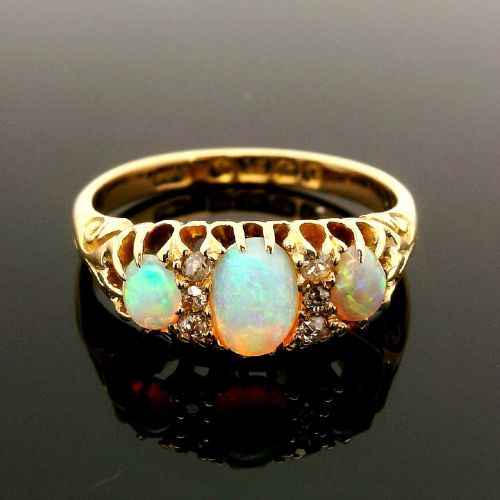
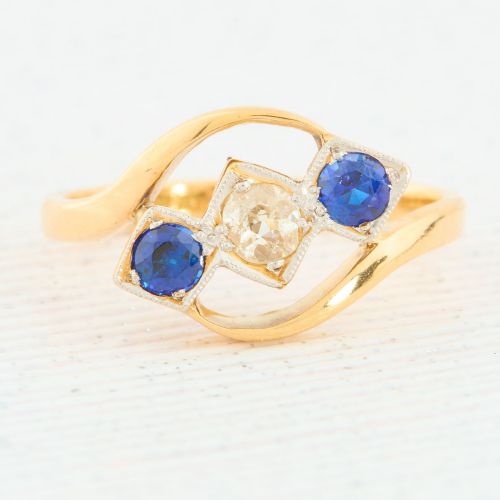
Victorian and Edwardian iterations frequently pair old cut diamonds with sapphires, rubies, opals or turquoise in yellow gold, whereas Art Deco designs introduce platinum settings and geometric lines.
How they were made
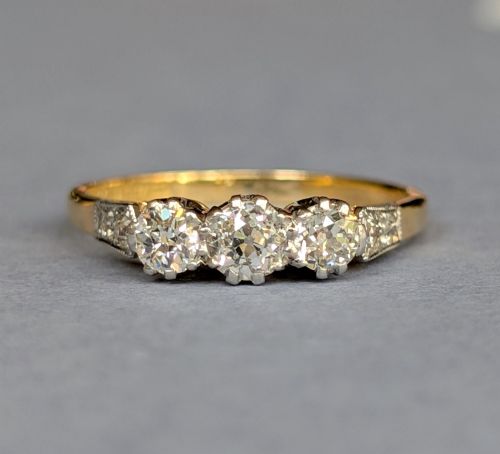
Construction relies heavily upon 18ct yellow and white gold paired with platinum, providing a durable yet ductile framework to secure the principal stones. Many period pieces utilise claw settings, starburst engravings or flush gypsy mountings.
Gemstones such as diamonds, sapphires and rubies are typically fashioned in old mine cuts or early brilliant cuts, shaped by hand to maximise light return within modest table facets.
Some Victorian gypsy rings hide tiny starburst engravings around the stones so the metal sparkles almost as brightly as the gems.
What varies in quality
Quality diverges significantly in the selection and matching of the central gems, where uniform colour saturation, proportionate carat sizing and minimal inclusions elevate a piece above standard examples. The precision of the setting work and the integrity of the original gold hallmarking also distinguish finer workshops from mass production.
Artisanal touches like hand-carved shoulders, delicate millegrain edges and secure claw integrity separate exceptional survivor pieces from heavily worn alternatives.
The 18ct Gold Three Stone Glossary
- Trilogy
- A ring featuring three principal gemstones arranged in a row, traditionally symbolising the past, present and future. This layout forms the backbone of the category.
- Old Cut
- A diamond faceting style prevalent before the modern brilliant cut was standardised, characterised by a smaller table, higher crown and open culet. These stones display a softer, candlelit sparkle.
- Gypsy Setting
- A mounting technique where gems are flush-set directly into the thick gold band, leaving the surface smooth and rounded. It was widely utilised during the Victorian era for durability.
- Platinum
- A dense, white precious metal frequently utilised during the Edwardian and Art Deco periods for prong and bezel settings. Its strength allowed jewellers to create finer, more secure metalwork around diamonds.
18ct Gold Three Stone: Frequently Asked Questions
What do the three stones represent?
The trio of gems traditionally signifies the past, the present and the future, making these configurations popular choices for romantic commitments and significant anniversaries.
This symbolism gained particular traction during the Victorian and Edwardian eras when sentimentality heavily influenced jewellery design.
How do I care for an antique gold ring?
Maintenance requires gentle cleaning with warm soapy water and a soft brush, avoiding harsh chemical dips that can damage softer gems like opal or turquoise.
Regular inspection by a jeweller ensures that the claws holding the three main stones remain tight and secure.
Are these pieces suitable for daily wear?
Gold of eighteen-carat purity provides a durable foundation for everyday use, though softer stones require additional mindfulness.
Settings featuring opals or turquoise demand more care than those set entirely with diamonds or sapphires.
How can I tell a Victorian piece from an Art Deco one?
Victorian examples typically feature warm yellow gold, starburst engravings and gypsy or claw settings housing old cut diamonds alongside rubies or sapphires.
Art Deco variations introduce platinum-topped yellow gold, geometric framing and sharper lines reflecting 1920s and 1930s aesthetics.