



18ct Gold Hoops
These 18ct gold hoops encompass everything from Victorian five-stone ring settings to mid-century earrings, prized for enduring metalwork and fine gemstones.
18ct Gold Hoops
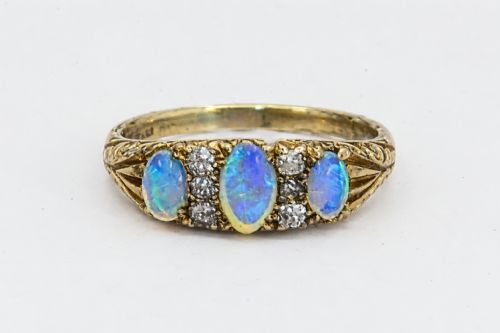
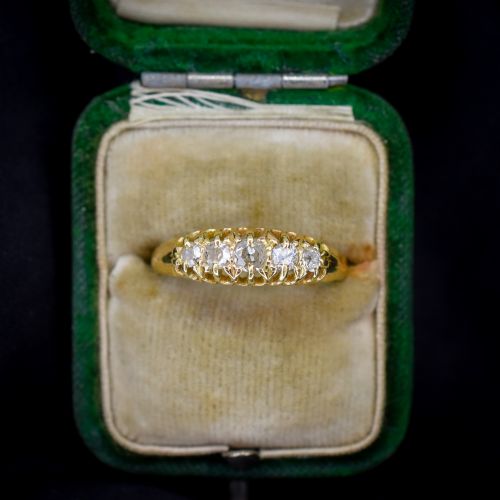
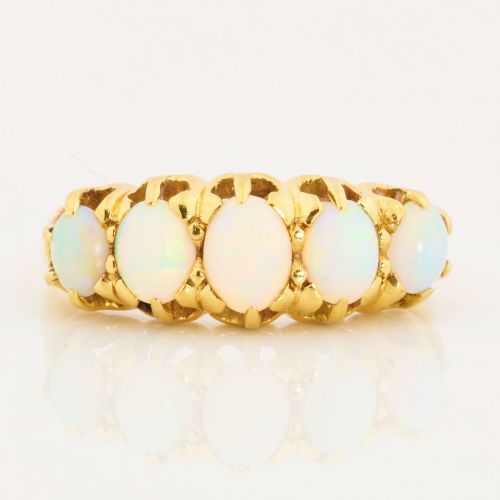
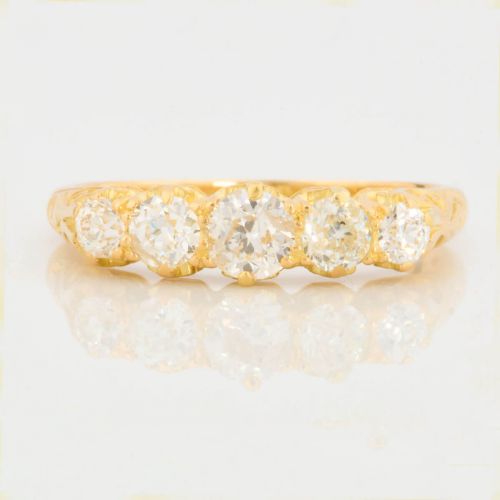
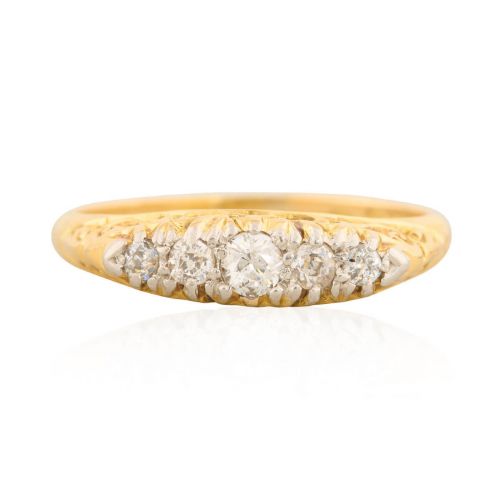
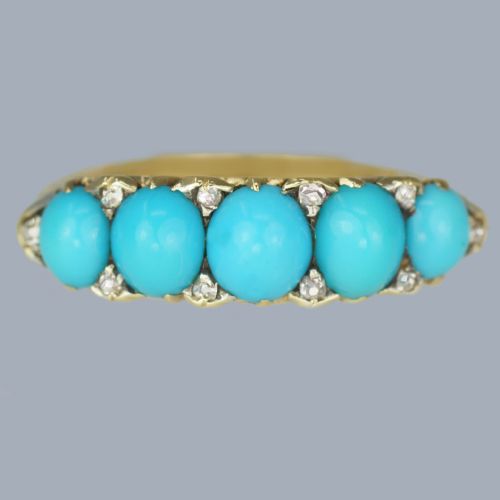
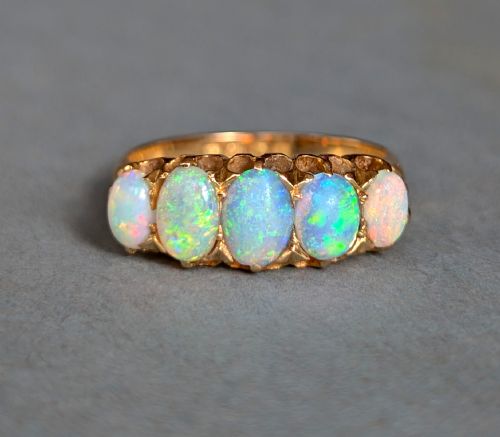
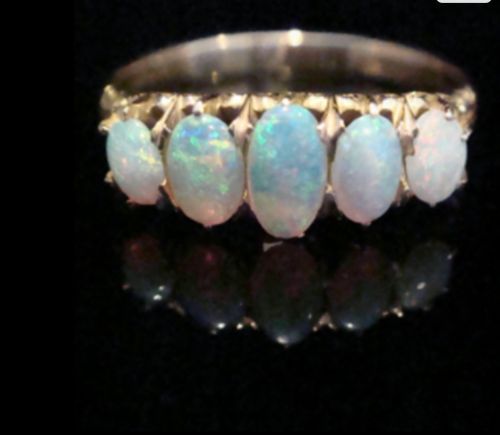
When searching for 18ct gold hoops, buyers encounter a selection dominated by antique finger rings configured as half hoops alongside a smaller group of actual ear hoops. These pieces span periods from the late nineteenth century through the Edwardian era into mid-century designs, originating from British workshops and continental makers.
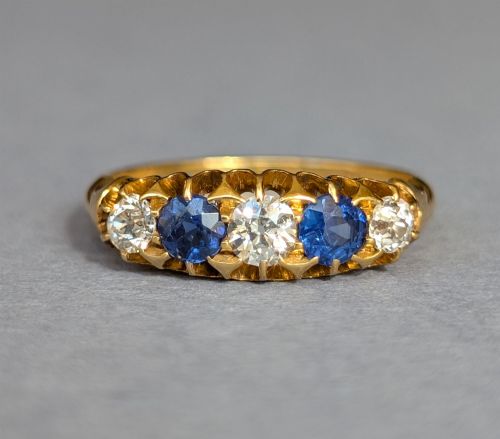
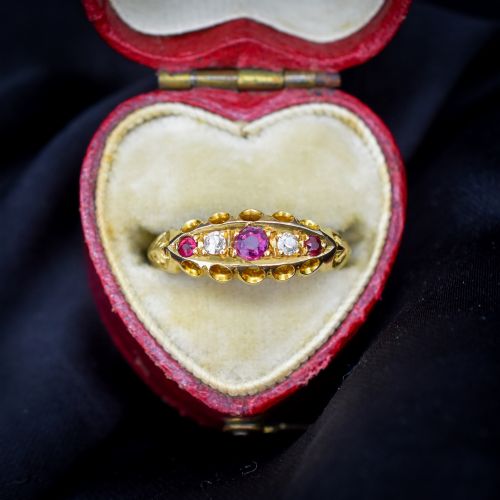
The finger rings frequently adopt the five-stone configuration, sometimes described in period terms as half hoop rings, aligning parallel gems across the hand. Alongside these multi-stone arrangements, drop earrings and clip-on ear designs appear, formed from solid yellow or white gold.
The materials paired with the metal include old cut diamonds, opals, sapphires, rubies, turquoise, garnet, and split pearls. These stones reflect the gemstone preferences of the Victorian and Edwardian periods, secured in claw settings or flush mountings.
How they were made
The construction relies on 18ct gold and 18ct yellow gold, shaped into bands, boat-shaped boat ring settings, and articulated earring drops. Jewellers utilised traditional hand-forging and casting methods, integrating platinum details in specific Edwardian white metal examples.
Gemstones such as old cut diamonds, sapphires, and opals were hand-set into the gold framework, using claw settings to maximise light entry or closed settings for specific cluster formations. Hallmarks stamped directly into the metal indicate assay office origins in cities like London and Chester.
Listings span the Victorian, Edwardian, and mid-century periods, incorporating 18ct yellow and white gold paired with opals, diamonds, and sapphires.
What varies in quality
The standard of an 18ct gold hoop piece depends upon the integrity of the gemstone selection and the preservation of the original setting work. Pieces featuring well-matched natural stones, such as solid opals or clean old cut diamonds, represent a higher tier of manufacture.
The crispness of hand-engraved details on the gold shoulders and the legibility of full hallmarks add distinction to individual pieces. Furthermore, items retaining original boxes or unaltered structural proportions demonstrate superior survival through the decades.
Boucheron·Le-Gi Italy
The 18ct Gold Hoops Glossary
- Half hoop
- A ring design featuring a single row of gemstones spanning the upper arc of the band. This configuration was common in Victorian and Edwardian jewellery.
- Old cut
- A diamond cutting style prevalent before the modern brilliant cut, characterised by a smaller table, higher crown, and open culet. These stones exhibit a distinct pattern under candlelight.
- Boat ring
- A ring style featuring a navette or boat-shaped setting that curves gently across the finger. It typically houses a sequence of graduated stones.
- Carat
- A unit of weight for gemstones, or a measure of gold purity where 18ct denotes seventy-five percent pure gold content. It determines the physical composition of the metal.
- Trefoil
- A decorative grouping of three elements, often gemstones, arranged to resemble a clover leaf. This motif appears frequently in cluster ring designs.
18ct Gold Hoops: Frequently Asked Questions
How do I identify Edwardian gold pieces?
Edwardian pieces often utilise lighter platinum work paired with yellow gold, alongside delicate milgrain edges around the stones. The motifs frequently include bows and symmetrical geometric patterns.
Assay office hallmarks and date letters stamped inside the band provide precise verification of the manufacturing year.
Are these earrings clip on or pierced?
The selection includes clip-on earring designs alongside drop configurations. Mid-century examples often employ hinged clip mechanisms for non-pierced ears.
Reviewing the specific hardware in the listing photographs confirms the exact fastening method used.
What gemstones were used in these items?
Jewellers utilised old cut diamonds, natural sapphires, rubies, and solid opals. Turquoise and split pearls also feature prominently in nineteenth-century examples.
These stones were selected for their colour and durability within everyday jewellery of the period.