

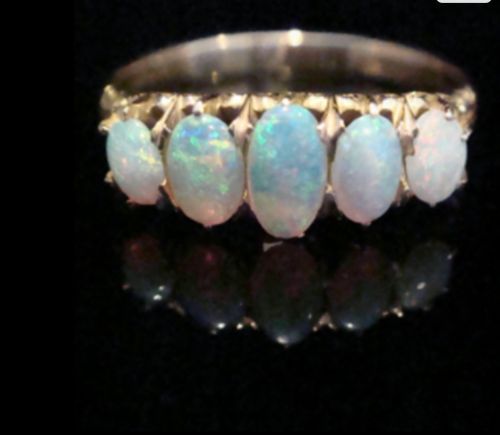


18ct Gold Half Hoop
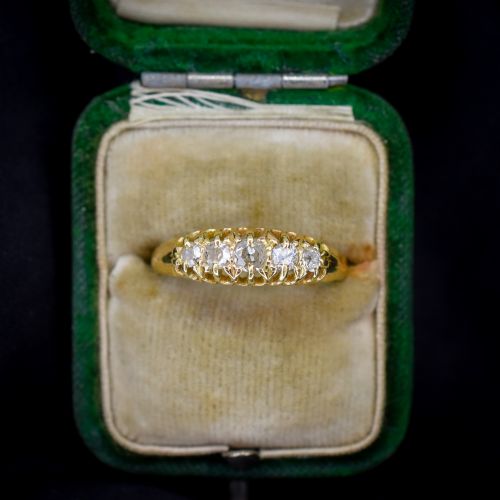
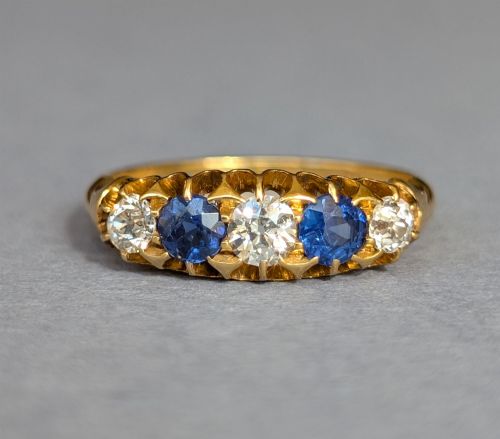
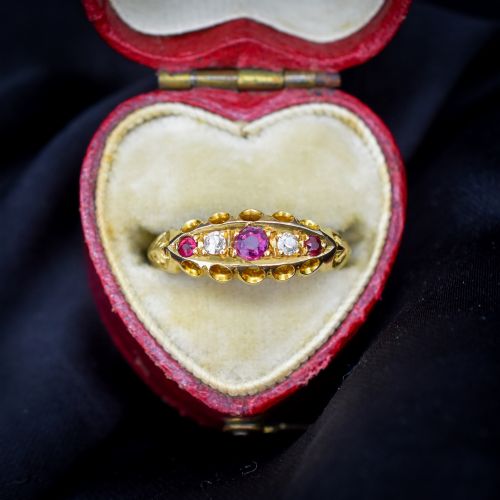
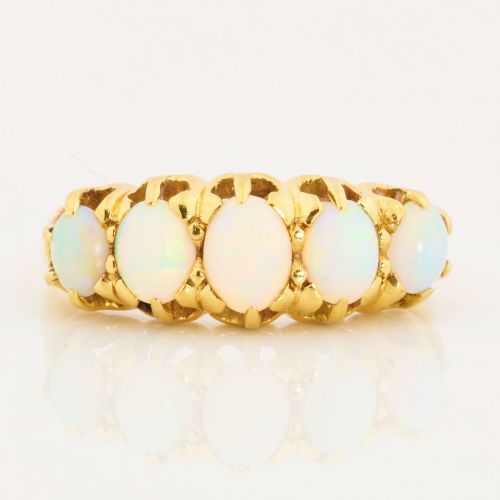
An 18ct gold half hoop brings together the unmistakable warmth of late nineteenth and early twentieth century precious metal and a row of matched gems.
18ct Gold Half Hoop
When you search for an 18ct gold half hoop, you discover finger-worn rings featuring a single linear row of stones set across the top of the band. The evidence shows these pieces span from the late nineteenth century through the Edwardian era and into the nineteen thirties.
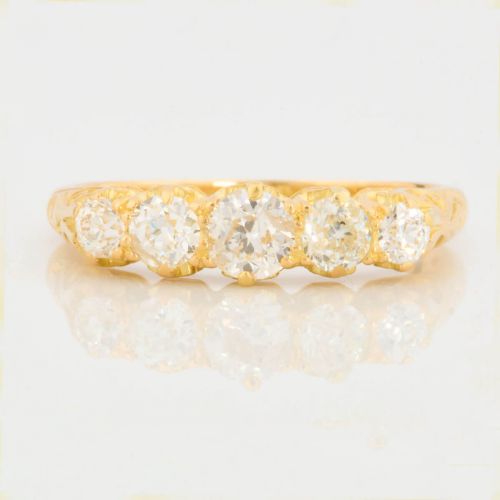
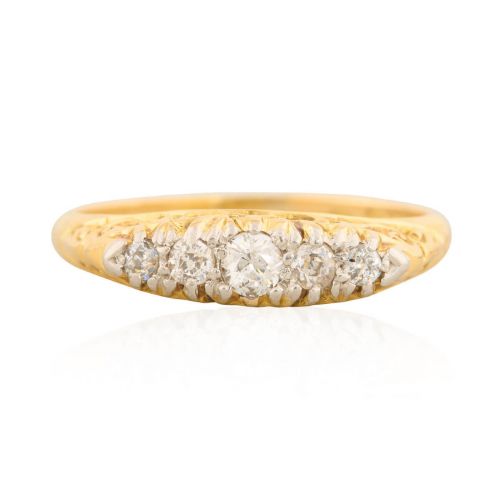
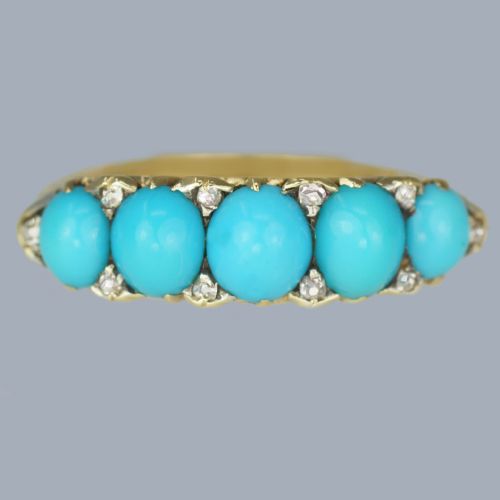
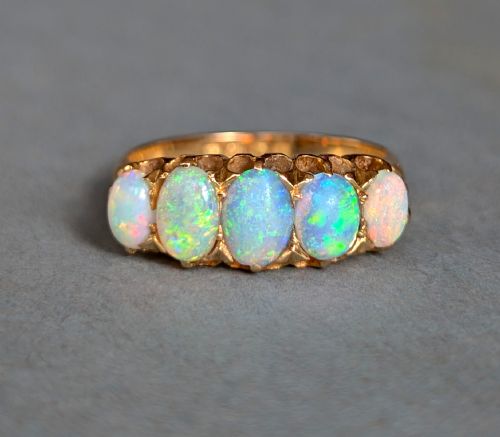
The most common version you meet on this page is the five stone configuration, often pairing old cut diamonds with sapphires, rubies or opals. These items emerge from Victorian and Edwardian workshops with substantial gold content and distinct gem arrangements.
How they were made
Goldsmiths shaped high purity 18ct yellow and rose gold to form solid bands and boat shaped settings. They secured old cut diamonds alongside coloured gems including natural opals, rubies, sapphires and turquoise using traditional claw and carved half hoop techniques.
Makers utilised sturdy metal foundations to support multi stone layouts, ensuring the structural integrity of each ring. Hallmarks stamped into the interior shank record assay office origins in cities such as London, Birmingham and Chester.
Assay office hallmarks from London, Birmingham and Chester appear frequently within the historical and current inventory of these half hoop rings.
What varies in quality
The distinction between tiers rests upon the choice and matching of the set gems, particularly the carat weight and clarity of the old cut diamonds. Superior examples display stones selected with uniform proportions and harmonious colour grading.
Construction heft and the crispness of the carved gallery work further define the standard of the piece. Well preserved hallmarks and minimal thinning to the original gold band indicate careful preservation over generations.
The 18ct Gold Half Hoop Glossary
- Half hoop
- A ring design featuring a single row of gemstones extending halfway around the finger band. This arrangement gained immense popularity during the Victorian and Edwardian periods.
- Old cut
- A diamond cutting style characterised by a small table, high crown and open culet, fashioned before modern brilliant standards. These stones exhibit soft, candlelit scintillation under low lighting.
- Carved half hoop
- A ring setting where the gold surrounding the stones is shaped into decorative scroll or boat motifs. This technique adds textural detail directly into the metal shoulders.
- Boat ring
- A specific ring profile shaped like a small boat, curving upwards towards the centre stones. It frequently houses five gems in a graduated row.
- Hallmark
- An official stamp struck into precious metal indicating the purity standard, assay office and date letter. British 18ct gold items typically carry crown and carat stamps.
18ct Gold Half Hoop: Frequently Asked Questions
How do I date an 18ct gold half hoop?
You date these rings by examining the assay office hallmarks stamped inside the shank, which record specific verification years. Stylistic clues such as carved boat settings and old cut diamond configurations also point toward Victorian or Edwardian periods.
Changes in gemstone combinations and claw styles help narrow down the decade of production. Comparing the band structure to documented pieces from 1890 through the 1930s provides further clarity.
Can I wear an 18ct gold half hoop daily?
These rings were built for everyday wear using durable 18ct gold and securely mounted gemstones. Many have survived a century or more of regular use on the hand.
Soft stones like opal require mindful care to prevent surface scratching during robust activities. Regular inspection of the claws by a jeweller ensures the gems remain firmly anchored.
What is an old cut diamond?
An old cut diamond is a hand faceted stone shaped before modern automated cutting techniques existed. These diamonds possess distinctive deep proportions and larger facets that catch ambient light in a warm manner.
They appear frequently in Victorian and Edwardian jewellery alongside sapphires and rubies. Their individual hand cut symmetry gives each ring a distinct personality.
Are these rings suitable for engagements?
Historical evidence shows these multi stone rings served as traditional engagement jewellery throughout the late nineteenth and early twentieth centuries. The five stone half hoop layout symbolised enduring commitment during the Victorian era.
Today, buyers continue to select them for engagements due to their distinct historical character and craftsmanship. Their low profile makes them comfortable for continuous daily wear alongside wedding bands.