





1880 French Mantel Clock
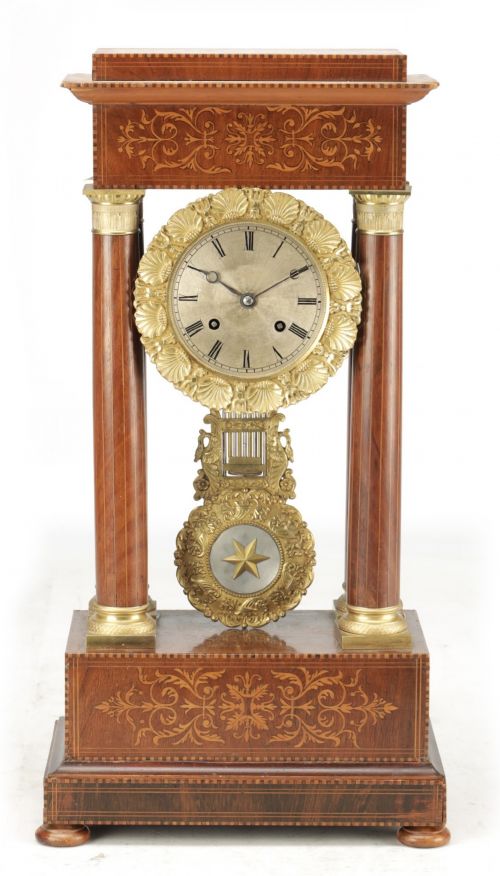
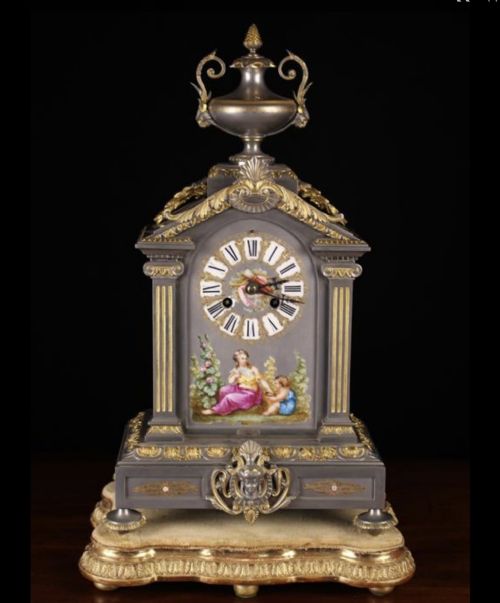
An 1880 french mantel clock brings ornate metalwork and steady eight-day movements into a room, offering both decorative presence and mechanical utility.
1880 French Mantel Clock
When you search for an 1880 french mantel clock, you encounter timepieces shaped by Victorian tastes and French revivalism from the late nineteenth century. These objects combine timekeeping with sculptural forms designed to anchor a room.
The version you are most likely to meet on this page is an eight-day striking mantel clock housed in gilt bronze, ormolu, or marble, often displaying Louis XVI or Rococo revival details. Carriage clocks and four-glass library models also appear frequently in the selection.
Many pieces arrive paired with garnitures or employ decorative elements like champleve enamel, porcelain panels, and bronze figures. They reflect a period of confident craftsmanship focused on domestic display.
Materials and Construction
These timepieces rely on cast brass, ormolu, and gilt bronze frameworks combined with marble, onyx, or exotic woods such as rosewood and walnut. Boulle work incorporates tortoiseshell and brass inlay to create intricate surface patterns.
Dial faces frequently utilise enamel with painted numerals, protected behind glass panels within heavy metal or stone cases. Movements are engineered for eight-day operation, occasionally incorporating striking mechanisms, alarms, or repeaters.
Materials recorded across the inventory include ormolu, champleve enamel, glass, porcelain, and various forms of marble.
Distinctions in Quality
The upper tier of these pieces shows crispness in the bronze casting and depth in the gilding, where chased details remain sharp and defined. Lesser examples display softer surface work and simplified case construction.
Movement sophistication separates standard timepieces from complex pieces equipped with repeating functions, alarm systems, or multi-train gear trains. The integration of high-grade porcelain panels or flawless champleve enamel elevates the status of an object.
DROCOURT·Leroy & Fils·Palais Royal
The 1880 French Mantel Clock Glossary
- Ormolu
- Gilded bronze or brass applied to clock cases and decorative mounts. This finish provides a bright metallic sheen characteristic of French revival pieces.
- Champleve
- An enamelling technique where troughs are dug into a metal surface and filled with vitreous colour before firing. It creates vibrant patterns on dials and bezels.
- Garniture
- A set consisting of a mantel clock accompanied by matching decorative side vases or candelabra. These matched groupings were placed together on a shelf or mantel.
- Boulle
- A style of marquetry using tortoiseshell and brass inlay developed in France. It decorates wooden clock cases with contrasting dark and metallic tones.
- Repeater
- A mechanical complication that strikes the hours and quarters on demand when a lever or cord is activated. It allowed owners to check the time in the dark.
1880 French Mantel Clock: Frequently Asked Questions
How do these clocks function?
Most pieces operate on an eight-day spring-driven movement requiring a key wind at regular intervals to maintain time and strike the hours. Some models include specialised complications like alarms or repeating mechanisms.
Escapements and pendulums regulate the release of power through the gear train, driving the hands across the enamelled dial face.
Where were they placed?
These clocks were designed to sit on the mantelpiece above a fireplace, acting as the visual centrepiece of a Victorian or French interior. Their sculptural cases and garniture sets allowed them to dominate the room.
Smaller versions like carriage clocks or library models served portable or desk-bound roles in studies and bedrooms.
What styles are common?
Revival aesthetics dominate the selection, drawing heavily from Louis XVI, French Rococo, and Empire traditions. These designs emphasise symmetry, scrolling foliage, and classical architectural motifs.
Materials like black marble, onyx, and tortoiseshell Boulle work offer alternative textures ranging from austere classical lines to ornate decorative displays.
What is a clock garniture?
A garniture is a matched set where a central mantel clock is flanked by two secondary decorative objects, such as urns, vases, or candelabra. These pieces share identical materials, styles, and surface ornamentation.
Displaying them together on a mantelpiece creates a balanced and unified decorative arrangement.