
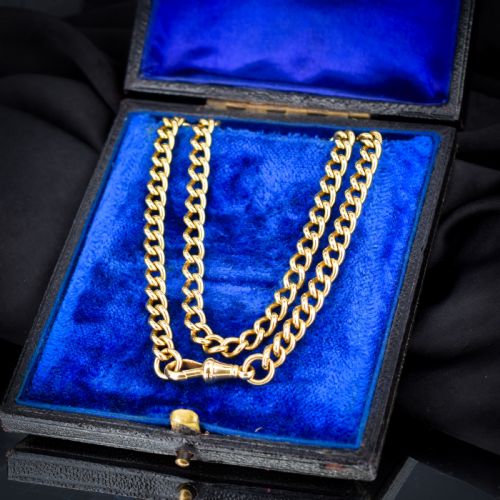
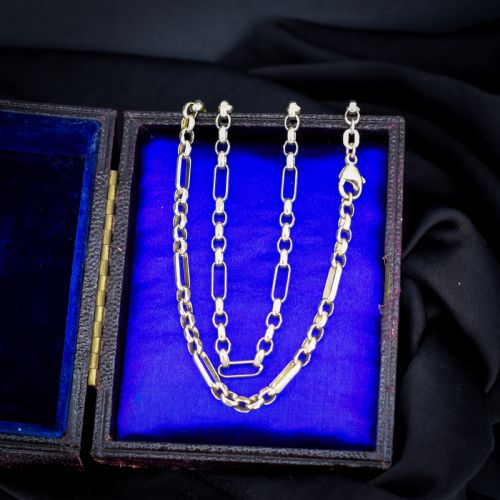


18 Carat Necklace
An 18 carat necklace brings together substantial gold work and period design, offering wearable history with enduring presence.
18 Carat Necklace
When you search for an 18 carat necklace, you are looking at substantial gold pieces created across several distinct eras, from the nineteenth century through the mid-twentieth century. The selection ranges from robust curb link chains and chatelaine conversions to intricate diamond and gemstone pendants.
You are most likely to meet Victorian and Edwardian examples alongside French antique medals and mid-century designs. These pieces combine precious metals with stones like diamond, ruby, citrine, opal, and coral, often configured as chains, pendants, or complete necklace sets.
The origin spans British and continental workshops, with a strong representation of French religious and sentimental pendants. Each format demonstrates how gold was worked to hold gemstones, display monograms, or form flexible links for daily wear.
How they were made
The construction relies heavily on 18ct yellow, white, and rose gold, shaped into hollow or solid links, bezels, and prongs. Artisans soldered individual components like dog clips, fancy links, and decorative bails by hand.
Gemstones including rose cut diamonds, rubies, black opals, and citrines are flush set, claw set, or arranged in clusters. Specialised techniques such as pietra dura inlay and delicate hand-engraving appear on French religious medals and floral motifs.
What varies in quality
The calibre of the goldsmithing dictates the overall success of the piece, visible in the snugness of stone settings and the fluid articulation of link chains. Superior examples maintain crisp detail in hand-engraved monograms and secure, well-balanced clasps or dog clips.
The quality of the materials themselves creates a clear division, particularly in the selection of matched gemstones and the depth of the gold colour. Heavier, solid constructions command attention through their physical weight and the integrity of their original mounts.
The 18 Carat Necklace Glossary
- Curb link
- A type of chain composed of identical, slightly twisted links that lie flat when worn. This construction provides exceptional strength and a smooth feel against the skin.
- Dog clip
- A spring-loaded fastener commonly found on antique watch chains and heavier necklaces. It allows the wearer to easily attach pendants or secure the chain.
- Pietra dura
- An artistic technique involving the inlay of small cut and fitted pieces of coloured stones to form a pictorial image. It frequently appears on nineteenth-century floral pendants.
- Rose cut
- A historic diamond cut featuring a flat base and a domed crown faceted with triangular planes. This style produces a soft, starry shimmer rather than intense brilliance.
- Witch's heart
- A pendant shape featuring an asymmetrical, twisted loop at the top of the heart motif. Originating in French sentimentality, it symbolises a heart caught or bewitched.
18 Carat Necklace: Frequently Asked Questions
How do I wear a heavy gold chain safely?
Heavier gold chains distribute weight well, but you should still remove them before sleeping or engaging in strenuous physical activity. Ensure that any dog clips or spring rings close fully and securely before fastening.
Store each piece individually in a soft pouch to prevent the links from scratching or tangling with other items in your collection.
How do I clean an 18 carat gold necklace?
Warm water, a mild washing-up liquid, and a very soft brush will safely remove everyday oils and dust from gold and hard gemstones. Rinse the piece thoroughly in clean water and pat dry with a lint-free cloth.
Avoid using ultrasonic cleaners on antique pieces with glued stones like opals or delicate coral, as the vibrations and moisture can cause damage.
What is the difference between yellow and white gold pieces?
Yellow gold contains a traditional alloy mix that highlights the warm, natural hue of the precious metal across Victorian and Edwardian periods. White gold incorporates alloys like palladium or silver to create a silvery tone that became popular in mid-century jewellery.
Both varieties maintain the same gold purity content when marked as 18 carat, differing only in their aesthetic presentation.