


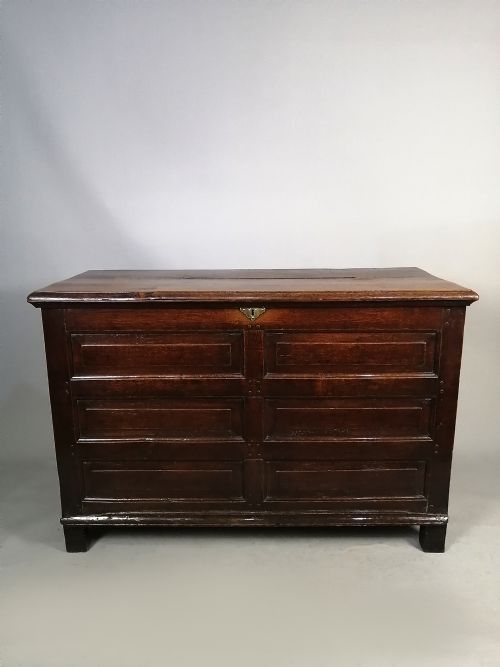
17th Century Storage Coffer
A 17th century storage coffer offers robust domestic utility and deep historical character, making it a foundational piece for traditional interiors.
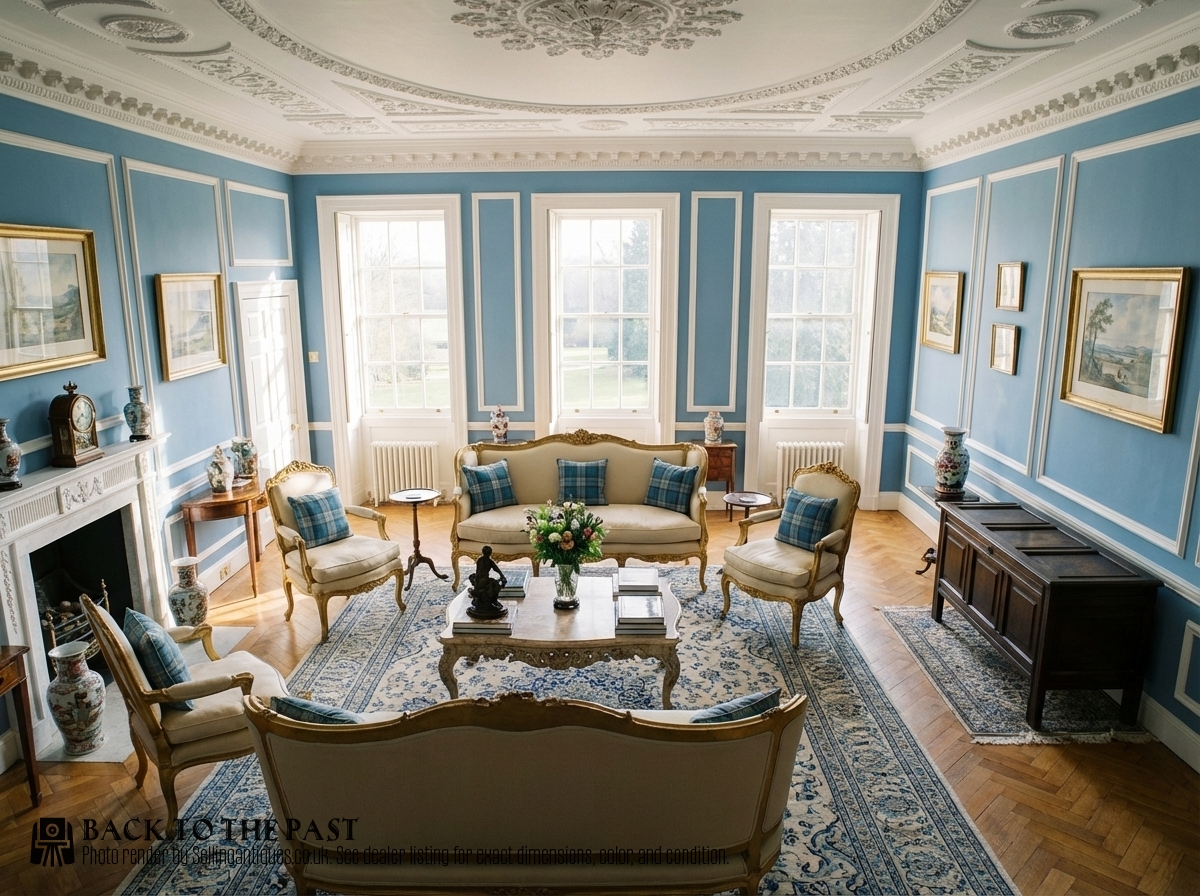
17th Century Storage Coffer
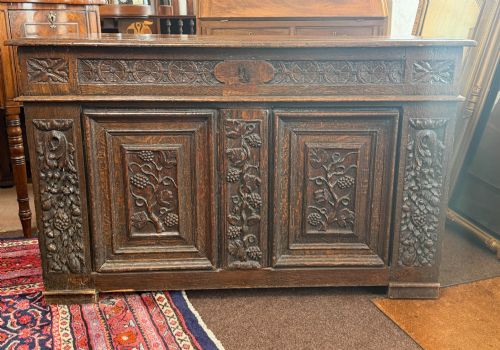
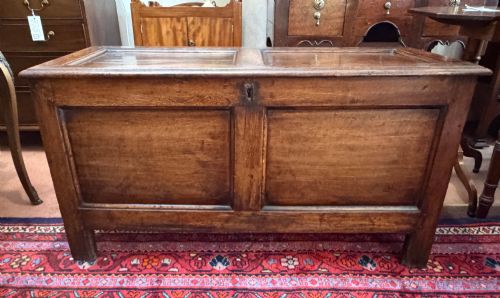
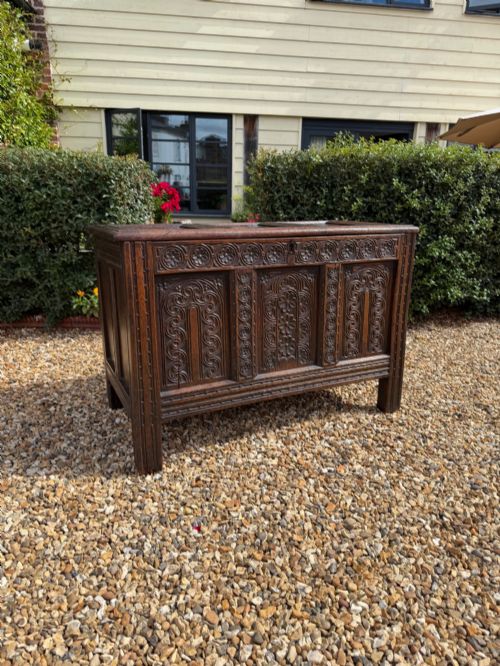
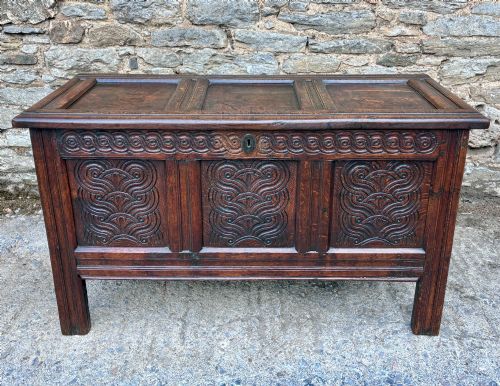
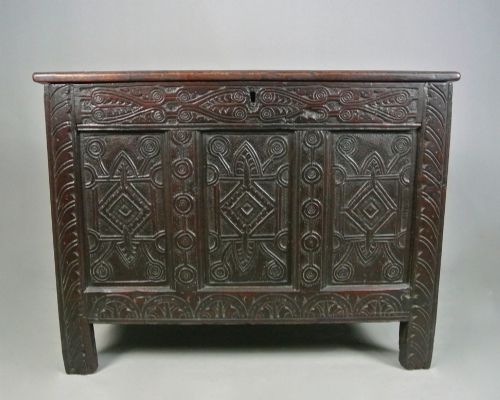
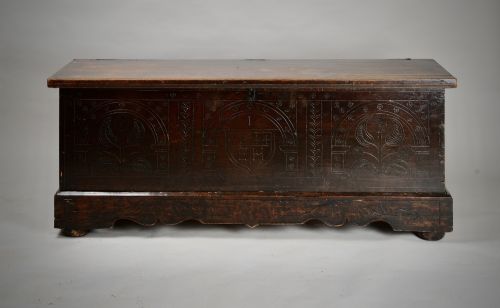
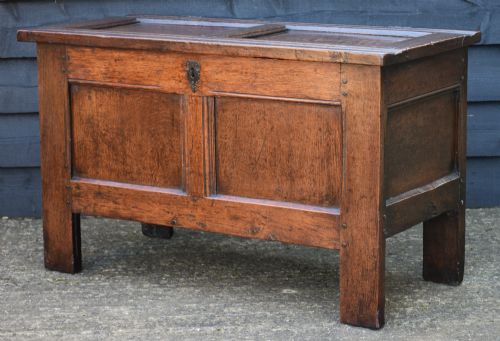
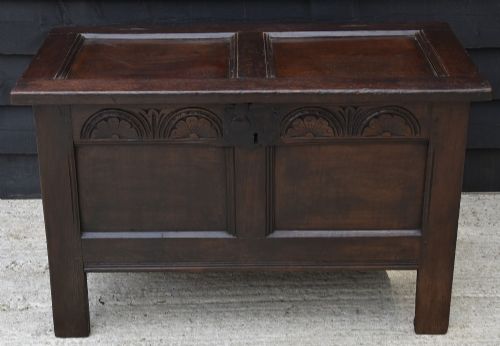
A 17th century storage coffer is a heavy wooden chest designed for domestic security and household storage, appearing frequently in solid oak with panelled construction. These sturdy trunks served multiple household functions, holding linen, documents, and valuables across generations.
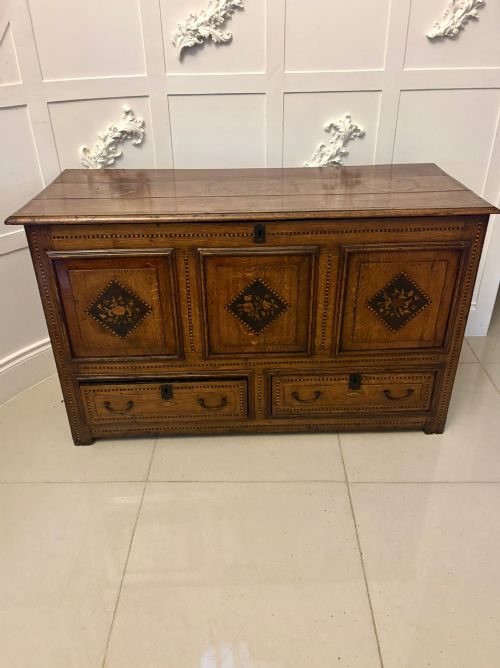
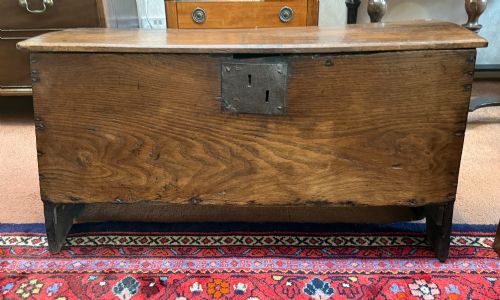
The selections span standard oak coffers, mule chests with lower drawers, six-plank constructions, and smaller travelling boxes or Bible boxes. Regional British examples sit alongside continental pieces in walnut, elm, cypress, and mahogany, reflecting varied local joinery traditions.
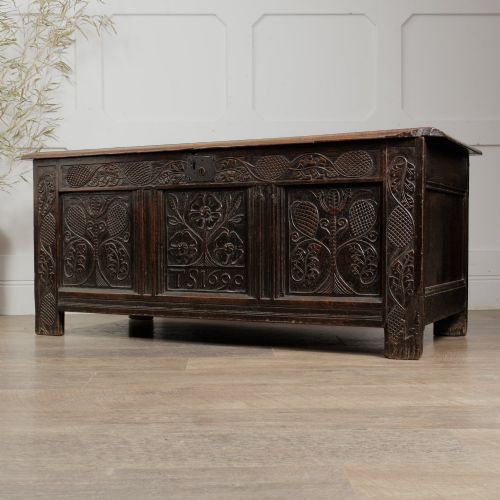
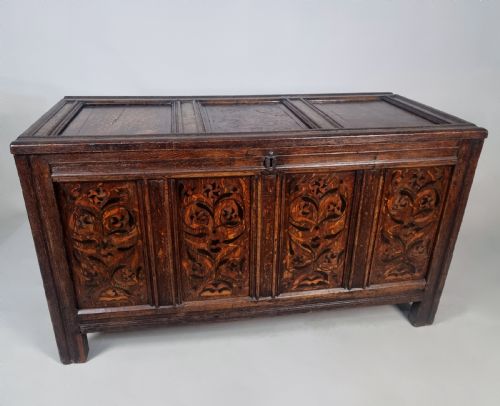
While genuine 17th-century pieces dominate, the inventory includes later revival interpretations from the nineteenth and twentieth centuries. Buyers encounter vernacular country chests, ecclesiastical examples with Gothic carving, and heavily carved Jacobean styles.
How They Were Made
Joiners built these chests primarily using solid oak joined with mortise and tenon frames, panelled to allow timber movement without splitting. Simpler versions utilise six planks pegged together at the corners, demonstrating direct vernacular carpentry.
Surface enrichment relied on hand carving, applied mouldings, and occasionally marquetry inlay using mixed woods. Hardware such as iron hinges, brackets, and brass mounts provided structural reinforcement and security.
Finishes developed naturally through centuries of handling, yielding patinated surfaces across native woods like oak and elm, as well as imported cypress and mahogany.
Listings feature regional British variations alongside continental European examples in oak, elm, cypress, and mahogany.
What Varies in Quality
Quality rests in the integrity of the timber, the crispness of the original hand carving, and the proportion of the piece. Untouched original surfaces with deep historic patina command greater appreciation than heavily restored or overly cleaned timber.
Construction methods reveal the maker's skill, distinguishing standard regional joinery from exceptional joined examples with sophisticated panel work and marquetry. Regional provenance, such as distinct Welsh or Dorset characteristics, adds specific historical interest.
The 17th Century Storage Coffer Glossary
- Coffer
- A heavy wooden chest used for storage, particularly of valuables and textiles. It forms the primary object type found in early domestic interiors.
- Mule chest
- A storage chest featuring one or more drawers built into the base beneath the main compartment. This transitional form bridges the chest and the chest of drawers.
- Six-plank coffer
- A primitive chest constructed from six individual boards joined directly at the edges. It represents early vernacular woodworking traditions.
- Marquetry
- Decorative inlay work using various woods to create geometric or floral patterns on the surface. It appears on finer seventeenth-century examples.
- Patina
- The surface sheen and colour developed by wood over centuries of use and exposure. Good preservation of this quality defines a superior antique.
17th Century Storage Coffer: Frequently Asked Questions
How were coffers used in the seventeenth century?
These heavy chests functioned primarily as secure storage for valuable household textiles, ecclesiastical goods, and important family documents.
Due to their sturdy construction, they also doubled as seating benches or tables within the home before dedicated furniture types became common.
What is the difference between a coffer and a mule chest?
A standard coffer provides a single top-opening compartment enclosed by sides and a lid.
A mule chest incorporates one or more drawers beneath the main storage well, offering easier access to stored items without lifting the lid.
How do I identify a 17th century piece from a later revival?
Original period pieces show authentic timber shrinkage, hand-cut peg joinery, and natural patination accumulated over centuries of use.
Revival pieces from later periods often display machine-cut elements, standardised proportions, and lack the deep surface wear characteristic of early joinery.
Can I use an antique coffer as a coffee table?
Many buyers repurpose these sturdy chests as low tables or window seats because their flat lids suit modern living spaces.
Consider the height and length of the specific piece to ensure it fits comfortably with your existing seating arrangements.