


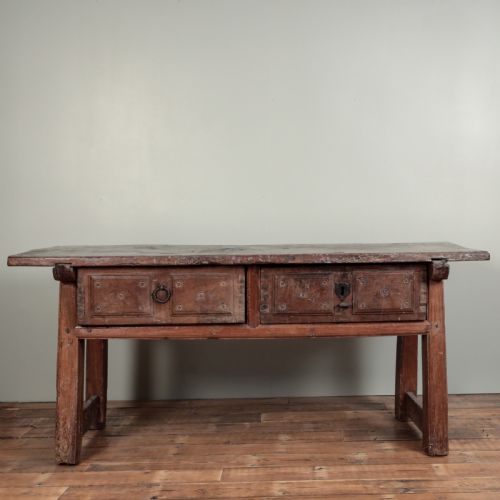


17th Century Spanish Furniture
These walnut tables, vargueno cabinets and press cupboards form the core of 17th century spanish furniture, offering deep historical presence and rich craftsmanship.
17th Century Spanish Furniture
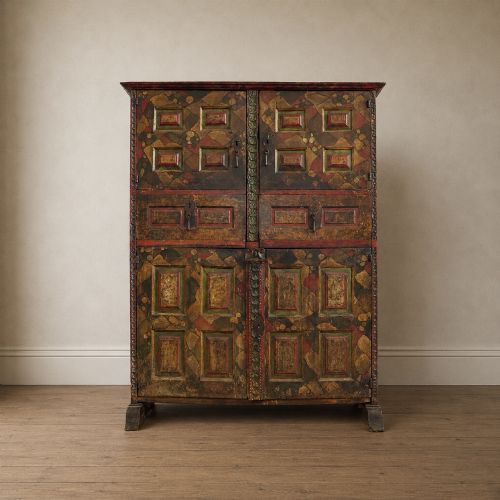
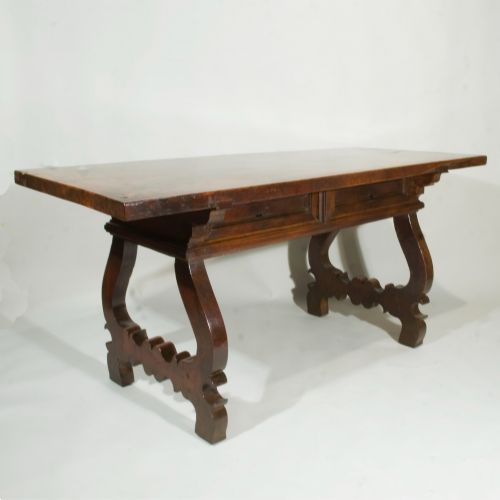
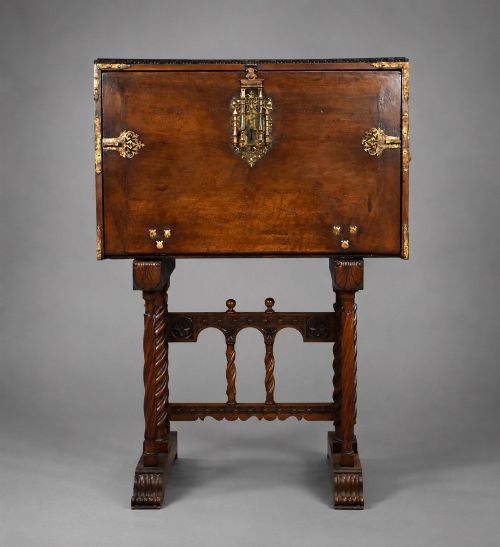
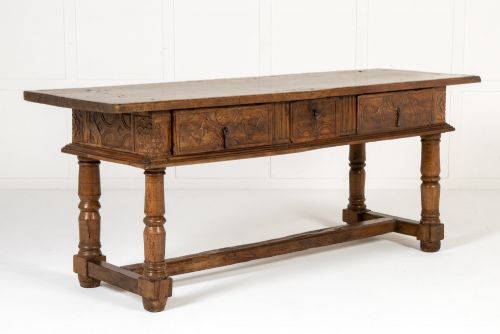
When you search for 17th century spanish furniture, you are looking at heavy timber forms built during the Spanish Baroque and Renaissance periods. These pieces include walnut tables, writing cabinets on stands, and polychrome painted housekeeper cupboards.
The version you are most likely to meet on this page is the walnut table or the vargueno cabinet, often raised on a stand. These items bring dark wood tones and traditional craftsmanship into domestic spaces.
How these pieces were made
Makers utilised solid walnut, oak, and ebonised wood to build these heavy structures, reinforcing them with wrought iron mounts and braces. The joinery relies on thick timbers and pegged joints designed to withstand heavy daily use.
Surface decoration involved pigment, polychrome paint, and tortoiseshell inlay to add colour and texture to cabinets and cupboards. Artisans also worked brass details into the designs to accent key lockplates and drawer fronts.
Housekeeper cupboards wore bright polychrome paint because gloomy castle interiors demanded all the cheer they could get.
What varies in quality
The standard of 17th century spanish furniture rests on the depth of the original patina and the integrity of the timber. Pieces that retain their early surface character and untouched structural elements stand far above later replacements.
Complexity of construction also defines the better examples, particularly where intricate cabinet drawers meet robust table bases. The integration of authentic wrought iron hardware and well-preserved pigment enhances the overall merit.
The 17th Century Spanish Furniture Glossary
- Vargueno
- A traditional Spanish cabinet with a drop-front writing desk enclosing small drawers. It typically sits on a matching wooden stand.
- Bargueño
- An alternative spelling for the classic Spanish drop-front writing cabinet used for storing documents and valuables.
- Papillero
- A small tabletop cabinet featuring multiple internal drawers for sorting papers and letters. It shares construction traits with larger varguenos.
- Polychrome
- The practice of decorating wood surfaces with multiple colours of paint. This technique appears on vernacular housekeeper cupboards from the period.
- Wrought iron
- Iron shaped by heating and hammering, utilised for structural braces, hinges, and decorative mounts on tables and cabinets.
17th Century Spanish Furniture: Frequently Asked Questions
What is a vargueno cabinet?
A vargueno is a portable writing cabinet featuring a drop-front lid that opens to reveal a cluster of small drawers. These cabinets were designed to sit on custom stands.
They served as portable desks and secure storage units for documents in wealthy households during the period.
What woods were used?
Makers relied heavily on solid walnut for the primary structure of tables and cabinets. Oak and ebonised wood also appear in specific regional pieces and decorative details.
These dense timbers provided the necessary strength for heavy domestic furniture.
How do I spot a painted piece?
Polychrome painted pieces feature pigmented decoration applied directly to the wood surface, often seen on housekeeper cupboards. This adds colour and illustrative detail to the exterior.
Such decoration reflects the vernacular aesthetic of specific Spanish regions during the seventeen hundreds.
What styles define this era?
The predominant styles are Spanish Baroque and Spanish Renaissance. These designs emphasise solid proportions and restrained classical ornamentation.
Furniture from this time avoids excessive carving in favour of strong architectural silhouettes and ironwork accents.