




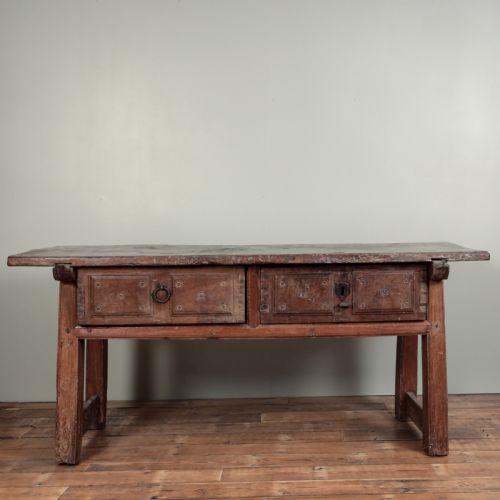

17th Century Spanish Desk
A 17th century spanish desk brings heavy walnut timber and drop-front fall panels into a room, offering secretive compartments that collectors prize.
17th Century Spanish Desk
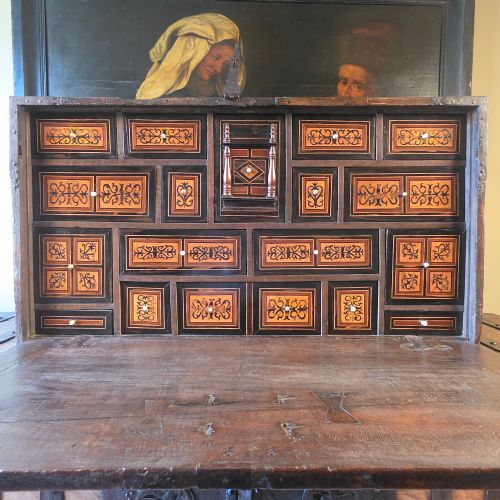
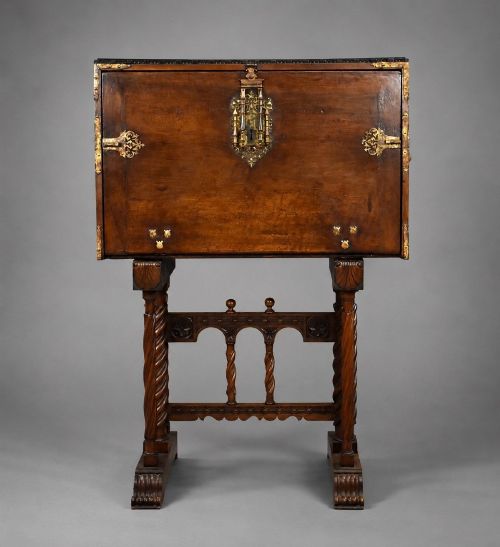
When searching for a 17th century spanish desk, buyers encounter heavy walnut furniture built for writing and storage, frequently incorporating drop-front writing surfaces known as bargueños or varguenos. These pieces often sit upon separate support stands or console tables, creating a commanding architectural presence in a room.
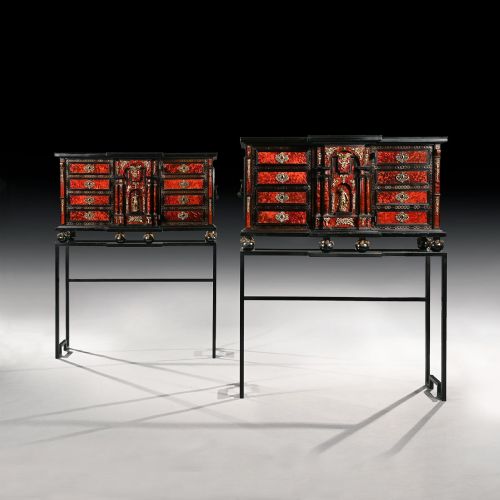
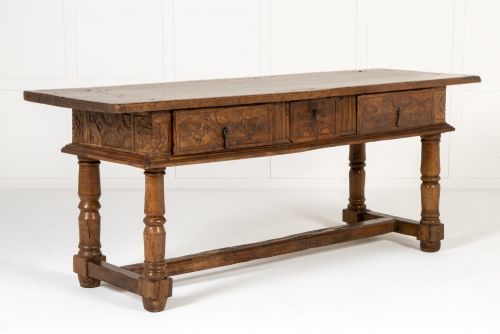
The selections on this page span the 17th century alongside later interpretations from the 18th century and around 1800. Alongside standard writing cabinets and desks, the evidence records console tables, cabinets on stands, and larger tables constructed in solid timber.
Spanish Renaissance and Spanish Baroque styles dominate the design vocabulary, giving these objects deep mouldings and severe geometric lines. Cabinets on stands combine functional writing compartments with decorative exteriors, while simpler tables rely on the grain of the timber for visual impact.
How they were made
Construction relies heavily on solid walnut and fruitwood, which provide the dense structural body required for large writing cabinets and heavy tables. Ebonised wood often forms contrasting dark mouldings and architectural framing around the primary surfaces.
Intricate exterior and interior decoration incorporates bone, tortoiseshell, and gilt bronze mounts, creating complex visual textures across drawer fronts and fall panels. Wrought iron hardware, including braces, hinges, and carrying handles, provides both structural reinforcement and stark metallic contrast against the timber.
Joinery techniques focus on sturdy pegging and panel construction to handle the weight of dense hardwoods and applied decorative elements. Surfaces frequently retain an original patina developed through centuries of handling and application of traditional finishes.
17th Century Spanish Desk Retail Price Guide 2026
Typical asking prices for 17th century spanish desk among the pieces listed under this phrase on Sellingantiques today, from the lower quarter to the upper quarter. They describe what is for sale here now, not the wider market.
Secret drawers inside these desks often required knowing a hidden sequence of pushes to unlock tiny compartments meant for smuggled gold.
What varies in quality
Quality in these desks rests on the depth and preservation of original decorative elements, such as inlaid bone, tortoiseshell panels, and gilt bronze mounts. Pieces retaining their matching original stands or authentic wrought iron hardware command greater interest from serious collectors.
The complexity of the interior drawer arrangement within a bargueño or papillero dictates much of the piece's standing. Finer examples feature intricate architectural facades inside the drop front, whereas utilitarian tables rely purely on timber selection and patination for their appeal.
The 17th Century Spanish Desk Glossary
- Bargueño
- A traditional Spanish chest or cabinet with a drop-front panel that opens to reveal numerous small drawers and compartments. This form sits upon a dedicated support stand or console table.
- Vargueno
- An alternative spelling for bargueño, describing the same iconic Spanish drop-front writing cabinet. These cabinets often feature elaborate bone inlay and tortoiseshell decoration.
- Papillero
- A small tabletop cabinet or miniature bureau designed for storing letters, documents, and small valuables. They share the multi-drawer interior layout typical of larger Spanish writing furniture.
- Ebonised wood
- Timber treated with a dark stain or finish to imitate expensive ebony wood. This technique creates strong visual contrasts on 17th-century cabinet facades.
- Patina
- The surface sheen and mellowing developed by wood and metal over centuries of age and use. Good original patination indicates minimal chemical stripping or harsh restoration.
17th Century Spanish Desk: Frequently Asked Questions
What is a bargueño desk?
A bargueño is a traditional Spanish writing cabinet featuring a drop-front fall panel that conceals a complex arrangement of small drawers and secret compartments. These cabinets were designed to be portable or placed upon dedicated wooden stands.
In period use, the drop front served as a writing surface when lowered, allowing the owner to conceal sensitive documents and valuables securely behind locked internal doors.
How are varguenos and papilleros different?
A vargueno is typically a substantial cabinet on a stand designed for floor placement, while a papillero is a smaller desk cabinet intended for desktop use.
Both forms share the characteristic multi-drawer interior hidden behind a solid exterior, but papilleros offer a more compact footprint suited for smaller study spaces.
What woods were used in Spanish desks?
Walnut serves as the primary structural timber for the vast majority of these Spanish desks and tables, prized for its strength and rich grain. Fruitwood and ebonised wood provide secondary framing elements and contrasting dark details.
Cabinet makers also incorporated exotic materials like tortoiseshell and bone into the internal drawer fronts to create striking geometric patterns.
How should I clean an antique walnut desk?
Antique walnut surfaces require gentle maintenance using dry or slightly damp cloths to preserve the fragile original patina and wax finishes. Avoid modern chemical polishes that can soften historic wood treatments and degrade delicate bone or tortoiseshell inlays.
Keeping the furniture away from direct heat sources and dramatic humidity shifts prevents the dense hardwoods from splitting or warping over time.