







17th Century Server
A 17th century server provides sturdy storage and surface space, bringing historical depth and useful practicality to a room.
17th Century Server
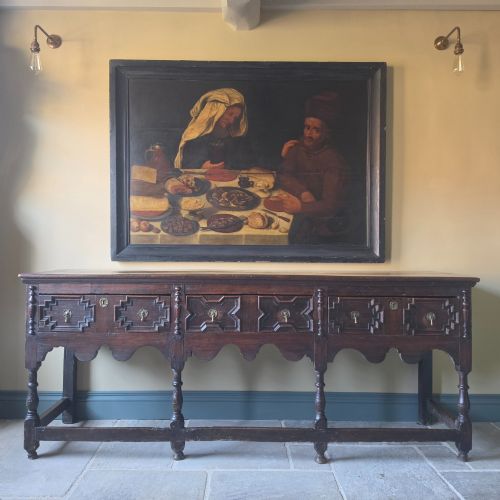
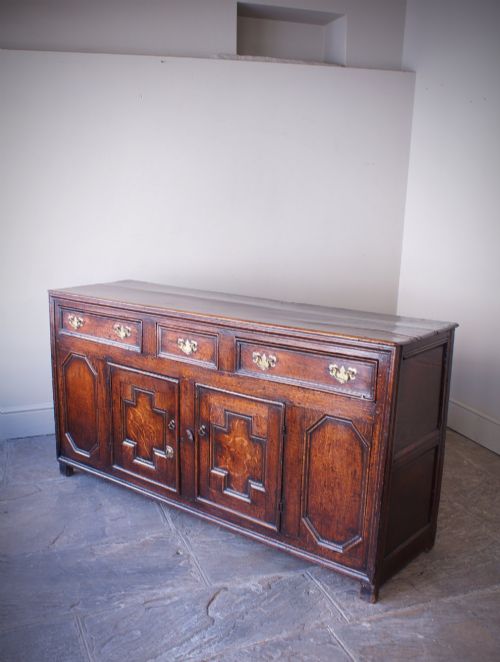
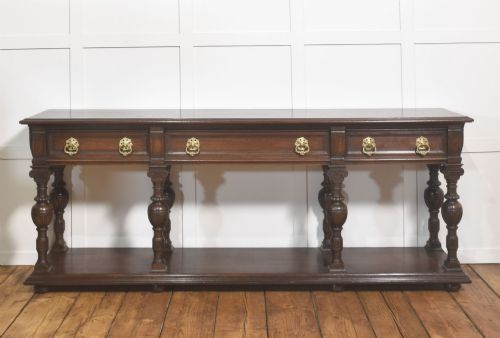
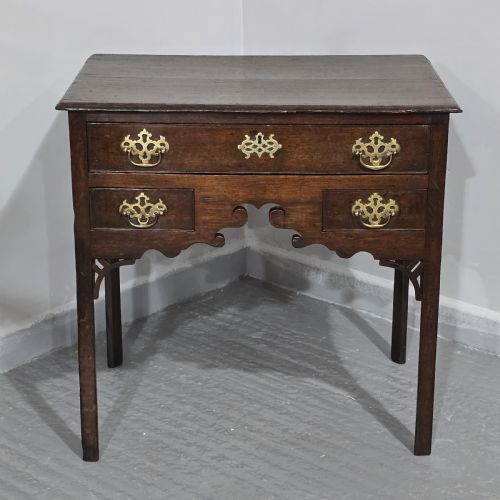
When searching for a 17th century server, buyers encounter forms such as dresser bases, side tables, lowboys, and court cupboards. These pieces functioned historically for food preparation and service in large halls and dining spaces.
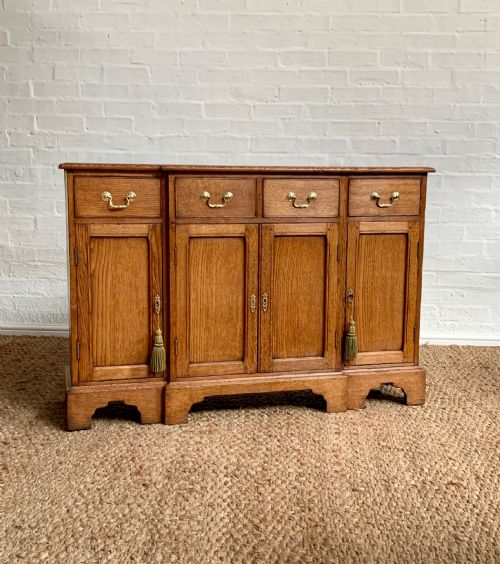
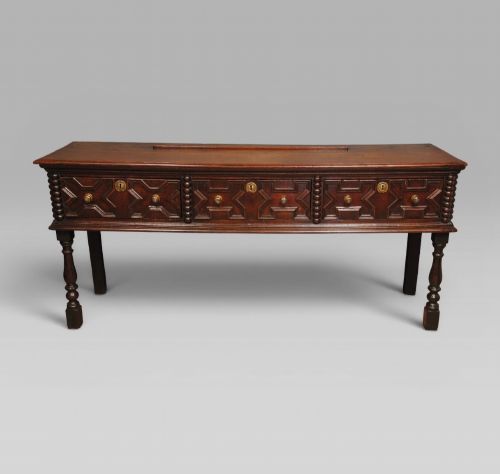
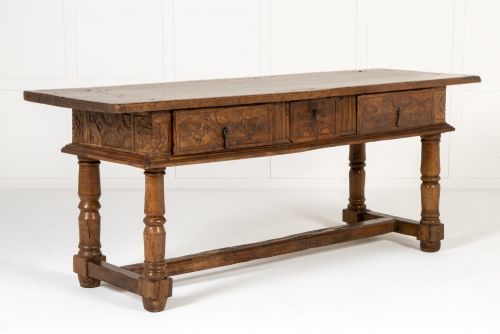
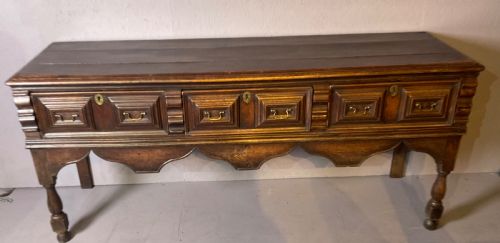
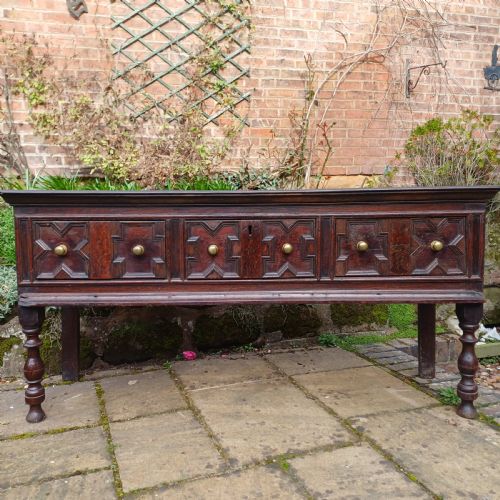
The version most commonly met on this page is the oak dresser base or side table, often originating from English, Spanish, or Flemish workshops. They offer low, horizontal surfaces set above drawers or cupboards.
Examples span authentic period works alongside later revivals from the Victorian era and the early twentieth century. Each shares the robust proportions and functional design characteristic of early dining furniture.
Materials and construction
Makers relied primarily on solid oak, walnut, and sometimes Spanish walnut for structural integrity. These timbers were joined using traditional methods that provided durability for heavy domestic use.
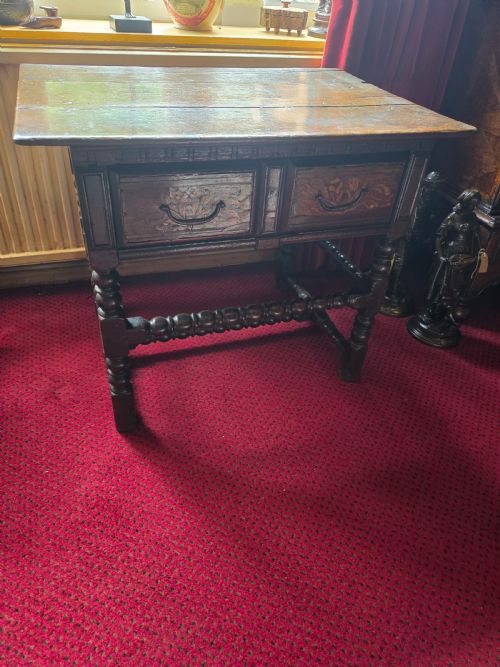
Surface ornamentation involved carving, wood inlay, and geometrically moulded drawer fronts. Iron and brass fittings, such as handles and hinges, completed the construction alongside wrought iron details.
17th Century Server Retail Price Guide 2026
Typical asking prices for 17th century server among the pieces listed under this phrase on Sellingantiques today, from the lower quarter to the upper quarter. They describe what is for sale here now, not the wider market.
The listings show pieces constructed from oak, walnut, and painted oak, incorporating iron and brass hardware.
Assessing quality
Quality depends on the crispness of the original carving and the integrity of the timber used in construction. Period pieces show the natural wear of centuries, whereas revival items reflect the craftsmanship of their specific era of production.
The sophistication of decorative elements, such as geometric mouldings and inlaid details, separates standard utility furniture from finer examples. Original surface treatments and hardware also influence the character of each piece.
The 17th Century Server Glossary
- Dresser base
- A low wooden storage unit featuring drawers or cupboards beneath a flat top. They served multiple domestic purposes in early kitchens and halls.
- Lowboy
- A small table with one or more drawers, standing on relatively tall legs. This form gained popularity for serving and storage.
- Court cupboard
- An enclosed piece of furniture used for displaying plate and storing provisions. These structures often feature upper and lower tiers.
- Barley twist
- A type of turning shaped to resemble a twisted rope. This decorative motif appears frequently on table legs and supports.
- Block front
- A cabinet front divided visually into three vertical sections, with the outer sections projecting forward. This technique adds depth to drawer construction.
17th Century Server: Frequently Asked Questions
How do I use a server in a modern home?
These pieces function well as sideboards in dining rooms or as console tables in hallways. Their drawers offer practical storage for linens or tableware while the top provides display space.
Placing them against a wall preserves walking space while letting the historical timber contrast with contemporary interiors.
How do I distinguish 17th century pieces from revivals?
Examine the timber shrinkage, tool marks, and construction joints for signs of age. Period pieces show natural wear patterns built up over centuries of use.
Revival items from later centuries often employ standardised machining techniques and cleaner internal fittings that differ from older hand-worked surfaces.
What is the difference between a dresser base and a lowboy?
A dresser base is typically longer and heavier, designed with multiple drawers or cupboards for substantial storage. They sit lower to the ground relative to their width.
A lowboy is smaller and lighter, usually standing on four distinct legs with fewer drawers, functioning more like a side table.
Are these servers suitable for daily use?
Solid timber construction makes these tables remarkably resilient for everyday placement. Their original purpose demanded durability under heavy loads.
Treating the wood with care and avoiding excessive moisture keeps the surface stable in modern environments.