


17th Century Console
A 17th century console brings robust architectural presence and rich historical character into a room through heavy timber and period joinery.
17th Century Console
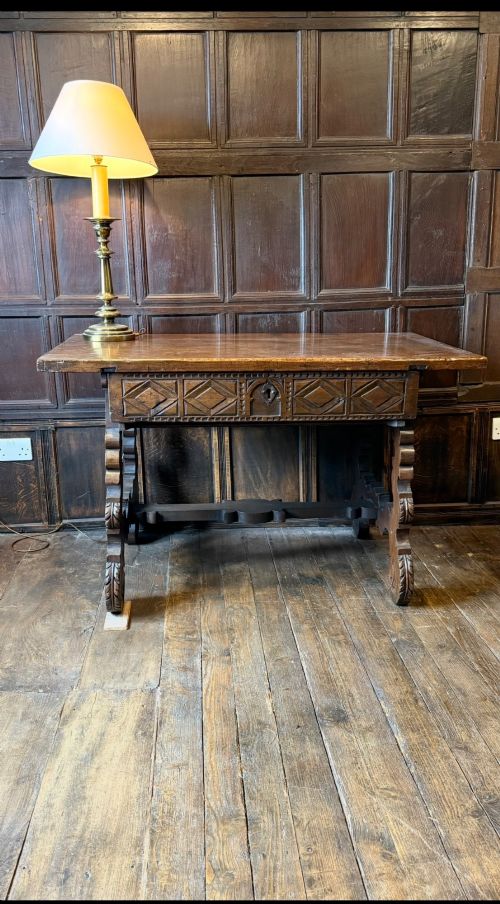
A 17th century console encompasses side tables, serving tables, and dresser bases originating from the seventeen hundreds alongside later revival pieces produced in the twentieth century. These objects function primarily as heavy side furniture designed to stand against walls in principal rooms.
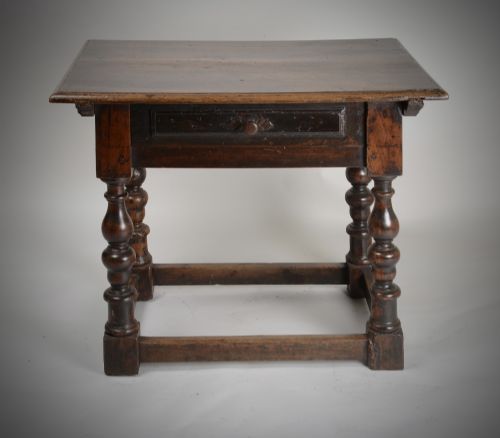
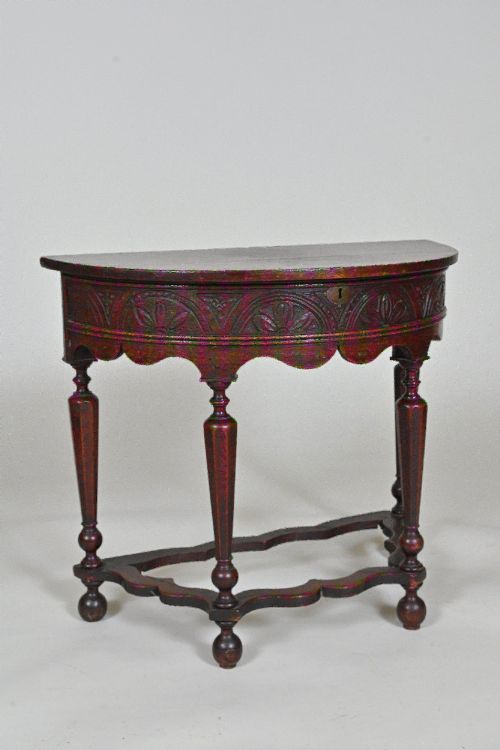
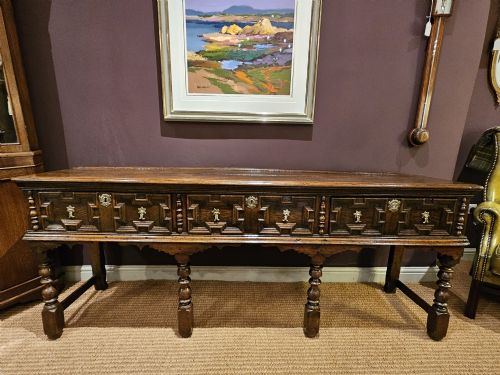
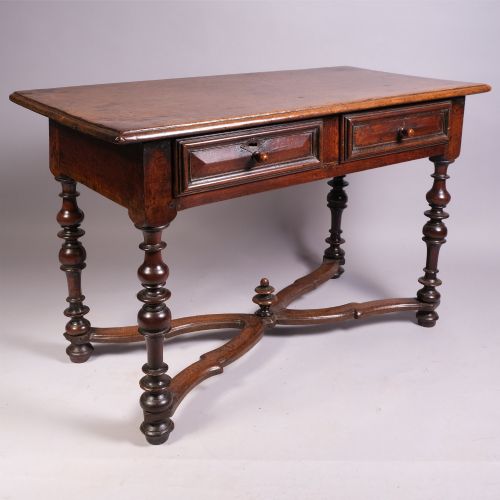
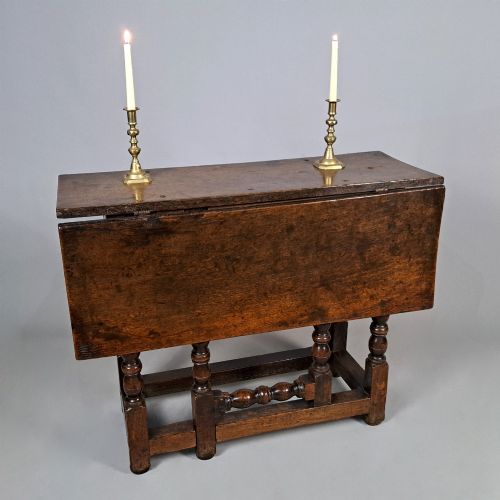
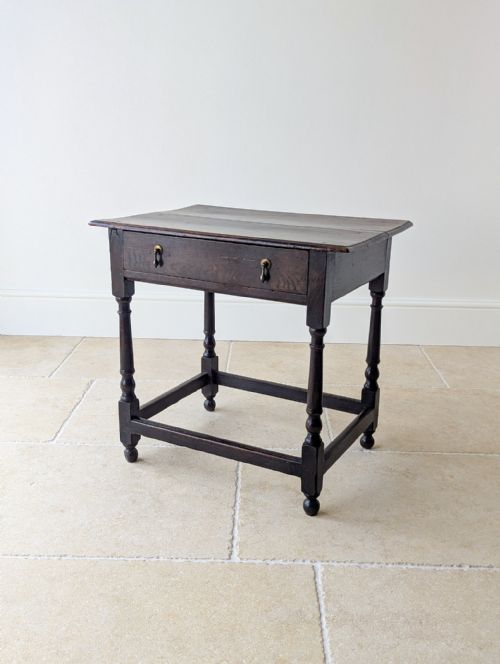
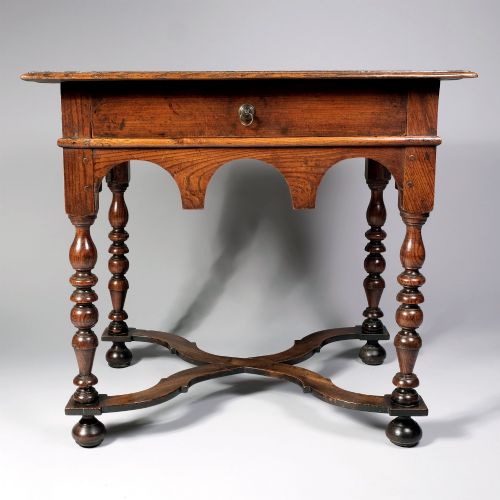
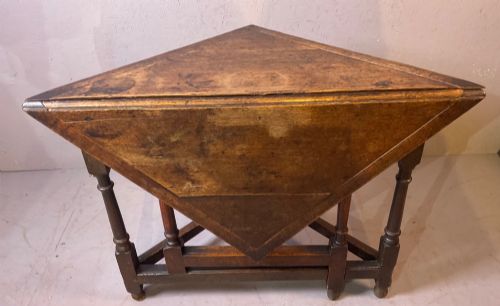
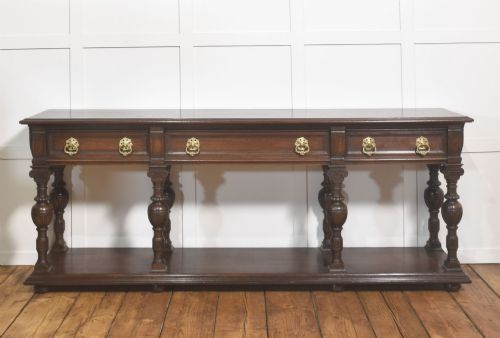
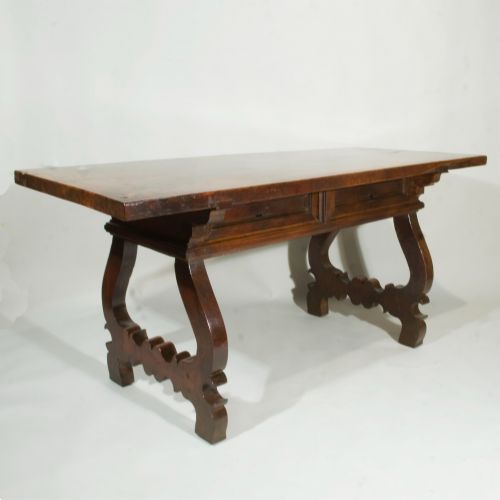
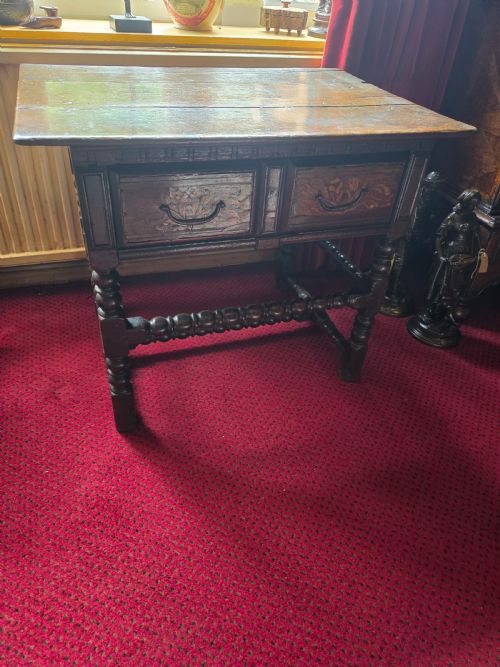
The versions most frequently met here span English and Spanish origins, constructed in oak or walnut with rectangular tops and substantial underframing. Credence tables, low dressers, and bobbin-turned side tables appear alongside serving tables dating to the Baroque and William and Mary periods.
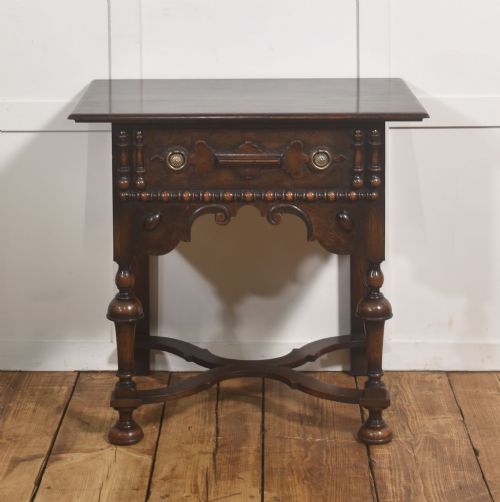
Revival iterations from nineteen ten to nineteen thirty replicate earlier Jacobean and Carolean forms using solid oak and traditional proportions. Buyers encounter both authentic period survivals and later interpretations sharing identical utilitarian forms.
Materials and Construction
Makers relied heavily on solid oak and walnut, supplementing structural elements with elm, fruitwood marquetry, and wrought iron hardware. Timber was selected for grain density and durability, forming thick plank tops and robust stretcher bases.
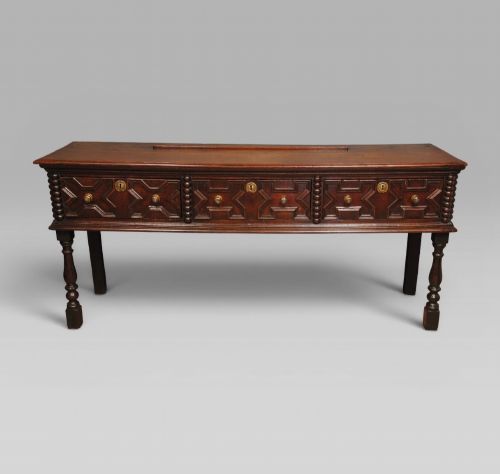
Joinery techniques utilised pegged mortise and tenon joints to support heavy loads without metal fasteners. Drawer construction frequently employed hand-cut dovetails and geometric mouldings fixed to the facade.
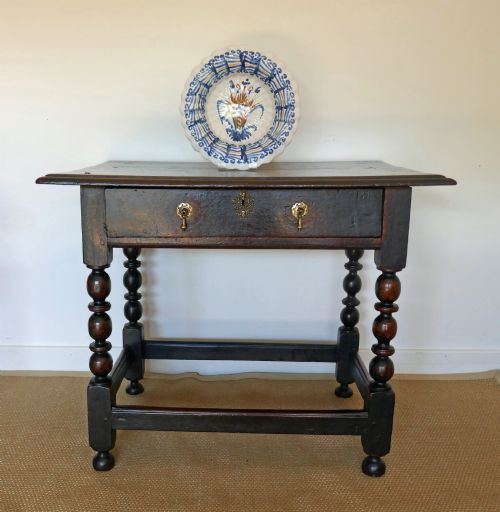
Turning lathes produced distinctive bobbin and barley twist legs, while surface finishes relied on applied wax or polish to protect the wood while revealing natural grain patterns.
17th Century Console Retail Price Guide 2026
Typical asking prices for 17th century console among the pieces listed under this phrase on Sellingantiques today, from the lower quarter to the upper quarter. They describe what is for sale here now, not the wider market.
Some seventeenth-century boards retain ancient carpenter's chalk marks on the underside, proving the craftsman measured twice before the first civil war.
Craftsmanship and Survival
Gradations in quality depend upon the integrity of the original timber and the crispness of hand-carved decorative details. Superior examples exhibit well-proportioned stretchers, harmonious grain matching on drawer fronts, and minimal replacement of structural components.
The survival of original surface patination separates exceptional pieces from those stripped or overly restored in later centuries. Subtle distinctions in turning depth and the execution of geometric mouldings indicate the skill of the original workshop.
The 17th Century Console Glossary
- Barley twist
- A spiral turning technique executed on a lathe to create a rope-like column on legs or stretchers. This decorative detail gained prominence during the late seventeenth century.
- Dresser base
- A low rectangular storage table fitted with drawers beneath the main surface, typically utilised for serving food or storing household textiles. These pieces form a significant portion of early joined furniture.
- Marquetry
- The art of applying decorative veneer pieces to a structural surface to create pictorial or geometric patterns. Fruitwood and contrasting timbers are typically employed in these designs.
- Stretcher
- A horizontal timber connecting the legs of a table to provide structural stability and rigidity. These supports frequently incorporate raised architectural mouldings.
17th Century Console: Frequently Asked Questions
How do I care for antique timber?
Maintaining these surfaces requires consistent humidity control and regular applications of microcrystalline wax to nourish the dry wood. Avoiding direct sunlight and heating vents prevents the oak and walnut boards from splitting.
Dusting with a soft, dry cloth preserves the historical finish without stripping the accumulated layers of old polish.
How are original pieces dated?
Dating relies on examining tool marks, timber shrinkage patterns, joinery methods, and the style of turning or carving. Hand-sawn boards and truncheons left by pit saws indicate period manufacture rather than modern machine production.
Comparing hardware fixings and secondary woods provides further evidence regarding the era of construction.
What is a bobbin-turned leg?
Bobbin-turning involves shaping wooden spindles on a lathe into a series of spherical or cylindrical segments resembling spools of thread. This technique became popular during the latter half of the seventeenth century.
The resulting legs add texture and visual rhythm to the underframe of side tables and stands.