



16th Century Oak Panels
These 16th century oak panels and related carvings bring substantial early timberwork into a room, offering genuine Tudor and Elizabethan character.
16th Century Oak Panels
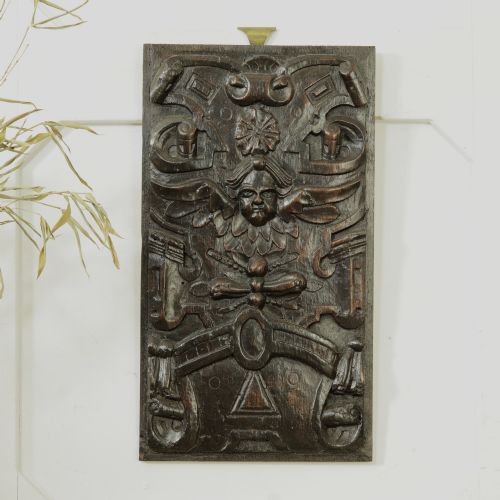
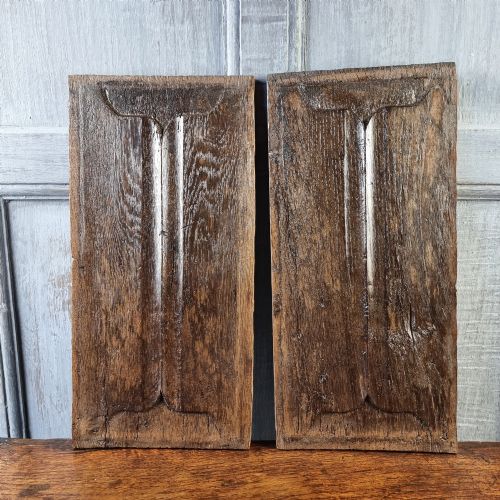
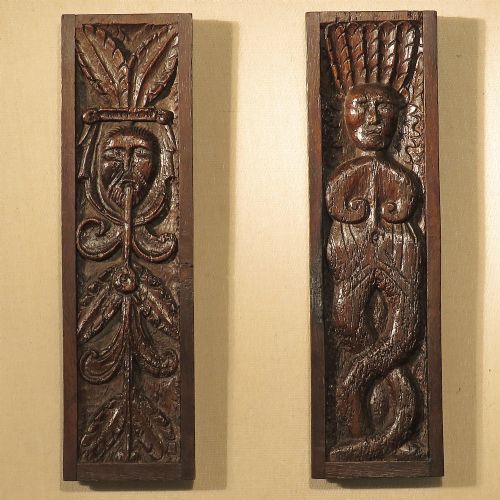
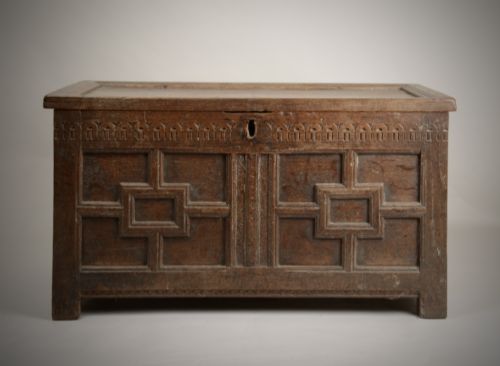
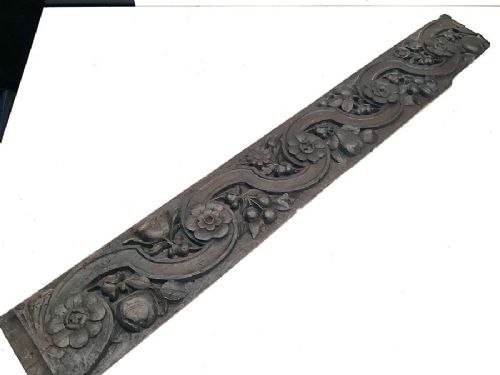
When you search for 16th century oak panels, you encounter architectural salvage, wall reliefs, and fragments salvaged from historic chests, coffers, and vestry cupboards. The most common survivals on this page are linenfold panels and carved sections depicting biblical scenes, mythical figures, Green Men, or figurative reliefs.
The material record spans the 16th century, the 17th century, and later revivals such as Tudor Revival pieces from the 1930s. Alongside oak, the listings incorporate walnut, wrought iron, and polychrome paint, reflecting both native English craftsmanship and continental Flemish Renaissance influences.
What varies in quality
The depth and clarity of the hand carving dictate the visual impact of each piece. Crisp, high-relief detailing on figures, mythical creatures, and drapery separates finer workshop output from simpler, more utilitarian carpentry.
The integrity of the timber and the survival of original surface characteristics, such as early paint traces or patinated grain, determine the historical weight of the panel. Pieces retaining their original structural context, whether as coffer fronts or paired wall sections, hold greater coherence.
16th Century Oak Panels Retail Price Guide 2026
Typical asking prices for 16th century oak panels among the pieces listed under this phrase on Sellingantiques today, from the lower quarter to the upper quarter. They describe what is for sale here now, not the wider market.
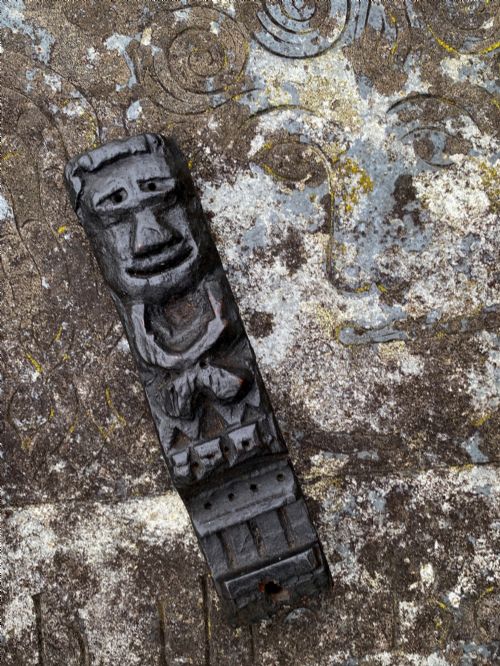
Among the carved timber faces stare ancient serpents and mythical winged devils keeping watch from centuries past.
The 16th Century Oak Panels Glossary
- Linenfold
- A style of wood carving representing folded linen or parchment, frequently seen on Tudor panels and chest fronts. This decorative motif creates vertical pleated folds across the timber surface.
- Relief
- Carving that projects from a flat background surface, executed in high or low depth to create figurative or decorative scenes. This technique gives dimensionality to panels depicting biblical or mythical subjects.
- Coffer
- A heavy wooden chest with a lid, often constructed from carved panels and utilised for storage in domestic or ecclesiastical settings. These pieces frequently incorporate panel fronts displaying period joinery.
- Polychrome
- Decoration employing several colours of paint applied directly to wood or stone surfaces. This finish survives on select early sculptures and relief panels.
16th Century Oak Panels: Frequently Asked Questions
How were 16th century panels used?
These panels functioned primarily as architectural wall linings, furniture fronts for coffers and cupboards, or decorative elements within ecclesiastical vestries. They provided both insulation and visual enrichment for domestic and religious interiors.
Over time, many panels were detached from their original structures and mounted as independent wall art or incorporated into later furniture cabinets and bookcases.
How do I identify Tudor woodwork?
Tudor woodwork is characterised by dense native timber, hand-chiselled tool marks, and traditional joinery methods such as mortise and tenon. Stylistic indicators include linenfold motifs, geometric strapwork, and early Renaissance figurative carvings.
Comparing the timber grain, patination, and construction style helps distinguish genuine 16th-century work from later revival pieces produced in the 1930s.
Can I hang these panels on a wall?
Most panels are substantial in weight due to the solid oak construction, requiring secure fixings anchored directly into wall studs or masonry. Wall mounting is a common way to display architectural salvage fragments and relief sculptures.
Ensuring adequate support protects both the historic timber and the wall surface from strain caused by heavy wooden carvings.
What is the difference between linenfold and figurative panels?
Linenfold panels feature stylised, repeating folds designed to resemble starched cloth or parchment, creating a uniform architectural texture. Figurative panels depict specific subjects, including biblical narratives, mythical winged devils, or portraits of men and women.
Figurative carvings generally offer greater narrative complexity, while linenfold panels provide rhythmic, geometric repetition across large furniture fronts.
How should I care for historic oak panels?
Historic oak requires stable indoor humidity levels away from direct heat sources and strong sunlight to prevent timber shrinkage or splitting. Maintaining a consistent environment preserves the natural patination and structural integrity of the wood.
Gentle dusting with a dry cloth is sufficient for routine maintenance, avoiding modern polishes or harsh chemical cleaners that might damage the surface.