
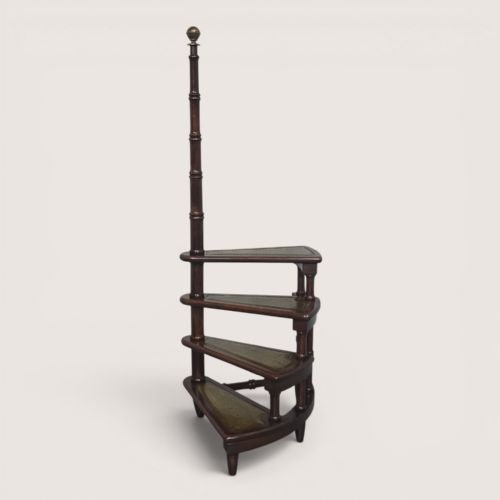


A 2026 Guide by Sellingantiques
Unusual Late Victorian Duet Stool., 1890
Priced at £285 from Rupert Hitchcox Antiques
Before chairs became common, most people sat on antique stools or benches.
The earliest joint stools often served double duty as small tables.
Look at court life. Royals used upholstered versions to establish hierarchy among courtiers, reserving chairs with backs and arms for monarchs while everyone else stood or shared backless benches.
Industrial changes in the nineteenth century shifted production toward factory-made piano and milking variants.
Gillows of Lancaster produced mahogany window stools from the late eighteenth century.
Thomas Chippendale supplied giltwood examples to wealthy clients during the 1760s and 1770s.
Don't expect maker's marks on provincial antique stools. Regional joiners turned them out by the dozen for local markets, relying on traditional patterns rather than chasing London fashions.
Middle Eastern Low Stool, 1900
Priced at £595 from Fernyhough Antiques Ltd
The 2026 retail price guide for Antique Stools is drawn from a proprietary archive of over 1.1 million retail prices indexed by Sellingantiques since 2003. This guide relies exclusively on their own internal data; no external sources or auction records are used.
Analysing nearly 25 years of UK antique market history alongside current retail values, the data indicates that typical UK retail prices for Antique Stools range between £300 and £1,400. Entry-level prices generally fall under £300 and premium examples upwards of £1,400.
Splayed legs are common on country antique stools, giving them a wider stance for better stability on the uneven dirt or stone floors found in rural cottages.
Central hand holes. A cutout in the seat often allowed the user to carry the piece with one hand.
Stretchers connecting the legs low down stop the joints splaying under weight.
Seventeenth-century joiners rived oak along the grain for maximum strength before cutting the tenons.
The shift to walnut in the 1700s required finer cabinet-making skills and glue rather than just wooden pegs.
Wedged through-tenons lock the legs of Windsor antique stools into thick elm seats so they don't work loose.
"Upholstered gout stools have an adjustable angle to ease circulation for sufferers of joint pain."
"Many short country forms were crafted specifically for sitting low near the hearth to watch cooking pots, so they won't take up much space."
"Some Georgian window seats were designed as matching pairs to frame an architectural view."
Based on almost 25 years of Sellingantiques UK antique market data, Antique Stools appeared 14404 times (out of 1,100,000 antiques) which gives it a rarity score of 6/100.
This score measures scarcity within the Sellingantiques archive only and is not a survey of the entire antiques market, so these statistics may not be indicative of the general availability of Antique Stools elsewhere.
The term refers to an early oak joint stool.
They were everyday seating for ordinary homes, not made for funerals.
Three legs guarantee a wobble-free seat on an uneven surface. Four legs require a flat floor, which most historic country cottages lacked.
Cobblers and dairy workers favoured this tripod form. It let them lean in any direction while working without tipping over.
Horsehair was the premium choice. Upholsterers curled and baked the tail hair to give it a lasting spring that held its shape under pressure.
Cheaper seating used whatever was local and affordable. Straw, dried moss and cow hair often filled the cushions in rural areas.
You are looking at a spinner's or weaver's stool. The missing front stretcher leaves empty space near the floor for a specific reason.
This open design gave the worker room to operate foot pedals. A front rail would have blocked their ankles and made long shifts in the cottage industries uncomfortable.
Many of these feature a slightly tilted seat too. It pitched the user forward toward the loom or spinning wheel to save them from straining their back over a long day.
Please note: This Antique Stools guide and its associated pricing data are provided for general informational purposes only. It does not constitute formal financial, investment, or appraisal advice and should not be relied upon as the sole basis for any commercial activity, purchasing, or sales decisions. Sellingantiques.co.uk accepts no liability for any actions taken in reliance on this information. Always consult with a qualified professional or independent appraiser.
