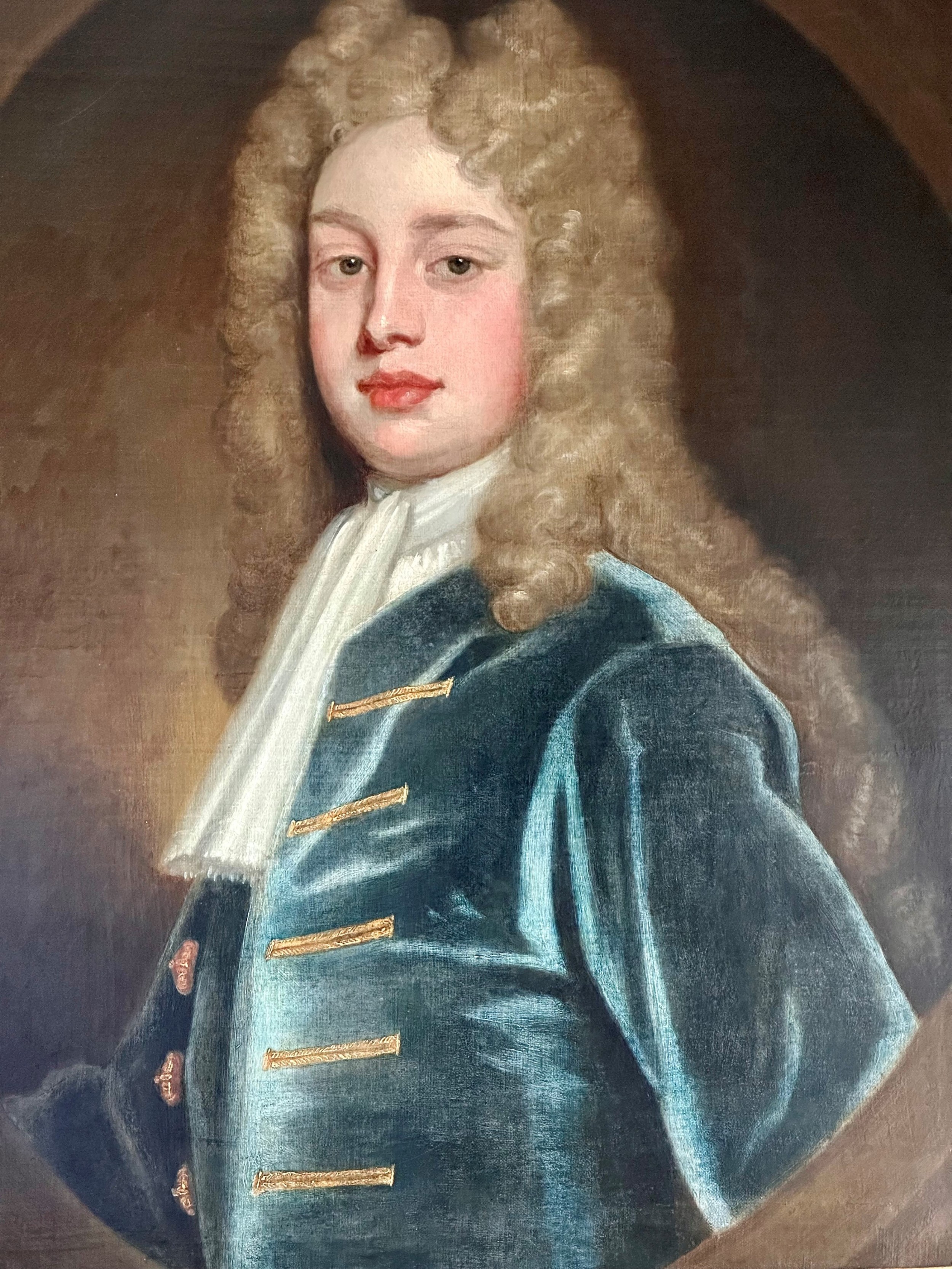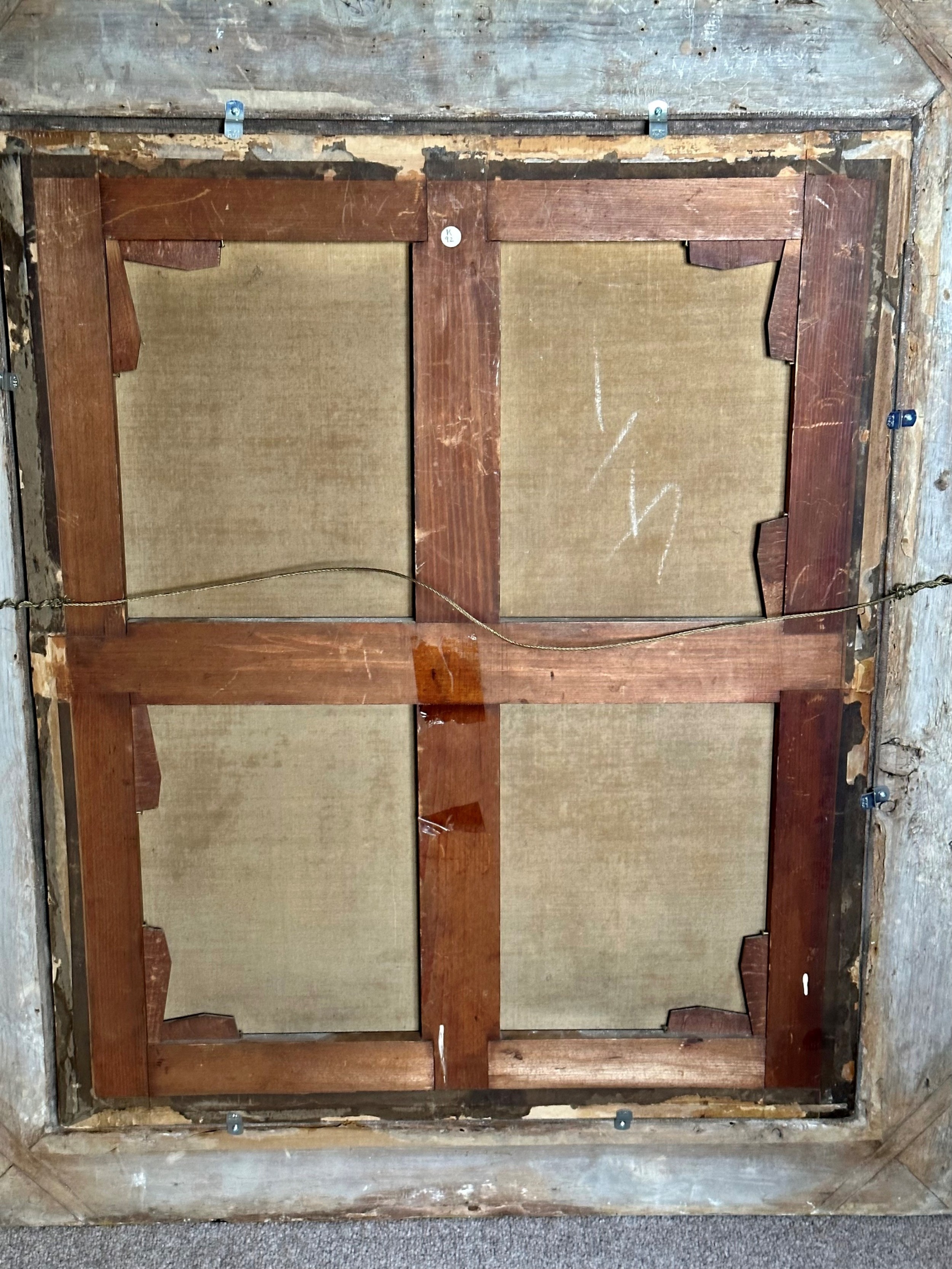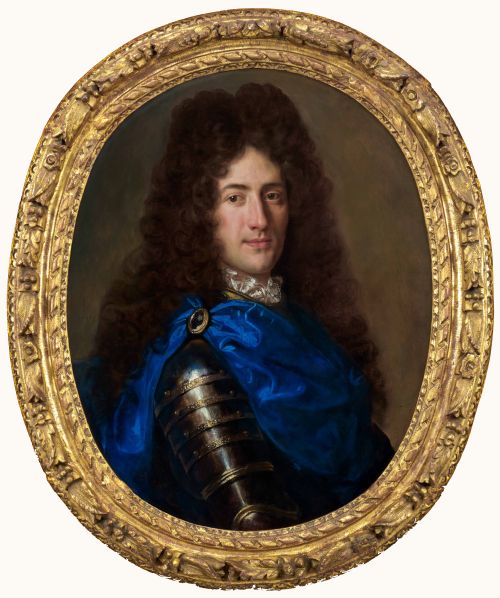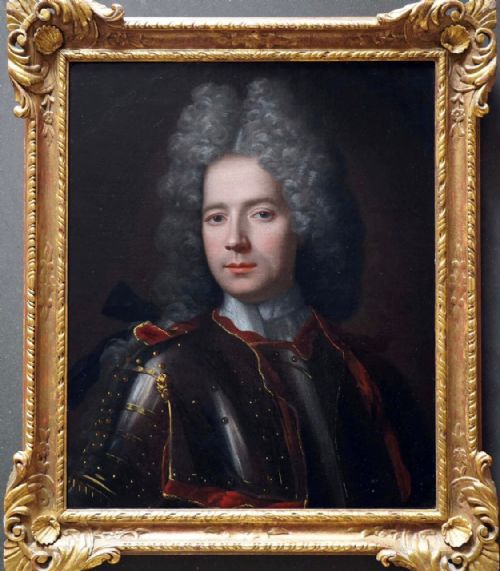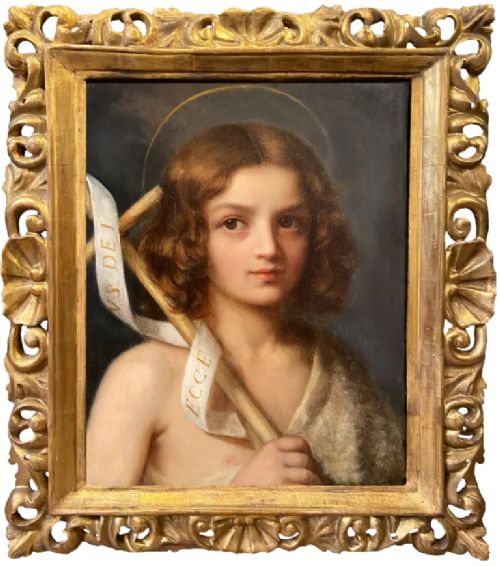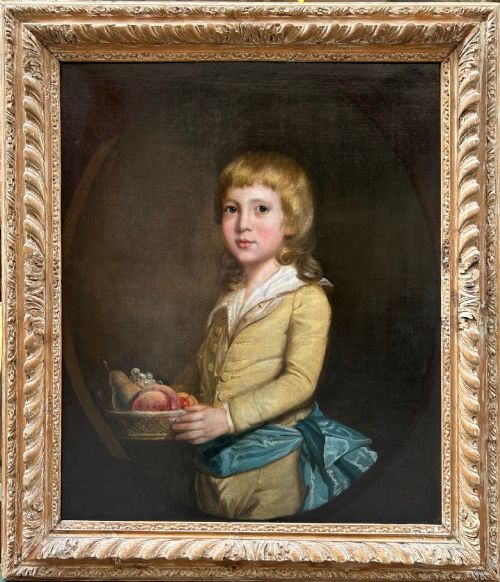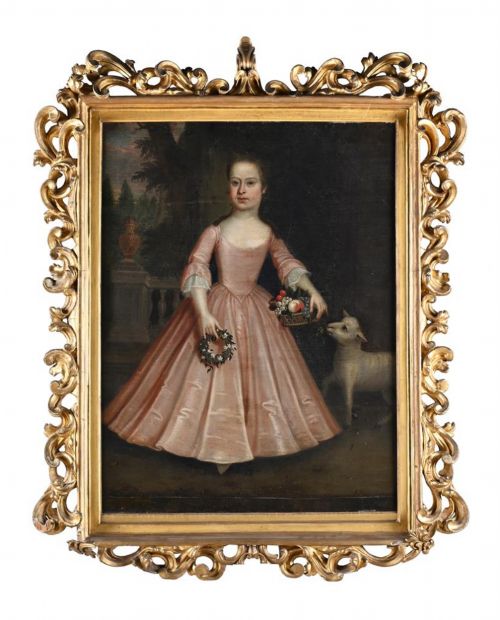
Roy Precious - Antiques & Fine Art has dated this 18th Century Oil Portrait to the 18th Century.
The sitter wears a large and very fashionable wig .. such wigs were expensive, the larger, the more costly. It is from this fashion that to this day rich and influential people are called 'bigwigs'.
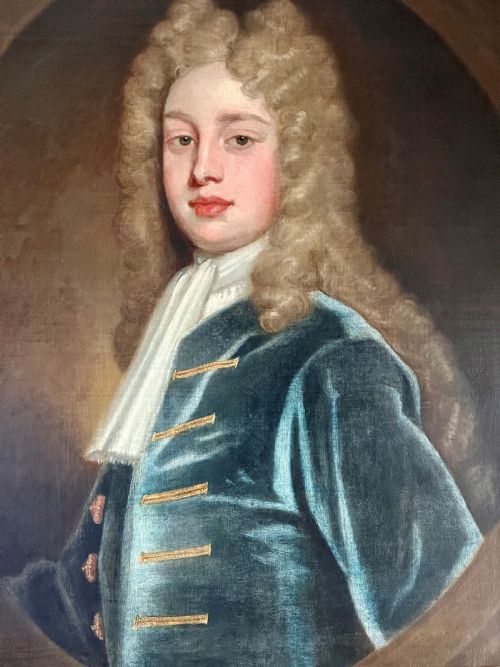
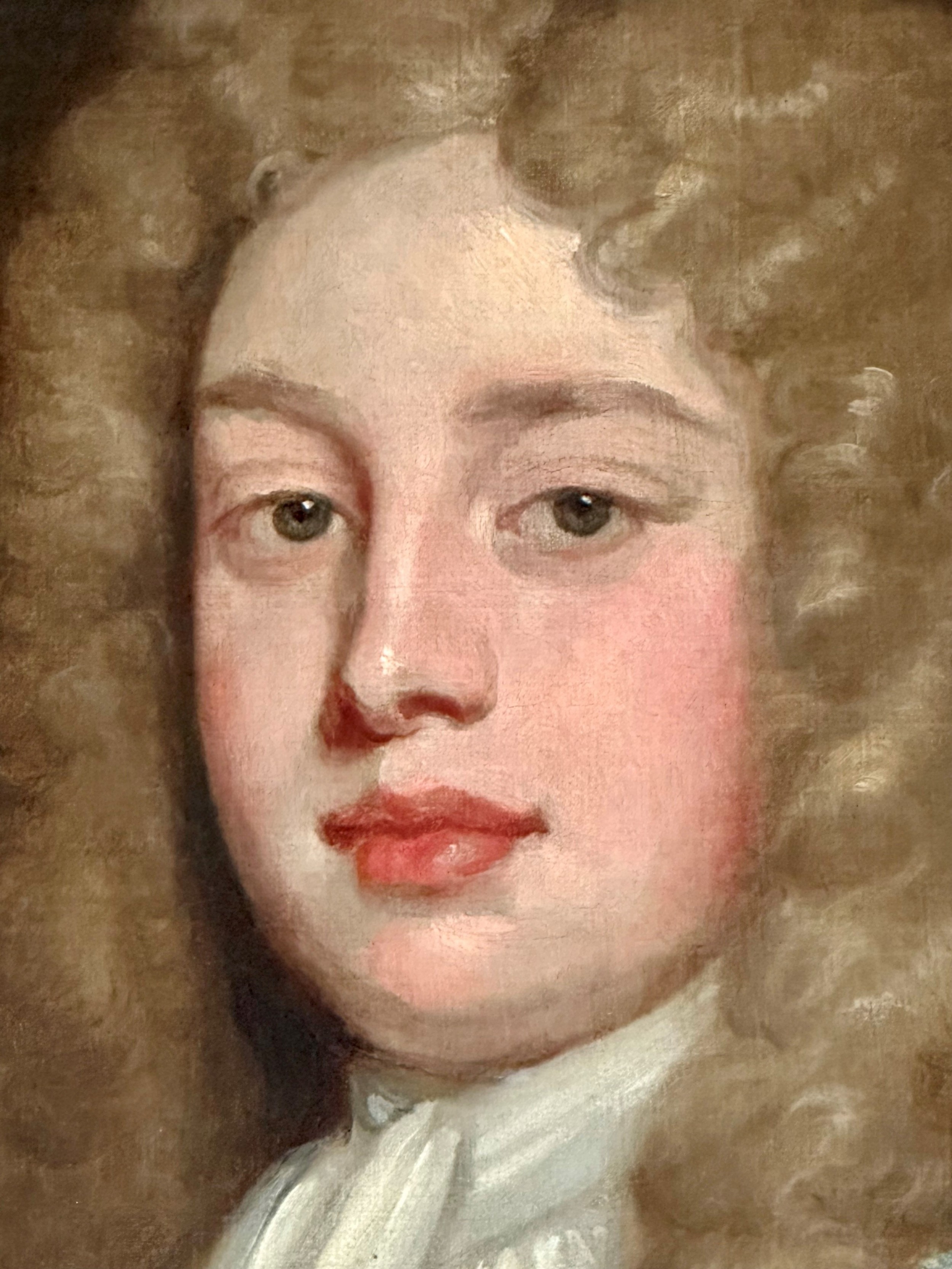
This is a good example of Kneller's work in the early 18th century. This looseness of focus is created with a free fluidity of brushstrokes. He has used a Rembrandtesque technique of subtle tones in the face, and we can see how Kneller often allowed the bluer ground layer to show through when suggesting the darker flesh tones. In both techniques, we should bear in mind Kneller’s own advice, when rebuking those who peered at his works too closely, ‘My paintings were not made for smelling of…’.
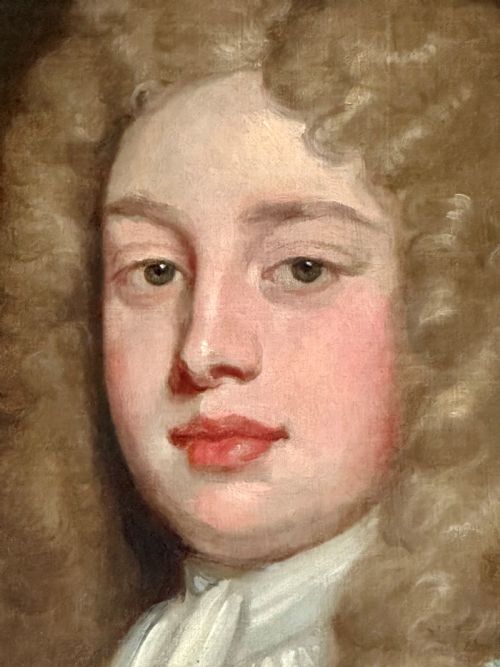
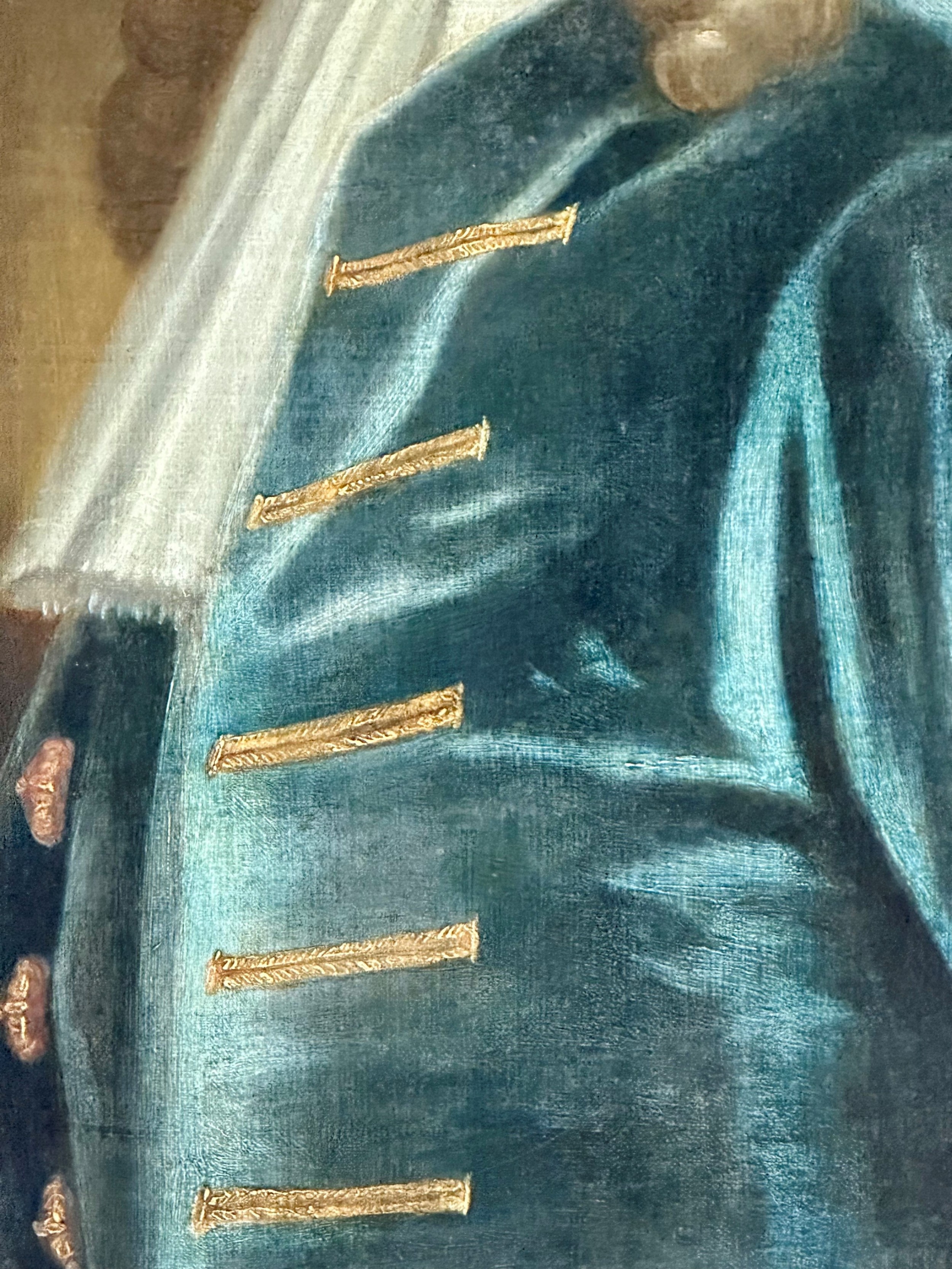
The painterly technique seen here is an excellent demonstration of Kneller’s style. The bold handling of the flesh tones is Kneller at his most emphatic, Rather than paint darker colours on top of the pink flesh tones, as most artists would have done, Kneller instead painted in the reverse order, using the ground layer for his dark shadows, and then painting the lighter colours on top. Often he worked with an almost dry brush in strong firm strokes. Here the flesh tones have been rapidly, almost roughly painted, with bold areas of impasto giving way to areas where almost no paint has been applied at all, a trick that allowed Kneller to use the blue-grey ground layer to show darker flesh tones.
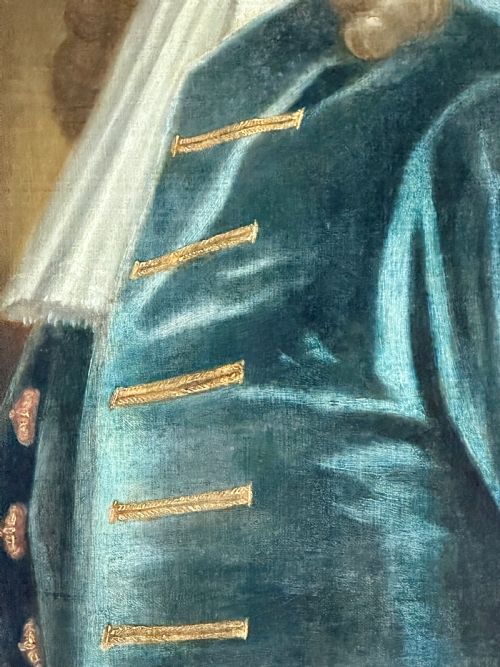
Basically Kneller's style was Baroque but there were three essential aspects to it which are found in all his mature works: naturalism, classicism and a feeling for the handling of paint. In his feeling for paint Kneller was, curiously, anti-classical in his dislike of 'finish' .. or 'over working' a painting. Both he, and later Gainsborough, defended a 'rough' surface.
SIR GODFREY KNELLER (1646-1723) dominates our understanding of late seventeenth and early eighteenth century British portraiture. With Van Dyck, Lely and Reynolds, his name has become synonymous with the visual interpretation of British history – not least because he painted almost every person of prominence in forty years of British public life. Every reigning British monarch from Charles II to George I sat to Kneller.
He studied under Ferdinand Bol, and perhaps Rembrandt himself in the 1660s. He was in Rome and Venice between 1672 and 1675, settling in England in 1676 for life. He was soon employed at Court and became the most successful portraitist of the generation following Lely. He enjoyed the office of Principal Painter, at first jointly with John Riley (d.1691), from shortly after the accession of William and Mary in 1688 until his death. He was knighted in 1692 and became a baronet in 1715.
His work fully expresses the spirit of the English Baroque, and includes penetrating studies of many of the leading figures of Whig Society such as the famous Kit-Kat portraits now in the National Portrait Gallery (Beningborough Hall, Yorkshire), which include the likenesses of Sir John Vanbrugh, Charles, 3rd Earl of Carlisle, and others.
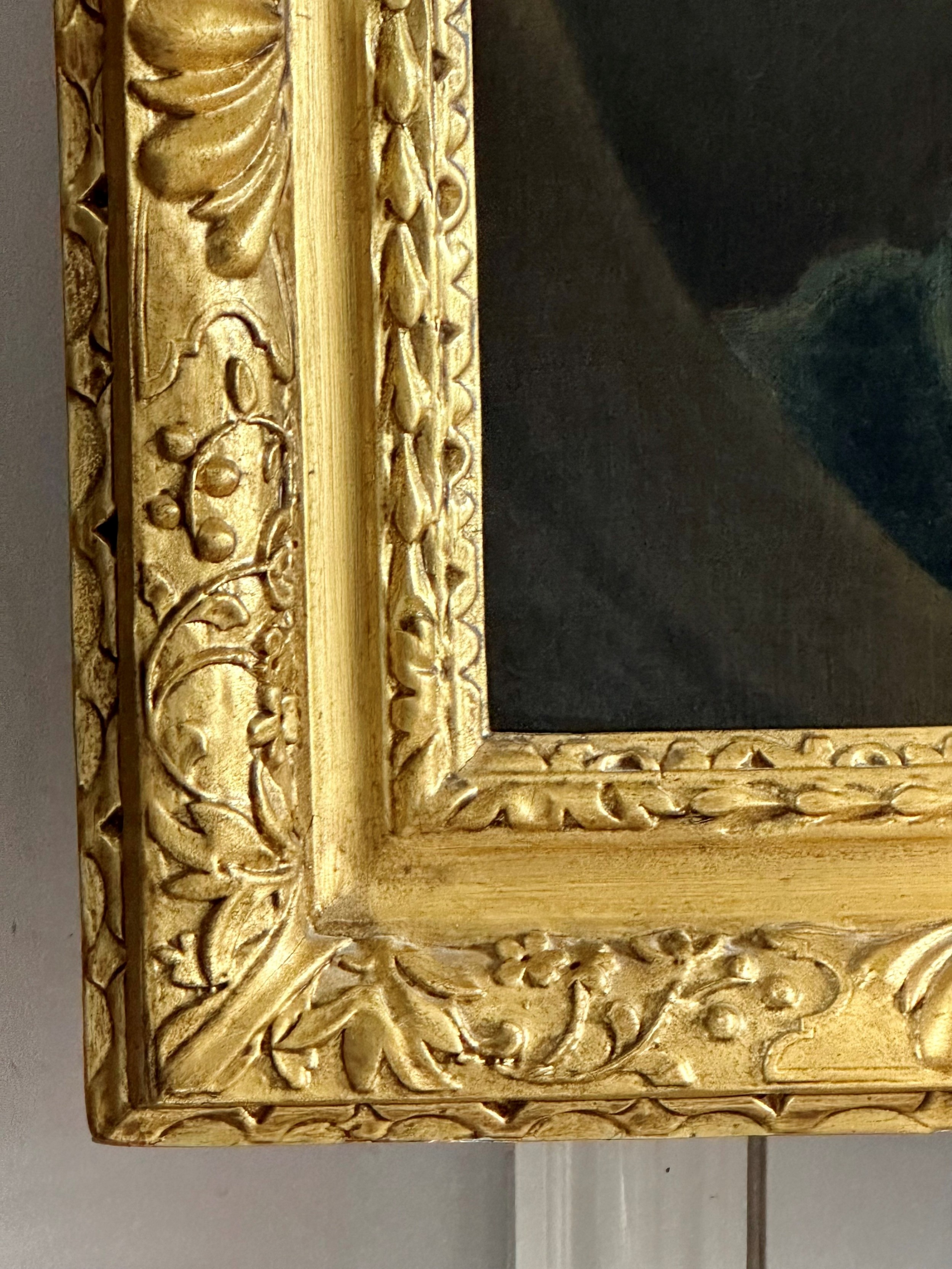
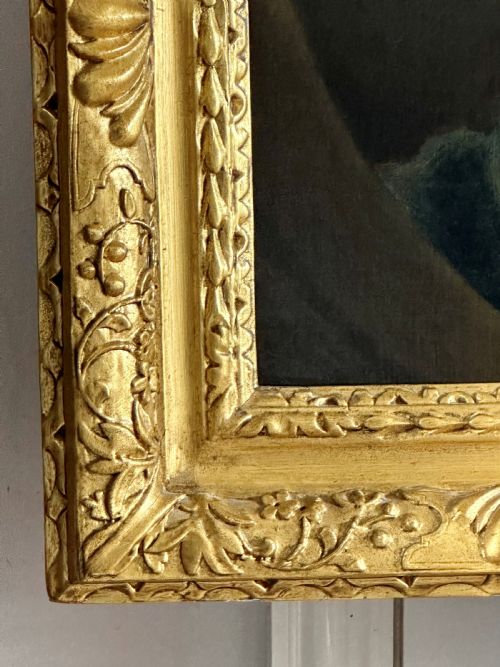
SIZE: 38 x 32.5 inches including the frame.
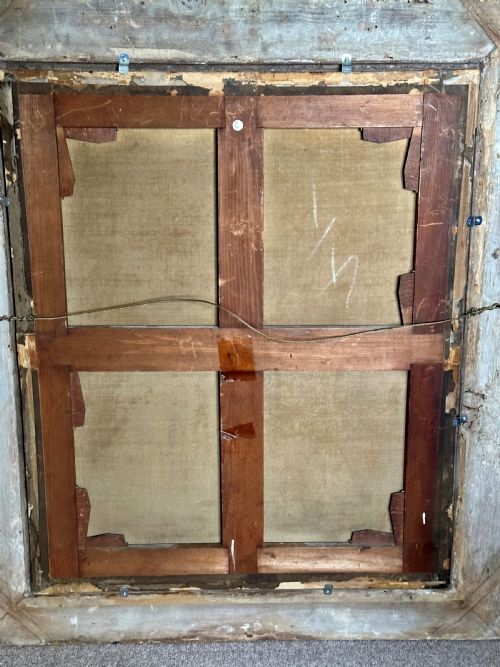
PROVENANCE: From a long standing Wiltshire private collection.
Roy Precious - Antiques & Fine Art has dated this 18th Century Oil Portrait to the 18th Century.
Roy and nadine precious: specialists in portraiture from the 16th to the 20th century. Established in 1972.
You can view the stock and full dealer information on the Roy Precious - Antiques & Fine Art Profile Page
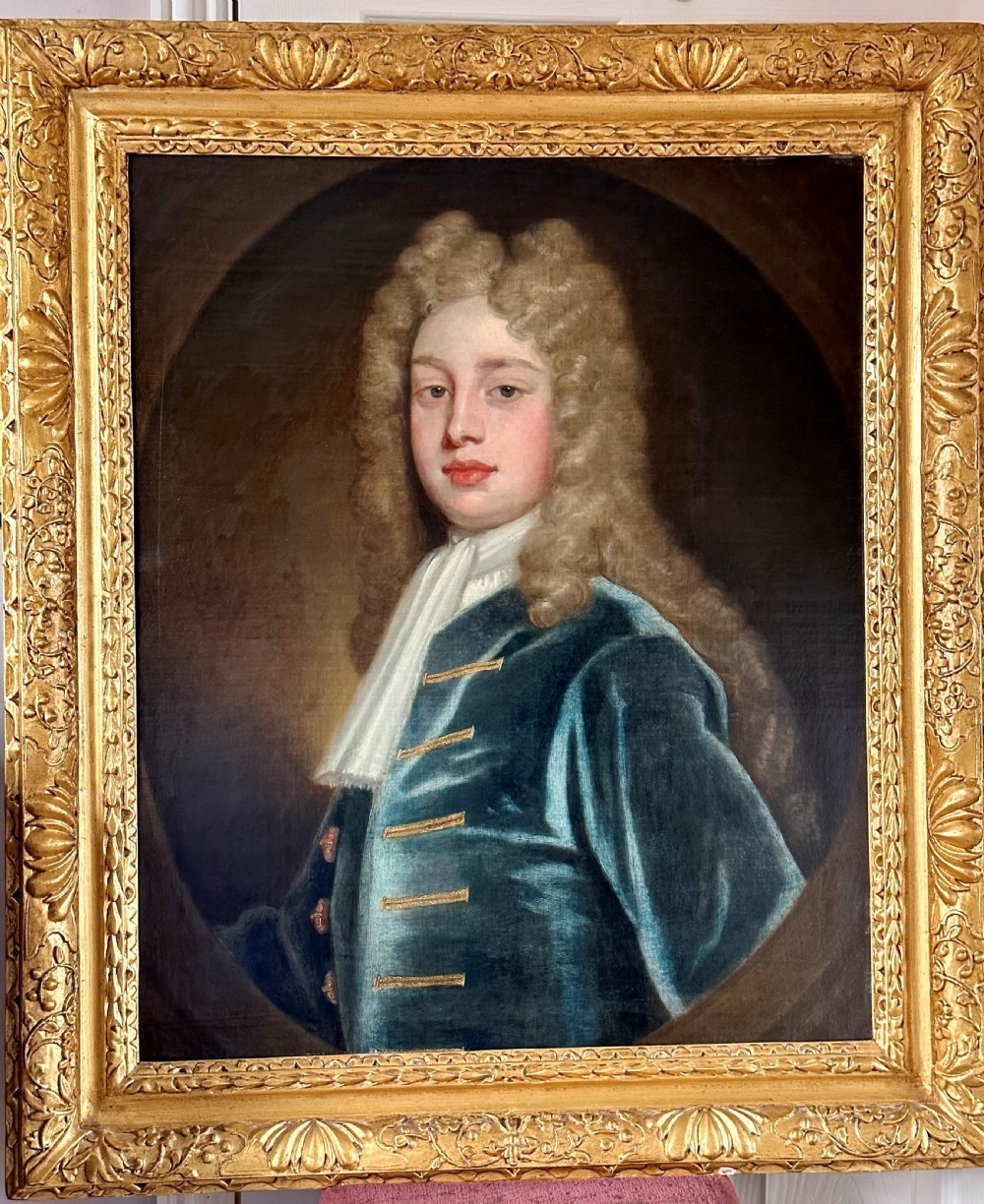
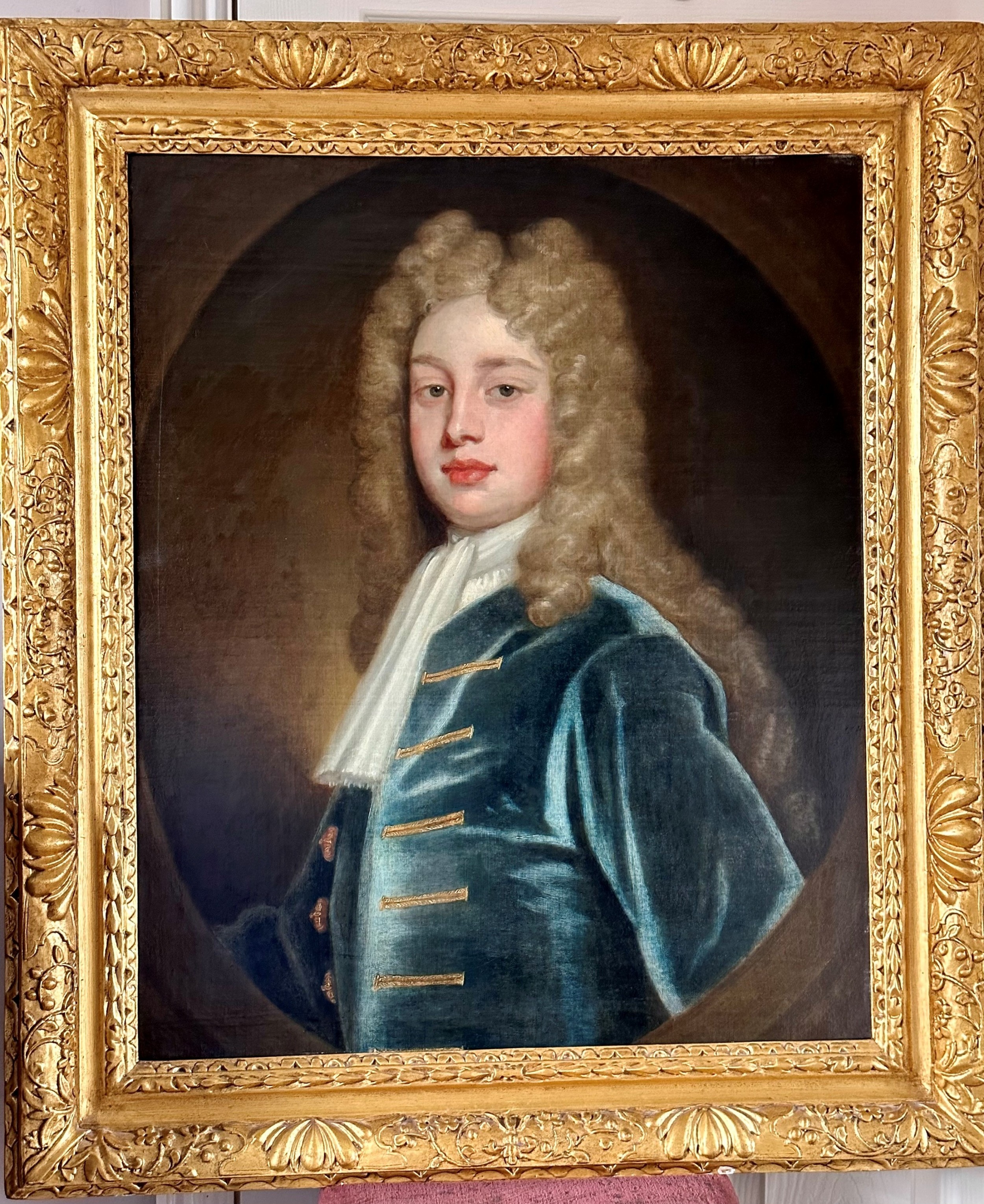
Portrait of a Gentleman c.1717 by Sir Godfrey Kneller.