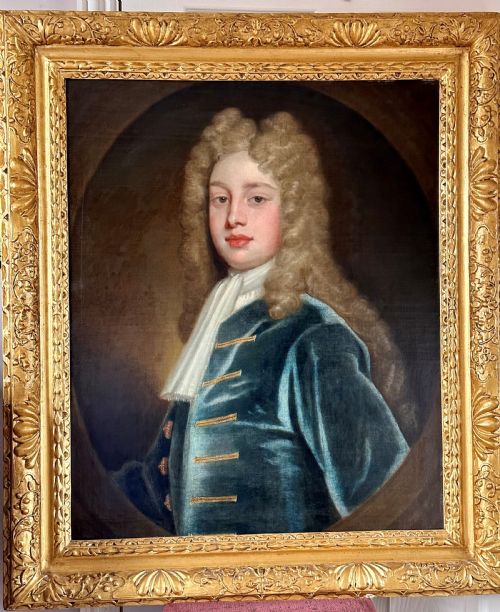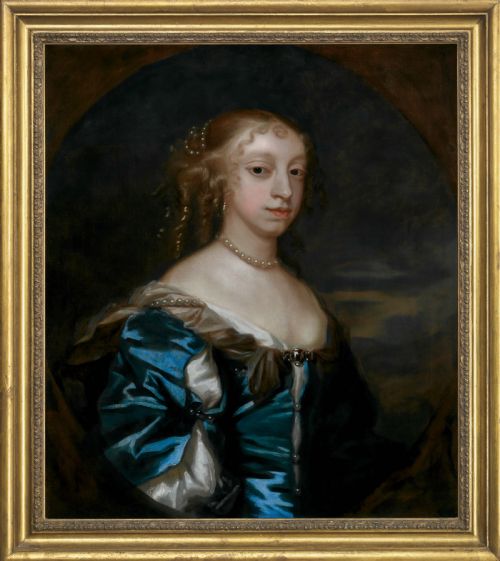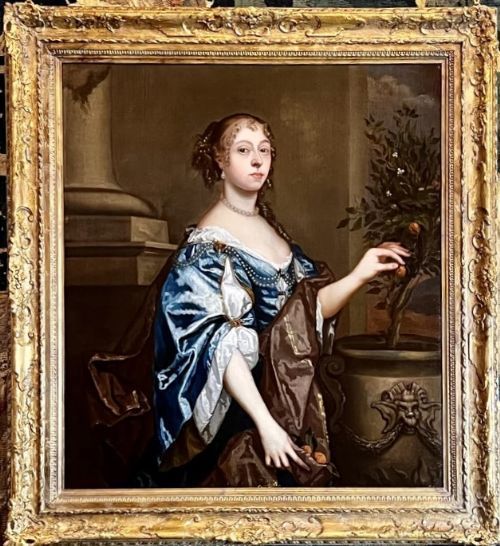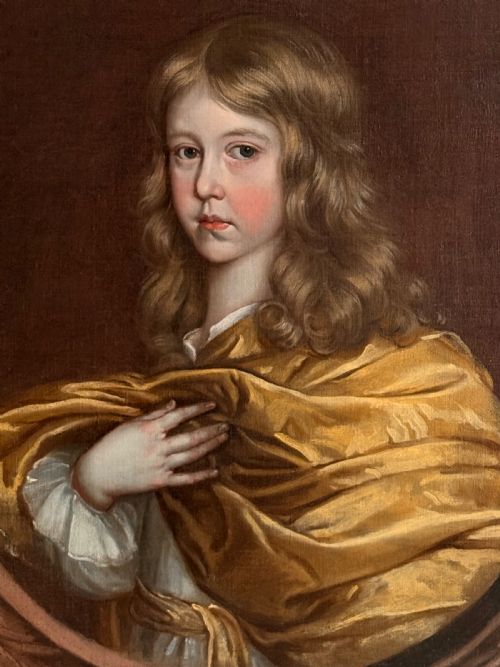
22,149  PAGES BROWSED TODAY PAGES TODAY 36  ANTIQUES UPLOADED TODAY NEW ARRIVALS
ID #SA1224743
FOR SALE
£8,950
Email Buy
Save
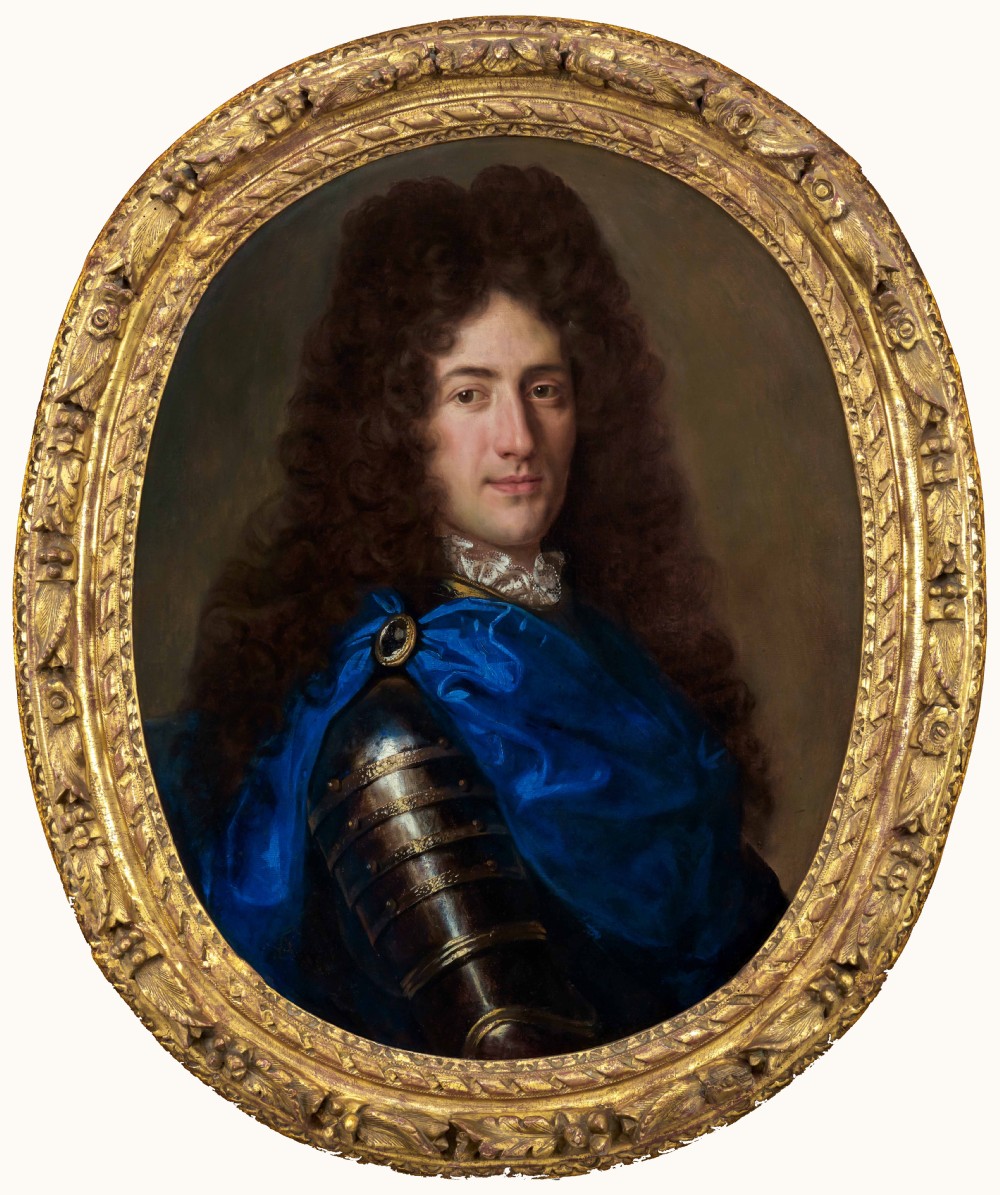
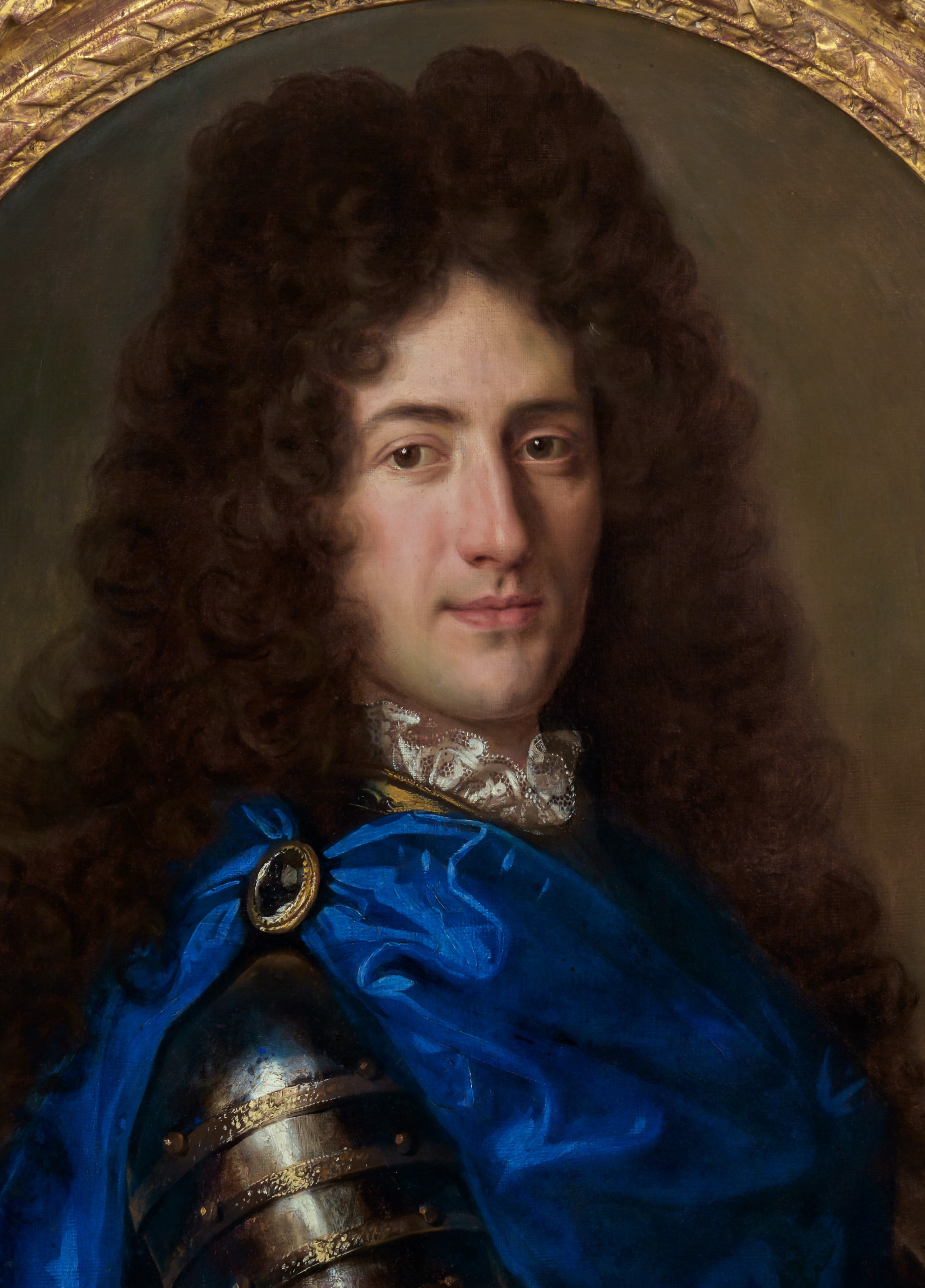
Portrait of a Gentleman in Armour and Azure Cloak with Diamond Clasp C.1700; Attributed to Joseph Vivienne (1657-1735), Oil on Canvas
Titan Fine Art
for sale €10,472     $11,367
£8,950
Titan Fine Art

Titan Fine Art

Sellingantiques Verified Since Jul 2016
View Dealers Stock Page
  • About Us
    Specialist in 17th & 18thc portraits. Highly curated selection, museum-level research & pro conservation. Exceptional art, expertly vetted.
Id #SA1224743
PDF SHARE
SAVE

Portrait of a Gentleman in Armour and Azure Cloak with Diamond Clasp C.1700; Attributed to Joseph Vivienne (1657-1735), Oil on Canvas

17th century
For Sale by Titan Fine Art
Description

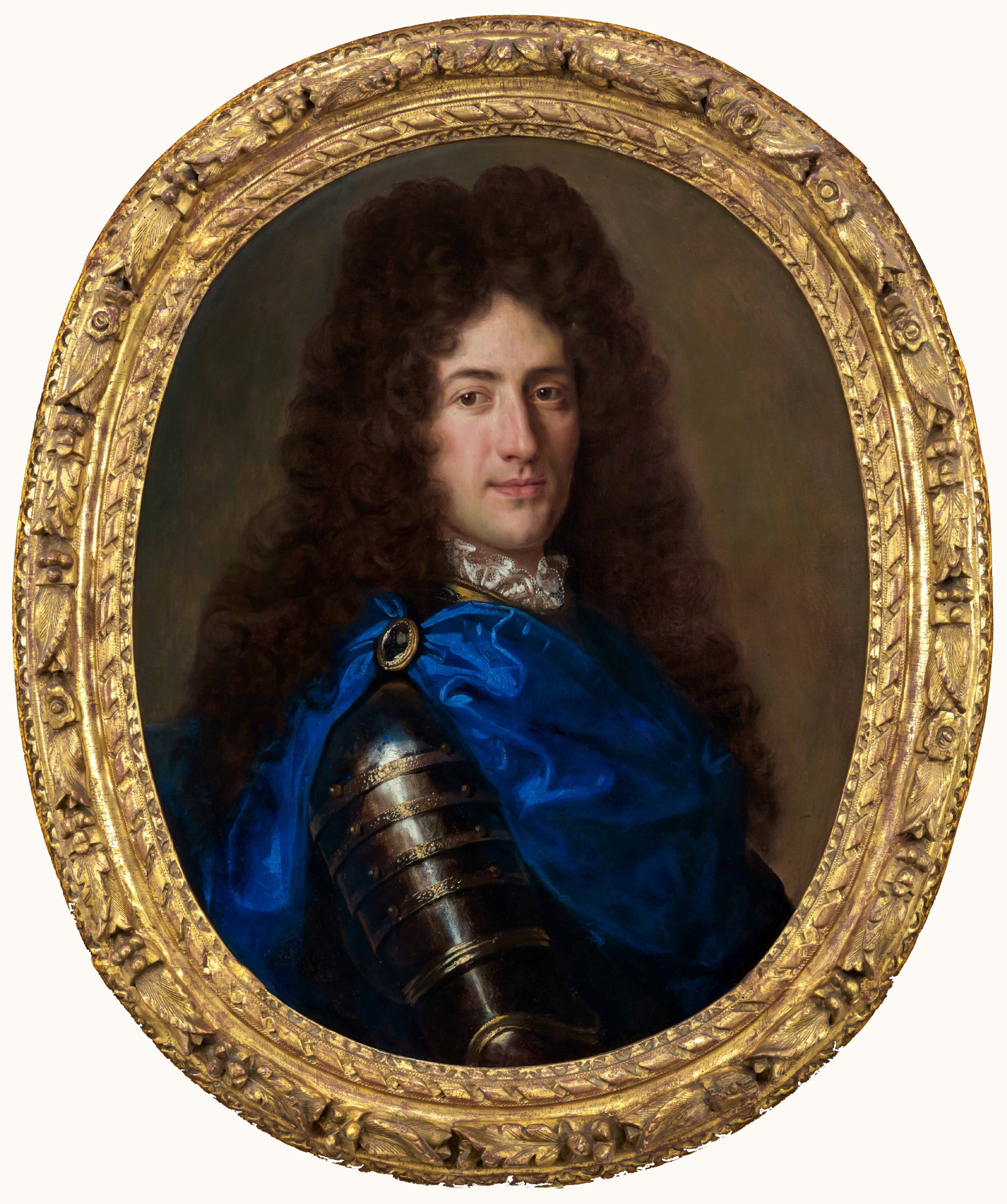
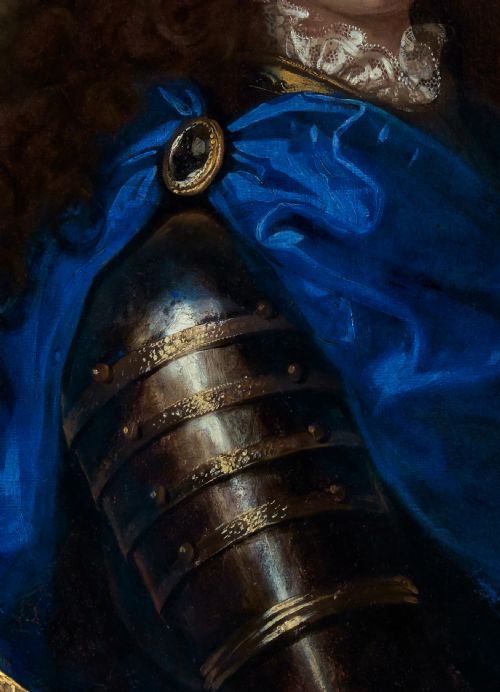
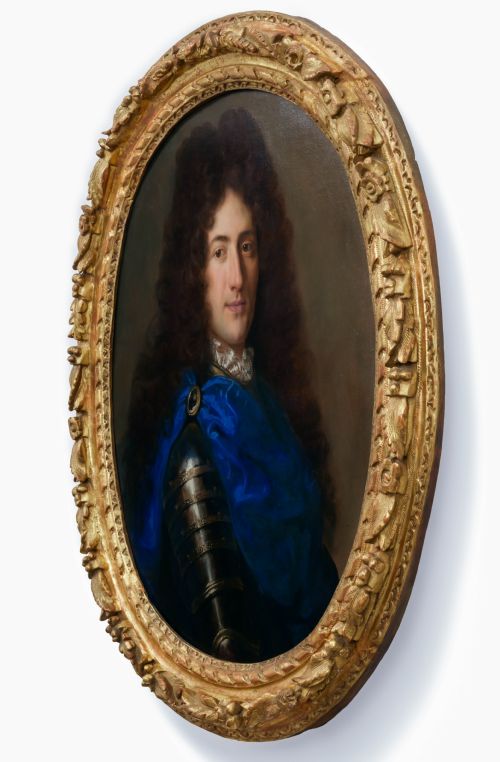
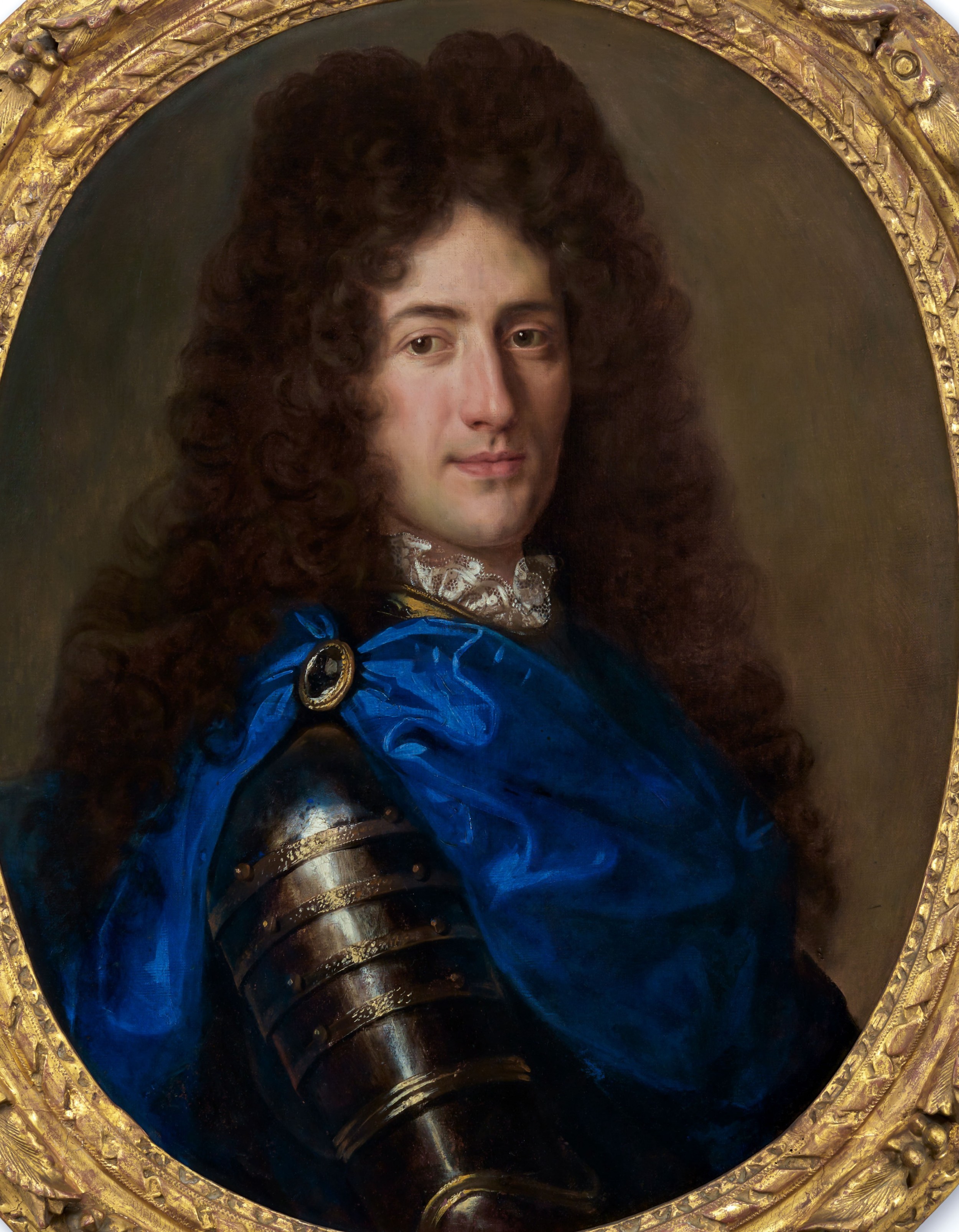
The sitter in this superb portrait is shown with the grandiloquence characteristic of the eighteenth-century French school of painting. The young nobleman has been portrayed wearing an ingeniously embellished French ceremonial armour, an azure cloak, and an abundance of cascading curls falling below his shoulders. This portrait proclaims to every onlooker that this is a superior being.
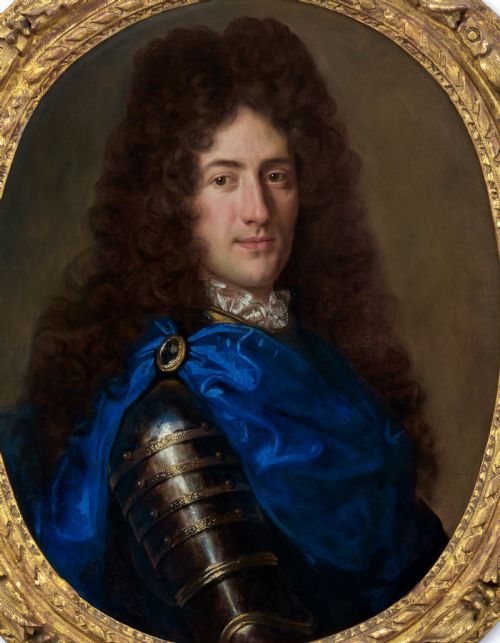
The features of the sitter’s face have been captured with great sensitivity, his confident gaze perhaps reflecting the near invincibility afforded by this steel suit. The flamboyance and penetrating sense of character, lending an air of noble expectancy to the composition, seems almost eclipsed by the artist's virtuosic handling of paint. It is easy to understand why many sitters from the upper echelons of society commissioned the artist to paint their portrait.
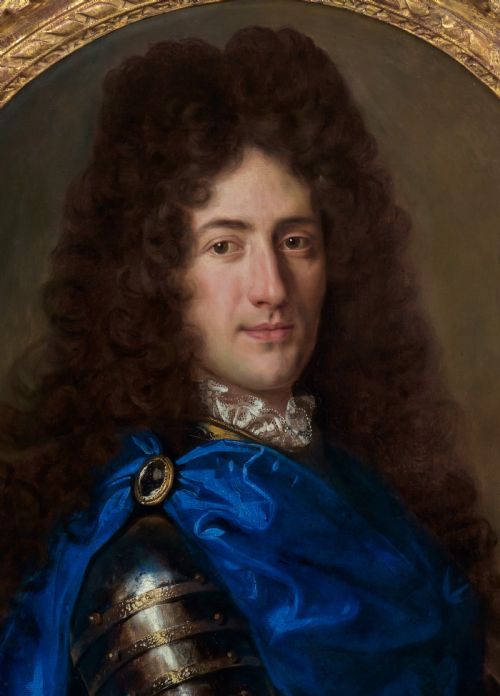
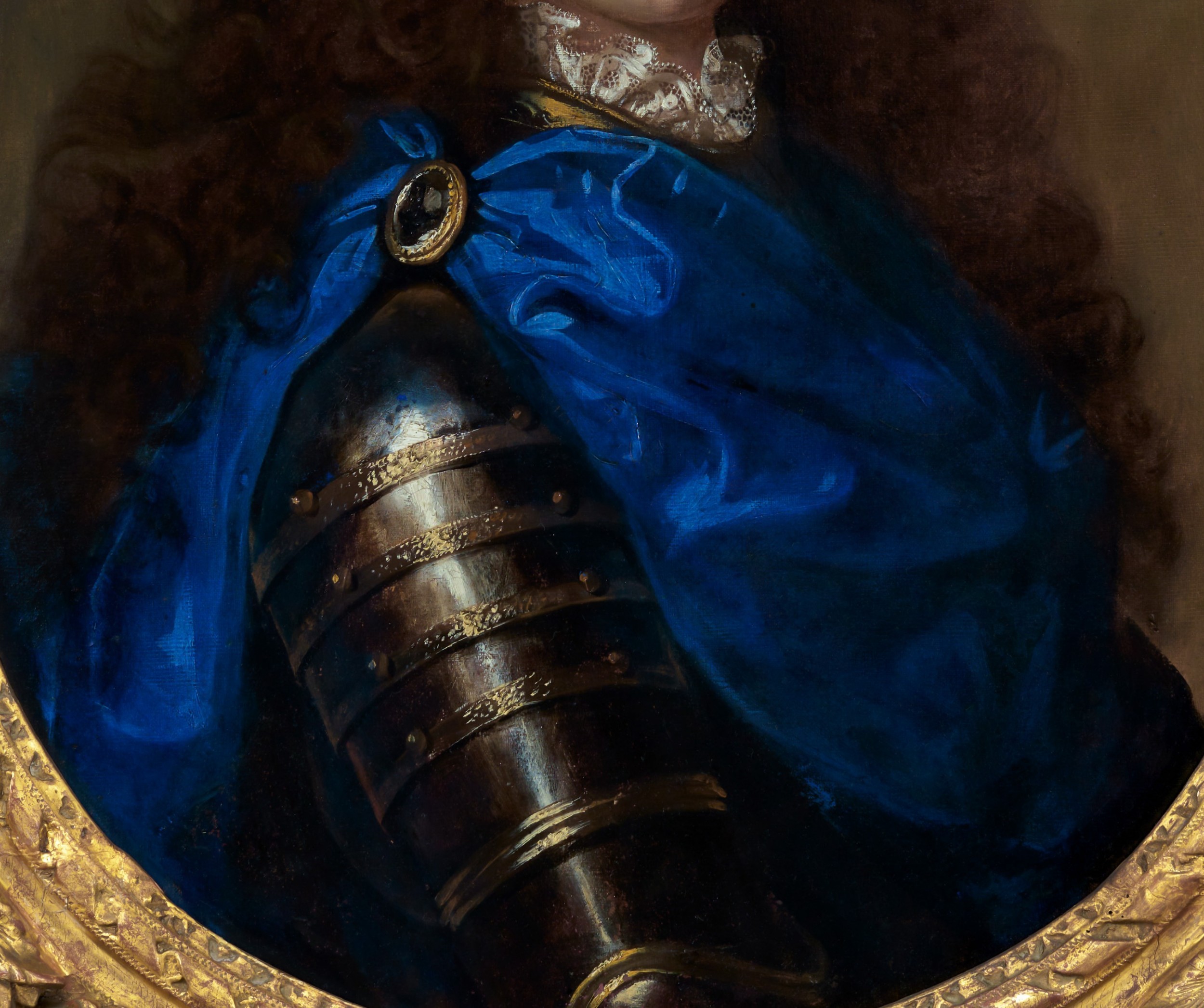
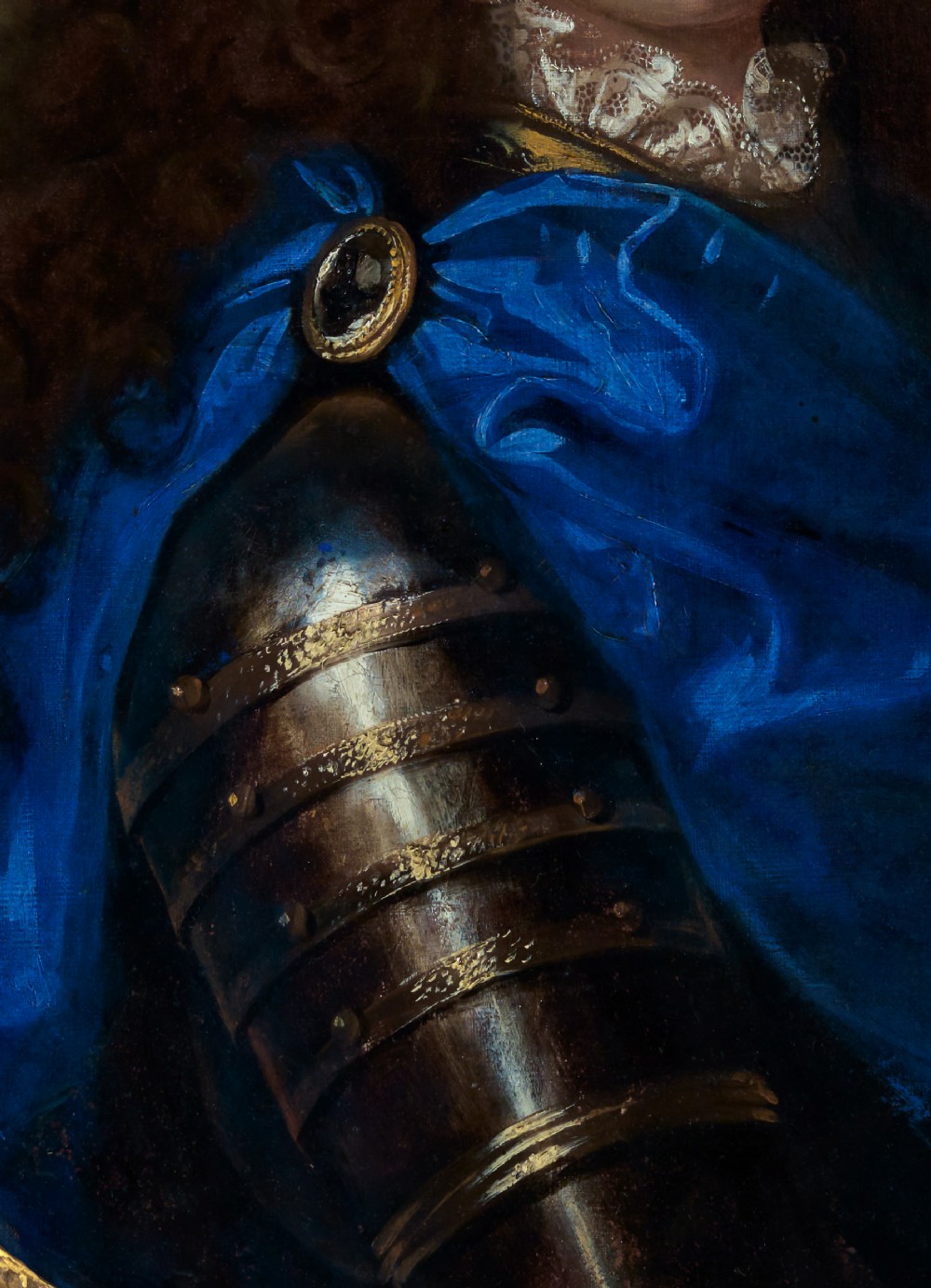
Such fine and ornate armour was not actually used on a battlefield - its portrayal in portraiture at this time was largely used to symbolise the subject’s wealth and status as well as a claim of succession to a chivalrous tradition. The style of hair and neckcloth help to date the portrait to the turn of the seventeenth century into the eighteenth century.
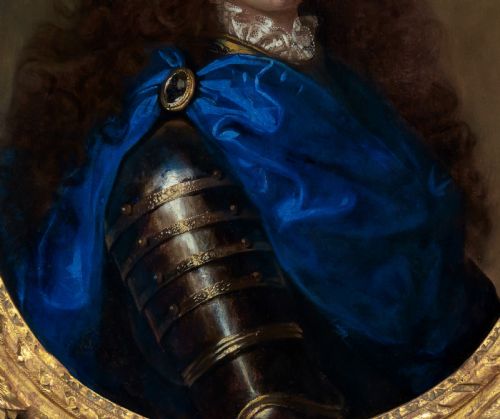
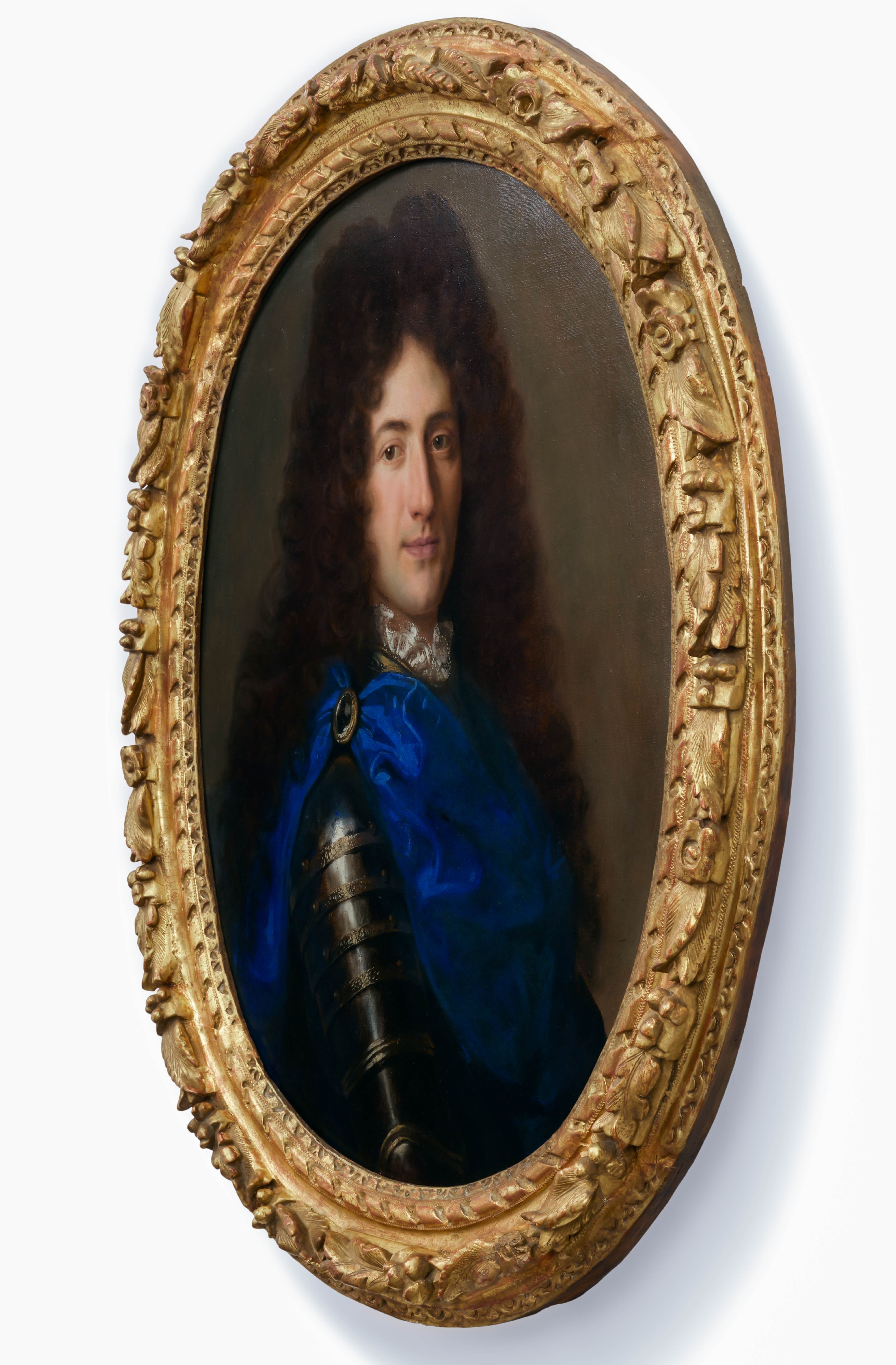
Held in an exquisite frame with foliage, acorns, and flower heads, carved in bold relief and gilded – a superb work of art in its own right.

Joseph Vivien (1657-1735) was a French painter. He left his native Lyon for Paris at the age of twenty to work in the workshop of Charles Le Brun. He made his reputation by his portraits in pastels, to which he gave a sparkle and immediacy which to that time was unrivalled. He trained as a painter in Paris in the 1670s, eventually specialising in portraiture. The Académie Royale de Peinture et de Sculpture received him in 1698.
In 1700 Vivien was appointed court painter to Maximilian II Emanuel, Elector of Bavaria, and thereafter divided his time between Paris, Maximilian Emmanuel's courts at Brussels and Munich, and the court of Maximilian Emmanuel's brother at Bonn.
His oil paintings are rare, the most important being the allegory of the Reunion of Max-Emmanuel of Bavaria with his family. His portraits of lesser nobles and of artists are often considered his best works. He played a significant role in popularising pastel portraits and ultimately emerged as the foremost advocate of this medium in France. Furthermore, he foreshadowed the rise of the next generation's leading pastel portraitist, Maurice-Quentin de la Tour. His peers praised his refined application of colour; with one admirer even conferred upon him the designation "Van Dyck of pastel".

His work is found in the Fine Arts Museums of San Francisco, Hermitage Museum, Saint Petersburg, Russia, J. Paul Getty Museum, Los Angeles, National Gallery of Art, Washington D.C., Rijksmuseum, Amsterdam, and Smithsonian American Art Museum, Washington D.C.

Measurements: Height 91cm, Width 76cm framed (Height 35.75”, Width 30” framed)

Physical Dimensions
Height
91cm (35.83")
Width
76cm (29.92")
Depth
9cm (3.54")
Declaration

Titan Fine Art has dated this Baroque Oil Portrait Painting to the 17th Century.

Reference Numbers
Sellingantiques Reference
SA1224743
Dealers Notes

Much more info about this item at: www.titanfineart.com

In a market saturated with available paintings, Titan Fine Art offers a distinct advantage: we sift through thousands of works to provide a specially curated selection. Each piece is meticulously chosen based on technical merit, provenance, and decorative appeal, ensuring our clients view only the finest examples of British and European art.

With over 20 years of expertise and 1,000+ works placed with collectors and institutions, we are one of the most prolific specialists in 17th and 18th-century portraiture. We combine a scholarly approach with museum-level rigor to replace the uncertainty of the open market with absolute confidence.

Why Buy From Titan Fine Art?

• Expertly Curated Selection

We act as your expert eye, selecting only high-quality works that offer genuine historical and artistic value.

• Museum-Level Research

Each portrait is supported by extensive academic research, often exceeding 40 hours, to establish attribution, sitter identity, and historical context.

• Professional Conservation

All paintings are carefully cleaned and stabilised by professional conservators, and are presented ready to hang.

• Transparent Pricing

No buyer’s premium or hidden fees—unlike auction houses, where additional costs can add 25–35%.

• Export Pricing Advantage

Reduced pricing is available for works exported outside the UK.

• Specialist Global Shipping

We manage the entire process, including custom crating, export documentation, and fully tracked delivery worldwide.

• Buy with Confidence

A 7-day return policy and the option to pay in GBP, USD, or EUR for convenience and transparency.

• Original Period Frames

Many works retain their original carved and gilded frames, which are works of art in their own right and enhance both historical authenticity and decorative impact.

• Personal Advisory Service

We work directly with collectors and interior designers, offering guidance on selection, scale, and placement—including bespoke room mock-ups on request.

Subscribe to our monthly 'new item alert' to be the first to hear about new works

Description
The sitter in this superb portrait is shown with the grandiloquence characteristic of the eighteenth-century French school of painting.
The young nobleman has been portrayed wearing an ingeniously embellished French ceremonial armour, an azure cloak, and an abundance of cascading curls falling below his shoulders.
Titan Fine Art

This portrait proclaims to every onlooker that this is a superior being.

fig 1. An oval oil painting depicting a gentleman wearing plate armour and an azure blue cloak with a jewelled brooch, set within a carved gold gilt frame.
fig 1. Portrait of a Gentleman in Armour and Azure Cloak with Diamond Clasp C.1700; Attributed to Joseph Vivienne (1657-1735), Oil on Canvas

The features of the sitter’s face have been captured with great sensitivity, his confident gaze perhaps reflecting the near invincibility afforded by this steel suit. The flamboyance and penetrating sense of character, lending an air of noble expectancy to the composition, seems almost eclipsed by the artist's virtuosic handling of paint. It is easy to understand why many sitters from the upper echelons of society commissioned the artist to paint their portrait.

fig 2. An oval oil painting depicting a gentleman wearing plate armour and an azure blue cloak with a jewelled brooch, set within a carved gold gilt frame.
fig 2. Portrait of a Gentleman in Armour and Azure Cloak with Diamond Clasp C.1700; Attributed to Joseph Vivienne (1657-1735), Oil on Canvas

Such fine and ornate armour was not actually used on a battlefield - its portrayal in portraiture at this time was largely used to symbolise the subject’s wealth and status as well as a claim of succession to a chivalrous tradition. The style of hair and neckcloth help to date the portrait to the turn of the seventeenth century into the eighteenth century.

fig 3. An oval oil painting depicting a gentleman wearing plate armour and an azure blue cloak with a jewelled brooch, set within a carved gold gilt frame.
fig 3. Portrait of a Gentleman in Armour and Azure Cloak with Diamond Clasp C.1700; Attributed to Joseph Vivienne (1657-1735), Oil on Canvas

Held in an exquisite frame with foliage, acorns, and flower heads, carved in bold relief and gilded – a superb work of art in its own right.

Joseph Vivien (1657-1735) was a French painter. He left his native Lyon for Paris at the age of twenty to work in the workshop of Charles Le Brun. He made his reputation by his portraits in pastels, to which he gave a sparkle and immediacy which to that time was unrivalled. He trained as a painter in Paris in the 1670s, eventually specialising in portraiture. The Académie Royale de Peinture et de Sculpture received him in 1698.

fig 4. An oval oil painting depicting a gentleman wearing plate armour and an azure blue cloak with a jewelled brooch, set within a carved gold gilt frame.
fig 4. Portrait of a Gentleman in Armour and Azure Cloak with Diamond Clasp C.1700; Attributed to Joseph Vivienne (1657-1735), Oil on Canvas

In 1700 Vivien was appointed court painter to Maximilian II Emanuel, Elector of Bavaria, and thereafter divided his time between Paris, Maximilian Emmanuel's courts at Brussels and Munich, and the court of Maximilian Emmanuel's brother at Bonn.

fig 5. An oval oil painting depicting a gentleman wearing plate armour and an azure blue cloak with a jewelled brooch, set within a carved gold gilt frame.
fig 5. Portrait of a Gentleman in Armour and Azure Cloak with Diamond Clasp C.1700; Attributed to Joseph Vivienne (1657-1735), Oil on Canvas

His oil paintings are rare, the most important being the allegory of the Reunion of Max-Emmanuel of Bavaria with his family. His portraits of lesser nobles and of artists are often considered his best works. He played a significant role in popularising pastel portraits and ultimately emerged as the foremost advocate of this medium in France. Furthermore, he foreshadowed the rise of the next generation's leading pastel portraitist, Maurice-Quentin de la Tour. His peers praised his refined application of colour; with one admirer even conferred upon him the designation "Van Dyck of pastel".

His work is found in the Fine Arts Museums of San Francisco, Hermitage Museum, Saint Petersburg, Russia, J. Paul Getty Museum, Los Angeles, National Gallery of Art, Washington D.C., Rijksmuseum, Amsterdam, and Smithsonian American Art Museum, Washington D.C.

Measurements: Height 91cm, Width 76cm framed (Height 35.75”, Width 30” framed)

Height
91cm (35.83")
Width
76cm (29.92")
Depth
9cm (3.54")
Date of Manufacture

Titan Fine Art has dated this Baroque Oil Portrait Painting to the 17th Century.

Reference Numbers
Sellingantiques Ref
SA1224743
Titan Fine Art
Titan Fine Art
Sellingantiques verified Since Jul 2016

Specialist in 17th & 18thc portraits. Highly curated selection, museum-level research & pro conservation. Exceptional art, expertly vetted.

Dealer Profile

You can view the stock and full dealer information on the Titan Fine Art Profile Page
PDF SHARE
SAVE
An oval oil painting depicting a gentleman wearing plate armour and an azure blue cloak with a jewelled brooch, set within a carved gold gilt frame.
1 / 6
Archive I An oval oil painting depicting a gentleman wearing plate armour and an azure blue cloak with a jewelled brooch, set within a carved gold gilt frame.

Portrait of a Gentleman in Armour and Azure Cloak with Diamond Clasp C.1700; Attributed to Joseph Vivienne (1657-1735), Oil on Canvas
Archive II An oval oil painting depicting a gentleman wearing plate armour and an azure blue cloak with a jewelled brooch, set within a carved gold gilt frame. View II
Archive III An oval oil painting depicting a gentleman wearing plate armour and an azure blue cloak with a jewelled brooch, set within a carved gold gilt frame. View III
Archive IV An oval oil painting depicting a gentleman wearing plate armour and an azure blue cloak with a jewelled brooch, set within a carved gold gilt frame. View IV
Archive V An oval oil painting depicting a gentleman wearing plate armour and an azure blue cloak with a jewelled brooch, set within a carved gold gilt frame. View V
Archive VI An oval oil painting depicting a gentleman wearing plate armour and an azure blue cloak with a jewelled brooch, set within a carved gold gilt frame. View VI
FURTHER BROWSING

Visitors also looked at these ⇣

Enlarged Archival View
Telephone 07875 412 111
Location
London
United Kingdom
Dealer Profile Page sellingantiques.co.uk/titan
Verified Since Jul 2016
Items For Sale 17
Items Sold 400
Titan Fine Art
Titan Fine Art
Verified Since Jul 2016
View Dealer Info
Location: London, United Kingdom
Verified
Jul 2016
For Sale
17
Sold
400
An oval oil painting depicting a gentleman wearing plate armour and an azure blue cloak with a jewelled brooch, set within a carved gold gilt frame.
Portrait of a Gentleman in Armour and Azure Cloak with Diamond Clasp c.1700; Attributed to Joseph Vivienne (1657-1735), Oil on canvas
Ref: SA1224743
An oval oil painting depicting a gentleman wearing plate armour and an azure blue cloak with a jewelled brooch, set within a carved gold gilt frame.
Detail View 1
Detail View 2
Detail View 3
Detail View 4
Detail View 5
Archival Detail
Every single antique dealer on our platform is individually approved by our internal team. We verify their professional trade history, ethical standards, and photographic quality to ensure a secure, high-standard buying environment. Upon joining, every dealer agrees to a strict 9-point code of conduct. While issues can occasionally arise, our dealers typically resolve them swiftly and directly with the buyer. In fact, since our founding in 2002, Sellingantiques has only had to step in to help resolve an issue on roughly five occasions—a true testament to the quality of our dealers and their dedication to your happiness.
Our dealers are highly experienced in packing and shipping fragile, high-value antiques. Because you are in direct contact with the dealer, you will be able to easily go through all available shipping and insurance options together to ensure your item arrives safely.
Antiques are the ultimate green purchase. By choosing historical pieces over newly manufactured goods, you completely eliminate the carbon footprint of modern mass production while preserving exceptional, timeless craftsmanship.

Baroque portraiture of this period is characterised by dramatic lighting, rich colour palettes, and formal posing. High-status subjects were frequently depicted wearing full armour, lace cravats, and voluminous periwigs, draped in luxurious textiles to signal military command and nobility.

Portraits were typically painted using hand-ground oil pigments on natural flax or linen canvas. Framing from this era generally consisted of hand-carved timber overlaid with gesso and gold leaf, crafted to match classical architectural proportions.

Authentic period canvases usually display natural age craquelure across the paint surface, hand-cut wooden stretcher bars, and historic lining or tacking edges. Examination under ultraviolet light helps identify historical restoration, re-lining, or later retouches.

A large-scale historic portrait serves as a focal point above a fireplace mantelpiece, sideboard, or within a dedicated gallery wall. Designers often pair antique gilt-framed portraits with modern architectural lines or deep paint shades to create visual contrast.

Keep oil paintings away from direct sunlight, heating sources, and fluctuating humidity levels to prevent paint flaking and canvas distortion. Dust frames gently with a dry, soft brush, and consult a professional conservator for surface cleaning or frame repair.
items
Add keywords to the filter
Price
£100
£250000
Era
Movements
Material
Origin
Stock Location
Freshness
Online Payments
Categories