29,842  PAGES BROWSED TODAY PAGES TODAY 74  ANTIQUES UPLOADED TODAY NEW ARRIVALS
ID #SA678041
FOR SALE
£6,500
Email
Save
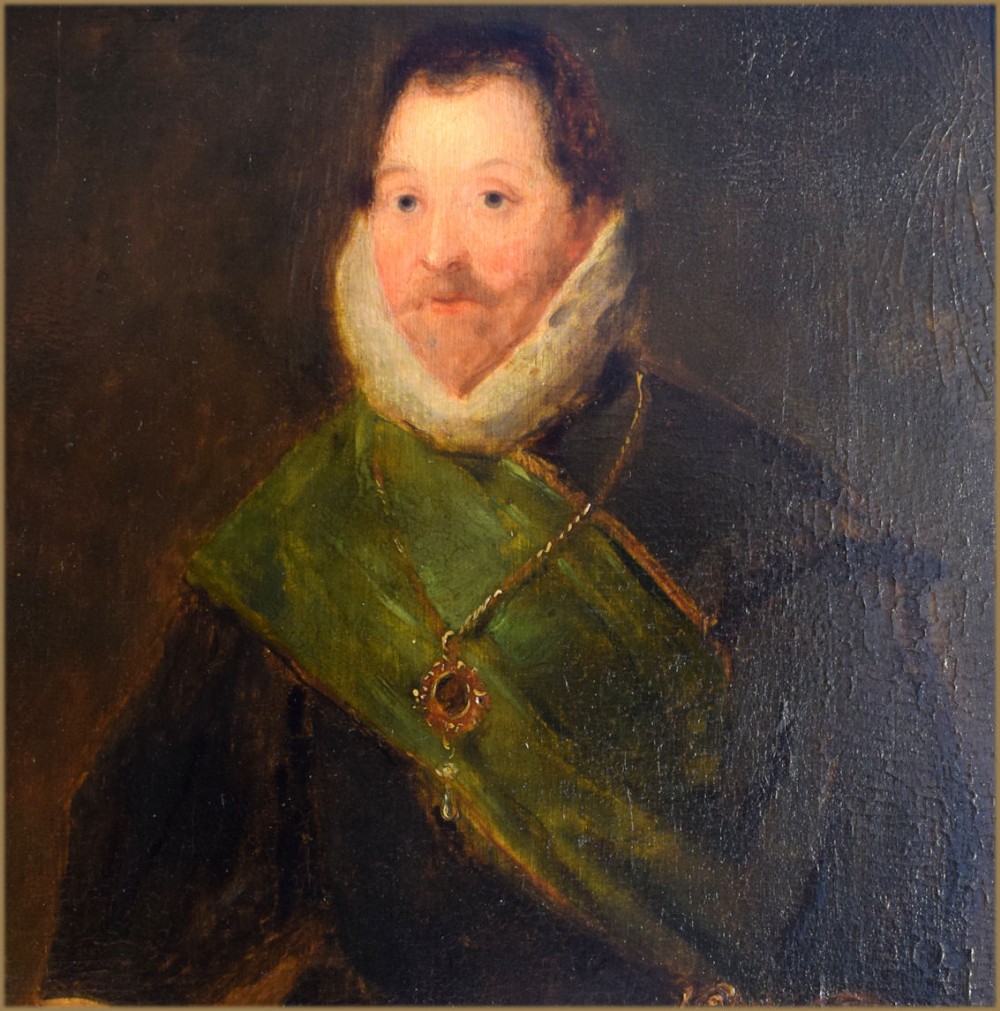
Circle of Marcus Gheeraerts the Younger, C. 1561/62 – 1636 Portrait of Sir Francis Drake C.1540 – 1596, Naval Officer Explorer, Privateer & Slave Trader
Artware Fineart
for sale €7,605     $8,255
£6,500

Artware Fineart

Sellingantiques Verified Since Sep 2008
View Dealers Stock Page
Id #SA678041
PDF SHARE
SAVE

Circle of Marcus Gheeraerts the Younger, C. 1561/62 – 1636 Portrait of Sir Francis Drake C.1540 – 1596, Naval Officer Explorer, Privateer & Slave Trader

17th century
For Sale by Artware Fineart
Description

Circle of Marcus Gheeraerts the Younger, c. 1561/62 – 1636

Portrait of Sir Francis Drake c.1540 – 1596, Naval Officer Explorer, Privateer & Slave Trader

oil on oak panel

26 x 21.5 cm. (10.1/2 x 8.3/4 in.)
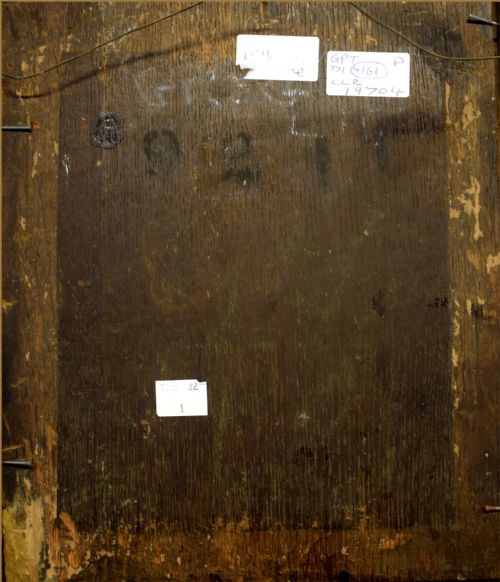
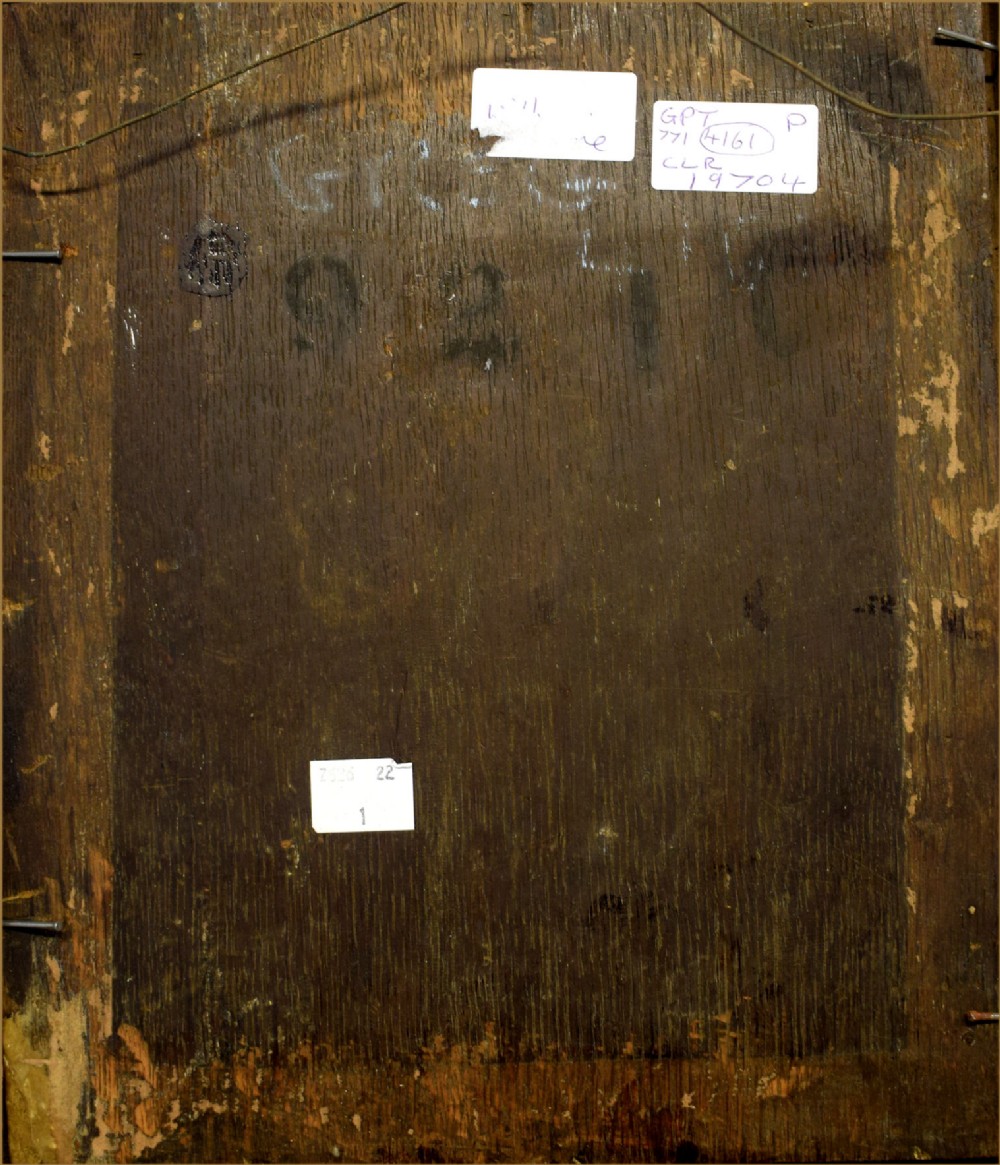
Christies Stenci on ther reverse

Notes

Drake, Sir Francis (1540–1596), pirate, sea captain, and explorer, was born about February or March 1540 in Crowndale, near Tavistock, Devon, the eldest of five known children of Edmund Drake (d. 1566) of Tavistock. Edmund's wife is unknown, though she may have been named Anna Milwaye. Edmund Drake was a shearman (of woollen cloth) at Crowndale, where his family had occupied the same farm for generations. Edmund was almost certainly a priest as well, perhaps one of those deprived of a living during Henry VIII's sequestration of religious property. In 1548 he was involved in a fracas with other clerics and laymen and forced to flee from Devon. Edmund soon gained a royal pardon, and found a place as curate at Upchurch in Kent. He was not an obvious partisan of either side in the religious debates, being Catholic enough to serve as curate at Upchurch in 1553 and protestant enough to be appointed vicar there when Elizabeth became queen.
Early training

Francis Drake had earlier begun living in Plymouth with his kinsman William Hawkins (b. before 1490, d. 1554/5), whose family included sons William Hawkins (c. 1519–1589)and John Hawkins (1532–1595). Francis Drake's brothers John and Joseph may also have lived there, though his two other brothers, Edward and Thomas, very likely did not. This association with the Hawkins family had a lasting influence on young Francis Drake. As he grew up, he served for several years under John Hawkins and seemed to model himself on this older relative. Originally from Tavistock, the Hawkins family had moved to Plymouth about the turn of the century and established a reputation in trading and seafaring. William Hawkins made trips to the Guinea coast of Africa and even to Brazil. He was a leading figure in Plymouth politics and on occasion represented the town in parliament. His sons John and William went to sea as boys, as did Francis Drake and the other boys in the household. They met people who knew how to live well, dress well, and speak well in conversations that covered politics, religion, trade, and foreign affairs. At home the boys learned to read and write and count. At sea they learned that a profit could be made by seizing ships and cargoes from foreign merchants who were themselves shading the law. A daring sea captain with a little luck could commit piracy and suffer nothing in consequence.
The Hawkins household was as flexible in religion as it was in morals. William Hawkinswas neither a devout Catholic nor an ardent protestant, but something in between. His son John Hawkins was the same. John Hawkins not only attended mass during trading visits to Spanish Tenerife but did so with such apparent fervour that his Spanish friends thought he was a committed Catholic. Young Francis Drake adopted the moderate religious practices of the Hawkins family, travelling with them to Dutch, French, and Spanish ports, and attending either Catholic or protestant churches, just as circumstances might dictate.
Learning to be a pirate

Among Devon's merchant seamen piracy was not the only part-time business. The slave trade was also common, and members of the Hawkins family made a good deal of money in this noxious enterprise. As early as 1560 Francis Drake sailed on one of the Hawkins slave ships, and in 1562 he went to sea with them again. John Hawkinscommanded the four-ship fleet, which paused for a time in Tenerife, where the family had friends and business associates. From there he sailed on to Cape Verde and down the Guinea coast to Sierra Leone, where he loaded his ships with slaves bought from the Portuguese, stolen from other slavers, or

Physical Dimensions
Height
26cm (10.24")
Width
22cm (8.66")
Depth
2cm (0.79")
Declaration

Artware Fineart has dated this Elizabethan Oil Portrait Painting to the 17th Century.

Reference Numbers
Sellingantiques Reference
SA678041
Dealers Internal Reference
4160
Description
Circle of Marcus Gheeraerts the Younger, c. 1561/62 – 1636

Portrait of Sir Francis Drake c.1540 – 1596, Naval Officer Explorer, Privateer & Slave Trader

oil on oak panel

26 x 21.5 cm. (10.1/2 x 8.3/4 in.)

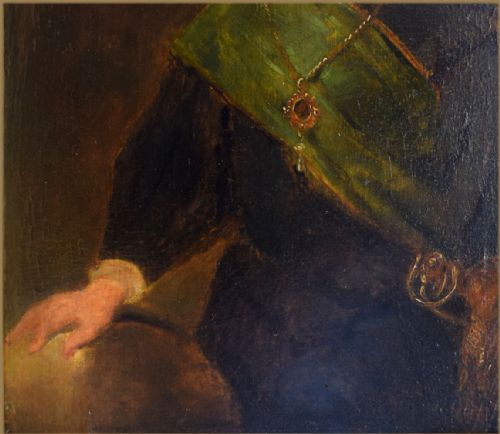
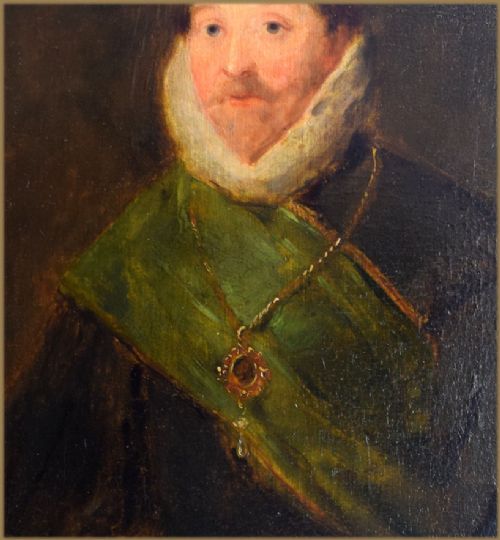
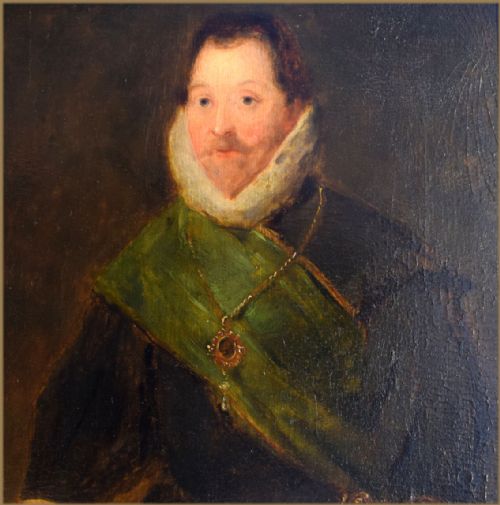
fig 1. An Elizabethan period oil portrait of a gentleman wearing a high white ruff, dark doublet, green sash, and gold medallion while resting his hand on a globe.
fig 1. Circle of Marcus Gheeraerts the Younger, C. 1561/62 – 1636 Portrait of Sir Francis Drake C.1540 – 1596, Naval Officer Explorer, Privateer & Slave Trader

Christies Stenci on ther reverse

Notes

Drake, Sir Francis (1540–1596), pirate, sea captain, and explorer, was born about February or March 1540 in Crowndale, near Tavistock, Devon, the eldest of five known children of Edmund Drake (d.
Artware Fineart

1566) of Tavistock. Edmund's wife is unknown, though she may have been named Anna Milwaye. Edmund Drake was a shearman (of woollen cloth) at Crowndale, where his family had occupied the same farm for generations. Edmund was almost certainly a priest as well, perhaps one of those deprived of a living during Henry VIII's sequestration of religious property. In 1548 he was involved in a fracas with other clerics and laymen and forced to flee from Devon. Edmund soon gained a royal pardon, and found a place as curate at Upchurch in Kent. He was not an obvious partisan of either side in the religious debates, being Catholic enough to serve as curate at Upchurch in 1553 and protestant enough to be appointed vicar there when Elizabeth became queen.

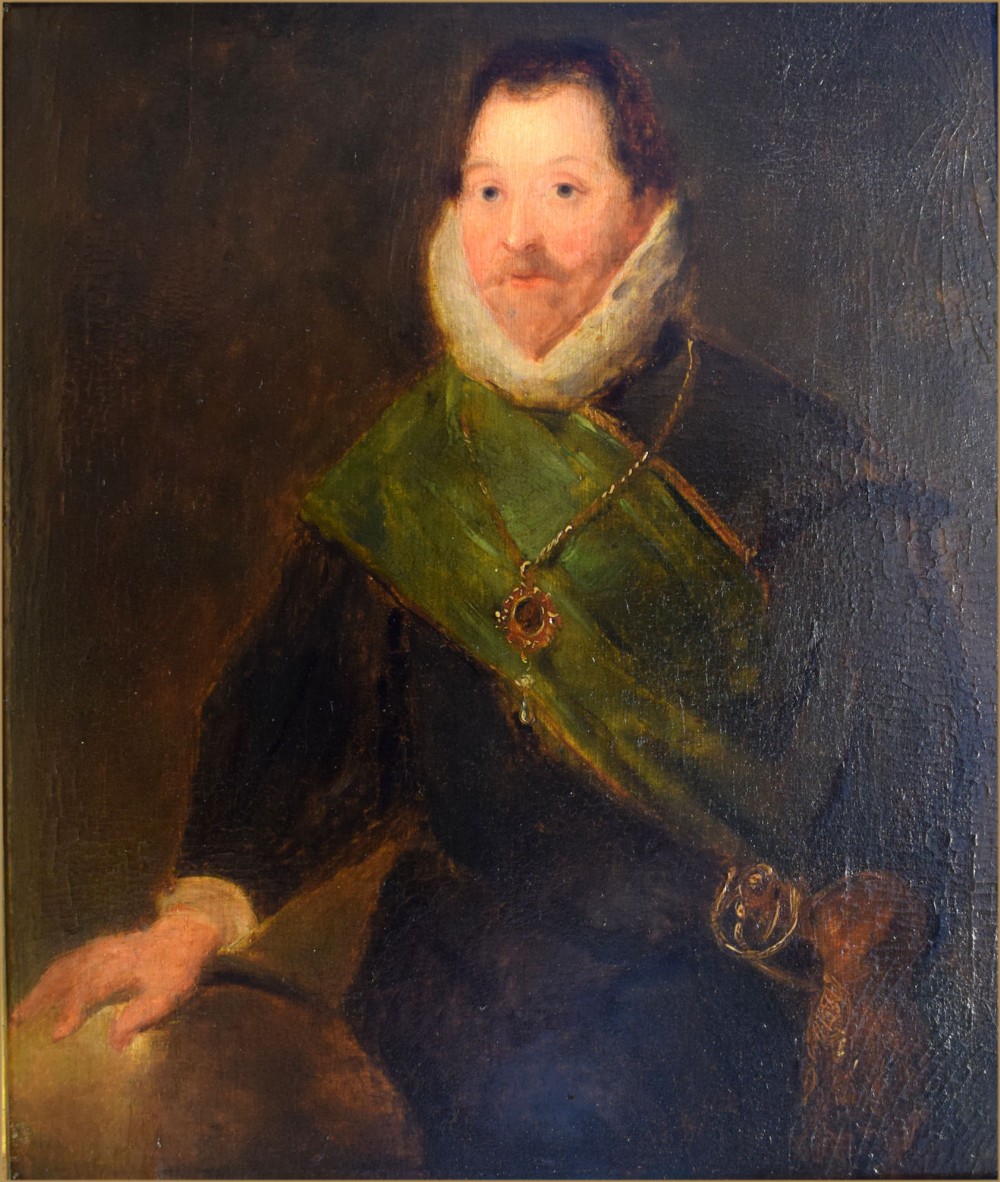
fig 2. An Elizabethan period oil portrait of a gentleman wearing a high white ruff, dark doublet, green sash, and gold medallion while resting his hand on a globe.
fig 2. Circle of Marcus Gheeraerts the Younger, C. 1561/62 – 1636 Portrait of Sir Francis Drake C.1540 – 1596, Naval Officer Explorer, Privateer & Slave Trader

Early training

Francis Drake had earlier begun living in Plymouth with his kinsman William Hawkins (b. before 1490, d. 1554/5), whose family included sons William Hawkins (c. 1519–1589)and John Hawkins (1532–1595). Francis Drake's brothers John and Joseph may also have lived there, though his two other brothers, Edward and Thomas, very likely did not. This association with the Hawkins family had a lasting influence on young Francis Drake. As he grew up, he served for several years under John Hawkins and seemed to model himself on this older relative. Originally from Tavistock, the Hawkins family had moved to Plymouth about the turn of the century and established a reputation in trading and seafaring. William Hawkins made trips to the Guinea coast of Africa and even to Brazil. He was a leading figure in Plymouth politics and on occasion represented the town in parliament. His sons John and William went to sea as boys, as did Francis Drake and the other boys in the household. They met people who knew how to live well, dress well, and speak well in conversations that covered politics, religion, trade, and foreign affairs. At home the boys learned to read and write and count. At sea they learned that a profit could be made by seizing ships and cargoes from foreign merchants who were themselves shading the law. A daring sea captain with a little luck could commit piracy and suffer nothing in consequence.

fig 3. An Elizabethan period oil portrait of a gentleman wearing a high white ruff, dark doublet, green sash, and gold medallion while resting his hand on a globe.
fig 3. Circle of Marcus Gheeraerts the Younger, C. 1561/62 – 1636 Portrait of Sir Francis Drake C.1540 – 1596, Naval Officer Explorer, Privateer & Slave Trader

The Hawkins household was as flexible in religion as it was in morals. William Hawkinswas neither a devout Catholic nor an ardent protestant, but something in between. His son John Hawkins was the same. John Hawkins not only attended mass during trading visits to Spanish Tenerife but did so with such apparent fervour that his Spanish friends thought he was a committed Catholic. Young Francis Drake adopted the moderate religious practices of the Hawkins family, travelling with them to Dutch, French, and Spanish ports, and attending either Catholic or protestant churches, just as circumstances might dictate.

fig 4. An Elizabethan period oil portrait of a gentleman wearing a high white ruff, dark doublet, green sash, and gold medallion while resting his hand on a globe.
fig 4. Circle of Marcus Gheeraerts the Younger, C. 1561/62 – 1636 Portrait of Sir Francis Drake C.1540 – 1596, Naval Officer Explorer, Privateer & Slave Trader

Learning to be a pirate

Among Devon's merchant seamen piracy was not the only part-time business. The slave trade was also common, and members of the Hawkins family made a good deal of money in this noxious enterprise. As early as 1560 Francis Drake sailed on one of the Hawkins slave ships, and in 1562 he went to sea with them again. John Hawkinscommanded the four-ship fleet, which paused for a time in Tenerife, where the family had friends and business associates. From there he sailed on to Cape Verde and down the Guinea coast to Sierra Leone, where he loaded his ships with slaves bought from the Portuguese, stolen from other slavers, or

Height
26cm (10.24")
Width
22cm (8.66")
Depth
2cm (0.79")
Date of Manufacture

Artware Fineart has dated this Elizabethan Oil Portrait Painting to the 17th Century.

Reference Numbers
Sellingantiques Ref
SA678041
Dealers Internal Ref
4160
Artware Fineart
Sellingantiques verified Since Sep 2008
Dealer Profile

You can view the stock and full dealer information on the Artware Fineart Profile Page
PDF SHARE
SAVE
An Elizabethan period oil portrait of a gentleman wearing a high white ruff, dark doublet, green sash, and gold medallion while resting his hand on a globe.
1 / 5
Archive I An Elizabethan period oil portrait of a gentleman wearing a high white ruff, dark doublet, green sash, and gold medallion while resting his hand on a globe.

Circle of Marcus Gheeraerts the Younger, C. 1561/62 – 1636 Portrait of Sir Francis Drake C.1540 – 1596, Naval Officer Explorer, Privateer & Slave Trader
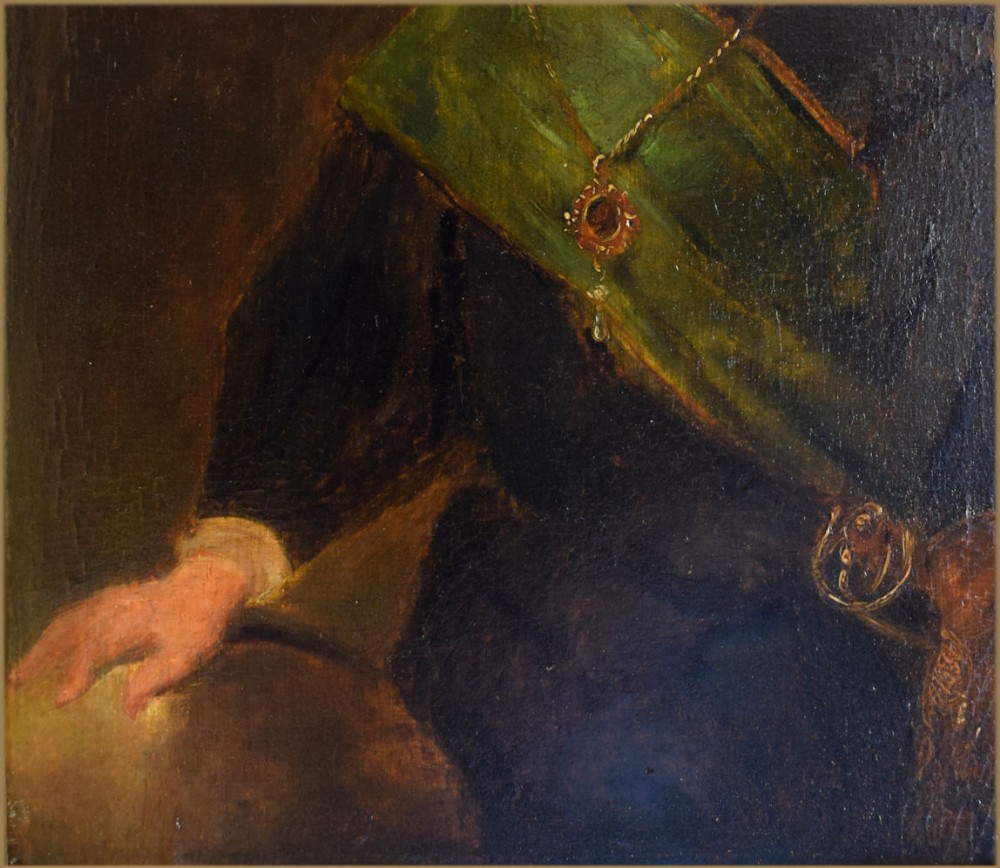
Archive II An Elizabethan period oil portrait of a gentleman wearing a high white ruff, dark doublet, green sash, and gold medallion while resting his hand on a globe. View II
Archive III An Elizabethan period oil portrait of a gentleman wearing a high white ruff, dark doublet, green sash, and gold medallion while resting his hand on a globe. View III
Archive IV An Elizabethan period oil portrait of a gentleman wearing a high white ruff, dark doublet, green sash, and gold medallion while resting his hand on a globe. View IV
Archive V An Elizabethan period oil portrait of a gentleman wearing a high white ruff, dark doublet, green sash, and gold medallion while resting his hand on a globe. View V
FURTHER BROWSING

Visitors also looked at these ⇣

Enlarged Archival View
Telephone 07958 699 645
Location
18 La Gare
51 Surrey Row
London
SE1 0BZ
United Kingdom
Verified Since Sep 2008
Items For Sale 243
Items Sold 223
Artware Fineart
Verified Since Sep 2008
View Dealer Info
Location: 18 La Gare , 51 Surrey Row , London , SE1 0BZ , United Kingdom
Verified
Sep 2008
For Sale
243
Sold
223
An Elizabethan period oil portrait of a gentleman wearing a high white ruff, dark doublet, green sash, and gold medallion while resting his hand on a globe.
Circle of Marcus Gheeraerts the Younger, c. 1561/62 – 1636 Portrait of Sir Francis Drake c.1540 – 1596, Naval Officer Explorer, Privateer & Slave Trader
Ref: SA678041
An Elizabethan period oil portrait of a gentleman wearing a high white ruff, dark doublet, green sash, and gold medallion while resting his hand on a globe.
Detail View 1
Detail View 2
Detail View 3
Detail View 4
Archival Detail
Every single antique dealer on our platform is individually approved by our internal team. We verify their professional trade history, ethical standards, and photographic quality to ensure a secure, high-standard buying environment. Upon joining, every dealer agrees to a strict 9-point code of conduct. While issues can occasionally arise, our dealers typically resolve them swiftly and directly with the buyer. In fact, since our founding in 2002, Sellingantiques has only had to step in to help resolve an issue on roughly five occasions—a true testament to the quality of our dealers and their dedication to your happiness.
Our dealers are highly experienced in packing and shipping fragile, high-value antiques. Because you are in direct contact with the dealer, you will be able to easily go through all available shipping and insurance options together to ensure your item arrives safely.
Antiques are the ultimate green purchase. By choosing historical pieces over newly manufactured goods, you completely eliminate the carbon footprint of modern mass production while preserving exceptional, timeless craftsmanship.

Elizabethan portraiture, prominent in 16th-century England, is characterised by formal posing, elaborate costume detailing, and symbolic props reflecting the sitters status, such as globes, sashes, or heraldic emblems.

Portraits from this era were typically executed using oil paints mixed with natural mineral pigments, applied directly onto oak panels or heavy linen canvas support.

Authenticity is evaluated through physical indicators such as natural age craquelure, period-appropriate panel joinery or hand-spun canvas weaves, timber dendrochronology, and pigment analysis under ultraviolet light.

Historic portraiture functions well as a focal point in contemporary spaces, particularly when paired with minimalist architecture, rich wall tones, or traditional timber cabinetry in a study or hallway.

Oil paintings require placement away from direct sunlight, stable relative humidity, and consistent temperatures. Surface cleaning and varnish consolidation should be conducted strictly by qualified art conservators.
items
Add keywords to the filter
Price
£100
£250000
Era
Movements
Material
Origin
Stock Location
Freshness
Online Payments
Categories