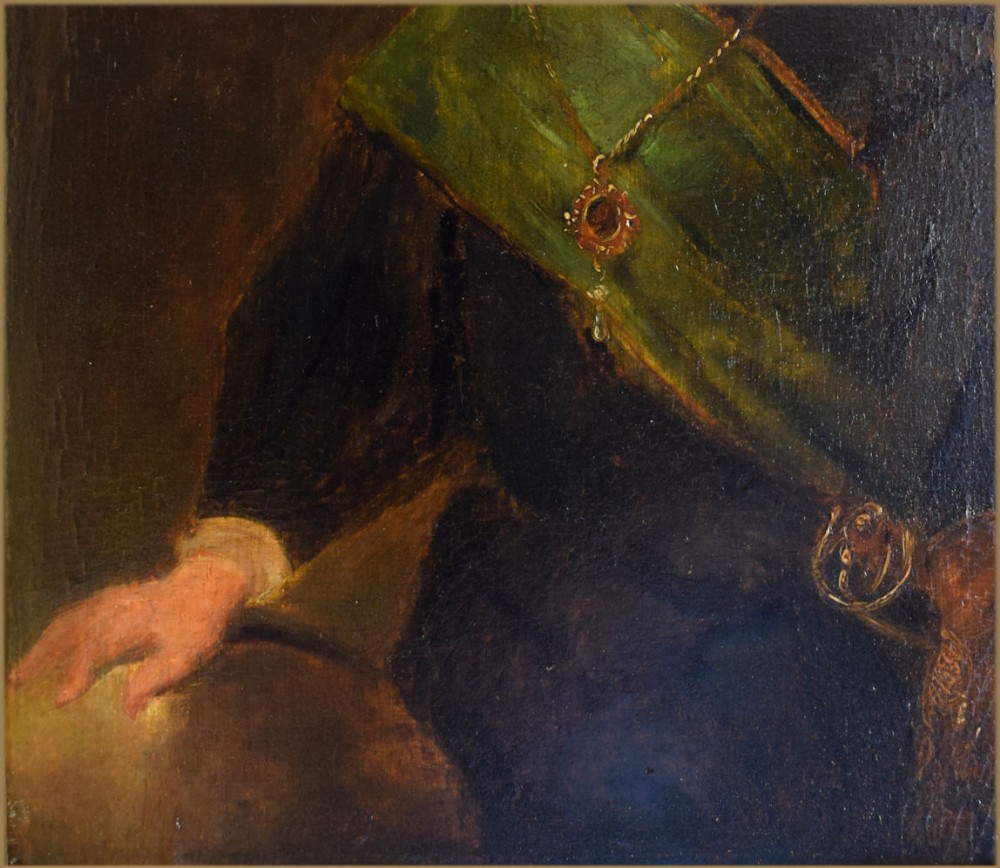
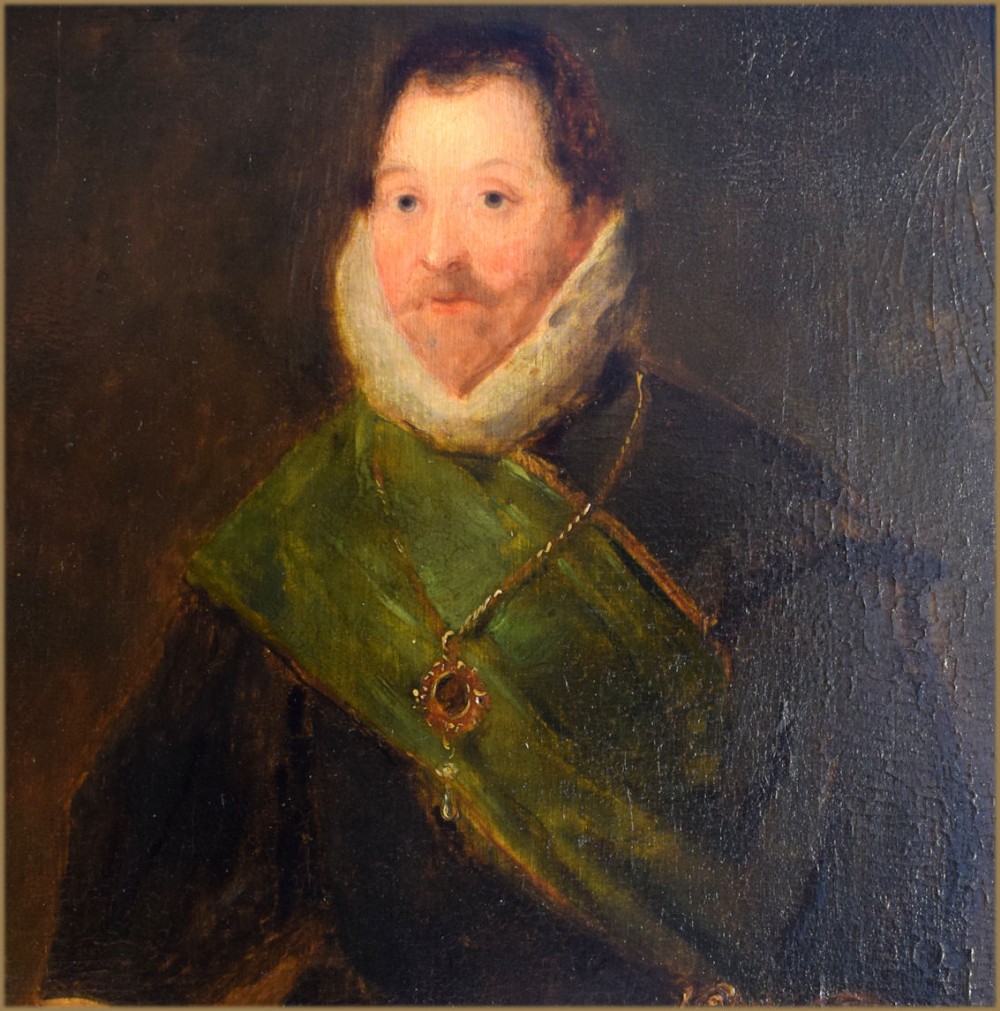
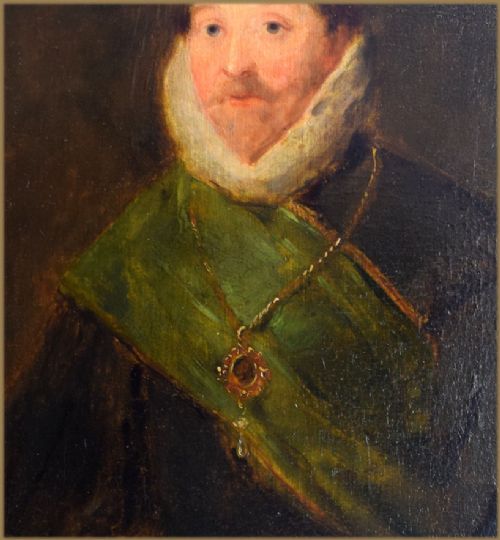
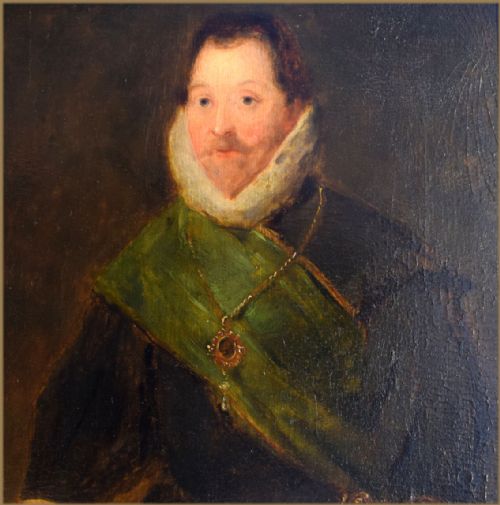
Artware Fineart has dated this Elizabethan Oil Portrait Painting to the 17th Century.
Portrait of Sir Francis Drake c.1540 – 1596, Naval Officer Explorer, Privateer & Slave Trader
oil on oak panel
26 x 21.5 cm. (10.1/2 x 8.3/4 in.)
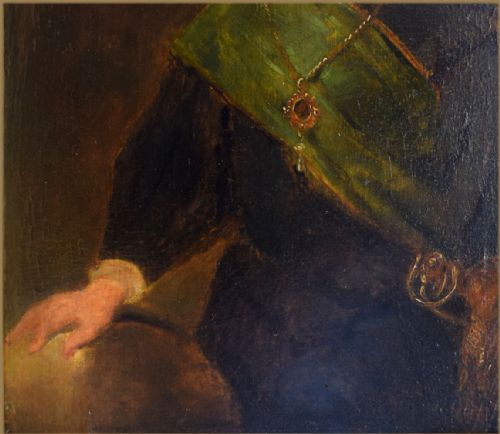
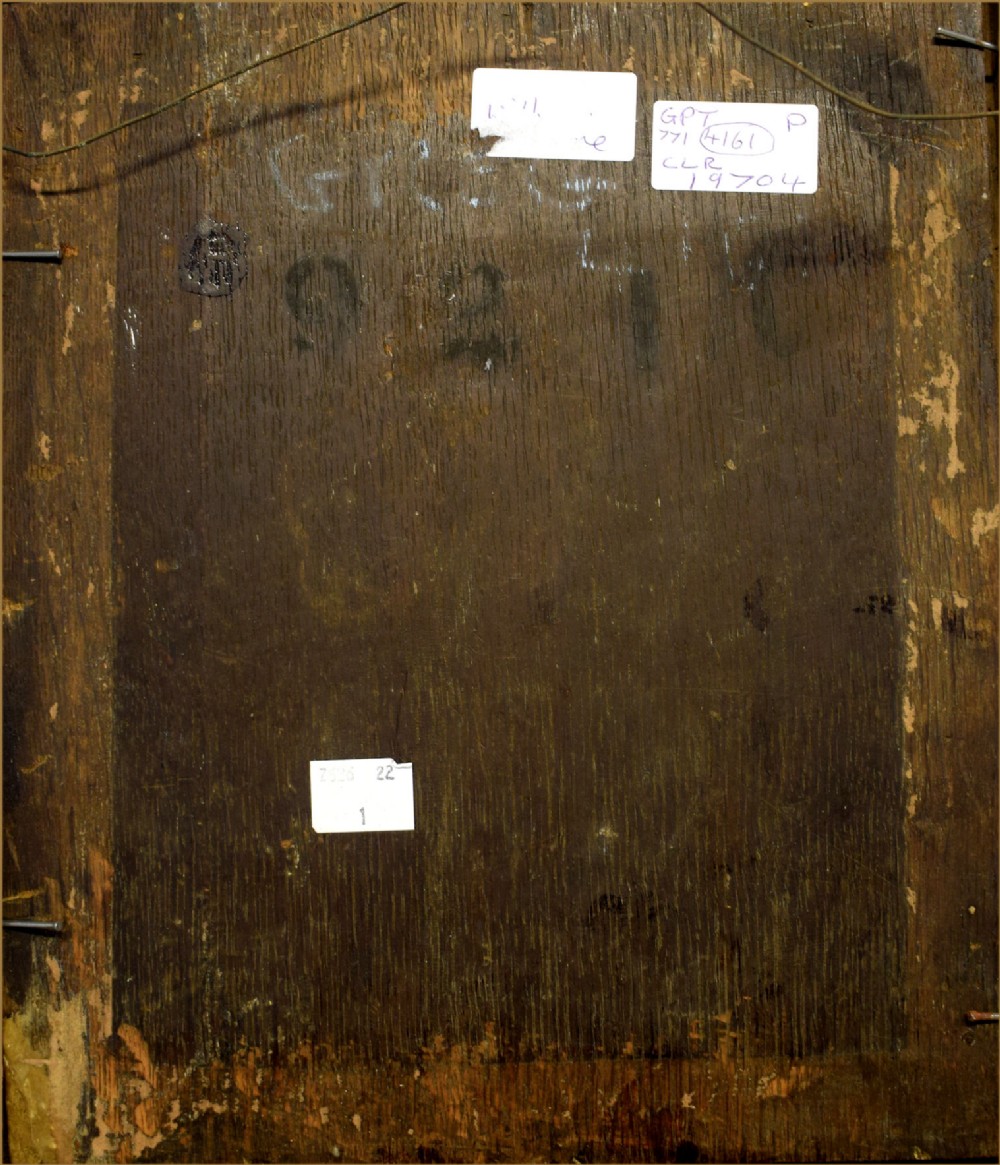
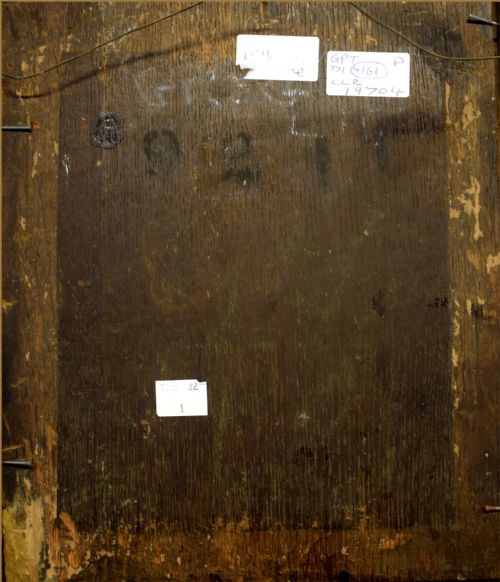
Christies Stenci on ther reverse
Notes
1566) of Tavistock. Edmund's wife is unknown, though she may have been named Anna Milwaye. Edmund Drake was a shearman (of woollen cloth) at Crowndale, where his family had occupied the same farm for generations. Edmund was almost certainly a priest as well, perhaps one of those deprived of a living during Henry VIII's sequestration of religious property. In 1548 he was involved in a fracas with other clerics and laymen and forced to flee from Devon. Edmund soon gained a royal pardon, and found a place as curate at Upchurch in Kent. He was not an obvious partisan of either side in the religious debates, being Catholic enough to serve as curate at Upchurch in 1553 and protestant enough to be appointed vicar there when Elizabeth became queen.
Early training
Francis Drake had earlier begun living in Plymouth with his kinsman William Hawkins (b. before 1490, d. 1554/5), whose family included sons William Hawkins (c. 1519–1589)and John Hawkins (1532–1595). Francis Drake's brothers John and Joseph may also have lived there, though his two other brothers, Edward and Thomas, very likely did not. This association with the Hawkins family had a lasting influence on young Francis Drake. As he grew up, he served for several years under John Hawkins and seemed to model himself on this older relative. Originally from Tavistock, the Hawkins family had moved to Plymouth about the turn of the century and established a reputation in trading and seafaring. William Hawkins made trips to the Guinea coast of Africa and even to Brazil. He was a leading figure in Plymouth politics and on occasion represented the town in parliament. His sons John and William went to sea as boys, as did Francis Drake and the other boys in the household. They met people who knew how to live well, dress well, and speak well in conversations that covered politics, religion, trade, and foreign affairs. At home the boys learned to read and write and count. At sea they learned that a profit could be made by seizing ships and cargoes from foreign merchants who were themselves shading the law. A daring sea captain with a little luck could commit piracy and suffer nothing in consequence.
The Hawkins household was as flexible in religion as it was in morals. William Hawkinswas neither a devout Catholic nor an ardent protestant, but something in between. His son John Hawkins was the same. John Hawkins not only attended mass during trading visits to Spanish Tenerife but did so with such apparent fervour that his Spanish friends thought he was a committed Catholic. Young Francis Drake adopted the moderate religious practices of the Hawkins family, travelling with them to Dutch, French, and Spanish ports, and attending either Catholic or protestant churches, just as circumstances might dictate.
Learning to be a pirate
Among Devon's merchant seamen piracy was not the only part-time business. The slave trade was also common, and members of the Hawkins family made a good deal of money in this noxious enterprise. As early as 1560 Francis Drake sailed on one of the Hawkins slave ships, and in 1562 he went to sea with them again. John Hawkinscommanded the four-ship fleet, which paused for a time in Tenerife, where the family had friends and business associates. From there he sailed on to Cape Verde and down the Guinea coast to Sierra Leone, where he loaded his ships with slaves bought from the Portuguese, stolen from other slavers, or
Artware Fineart has dated this Elizabethan Oil Portrait Painting to the 17th Century.
You can view the stock and full dealer information on the Artware Fineart Profile Page
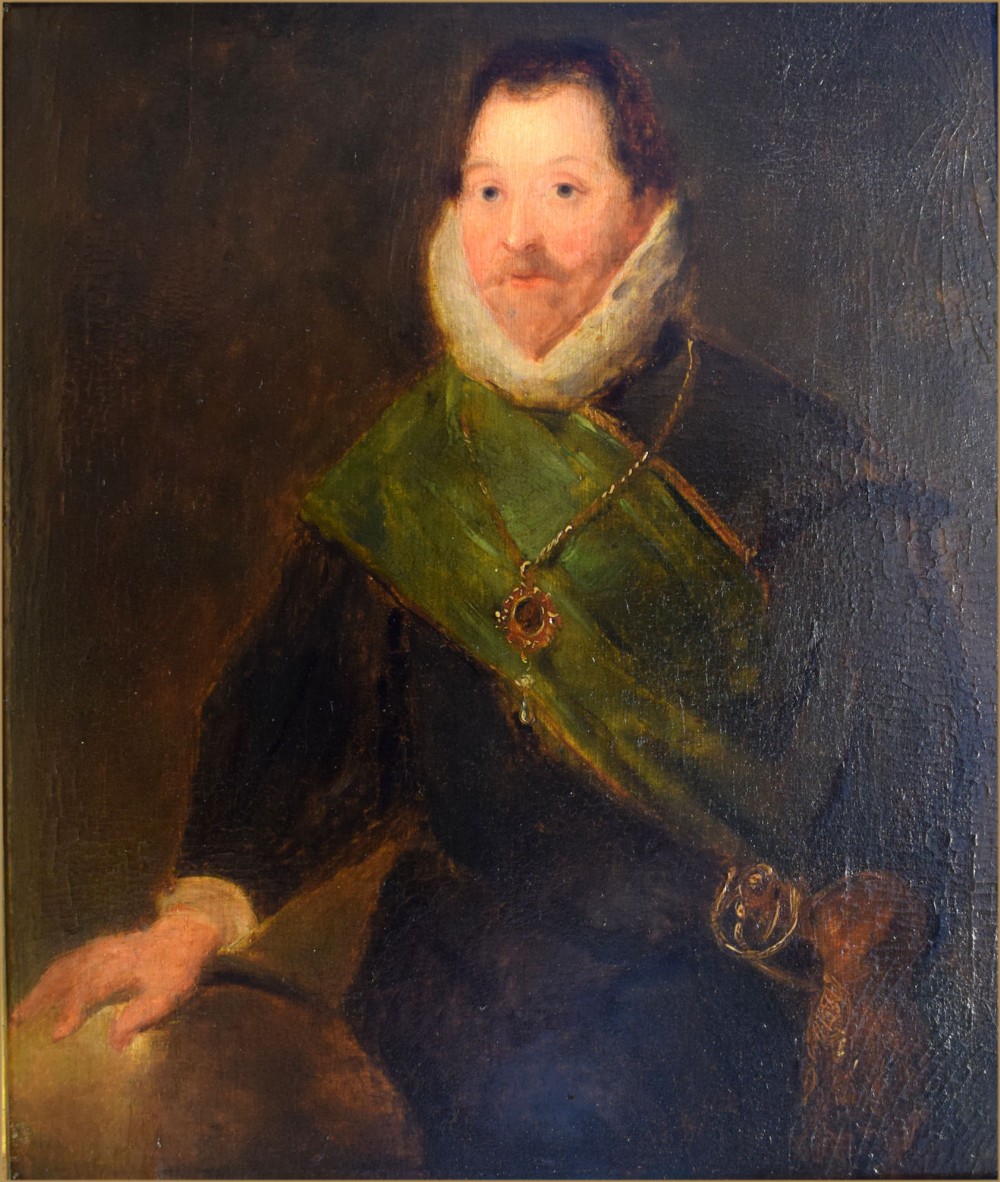
Circle of Marcus Gheeraerts the Younger, C. 1561/62 – 1636 Portrait of Sir Francis Drake C.1540 – 1596, Naval Officer Explorer, Privateer & Slave Trader