13,284  PAGES BROWSED TODAY PAGES TODAY 36  ANTIQUES UPLOADED TODAY NEW ARRIVALS
ID #SA553730
FOR SALE
£4,500
Email
Save
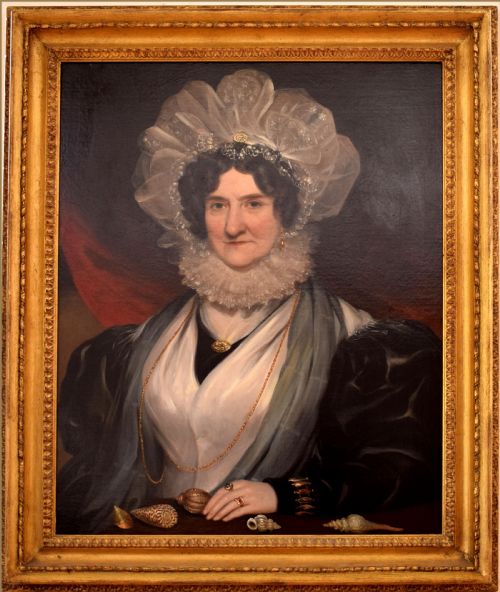
William Huggins, 1820 – 1884 Portrait of a Victorian Conchologist Wearing Lace Mop Cap, Ruff and Jewelry
Artware Fineart
for sale €5,265     $5,715
£4,500

Artware Fineart

Sellingantiques Verified Since Sep 2008
View Dealers Stock Page
Id #SA553730
PDF SHARE
SAVE

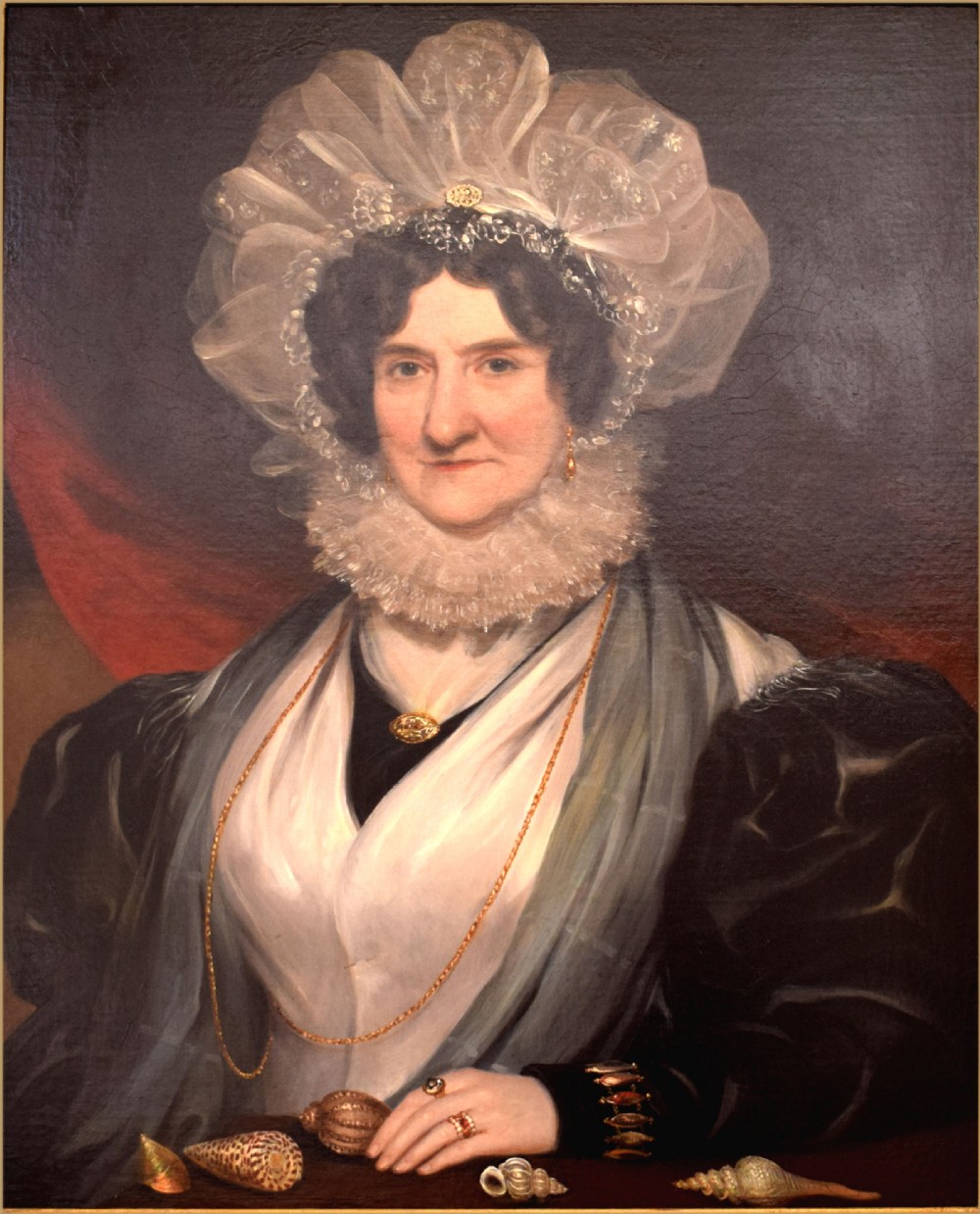
William Huggins, 1820 – 1884 Portrait of a Victorian Conchologist Wearing Lace Mop Cap, Ruff and Jewelry

19th century
For Sale by Artware Fineart
Description

William Huggins, 1820 – 1884

Portrait of a Victorian Conchologist wearing Lace Mop Cap, Ruff and Jewelry

oil on canvas

30 x 25 in. (76.20 x 63.50 cm.)

Throughout the nineteenth-century the mania for seashells steadily swelled; they featured on Christmas cards, and adorned countless keepsakes, jewellery, and furniture. The Gradgrind nursery in Charles Dickens’ Hard Times is equipped with a “little conchological cabinet, a little metallurgical cabinet, and a little mineralogical cabinet”, whilst, inspired by works of natural history, men and women scoured the seashore for conchological specimens. Conchology, unlike other branches of natural history such as zoology or mineralogy was easily accessible to everyone, and did not require specialist equipment. It also had the added bonus of including inanimate specimens that were not subject to disease or decay.
George Spratt’s composite caricature of ‘The Conchologist’ offers a personification of the craze – a woman, fashioned from shells of marine life, is depicted scanning the sea-side for her kin: her basket is filled with sprigs of seaweed and various tide pool treasures. Her rather ineffectual sun-bonnet looks to be crafted from the soft-bodied bell of a jellyfish, while a quasi-vulval cowry shell, disturbingly enlarged, makes up the lower half of her body.
The Shell Grotto in Margate, is perhaps the most impressive example of conchological worship. In 1835 an architectural love letter to the humble shell was uncovered by a man and his son attempting to dig a duck pond. The son, falling from a hole in the ground, recovered from his tumble to find a chamber ‘papered’ with an exquisite tapestry of shells. The chamber was connected to a labyrinthian passage similarly shrouded with cockles, whelks, mussels and oyster shells forming intricate mosaics. We still do not know how, or why the grotto came to be nor who is responsible for its creation.
Victorian women made use of their collection in various handicraft projects. Many put together imitation bouquets: using various miniature shells to create the desired flower.

Soon enough collectors, having exhausted the beaches of Britain, took to harvesting more impressive shells from overseas. An army of merchants, catering for the increasing demand, set up shop in London. The name of the global oil company “Shell” is, oddly enough, a reminder of the victorian love of conchology.

In 1833 one Marcus Samuel opened such a shop selling shells, curios, and other trinkets to natural history enthusiasts. By 1851 Marcus was described in the census as a ‘shell merchant’ and was listed as proprietor of ‘The Shell Shop’ in Houndsditch. He later formed the ‘Shell Transport and Trading Company.’ In 1882 his son (Marcus Junior) while travelling in the Caspian Sea, saw a potential for exporting oil from the region. He commissioned the world’s first purpose-built oil tanker and named the tanker the Murex, Latin for a type of snail shell, as a nod to the company’s beginnings. The first logo (1901) was a mussel shell, but by 1904 it was replaced with a scallop shell.

Conchology (from Ancient Greek: konkhos, "cockle") is the study of mollusc shells. Conchology is one aspect of malacology, the study of molluscs; however, malacology is the study of molluscs as whole organisms, whereas conchology is confined to the study of their shells. It includes the study of land and freshwater mollusc shells as well as seashells and extends to the study of a gastropod's operculum.

Conchology is now sometimes seen as an archaic study, because relying on only one aspect of an organism's morphology can be misleading. However, a shell often gives at least some insight into molluscan taxonomy, and historically the shell was often the only part of exotic species that was available for study. Even in current museum collections it is common for the dry ma

Physical Dimensions
Height
77cm (30.31")
Width
64cm (25.20")
Depth
3cm (1.18")
Declaration

Artware Fineart has dated this Victorian Oil Portrait Painting to the 19th Century.

Reference Numbers
Sellingantiques Reference
SA553730
Dealers Internal Reference
3986
Description
William Huggins, 1820 – 1884

Portrait of a Victorian Conchologist wearing Lace Mop Cap, Ruff and Jewelry

oil on canvas

30 x 25 in. (76.20 x 63.50 cm.)

Throughout the nineteenth-century the mania for seashells steadily swelled; they featured on Christmas cards, and adorned countless keepsakes, jewellery, and furniture.
Artware Fineart

The Gradgrind nursery in Charles Dickens’ Hard Times is equipped with a “little conchological cabinet, a little metallurgical cabinet, and a little mineralogical cabinet”, whilst, inspired by works of natural history, men and women scoured the seashore for conchological specimens. Conchology, unlike other branches of natural history such as zoology or mineralogy was easily accessible to everyone, and did not require specialist equipment. It also had the added bonus of including inanimate specimens that were not subject to disease or decay.

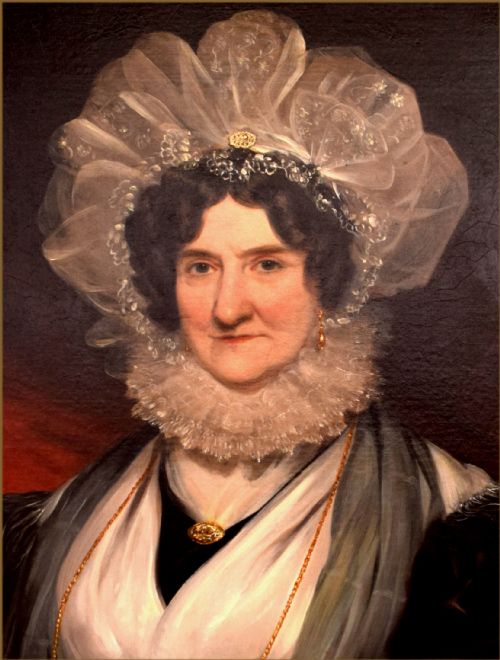
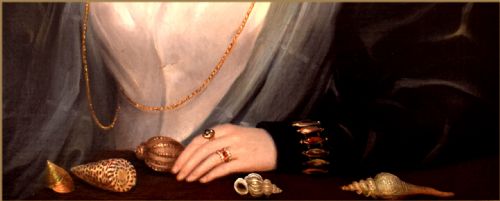
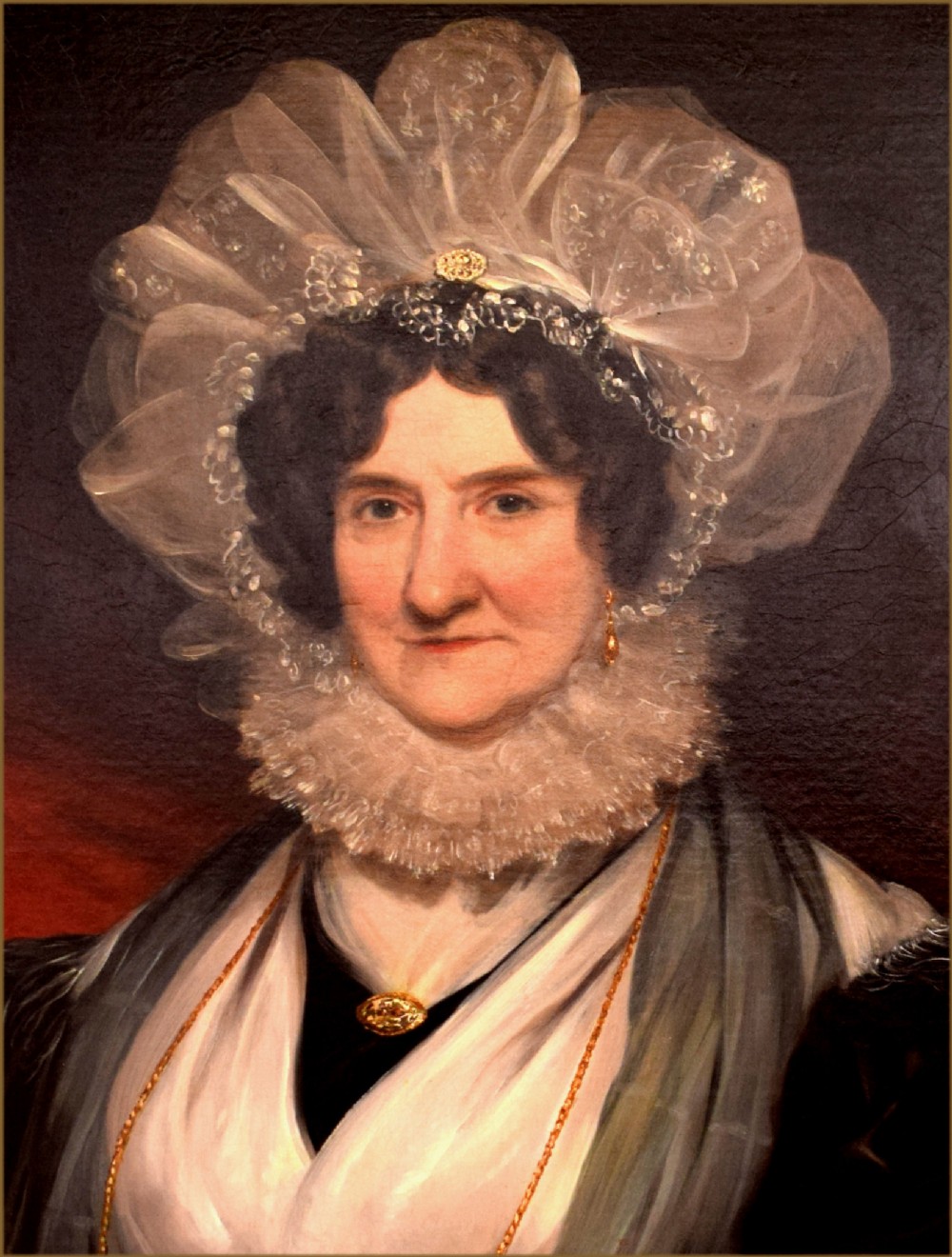
fig 1. A 19th-century Victorian oil painting depicting a female conchologist wearing a white lace bonnet, pleated ruff, and gold jewellery alongside a selection of sea shells.
fig 1. William Huggins, 1820 – 1884 Portrait of a Victorian Conchologist Wearing Lace Mop Cap, Ruff and Jewelry

George Spratt’s composite caricature of ‘The Conchologist’ offers a personification of the craze – a woman, fashioned from shells of marine life, is depicted scanning the sea-side for her kin: her basket is filled with sprigs of seaweed and various tide pool treasures. Her rather ineffectual sun-bonnet looks to be crafted from the soft-bodied bell of a jellyfish, while a quasi-vulval cowry shell, disturbingly enlarged, makes up the lower half of her body.

fig 2. A 19th-century Victorian oil painting depicting a female conchologist wearing a white lace bonnet, pleated ruff, and gold jewellery alongside a selection of sea shells.
fig 2. William Huggins, 1820 – 1884 Portrait of a Victorian Conchologist Wearing Lace Mop Cap, Ruff and Jewelry

The Shell Grotto in Margate, is perhaps the most impressive example of conchological worship. In 1835 an architectural love letter to the humble shell was uncovered by a man and his son attempting to dig a duck pond. The son, falling from a hole in the ground, recovered from his tumble to find a chamber ‘papered’ with an exquisite tapestry of shells. The chamber was connected to a labyrinthian passage similarly shrouded with cockles, whelks, mussels and oyster shells forming intricate mosaics. We still do not know how, or why the grotto came to be nor who is responsible for its creation.

fig 3. A 19th-century Victorian oil painting depicting a female conchologist wearing a white lace bonnet, pleated ruff, and gold jewellery alongside a selection of sea shells.
fig 3. William Huggins, 1820 – 1884 Portrait of a Victorian Conchologist Wearing Lace Mop Cap, Ruff and Jewelry

Victorian women made use of their collection in various handicraft projects. Many put together imitation bouquets: using various miniature shells to create the desired flower.

Soon enough collectors, having exhausted the beaches of Britain, took to harvesting more impressive shells from overseas. An army of merchants, catering for the increasing demand, set up shop in London. The name of the global oil company “Shell” is, oddly enough, a reminder of the victorian love of conchology.

In 1833 one Marcus Samuel opened such a shop selling shells, curios, and other trinkets to natural history enthusiasts. By 1851 Marcus was described in the census as a ‘shell merchant’ and was listed as proprietor of ‘The Shell Shop’ in Houndsditch. He later formed the ‘Shell Transport and Trading Company.’ In 1882 his son (Marcus Junior) while travelling in the Caspian Sea, saw a potential for exporting oil from the region. He commissioned the world’s first purpose-built oil tanker and named the tanker the Murex, Latin for a type of snail shell, as a nod to the company’s beginnings. The first logo (1901) was a mussel shell, but by 1904 it was replaced with a scallop shell.

Conchology (from Ancient Greek: konkhos, "cockle") is the study of mollusc shells. Conchology is one aspect of malacology, the study of molluscs; however, malacology is the study of molluscs as whole organisms, whereas conchology is confined to the study of their shells. It includes the study of land and freshwater mollusc shells as well as seashells and extends to the study of a gastropod's operculum.

Conchology is now sometimes seen as an archaic study, because relying on only one aspect of an organism's morphology can be misleading. However, a shell often gives at least some insight into molluscan taxonomy, and historically the shell was often the only part of exotic species that was available for study. Even in current museum collections it is common for the dry ma

Height
77cm (30.31")
Width
64cm (25.20")
Depth
3cm (1.18")
Date of Manufacture

Artware Fineart has dated this Victorian Oil Portrait Painting to the 19th Century.

Reference Numbers
Sellingantiques Ref
SA553730
Dealers Internal Ref
3986
Artware Fineart
Sellingantiques verified Since Sep 2008
Dealer Profile

You can view the stock and full dealer information on the Artware Fineart Profile Page
PDF SHARE
SAVE
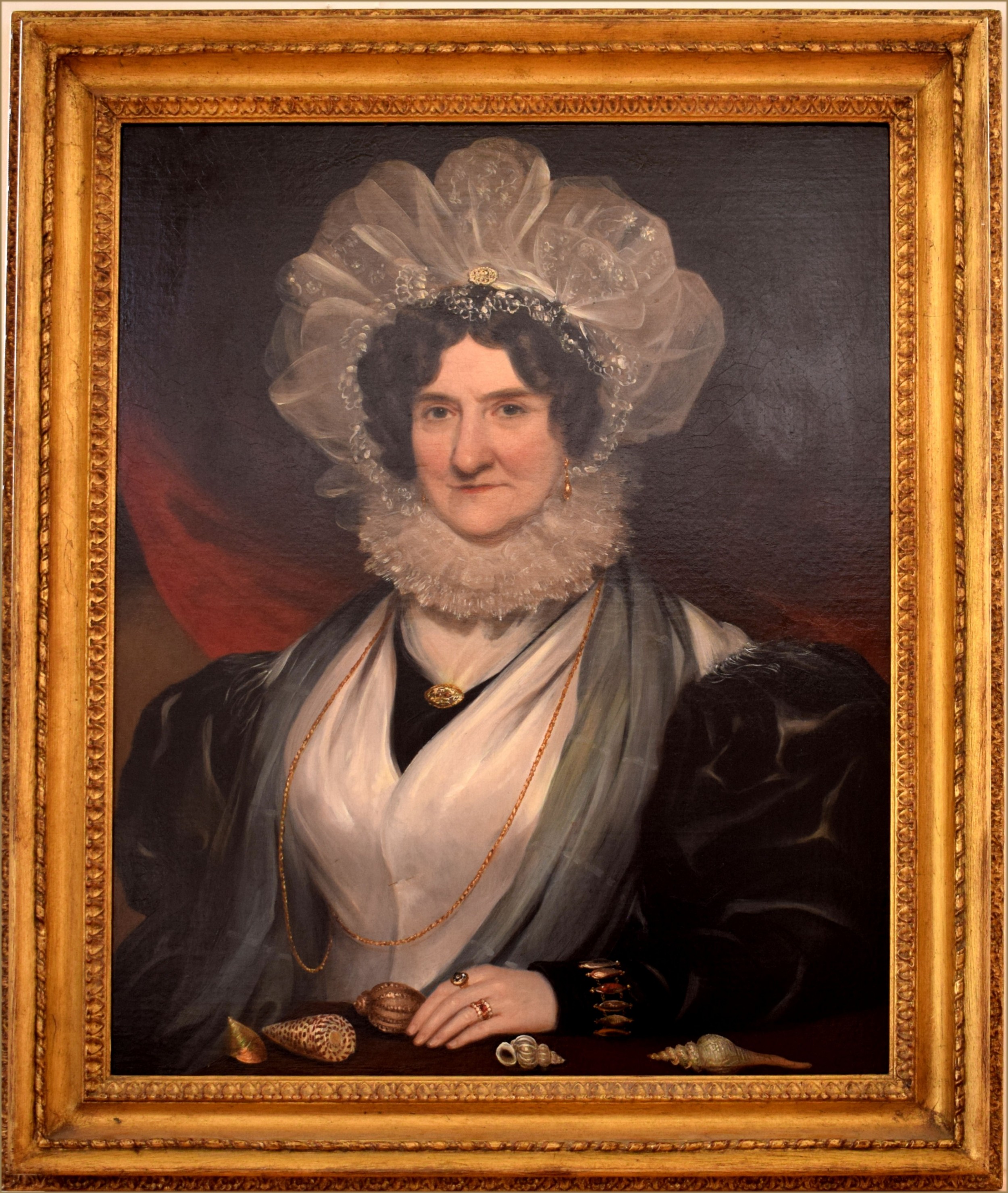
A 19th-century Victorian oil painting depicting a female conchologist wearing a white lace bonnet, pleated ruff, and gold jewellery alongside a selection of sea shells.
1 / 4
Archive I A 19th-century Victorian oil painting depicting a female conchologist wearing a white lace bonnet, pleated ruff, and gold jewellery alongside a selection of sea shells.

William Huggins, 1820 – 1884 Portrait of a Victorian Conchologist Wearing Lace Mop Cap, Ruff and Jewelry
Archive II A 19th-century Victorian oil painting depicting a female conchologist wearing a white lace bonnet, pleated ruff, and gold jewellery alongside a selection of sea shells. View II
Archive III A 19th-century Victorian oil painting depicting a female conchologist wearing a white lace bonnet, pleated ruff, and gold jewellery alongside a selection of sea shells. View III
Archive IV A 19th-century Victorian oil painting depicting a female conchologist wearing a white lace bonnet, pleated ruff, and gold jewellery alongside a selection of sea shells. View IV
FURTHER BROWSING

Visitors also looked at these ⇣

Enlarged Archival View
Telephone 07958 699 645
Location
18 La Gare
51 Surrey Row
London
SE1 0BZ
United Kingdom
Verified Since Sep 2008
Items For Sale 243
Items Sold 223
Artware Fineart
Verified Since Sep 2008
View Dealer Info
Location: 18 La Gare , 51 Surrey Row , London , SE1 0BZ , United Kingdom
Verified
Sep 2008
For Sale
243
Sold
223
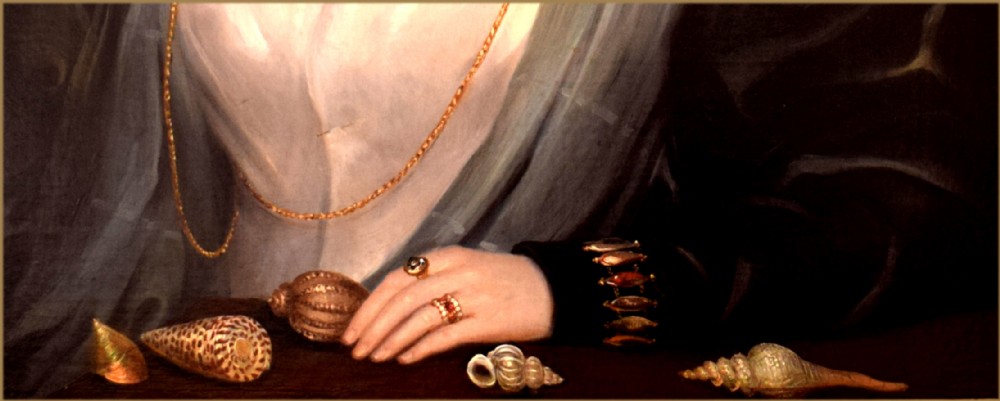
A 19th-century Victorian oil painting depicting a female conchologist wearing a white lace bonnet, pleated ruff, and gold jewellery alongside a selection of sea shells.
William Huggins, 1820 – 1884 Portrait of a Victorian Conchologist wearing Lace Mop Cap, Ruff and Jewelry
Ref: SA553730
A 19th-century Victorian oil painting depicting a female conchologist wearing a white lace bonnet, pleated ruff, and gold jewellery alongside a selection of sea shells.
Detail View 1
Detail View 2
Detail View 3
Archival Detail
Every single antique dealer on our platform is individually approved by our internal team. We verify their professional trade history, ethical standards, and photographic quality to ensure a secure, high-standard buying environment. Upon joining, every dealer agrees to a strict 9-point code of conduct. While issues can occasionally arise, our dealers typically resolve them swiftly and directly with the buyer. In fact, since our founding in 2002, Sellingantiques has only had to step in to help resolve an issue on roughly five occasions—a true testament to the quality of our dealers and their dedication to your happiness.
Our dealers are highly experienced in packing and shipping fragile, high-value antiques. Because you are in direct contact with the dealer, you will be able to easily go through all available shipping and insurance options together to ensure your item arrives safely.
Antiques are the ultimate green purchase. By choosing historical pieces over newly manufactured goods, you completely eliminate the carbon footprint of modern mass production while preserving exceptional, timeless craftsmanship.

Victorian portraiture emerged during the 19th century, characterized by realistic depictions of sitters accompanied by personal items that denoted their profession, scientific interest, or social status.

Artists typically applied oil-based pigments mixed with natural binders onto stretched linen or cotton canvas, finishing the surface with protective varnish.

Authentic works from this period usually feature natural age-related craquelure, period-appropriate timber stretcher bars, and historic pigment layering techniques.

A period portrait can be hung above a fireplace mantelpiece, integrated into a gallery wall, or placed in a study alongside classic wooden furnishings.

Paintings should be kept away from direct sunlight, excess heat, and fluctuating humidity, with dust removed gently using a dry, soft brush.
items
Add keywords to the filter
Price
£100
£250000
Era
Movements
Material
Origin
Stock Location
Freshness
Online Payments
Categories