22,898  PAGES BROWSED TODAY PAGES TODAY 36  ANTIQUES UPLOADED TODAY NEW ARRIVALS
ID #SA553692
FOR SALE
£3,500
Email
Save
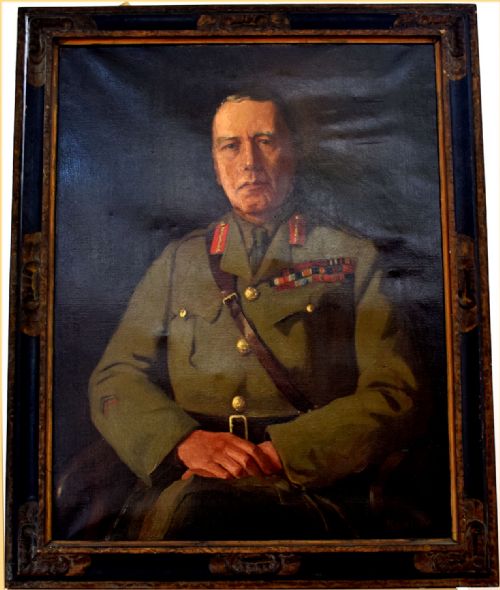
Ruth Cecil Latter, 1869-1949 Portrait of Sir (Cecil Frederick) Nevil Macready 1st Bt, Kcb, Kcmg and Gcmg, 1862-1946
Artware Fineart
for sale €4,095     $4,445
£3,500

Artware Fineart

Sellingantiques Verified Since Sep 2008
View Dealers Stock Page
Id #SA553692
PDF SHARE
SAVE

Ruth Cecil Latter, 1869-1949 Portrait of Sir (Cecil Frederick) Nevil Macready 1st Bt, Kcb, Kcmg and Gcmg, 1862-1946

1920 - 1940
For Sale by Artware Fineart
Description

Ruth Cecil Latter, 1869-1949

Portrait of Sir (Cecil Frederick) Nevil Macready 1st Bt, KCB, KCMG and GCMG, 1862-1946

Signed/Inscribed:

"R.Latter"

oil on canvas

91.44 x 71.12 cm. (36 x 28in.)

Sir (Cecil Frederick) Nevil, Macready, first baronet (1862–1946), army officer, was born on 7 May 1862 at 6 Wellington Square, Cheltenham, youngest son of the actor William Charles Macready (1793–1873) and his second wife, Cecile Louise Frederica Spencer (d. 1908), a granddaughter of Sir William Beechey the painter. Nevil, as he was always known, was Cecile's only child, and only one son and one daughter from his father's first marriage survived infancy.

Macready was brought up in artistic and literary circles. In his memoirs he adjudged himself ‘far too lazy’ to follow a career in painting or drawing (Macready, 1.14), and his father resolutely opposed his going on the stage. After a series of schools he went to the Royal Military College, Sandhurst; and in October 1881 he was commissioned into the Gordon Highlanders. He took part in the Egyptian campaign of 1882, including the battle of Tell al-Kebir. In the summer of 1884 he was appointed staff lieutenant of military police and garrison adjutant at Alexandria, thus establishing a career pattern which he was to follow for most of his professional life: adjutancy, staff duties, and police work. ‘It was not a bad thing’, recalled Macready ‘to have Staff experience when young … The great thing is always to have a ready answer on one's tongue. Even if it is not absolutely correct, there are many generals who will be none the wiser’ (Macready, 1.69–70). In 1886 he married Sophia Geraldine Atkin (d. 1931) from a co. Cork family. They had two daughters and one son.

After some five years as a military policeman Macready rejoined his regiment early in 1890 and served in Ceylon and India for two years. In 1892, as a captain, he was transferred to Dublin and in 1894 he became adjutant of a volunteer battalion of the regiment based in Aberdeenshire. In 1899 he returned to the 2nd battalion in India, which in September was sent to South Africa.

Macready, promoted major in 1899, saw active service during the South African War, including the defence of Ladysmith, where he was one of the besieged garrison from October 1899 to February 1900. Having been promoted lieutenant-colonel, he was in June 1901 selected to head a commission investigating cattle-raiding in Zululand. Following this he served in a series of staff jobs, including assistant provost-marshal at Port Elizabeth and assistant adjutant-general and chief staff officer of Cape Colony. For his work in South Africa he was twice mentioned in dispatches. He was promoted colonel in 1903.

In 1907 Macready became assistant adjutant-general at the War Office, in the directorate of personal services which was, among other matters, responsible for discipline and the use of troops in aid of the civil power. For a year from May 1909 he commanded the 2nd infantry brigade at Aldershot, but he returned to the War Office in 1910 as director of personal services. The same year he was promoted major-general. His position made him a crucial figure in the deployment of troops during a series of serious labour disputes in Great Britain and anticipated civil disturbance in Ireland. He earned the confidence of the government as a ‘safe pair of hands’ in circumstances where passions ran high and over-hasty action could have disastrous consequences. He certainly had liberal political sympathies. Writing in 1930 his close colleague Wyndham Childs recalled that they both ‘held views which nowadays I suppose would be called sane, though at that time they were thought ultra-democratic’ (Childs, 83). In particular, Macready conceded the right to strike and (unlike many fellow officers) favoured Irish home rule.

In November 1910 Macready was sen

Physical Dimensions
Height
36cm (14.17")
Width
28cm (11.02")
Depth
5cm (1.97")
Declaration

Artware Fineart has dated this Antique Military Oil Portrait to the 1930s.

Reference Numbers
Sellingantiques Reference
SA553692
Dealers Internal Reference
3940
Description
Ruth Cecil Latter, 1869-1949

Portrait of Sir (Cecil Frederick) Nevil Macready 1st Bt, KCB, KCMG and GCMG, 1862-1946

Signed/Inscribed:

"R.Latter"

oil on canvas

91.44 x 71.12 cm. (36 x 28in.)

Sir (Cecil Frederick) Nevil, Macready, first baronet (1862–1946), army officer, was born on 7 May 1862 at 6 Wellington Square, Cheltenham, youngest son of the actor William Charles Macready (1793–1873) and his second wife, Cecile Louise Frederica Spencer (d. 1908), a granddaughter of Sir William Beechey the painter.
Nevil, as he was always known, was Cecile's only child, and only one son and one daughter from his father's first marriage survived infancy.
Artware Fineart
fig 1. An oil painting on canvas depicting a seated British army officer in khaki uniform with military decorations against a dark background.
fig 1. Ruth Cecil Latter, 1869-1949 Portrait of Sir (Cecil Frederick) Nevil Macready 1st Bt, Kcb, Kcmg and Gcmg, 1862-1946

Macready was brought up in artistic and literary circles. In his memoirs he adjudged himself ‘far too lazy’ to follow a career in painting or drawing (Macready, 1.14), and his father resolutely opposed his going on the stage. After a series of schools he went to the Royal Military College, Sandhurst; and in October 1881 he was commissioned into the Gordon Highlanders. He took part in the Egyptian campaign of 1882, including the battle of Tell al-Kebir. In the summer of 1884 he was appointed staff lieutenant of military police and garrison adjutant at Alexandria, thus establishing a career pattern which he was to follow for most of his professional life: adjutancy, staff duties, and police work. ‘It was not a bad thing’, recalled Macready ‘to have Staff experience when young … The great thing is always to have a ready answer on one's tongue. Even if it is not absolutely correct, there are many generals who will be none the wiser’ (Macready, 1.69–70). In 1886 he married Sophia Geraldine Atkin (d. 1931) from a co. Cork family. They had two daughters and one son.

fig 2. An oil painting on canvas depicting a seated British army officer in khaki uniform with military decorations against a dark background.
fig 2. Ruth Cecil Latter, 1869-1949 Portrait of Sir (Cecil Frederick) Nevil Macready 1st Bt, Kcb, Kcmg and Gcmg, 1862-1946

After some five years as a military policeman Macready rejoined his regiment early in 1890 and served in Ceylon and India for two years. In 1892, as a captain, he was transferred to Dublin and in 1894 he became adjutant of a volunteer battalion of the regiment based in Aberdeenshire. In 1899 he returned to the 2nd battalion in India, which in September was sent to South Africa.

Macready, promoted major in 1899, saw active service during the South African War, including the defence of Ladysmith, where he was one of the besieged garrison from October 1899 to February 1900. Having been promoted lieutenant-colonel, he was in June 1901 selected to head a commission investigating cattle-raiding in Zululand. Following this he served in a series of staff jobs, including assistant provost-marshal at Port Elizabeth and assistant adjutant-general and chief staff officer of Cape Colony. For his work in South Africa he was twice mentioned in dispatches. He was promoted colonel in 1903.

In 1907 Macready became assistant adjutant-general at the War Office, in the directorate of personal services which was, among other matters, responsible for discipline and the use of troops in aid of the civil power. For a year from May 1909 he commanded the 2nd infantry brigade at Aldershot, but he returned to the War Office in 1910 as director of personal services. The same year he was promoted major-general. His position made him a crucial figure in the deployment of troops during a series of serious labour disputes in Great Britain and anticipated civil disturbance in Ireland. He earned the confidence of the government as a ‘safe pair of hands’ in circumstances where passions ran high and over-hasty action could have disastrous consequences. He certainly had liberal political sympathies. Writing in 1930 his close colleague Wyndham Childs recalled that they both ‘held views which nowadays I suppose would be called sane, though at that time they were thought ultra-democratic’ (Childs, 83). In particular, Macready conceded the right to strike and (unlike many fellow officers) favoured Irish home rule.

In November 1910 Macready was sen

Height
36cm (14.17")
Width
28cm (11.02")
Depth
5cm (1.97")
Date of Manufacture

Artware Fineart has dated this Antique Military Oil Portrait to the 1930s.

Reference Numbers
Sellingantiques Ref
SA553692
Dealers Internal Ref
3940
Artware Fineart
Sellingantiques verified Since Sep 2008
Dealer Profile

You can view the stock and full dealer information on the Artware Fineart Profile Page

PDF SHARE
SAVE
An oil painting on canvas depicting a seated British army officer in khaki uniform with military decorations against a dark background.
1 / 3
Archive I An oil painting on canvas depicting a seated British army officer in khaki uniform with military decorations against a dark background.

Ruth Cecil Latter, 1869-1949 Portrait of Sir (Cecil Frederick) Nevil Macready 1st Bt, Kcb, Kcmg and Gcmg, 1862-1946
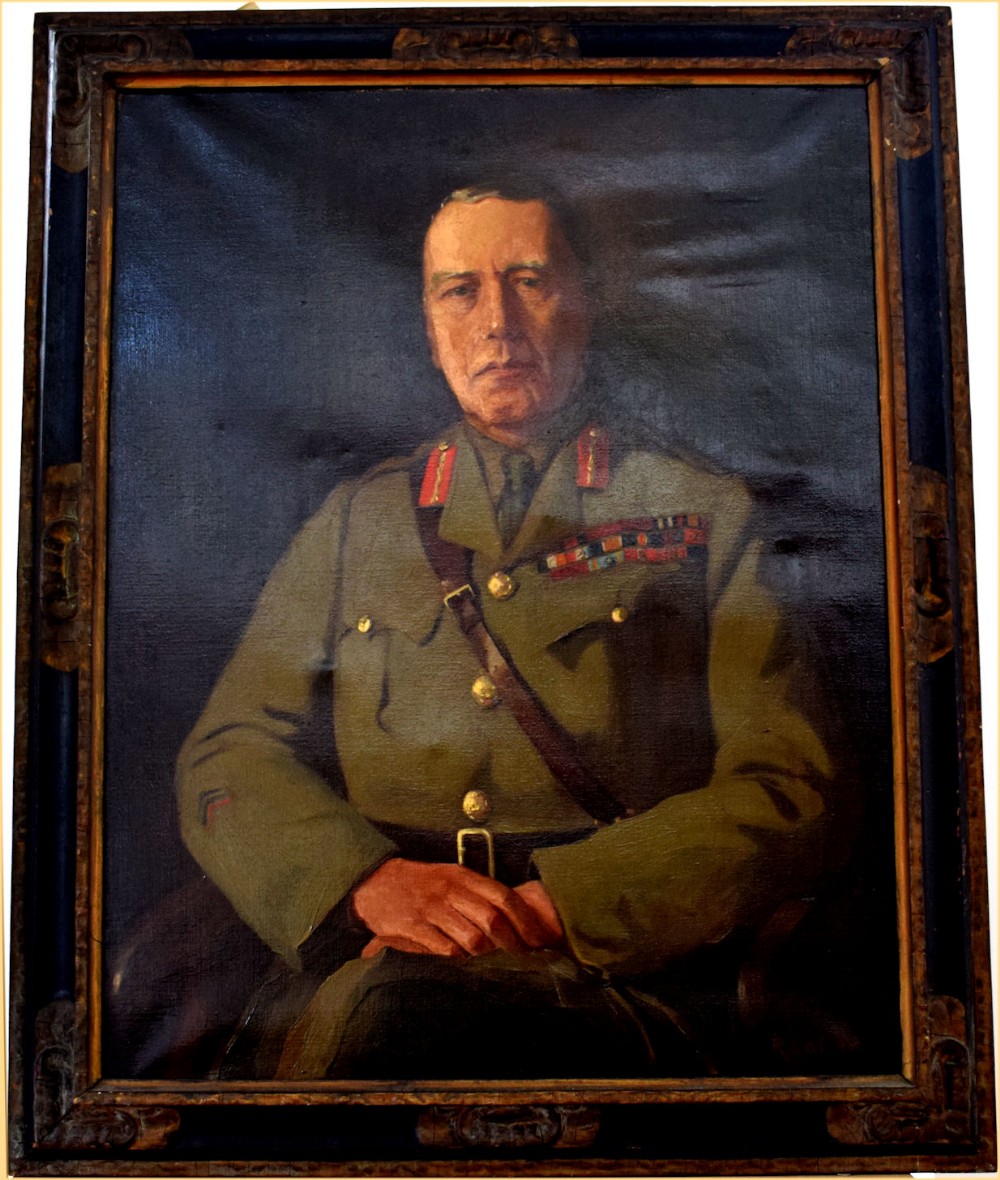
Archive II An oil painting on canvas depicting a seated British army officer in khaki uniform with military decorations against a dark background. View II
Archive III An oil painting on canvas depicting a seated British army officer in khaki uniform with military decorations against a dark background. View III
FURTHER BROWSING

Visitors also looked at these ⇣

Enlarged Archival View
Telephone 07958 699 645
Location
18 La Gare
51 Surrey Row
London
SE1 0BZ
United Kingdom
Verified Since Sep 2008
Items For Sale 243
Items Sold 223
Artware Fineart
Verified Since Sep 2008
View Dealer Info
Location: 18 La Gare , 51 Surrey Row , London , SE1 0BZ , United Kingdom
Verified
Sep 2008
For Sale
243
Sold
223
An oil painting on canvas depicting a seated British army officer in khaki uniform with military decorations against a dark background.
Ruth Cecil Latter, 1869-1949 Portrait of Sir (Cecil Frederick) Nevil Macready 1st Bt, KCB, KCMG and GCMG, 1862-1946
Ref: SA553692
An oil painting on canvas depicting a seated British army officer in khaki uniform with military decorations against a dark background.
Detail View 1
Detail View 2
Archival Detail
Every single antique dealer on our platform is individually approved by our internal team. We verify their professional trade history, ethical standards, and photographic quality to ensure a secure, high-standard buying environment. Upon joining, every dealer agrees to a strict 9-point code of conduct. While issues can occasionally arise, our dealers typically resolve them swiftly and directly with the buyer. In fact, since our founding in 2002, Sellingantiques has only had to step in to help resolve an issue on roughly five occasions—a true testament to the quality of our dealers and their dedication to your happiness.
Our dealers are highly experienced in packing and shipping fragile, high-value antiques. Because you are in direct contact with the dealer, you will be able to easily go through all available shipping and insurance options together to ensure your item arrives safely.
Antiques are the ultimate green purchase. By choosing historical pieces over newly manufactured goods, you completely eliminate the carbon footprint of modern mass production while preserving exceptional, timeless craftsmanship.

Early 20th-century British military portraiture features realistic depictions of armed forces personnel, characterised by subdued colour palettes, formal composition, and precise attention to uniform insignia and honours.

These works were created using oil pigments bound with linseed oil applied directly to stretched flax or cotton canvas, frequently mounted on timber stretcher bars.

Authentic period oil paintings feature natural age craquelure across the paint surface, original stretcher bars with timber aging, and period-appropriate canvas weave and edge oxidation.

A formal portrait serves as a focal point in a study, hallway, or library setting, complementing dark wood paneling, brass wall lights, and tailored upholstery.

Canvas paintings must be displayed away from direct sunlight and fluctuating humidity, dusted lightly with a soft brush, and restored only by a qualified art conservator.
items
Add keywords to the filter
Price
£100
£250000
Era
Movements
Material
Origin
Stock Location
Freshness
Online Payments
Categories