41,073  PAGES BROWSED TODAY PAGES TODAY 84  ANTIQUES UPLOADED TODAY NEW ARRIVALS
Sort Order
Items Per Page
ID #SA1230534
FOR SALE
£980
Email Buy
Save
Superb Patina and Provenance Welsh Oak Coffer C.1680
Webberley Antiques
for sale €1,147     $1,245
£980
Webberley Antiques

Webberley Antiques

Sellingantiques Verified Since Nov 2008
View Dealers Stock Page
  • About Us
    Specialists in 18th century and earlier furniture for more than 45 years
Id #SA1230534
PDF SHARE
SAVE

Superb Patina and Provenance Welsh Oak Coffer C.1680

17th century
Description

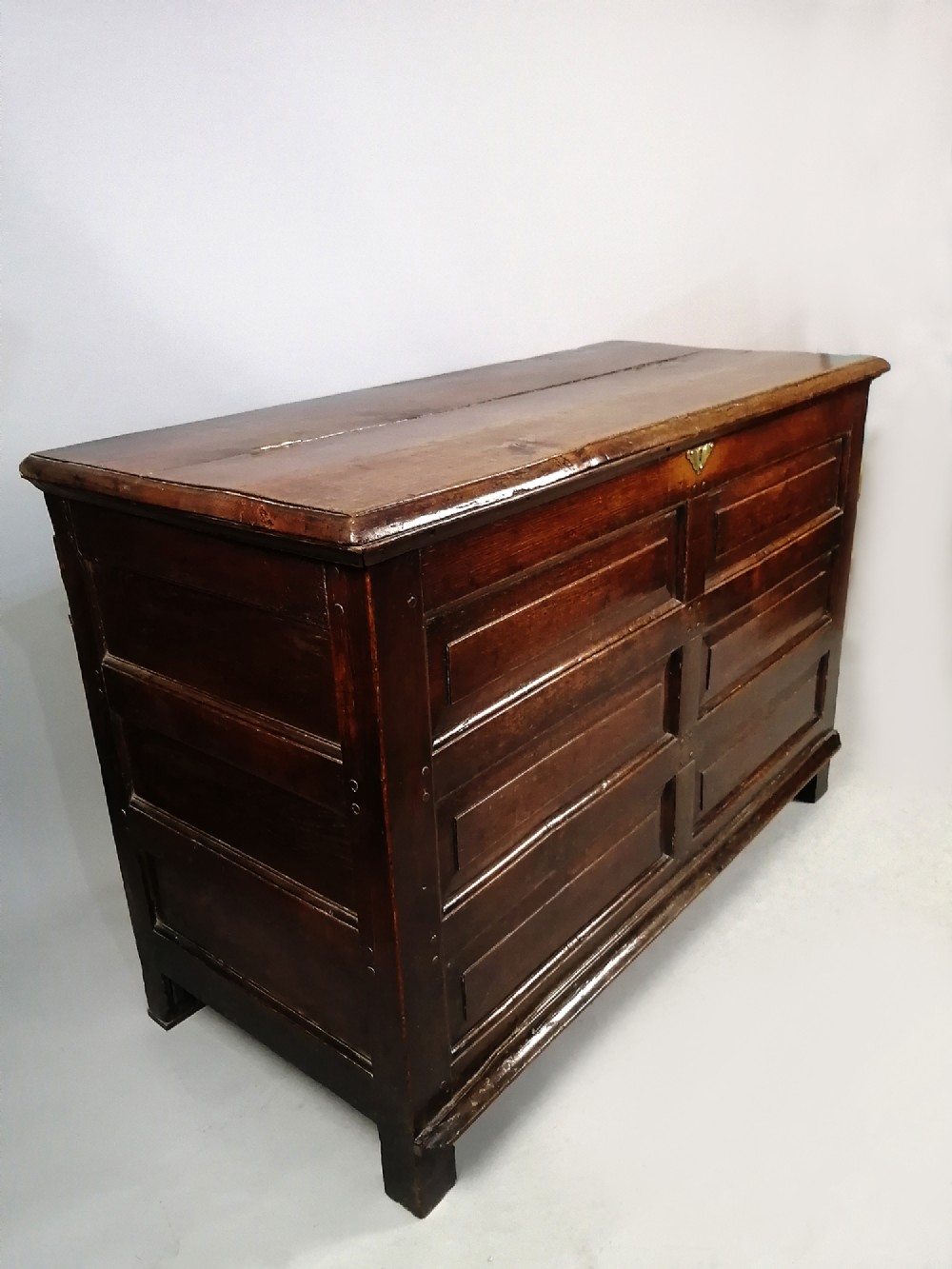
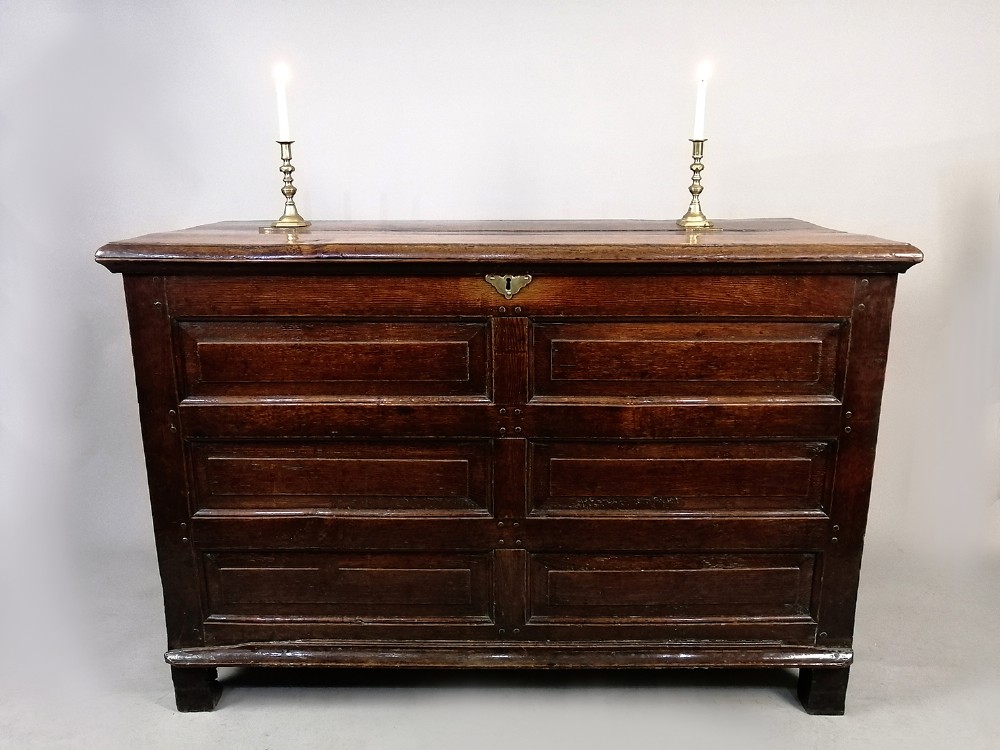
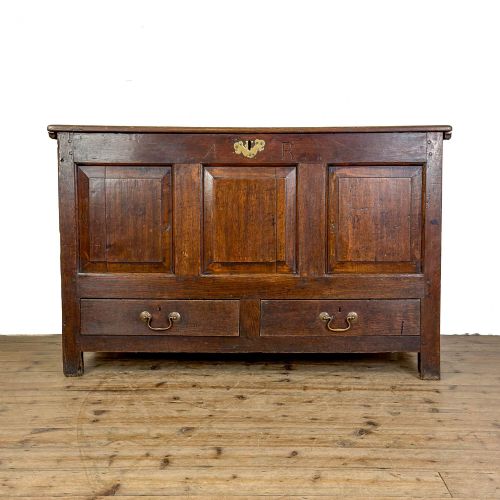
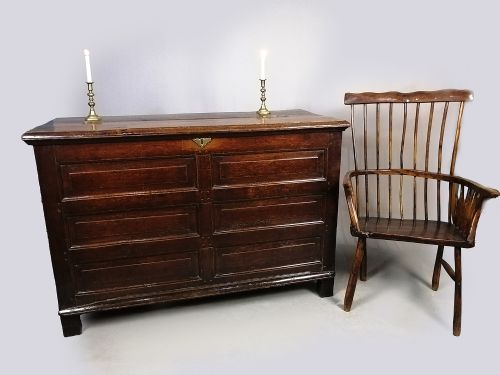
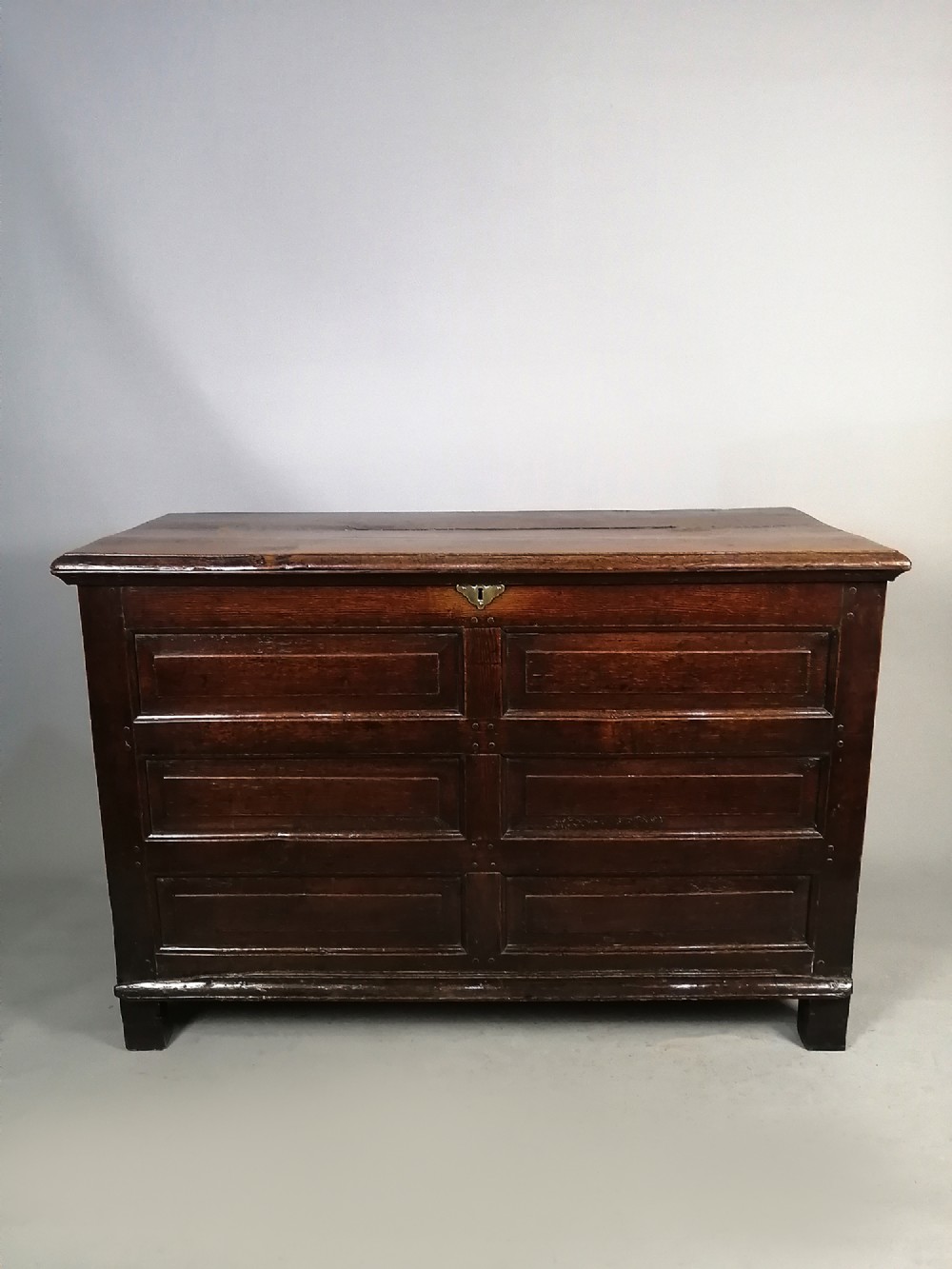
A superb large Welsh oak coffer of beautifully linear form with peg and tenon joints (all pegs original) and original fielded panels throughout. The front panels hand carved to give a raised central cartouche.

.

With an exceptionally good natural colour and very rich natural patina.

.

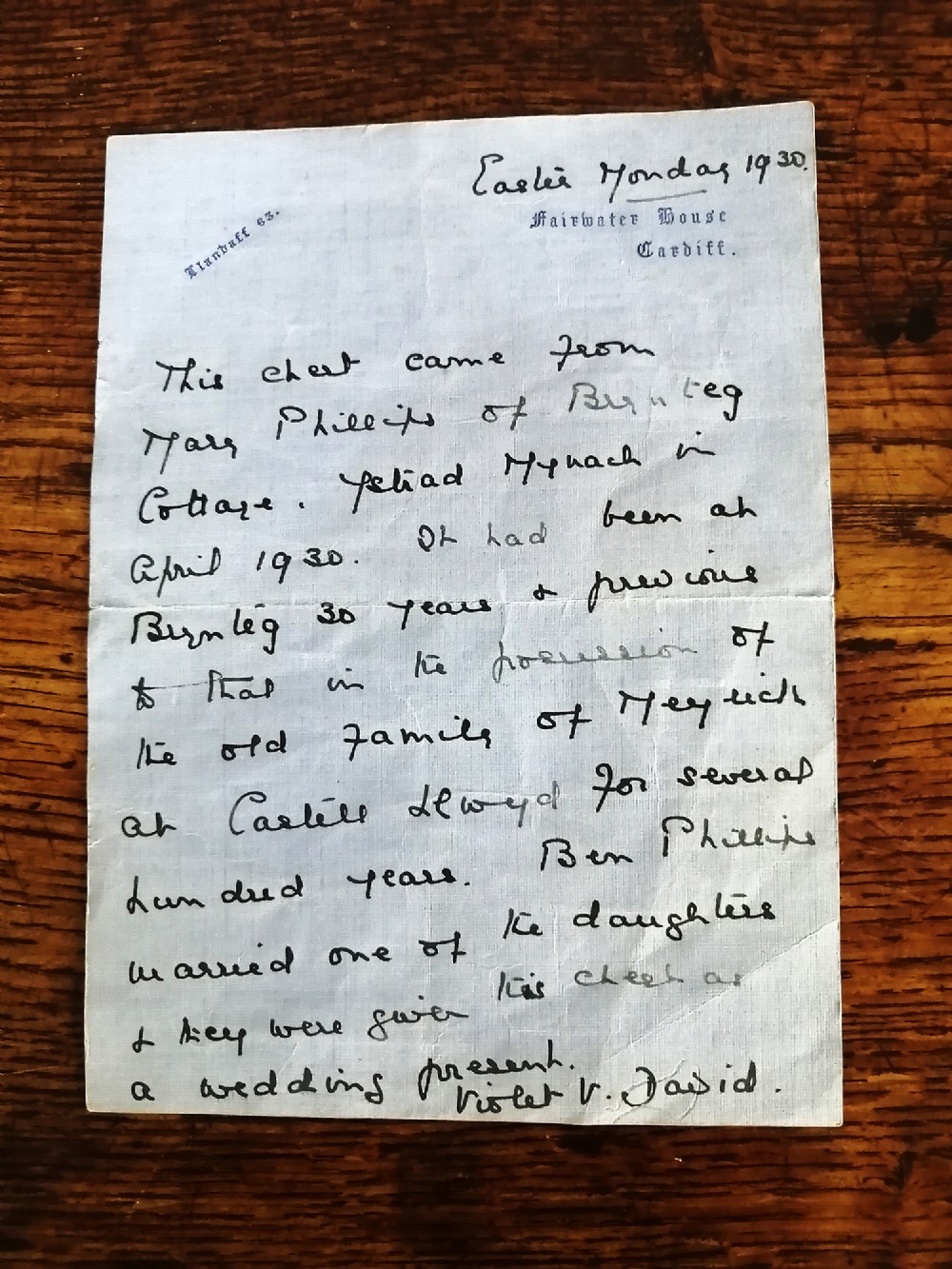
The coffer has provenance by way of a signed letter from Violet V. David of Fairwater House, Cardiff, dated Easter Monday 1930, which states

.

“This coffer came from Mary Phillips of Brynteg Cottage, Ystrad Mynach in April 1930*. It had been at Brynteg 30 years and previous to that in the possession of the old family of Meyrick at Castell Llwyd for several hundred years. Ben Phillips married one of the daughters and they were given this chest as a wedding present.”

.

Violet was the wife of Major Evan John Carne David who served as High Sheriff of Glamorgan in 1930 and who had inherited Fairwater House.

.

The house was designed by David Vaughan and built in 1844 for Major David’s great grandfather Evan David – a significant landowner in Wales.

At some point after the second world war ended in 1945, the Major and Violet moved out and the house became a local hostel for elderly men, closing in the 1980s. It was later demolished to make way for a large housing development.

.

The reference to “Ben Phillips” appears to be the marriage between Benjamin Meyrick and Elizabeth Phillips in around 1840 and the coffer came to Mary Phillips in 1900. Mary may not have known that it was her ancestor Elizabeth who was the “Phillips” and not Benjamin.

.

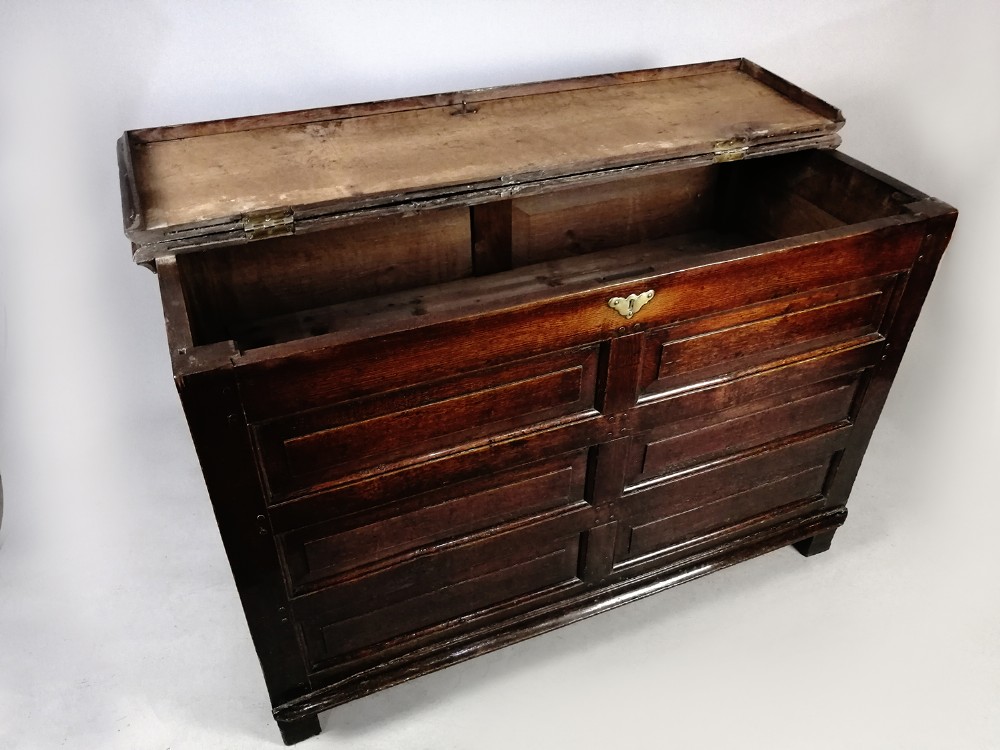
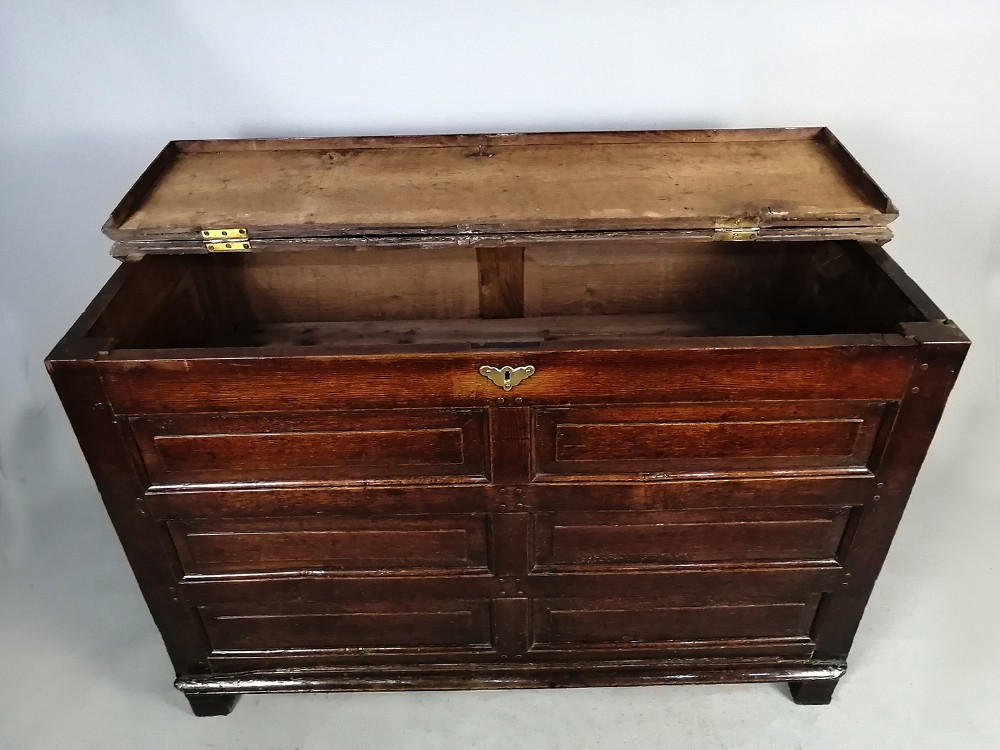
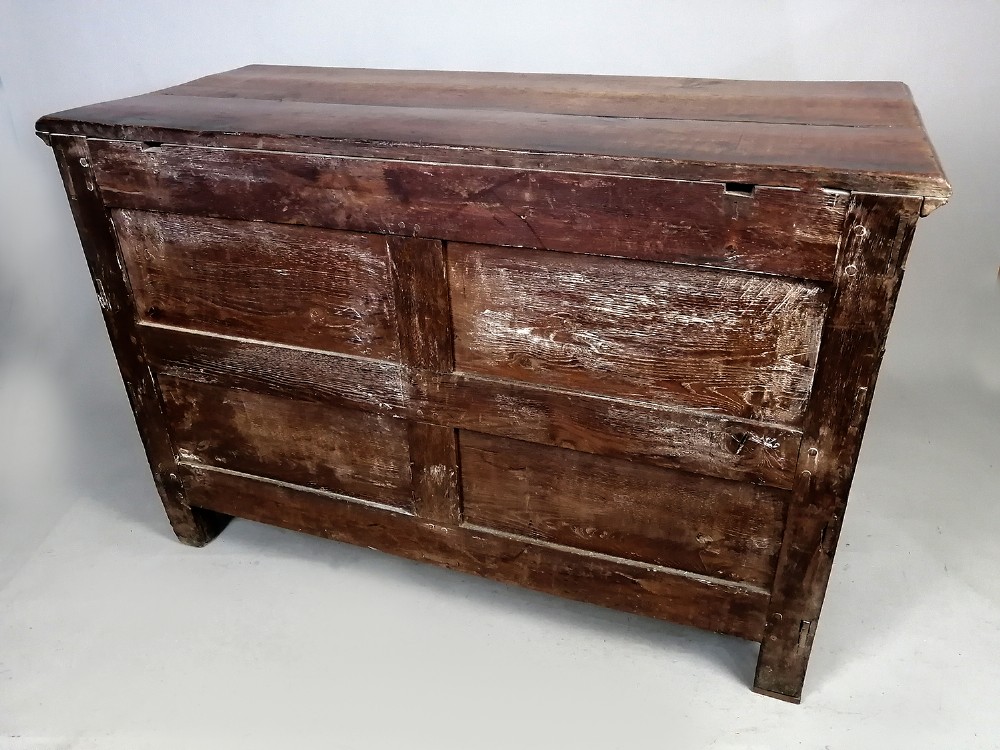
The chest is in excellent condition with no new timbers other than a half width removable shelf to the interior which was added professionally many moons ago.

.

The planks of the lid have been hinged – no doubt because the weight of the lid and height of the coffer required above average height and strength to lift it! Now the lid is simple to lift and fold back and the coffer offers a huge amount of easy to use storage.

.

Colour and patina such as this takes centuries to develop and this chest dates from the late 17th Century and has clearly always been much loved, cared for and carries its long and fascinating history with it. The original letter from Violet David will be provided to the purchaser.

.

Very sturdy, robust and usable.

.

A fantastic Welsh oak coffer of exceptional colour and patination.

.

.

Dimensions are:

.

36 inches high, 53.5 inches wide and 24 inches deep.

Declaration

Webberley Antiques has dated this Antique Welsh Oak Coffer to the 17th Century.
Reference Numbers
Sellingantiques Reference
SA1230534
Dealers Notes

I describe and photograph my pieces accurately and with the aim that on arrival each will exceed your expectations.

I operate a full refund guarantee and am always happy to give free, honest and friendly advice.

Description
A superb large Welsh oak coffer of beautifully linear form with peg and tenon joints (all pegs original) and original fielded panels throughout. The front panels hand carved to give a raised central cartouche.
fig 1. A seventeenth-century dark oak coffer featuring six rectangular moulded panels on the front facade and a central brass keyhole escutcheon.
fig 1. Superb Patina and Provenance Welsh Oak Coffer C.1680

With an exceptionally good natural colour and very rich natural patina.

The coffer has provenance by way of a signed letter from Violet V. David of Fairwater House, Cardiff, dated Easter Monday 1930, which states

“This coffer came from Mary Phillips of Brynteg Cottage, Ystrad Mynach in April 1930*.

It had been at Brynteg 30 years and previous to that in the possession of the old family of Meyrick at Castell Llwyd for several hundred years.
Webberley Antiques

Ben Phillips married one of the daughters and they were given this chest as a wedding present.”
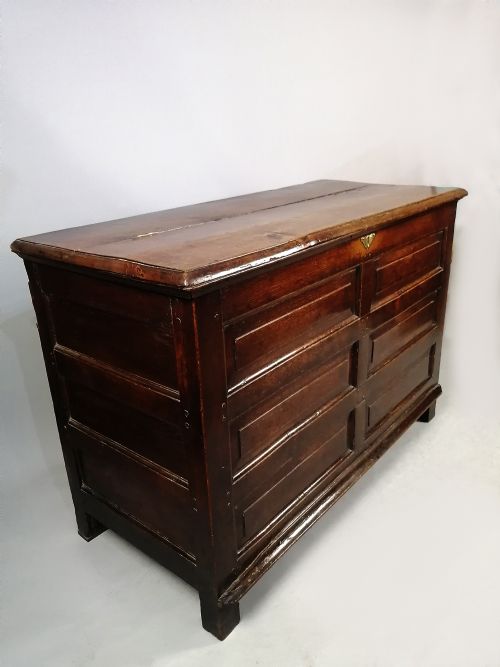
fig 2. A seventeenth-century dark oak coffer featuring six rectangular moulded panels on the front facade and a central brass keyhole escutcheon.
fig 2. Superb Patina and Provenance Welsh Oak Coffer C.1680

Violet was the wife of Major Evan John Carne David who served as High Sheriff of Glamorgan in 1930 and who had inherited Fairwater House.

The house was designed by David Vaughan and built in 1844 for Major David’s great grandfather Evan David – a significant landowner in Wales.
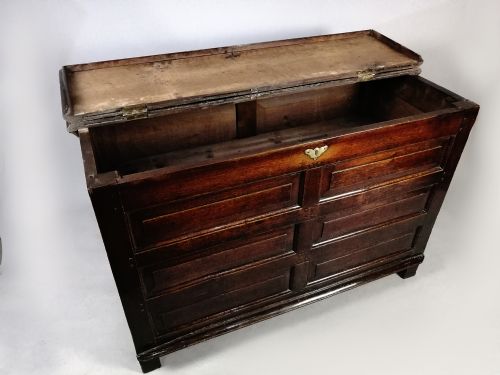
fig 3. A seventeenth-century dark oak coffer featuring six rectangular moulded panels on the front facade and a central brass keyhole escutcheon.
fig 3. Superb Patina and Provenance Welsh Oak Coffer C.1680

At some point after the second world war ended in 1945, the Major and Violet moved out and the house became a local hostel for elderly men, closing in the 1980s. It was later demolished to make way for a large housing development.
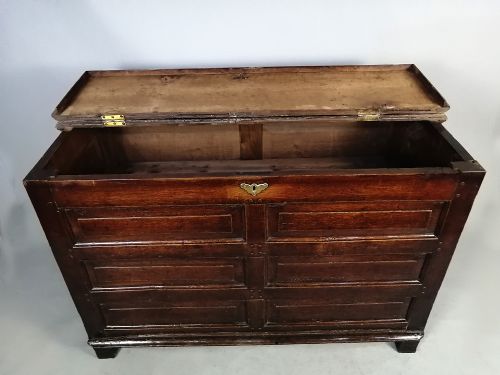
fig 4. A seventeenth-century dark oak coffer featuring six rectangular moulded panels on the front facade and a central brass keyhole escutcheon.
fig 4. Superb Patina and Provenance Welsh Oak Coffer C.1680

The reference to “Ben Phillips” appears to be the marriage between Benjamin Meyrick and Elizabeth Phillips in around 1840 and the coffer came to Mary Phillips in 1900. Mary may not have known that it was her ancestor Elizabeth who was the “Phillips” and not Benjamin.
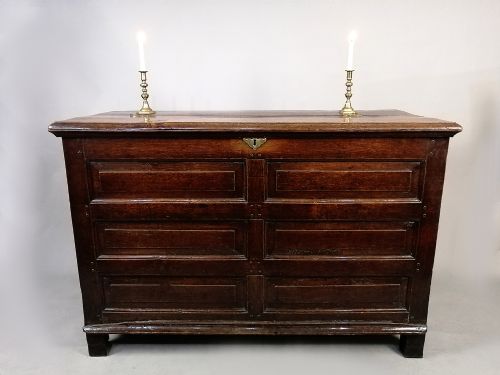
fig 5. A seventeenth-century dark oak coffer featuring six rectangular moulded panels on the front facade and a central brass keyhole escutcheon.
fig 5. Superb Patina and Provenance Welsh Oak Coffer C.1680

The chest is in excellent condition with no new timbers other than a half width removable shelf to the interior which was added professionally many moons ago.

The planks of the lid have been hinged – no doubt because the weight of the lid and height of the coffer required above average height and strength to lift it! Now the lid is simple to lift and fold back and the coffer offers a huge amount of easy to use storage.
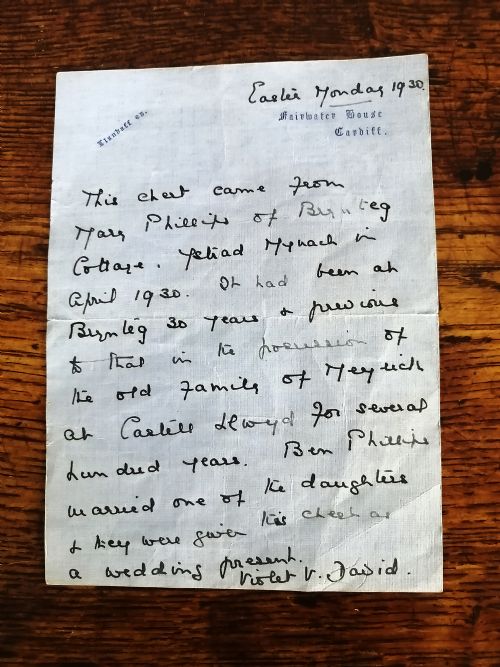
fig 6. A seventeenth-century dark oak coffer featuring six rectangular moulded panels on the front facade and a central brass keyhole escutcheon.
fig 6. Superb Patina and Provenance Welsh Oak Coffer C.1680

Colour and patina such as this takes centuries to develop and this chest dates from the late 17th Century and has clearly always been much loved, cared for and carries its long and fascinating history with it. The original letter from Violet David will be provided to the purchaser.

Very sturdy, robust and usable.

A fantastic Welsh oak coffer of exceptional colour and patination.

Dimensions are:

36 inches high, 53.5 inches wide and 24 inches deep.

Date of Manufacture

Webberley Antiques has dated this Antique Welsh Oak Coffer to the 17th Century.

Reference Numbers
Sellingantiques Ref
SA1230534
Webberley Antiques
Webberley Antiques
Sellingantiques verified Since Nov 2008

Specialists in 18th century and earlier furniture for more than 45 years

Dealer Profile

You can view the stock and full dealer information on the Webberley Antiques Profile Page
PDF SHARE
SAVE
A seventeenth-century dark oak coffer featuring six rectangular moulded panels on the front facade and a central brass keyhole escutcheon.
1 / 8
Archive I A seventeenth-century dark oak coffer featuring six rectangular moulded panels on the front facade and a central brass keyhole escutcheon.

Superb Patina and Provenance Welsh Oak Coffer C.1680
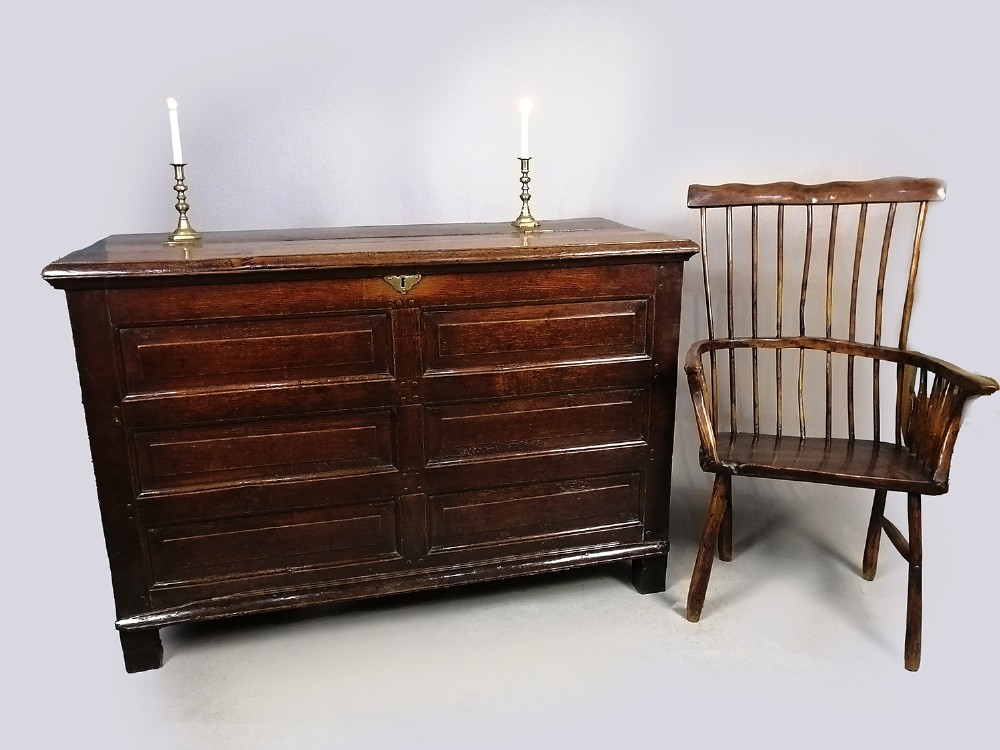
Archive II A seventeenth-century dark oak coffer featuring six rectangular moulded panels on the front facade and a central brass keyhole escutcheon. View II
Archive III A seventeenth-century dark oak coffer featuring six rectangular moulded panels on the front facade and a central brass keyhole escutcheon. View III
Archive IV A seventeenth-century dark oak coffer featuring six rectangular moulded panels on the front facade and a central brass keyhole escutcheon. View IV
Archive V A seventeenth-century dark oak coffer featuring six rectangular moulded panels on the front facade and a central brass keyhole escutcheon. View V
Archive VI A seventeenth-century dark oak coffer featuring six rectangular moulded panels on the front facade and a central brass keyhole escutcheon. View VI
Archive VII A seventeenth-century dark oak coffer featuring six rectangular moulded panels on the front facade and a central brass keyhole escutcheon. View VII
Archive VIII A seventeenth-century dark oak coffer featuring six rectangular moulded panels on the front facade and a central brass keyhole escutcheon. View VIII
FURTHER BROWSING

Visitors also looked at these ⇣

Enlarged Archival View
Telephone 07765 233266
Location
East Sussex
United Kingdom

By appointment only.
Verified Since Nov 2008
Items For Sale 79
Items Sold 417
Webberley Antiques
Webberley Antiques
Verified Since Nov 2008
View Dealer Info
Location: East Sussex, United Kingdom, , By appointment only.
Verified
Nov 2008
For Sale
79
Sold
417
A seventeenth-century dark oak coffer featuring six rectangular moulded panels on the front facade and a central brass keyhole escutcheon.
Superb Patina and Provenance Welsh Oak Coffer c.1680
Ref: SA1230534
A seventeenth-century dark oak coffer featuring six rectangular moulded panels on the front facade and a central brass keyhole escutcheon.
Detail View 1
Detail View 2
Detail View 3
Detail View 4
Detail View 5
Detail View 6
Detail View 7
Archival Detail
Every single antique dealer on our platform is individually approved by our internal team. We verify their professional trade history, ethical standards, and photographic quality to ensure a secure, high-standard buying environment. Upon joining, every dealer agrees to a strict 9-point code of conduct. While issues can occasionally arise, our dealers typically resolve them swiftly and directly with the buyer. In fact, since our founding in 2002, Sellingantiques has only had to step in to help resolve an issue on roughly five occasions—a true testament to the quality of our dealers and their dedication to your happiness.
Our dealers are highly experienced in packing and shipping fragile, high-value antiques. Because you are in direct contact with the dealer, you will be able to easily go through all available shipping and insurance options together to ensure your item arrives safely.
Antiques are the ultimate green purchase. By choosing historical pieces over newly manufactured goods, you completely eliminate the carbon footprint of modern mass production while preserving exceptional, timeless craftsmanship.

In the 17th century, the coffer was a fundamental piece of domestic furniture across Britain, serving as the primary secure storage for expensive textiles, linens, and personal valuables. Crafted prior to the widespread adoption of built-in wardrobes or chests of drawers, these joined timber boxes reflected regional woodworking traditions and household wealth.

Early coffers were constructed predominantly from solid native hard woods, such as oak, using frame-and-panel joinery held together with wooden dowels or pegs. This construction method allowed the timber panels to expand and contract with environmental changes without splitting the frame, while iron or brass hardware provided locking mechanisms and hinges.

Authentic period coffers display signs of hand-craftsmanship, including irregular peg placements, hand-planed timber surfaces, and hand-forged ironwork or cast brass escutcheons. Look for natural wood shrinkage around joint lines, age-appropriate patination, and evidence of historical woodworking techniques such as mortise and tenon construction.

A substantial oak coffer works well placed in an entryway or hallway to ground the space, or situated at the foot of a bed for discreet storage. Combining dark, patinated wood with light neutral walls, woven textiles, and modern minimalist ceramics creates a balanced textural contrast in contemporary settings.

Preserve early oak furniture by placing it away from direct heat sources, radiators, and strong sunlight to prevent timber desiccation and warping. Regular dusting with a soft cloth and occasional light applications of a high-quality beeswax polish will maintain the protective surface patina.
items
Add keywords to the filter
Price
£100
£250000
Era
Movements
Material
Origin
Stock Location
Freshness
Online Payments
Categories