Antiques Decorative (Sussex) has dated this Antique Maritime Oil Painting to the Victorian era.
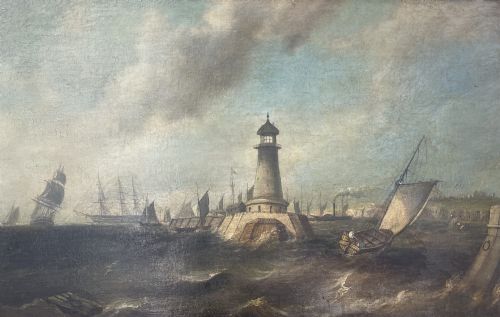
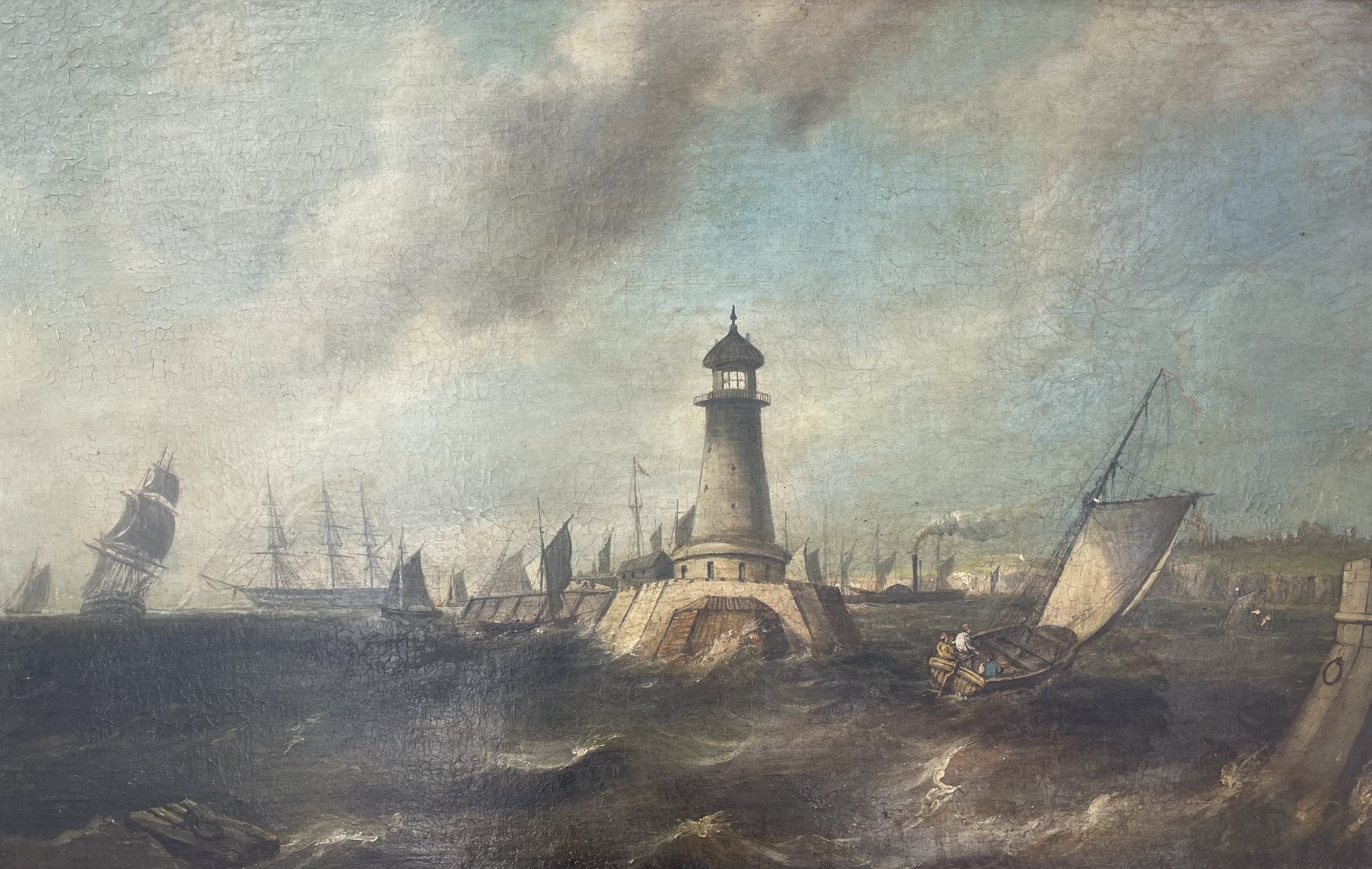
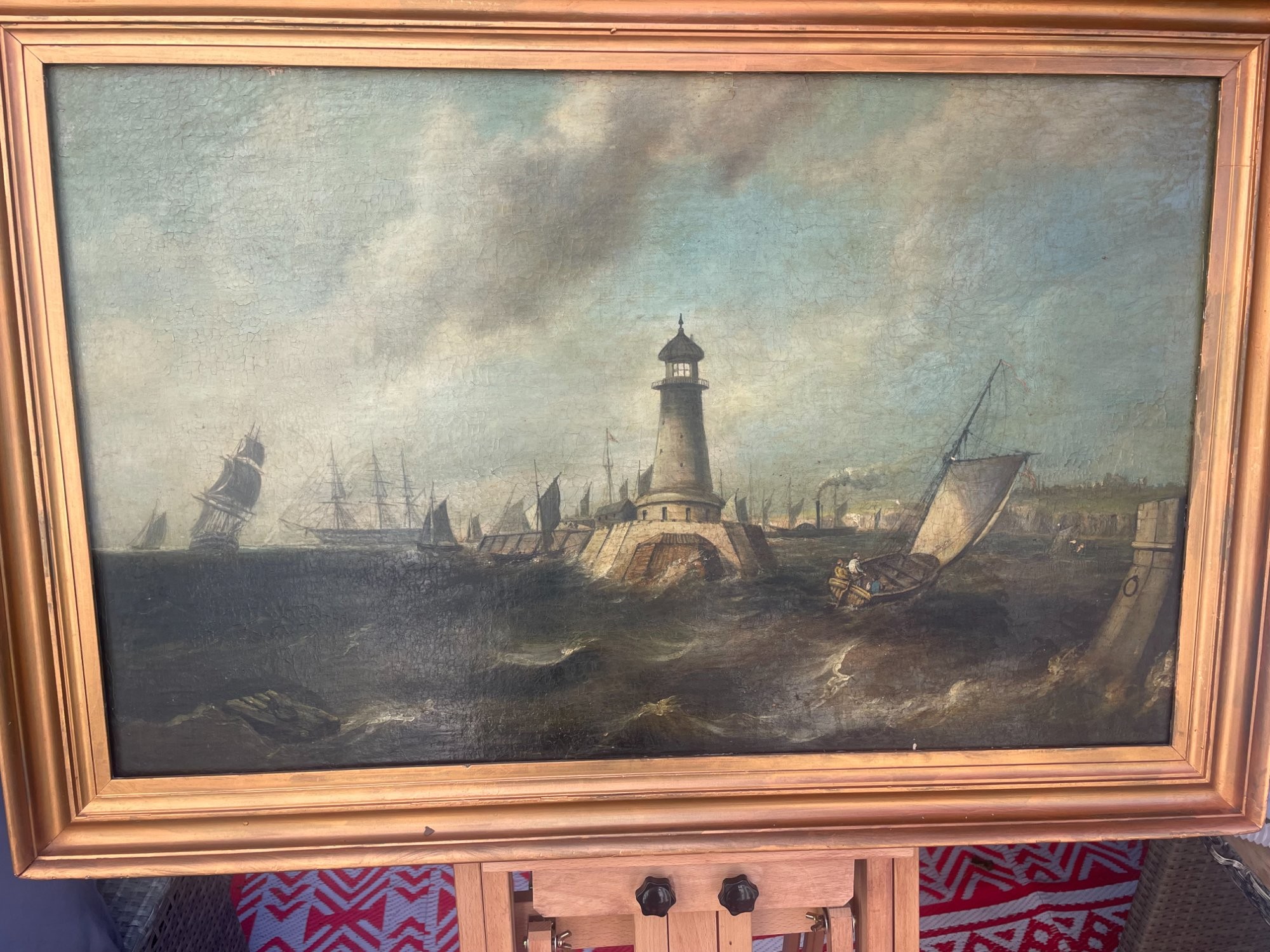
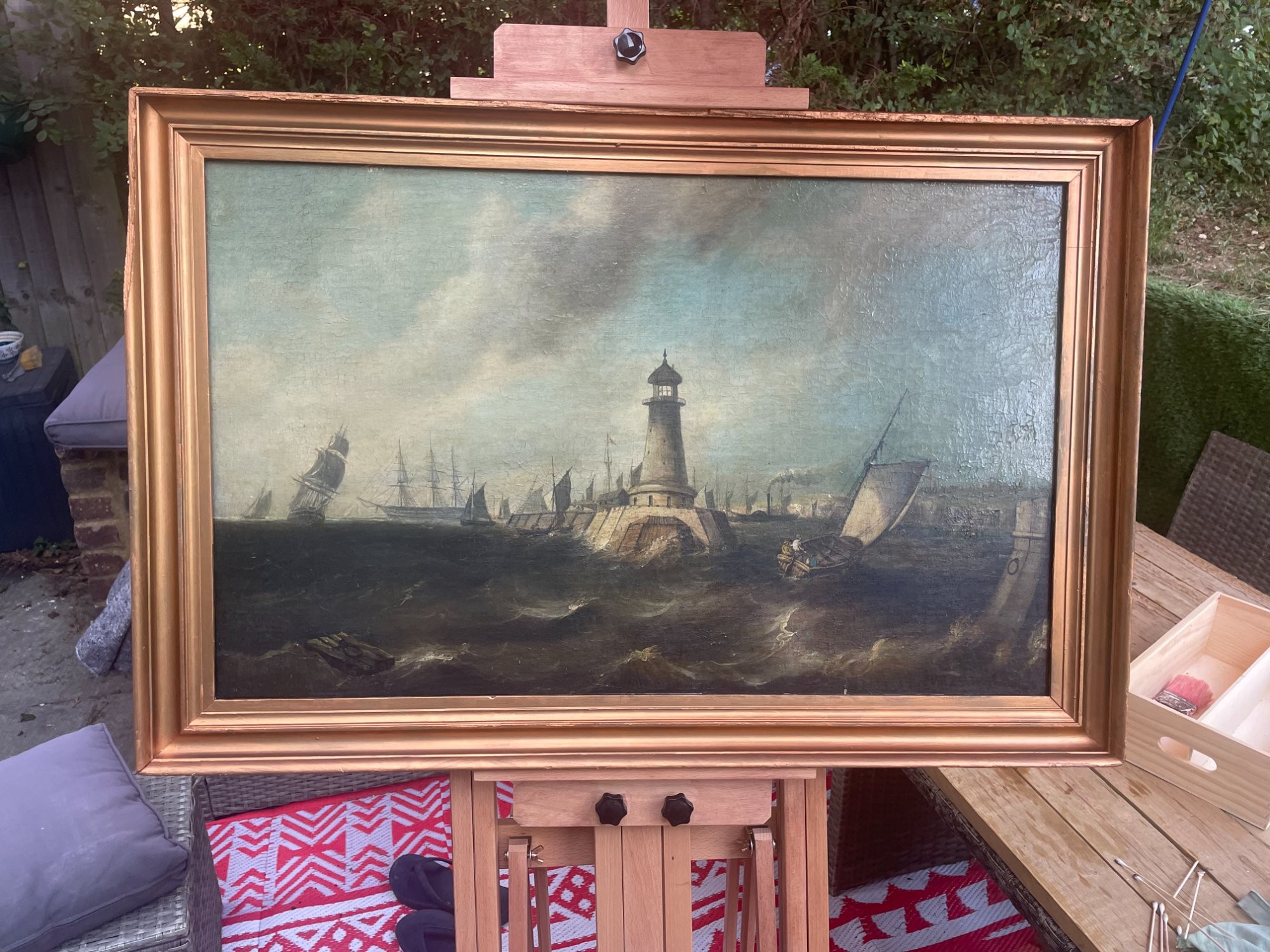
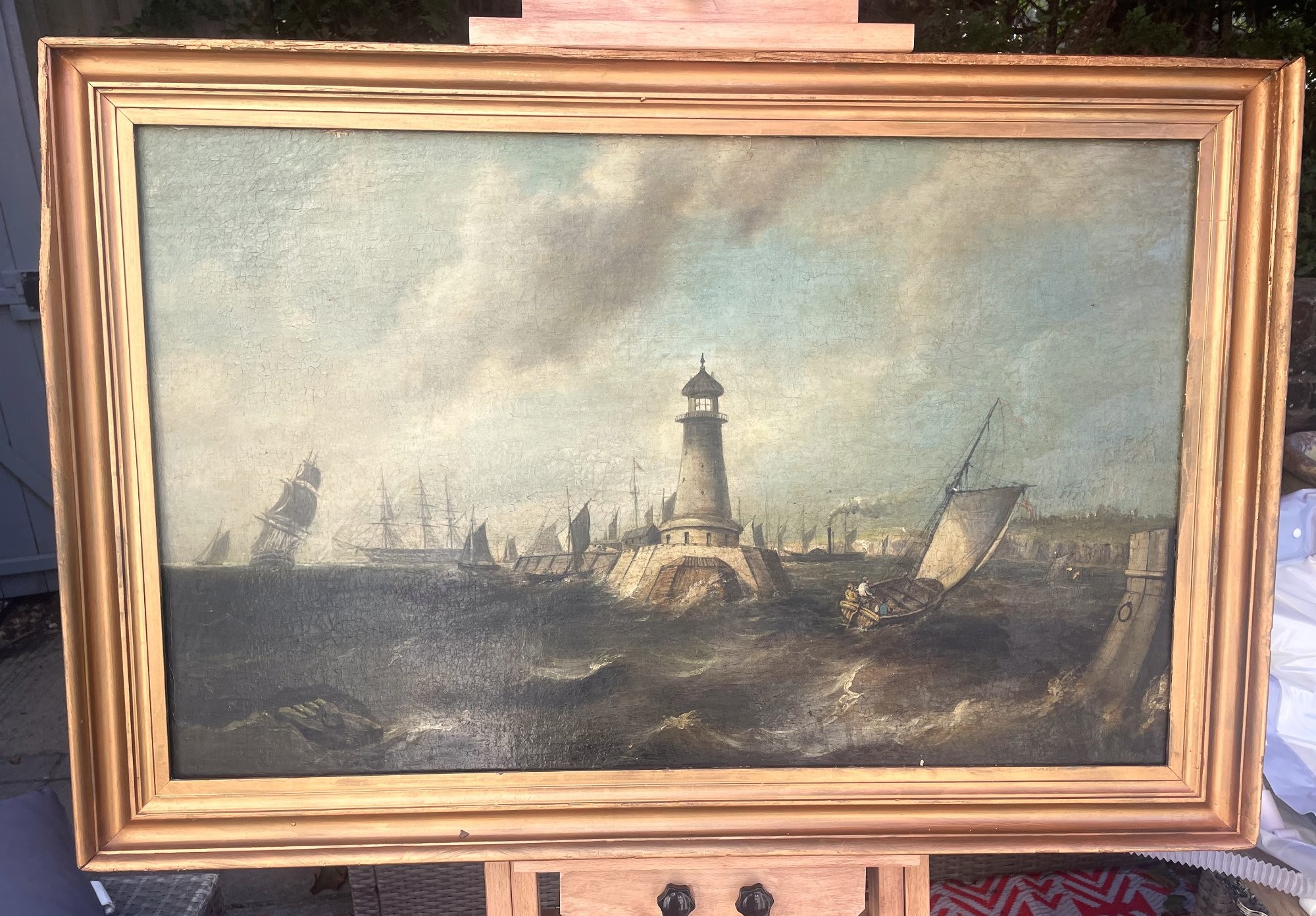
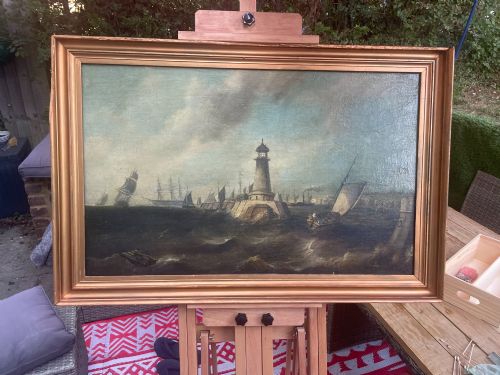
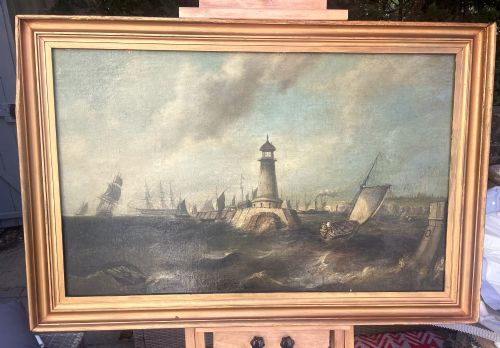
Painted in oil on canvas and dating from around the 1840s or 1850s, the scene captures Plymouth at a pivotal moment in maritime history. Traditional sailing vessels share the water with early steam-powered craft, recording the gradual transition from the age of sail to the new era of steam.
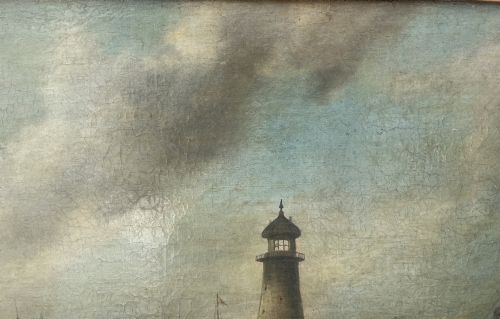
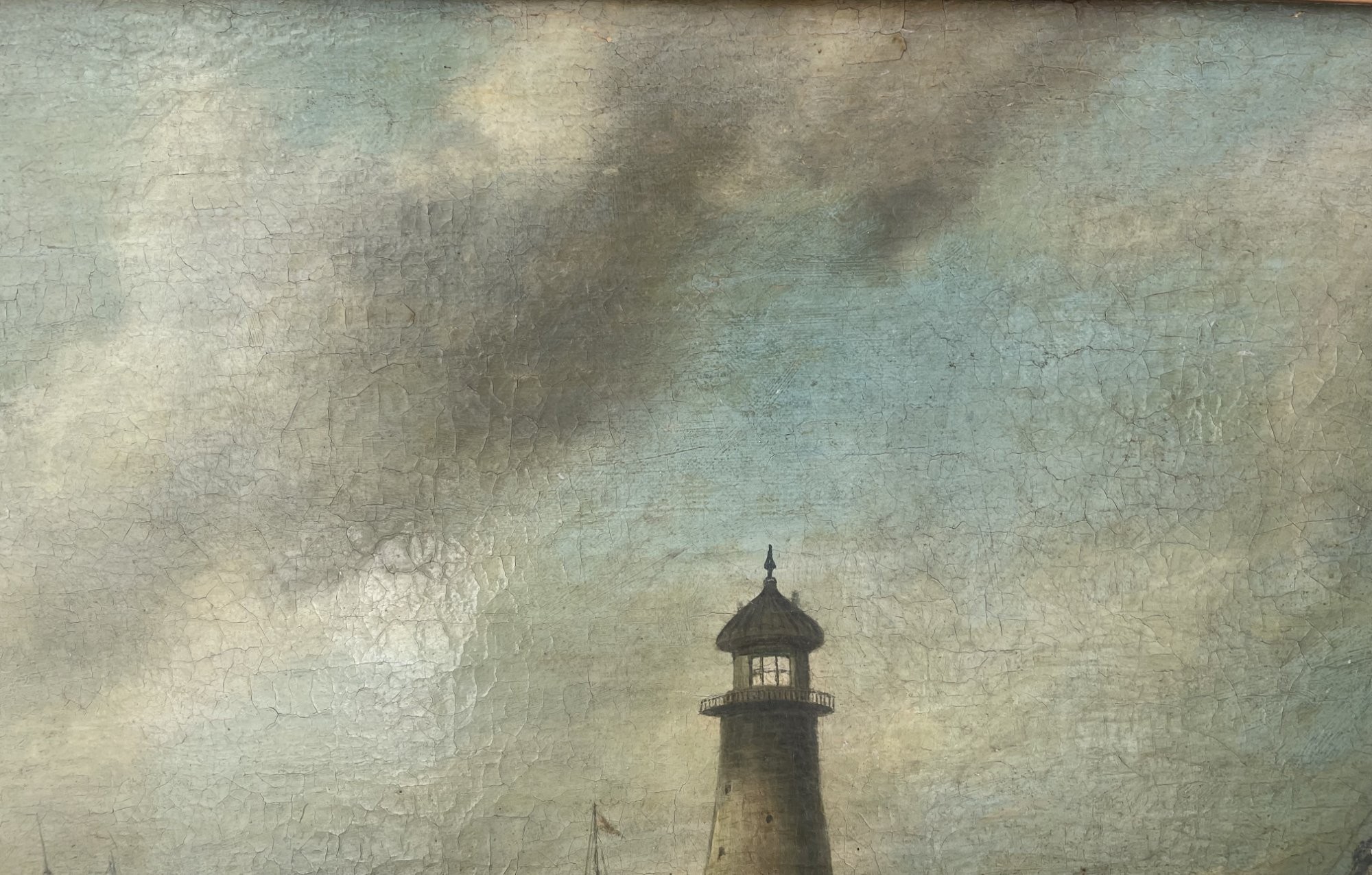
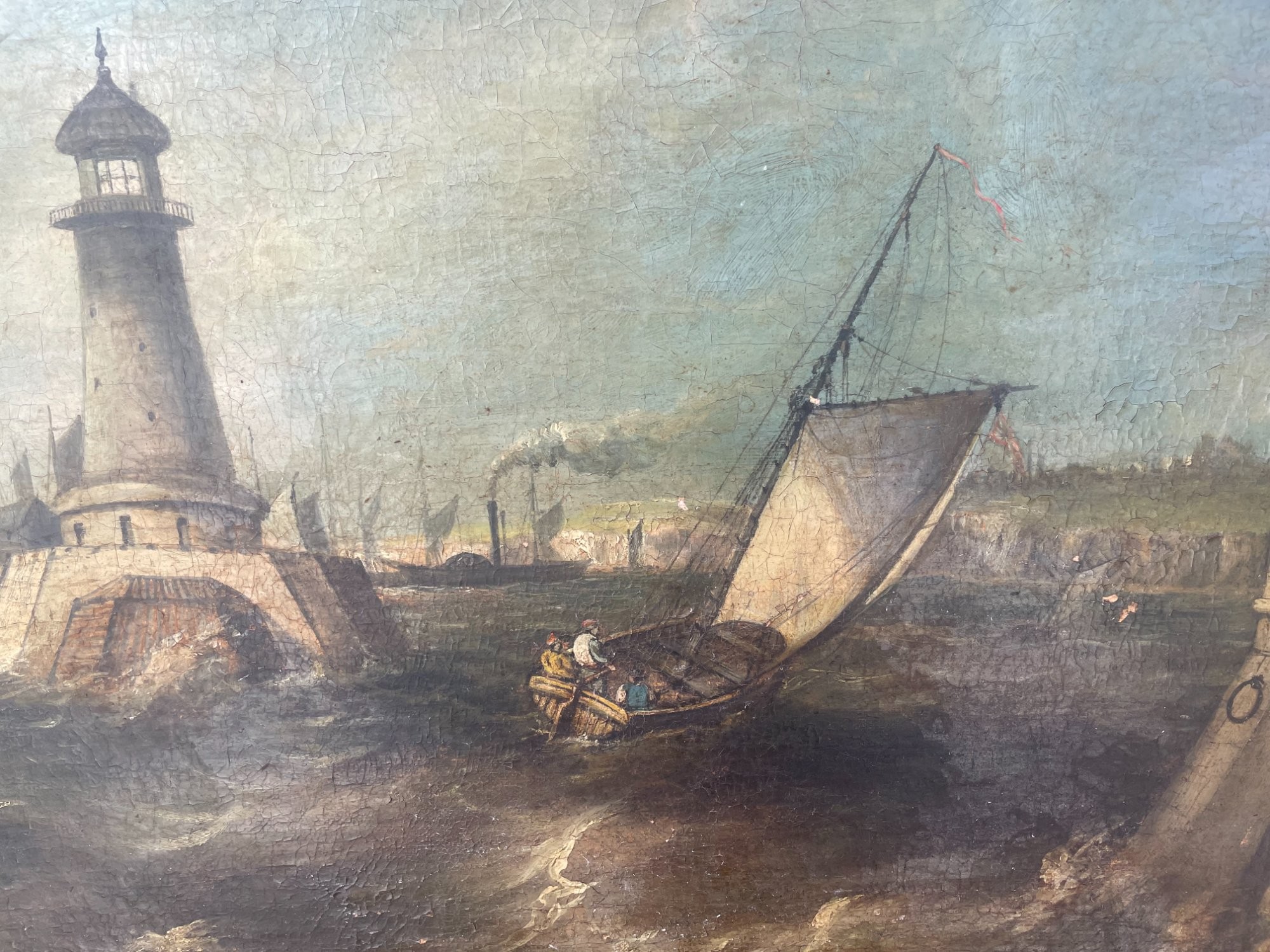
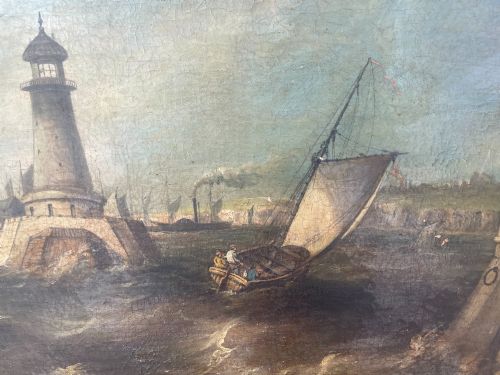
The newly completed Breakwater Lighthouse provides an important landmark within the composition. Finished in 1843, the lighthouse stands against a luminous sky while vessels move through the choppy waters of the Sound.
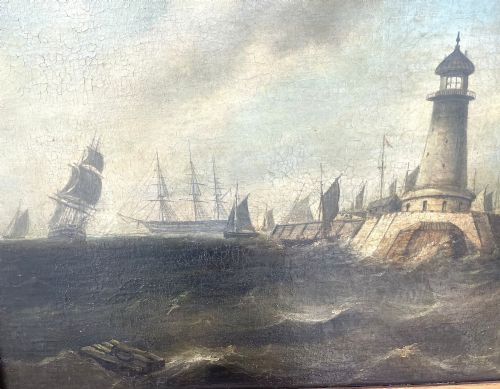
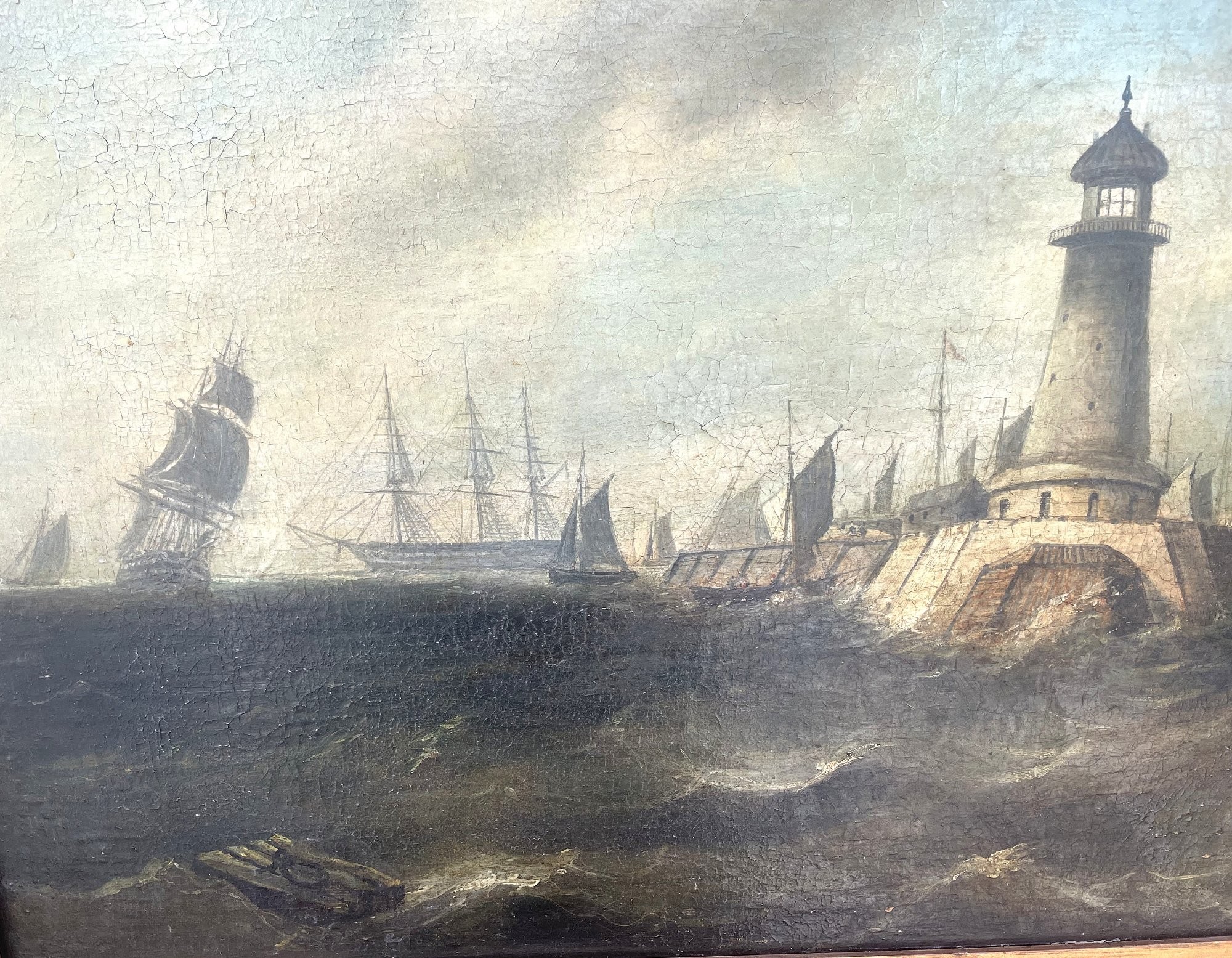
To the left, a large Royal Navy three-decker is shown apparently departing the port. With its imposing hull, multiple gun decks and towering arrangement of masts and rigging, the ship may possibly represent HMS St George, or a comparable first-rate warship stationed at Plymouth.
HMS St George was launched at Plymouth Dockyard in 1840 as a 120-gun first-rate ship of the line. She later served as a guard ship at Devonport before being razeed and converted during 1858–59 into a steam-powered, 89-gun second-rate two-decker. The vessel’s identity within this painting cannot be confirmed, but its inclusion alongside early steam craft gives the composition considerable historical and naval interest.
Circle of Nicholas Condy
The painting is attributed to the circle of Nicholas Condy, the celebrated Plymouth marine painter known for his detailed views of Plymouth Sound, Royal Navy vessels, coastal shipping and changing weather conditions.
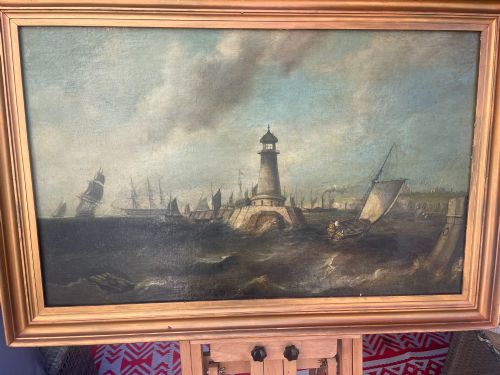
The composition shares many of the characteristics associated with Condy and the wider Plymouth school of marine painting. These include the low coastal viewpoint, animated water, carefully observed shipping and the effective contrast between the darkened foreground and the brighter sky beyond.
The artist has created a convincing sense of movement through the rolling waves, billowing sails, smoke and scattered vessels. Small boats occupy the foreground, while the large warship and lighthouse establish the scale and historical setting of the scene.

More than simply a decorative seascape, the painting appears to document a period of rapid technological change. The great wooden three-decker represents the established power of the Royal Navy, while the steam vessels signal the beginning of a new maritime age.
Condition
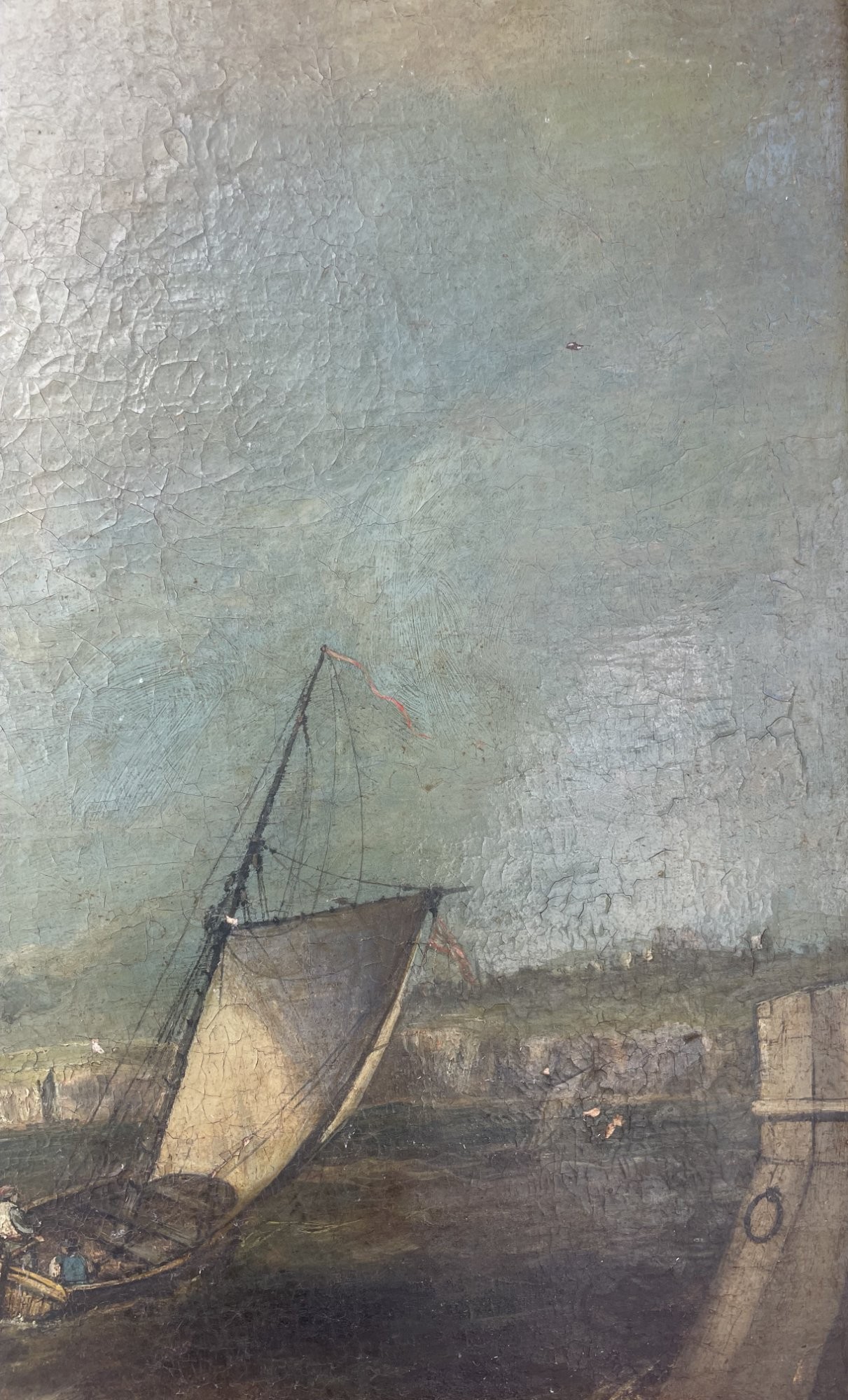
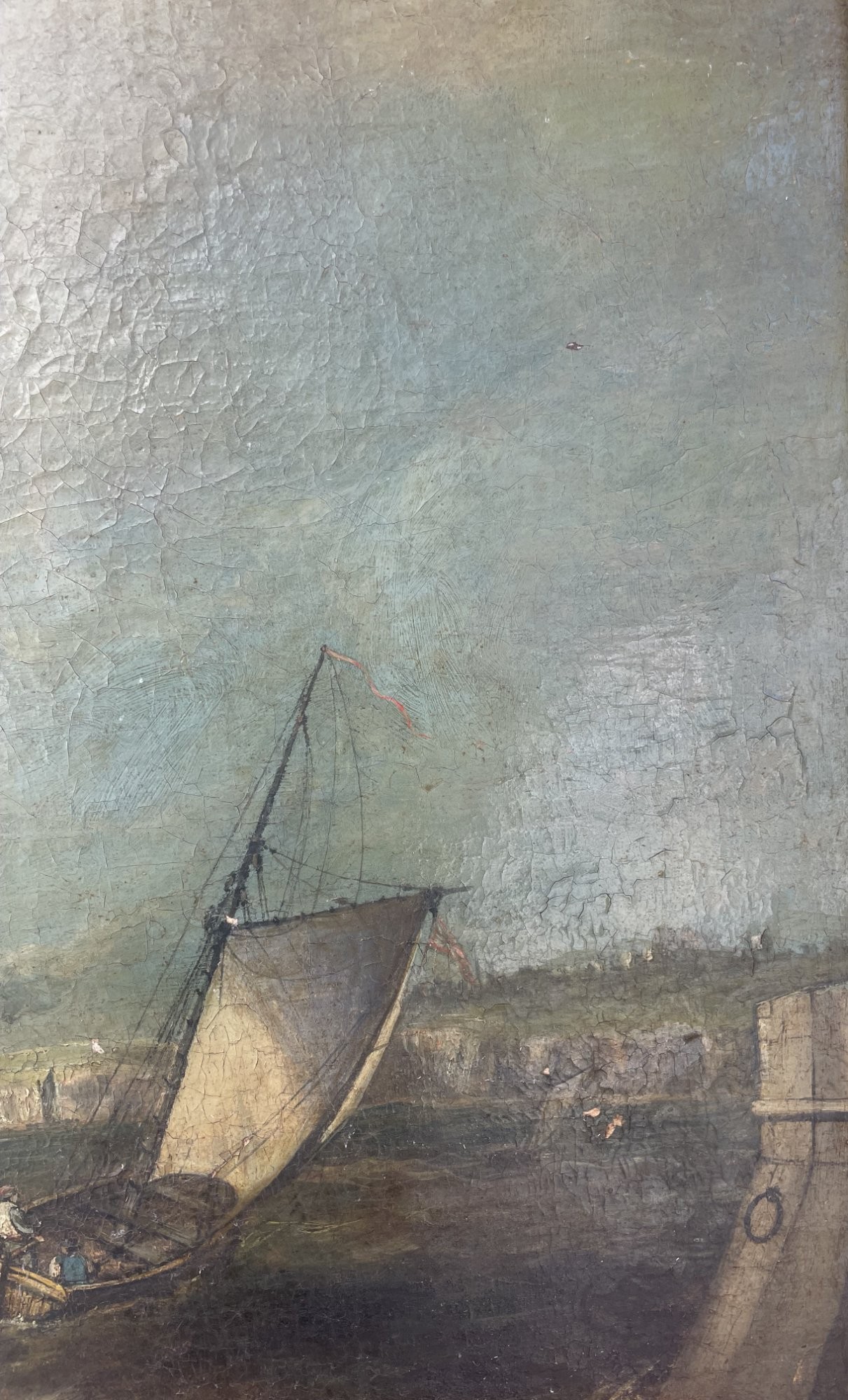
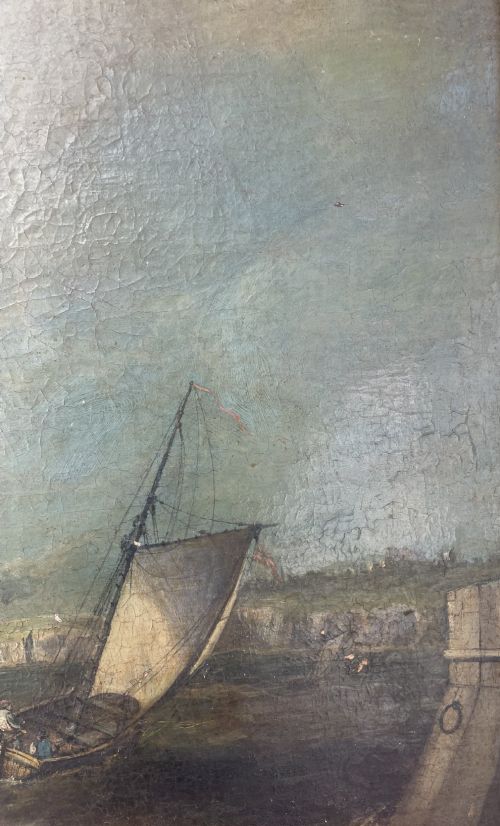
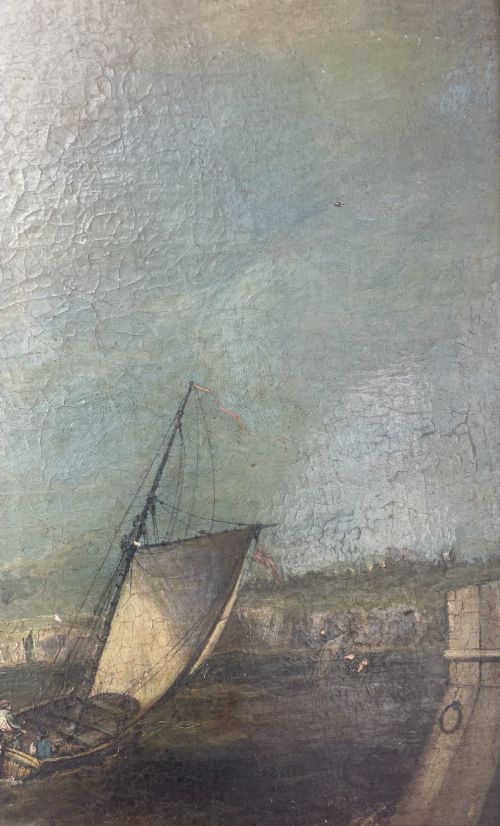
The painting displays extensive age-related craquelure across the painted surface, together with some yellowing and discolouration of the varnish.
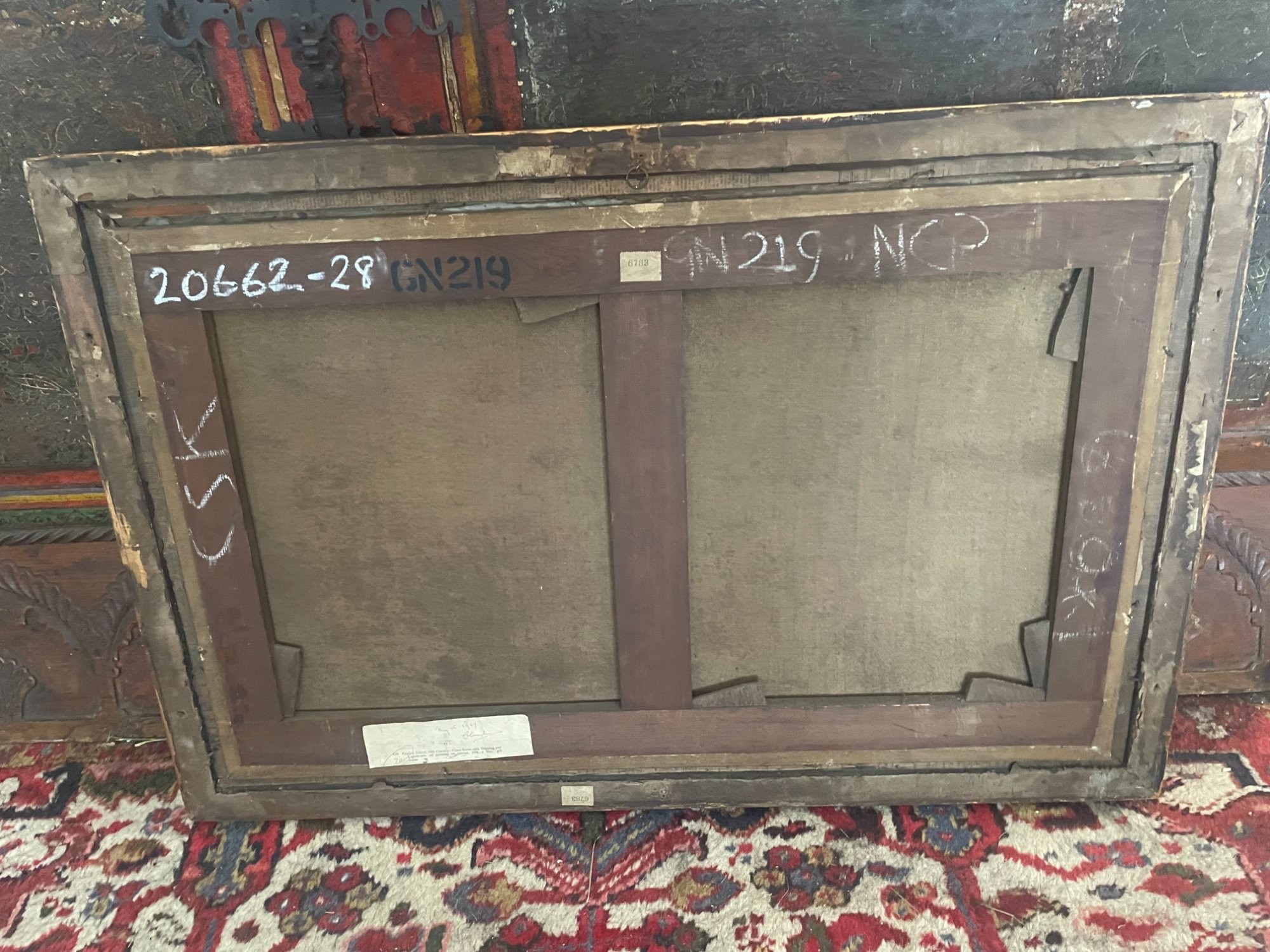
The canvas has been historically relined, most likely to strengthen and stabilise the original support. There are areas of surface wear and historic restoration consistent with the painting’s age.

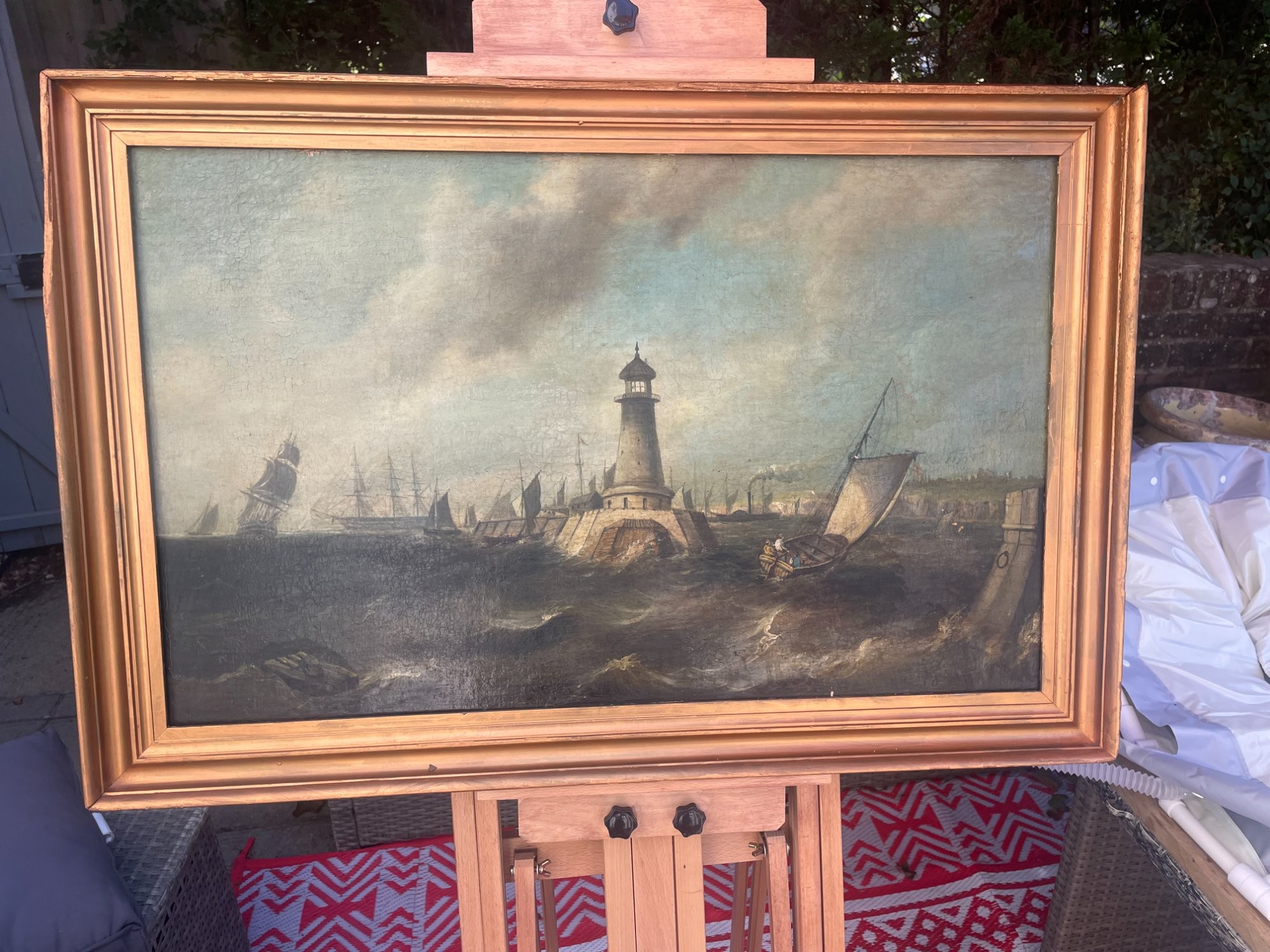
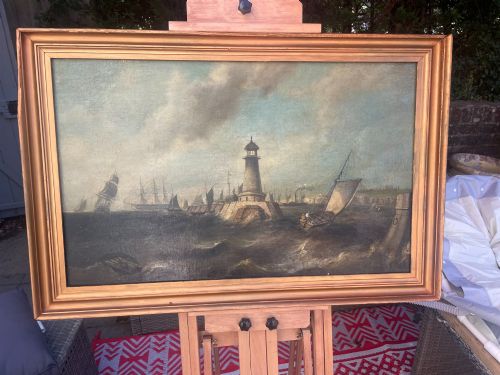
The work is presented in a decorative gilt frame. Buyers are encouraged to study all photographs carefully and request any additional images or condition information required before purchase.
Provenance
The reverse bears a Christie’s stencil, understood to relate to the painting’s sale or handling through Christie’s during the 1960s. Further archival research may help establish the precise sale and earlier ownership history.
Details
Artist: Circle of Nicholas Condy
Subject: Plymouth Breakwater Lighthouse and shipping in Plymouth Sound
Possible vessel: HMS St George, or a comparable Royal Navy first-rate three-decker
Date: Mid-19th century, probably circa 1843–1855

Medium: Oil on canvas
School: British Marine School
Provenance: Christie’s stencil verso, believed to relate to the 1960s
Condition: Extensive craquelure, yellowed varnish and historic relining
Location: Antiques Decorative, Sussex
Delivery: Worldwide shipping available
Antiques Decorative (Sussex) has dated this Antique Maritime Oil Painting to the Victorian era.
Timeless treasures: elevate your space with decorative art and antiques
You can view the stock and full dealer information on the Antiques Decorative (Sussex) Profile Page
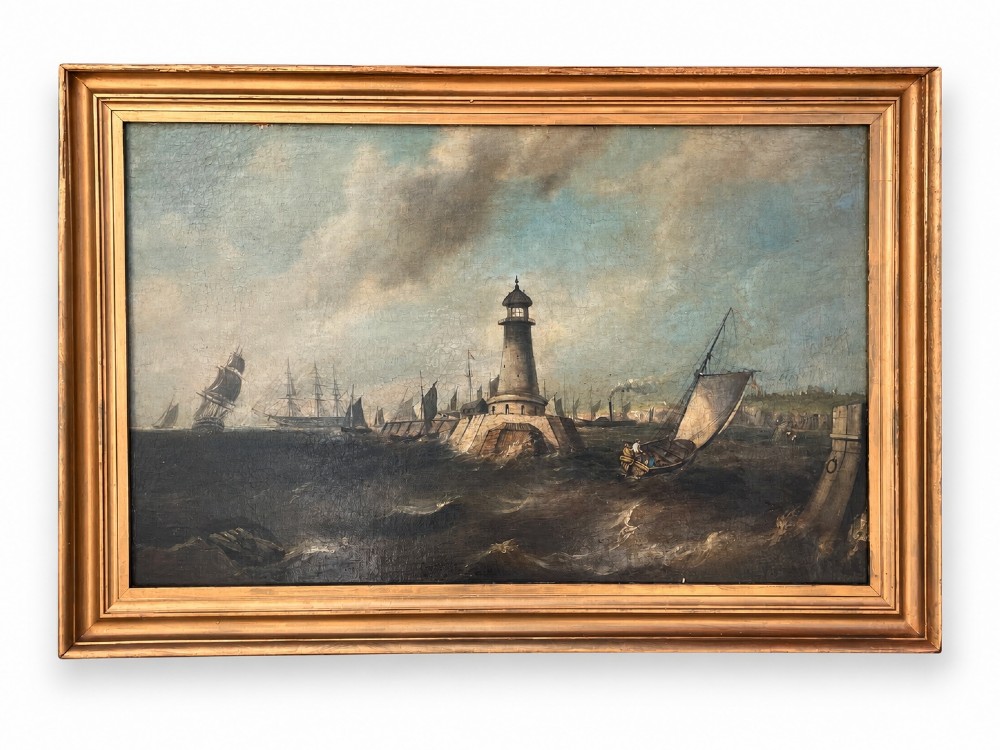
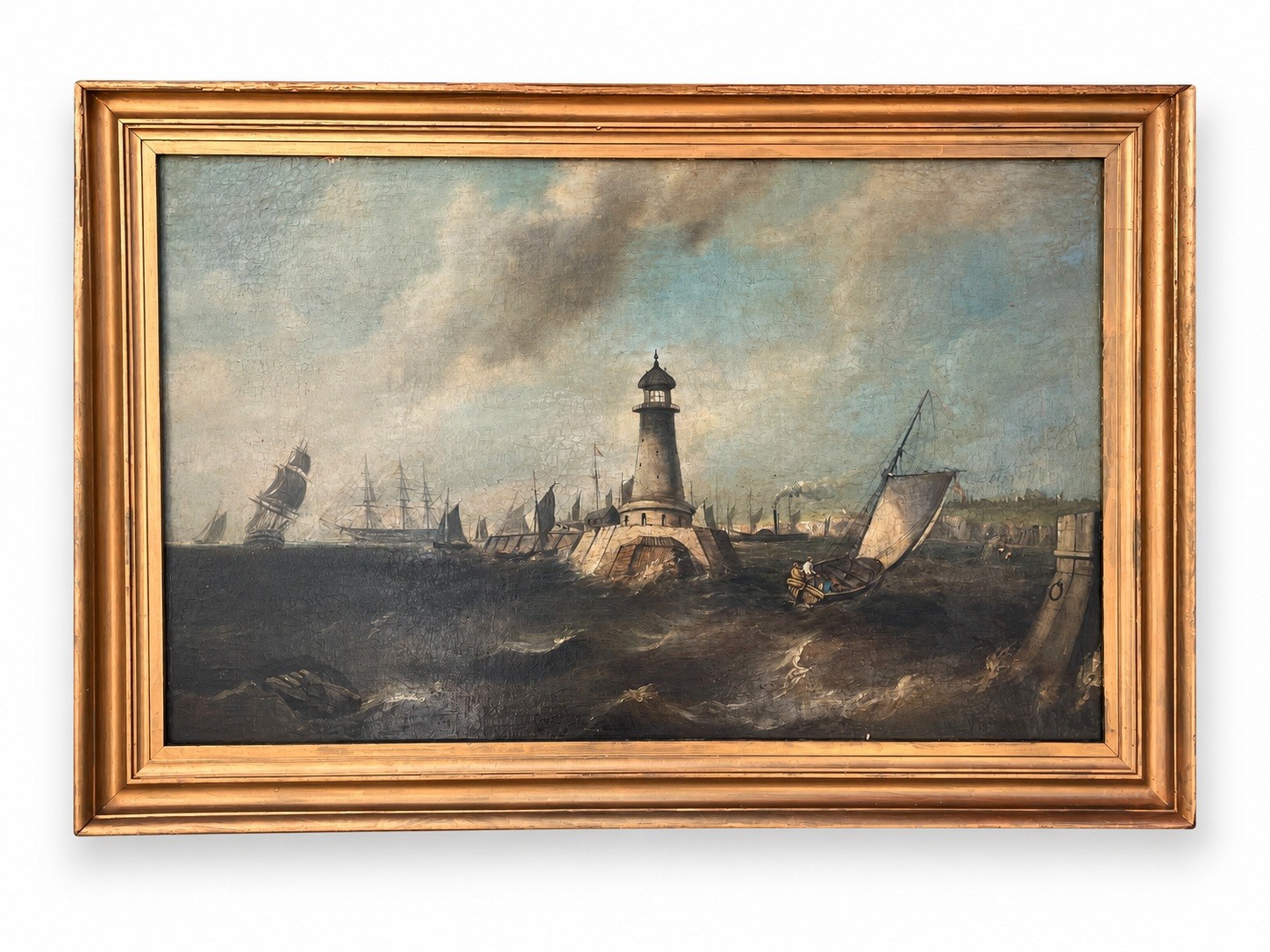
Circle of Nicholas Condy – Plymouth Breakwater Lighthouse with Royal Navy Shipping, Mid-19th Century Oil Painting