7,706  PAGES BROWSED TODAY PAGES TODAY 36  ANTIQUES UPLOADED TODAY NEW ARRIVALS
ID #SA1209561
FOR SALE
£4,800
Email
Save
Joseph Highmore (Attributed), Portrait of Thomas Marsh, Canterbury - Antique Oil Painting
Brave Fine Art
for sale €5,616     $6,096
£4,800
Brave Fine Art

Brave Fine Art

Sellingantiques Verified Since Nov 2018
View Dealers Stock Page
  • About Us
    Exquisite antique paintings that capture the imagination.
Id #SA1209561
PDF SHARE
SAVE

Joseph Highmore (Attributed), Portrait of Thomas Marsh, Canterbury - Antique Oil Painting

18th century
For Sale by Brave Fine Art
Description

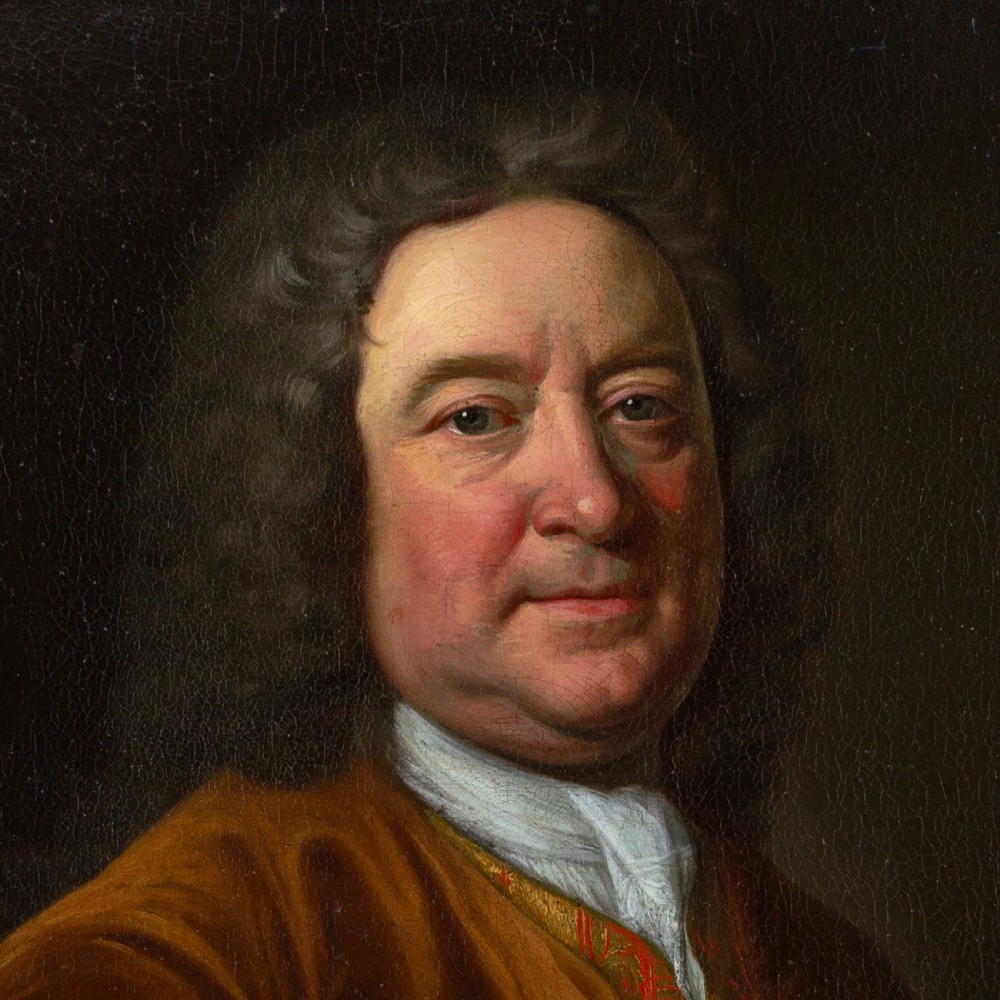
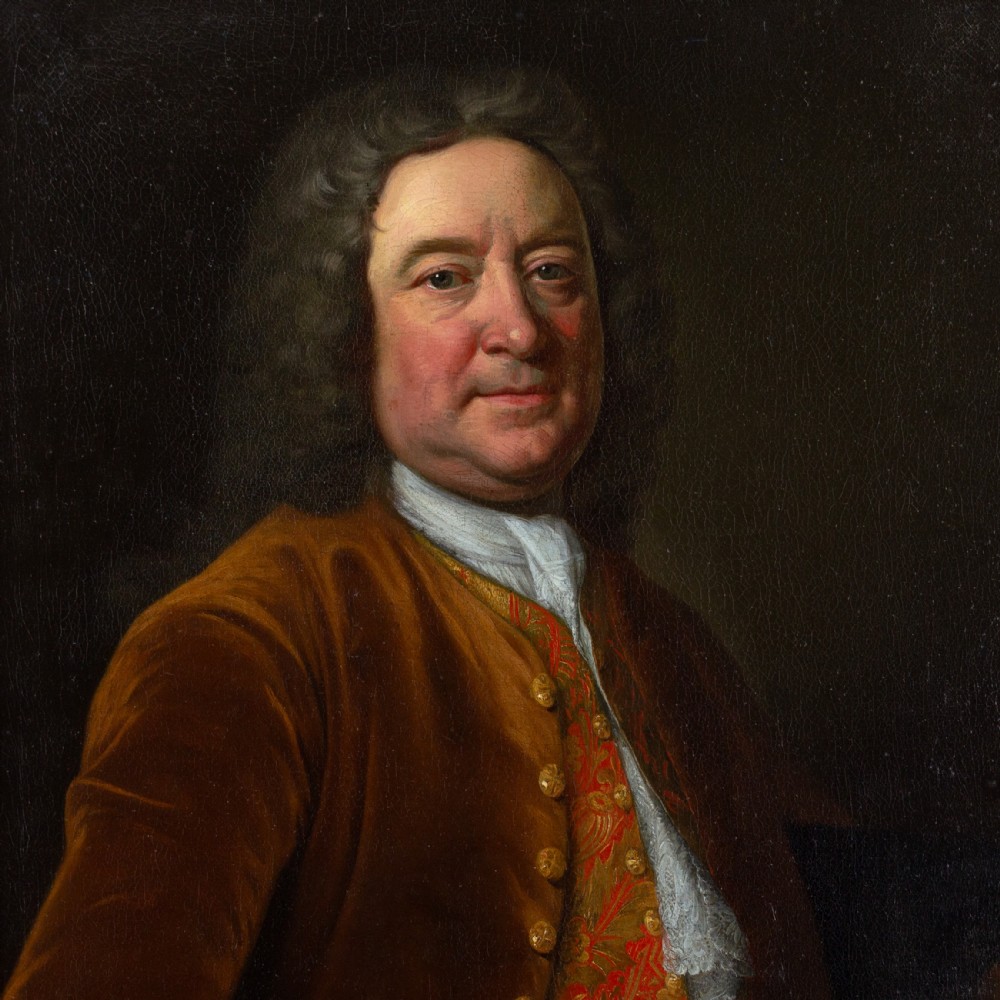
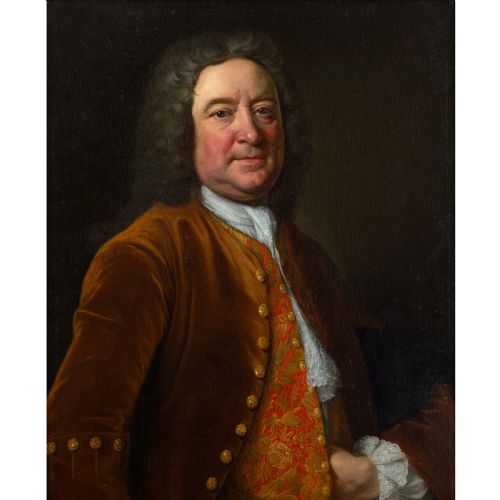
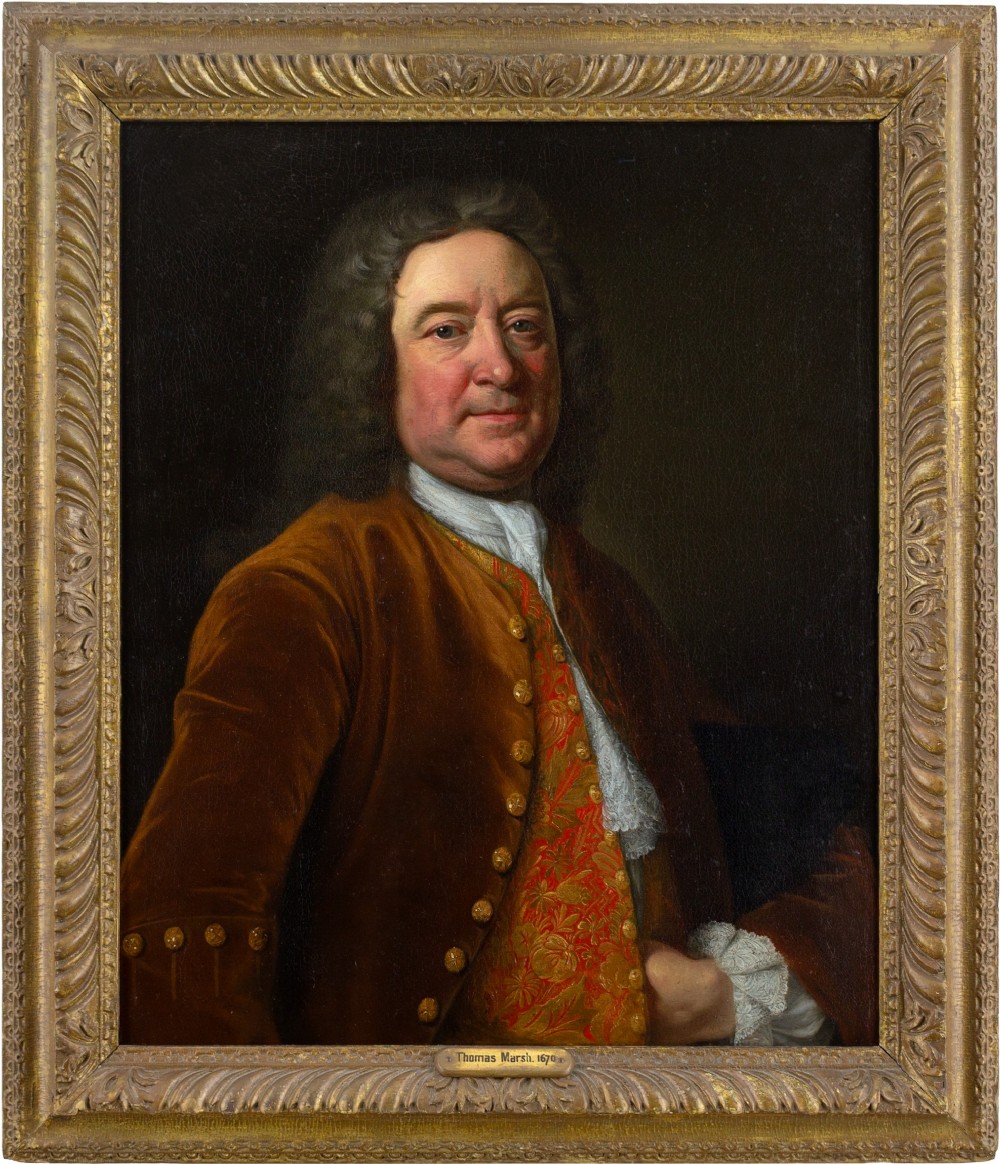
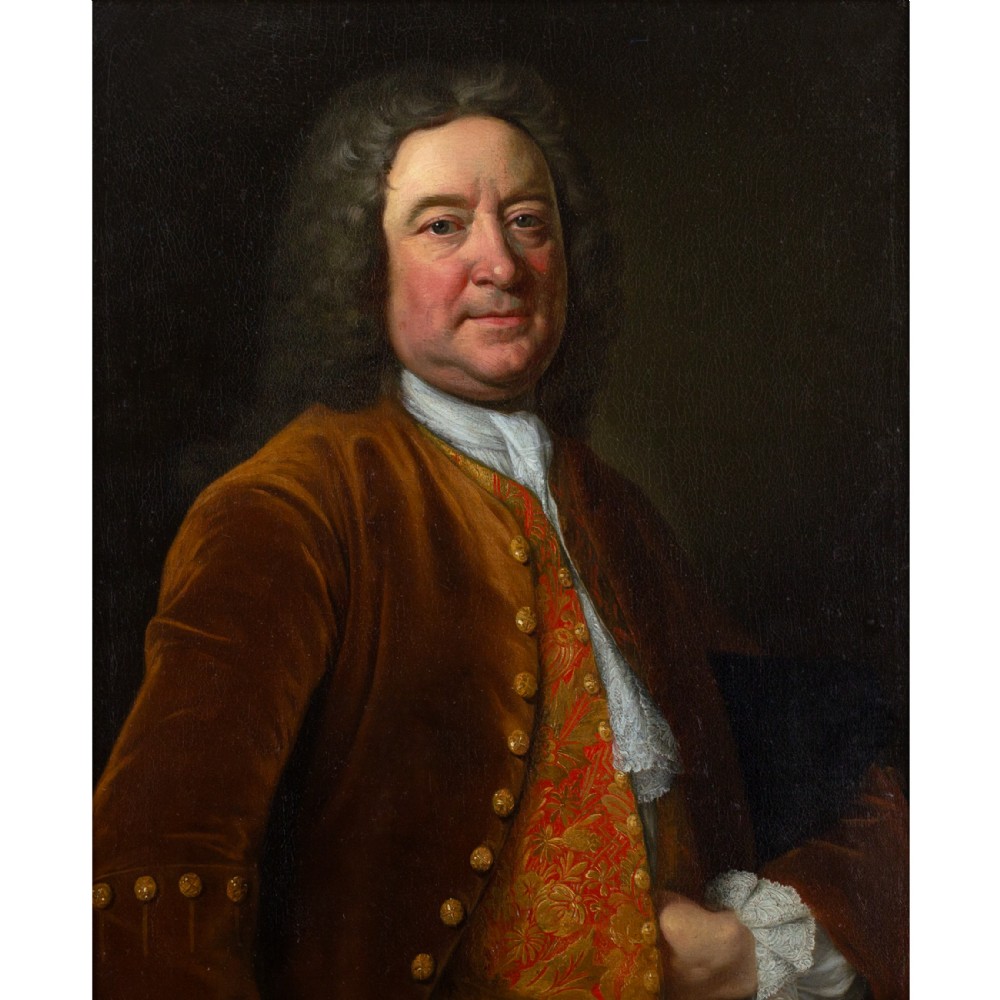
This early 18th-century oil painting by English artist Joseph Highmore (1692-1780) depicts Thomas Marsh Esq. (c.1667-1739), a Kent landowner and senior militia officer, shown at approximately mid to late middle age.

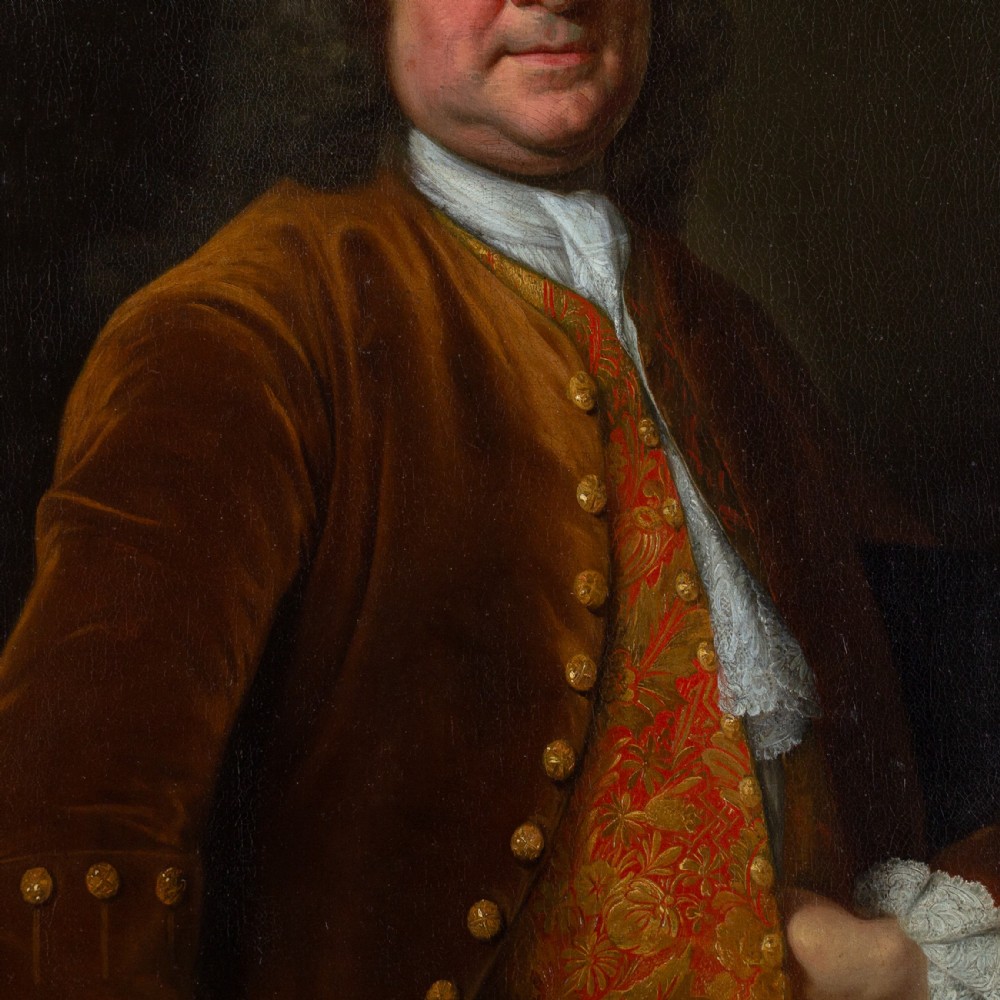
Marsh is presented half-length against a dark, neutral ground, his figure turned slightly to the left while his gaze meets the viewer with gentle assurance. He wears a rich brown coat fastened with gilt buttons over a patterned waistcoat of warm red and gold, its surface subtly animated with woven ornament. At his neck, a crisp white cravat is tied with measured formality. His right arm extends outward, resting beyond the picture plane, while his left hand is drawn inward toward his waist - a confident pose that conveys authority without veering into theatricality.

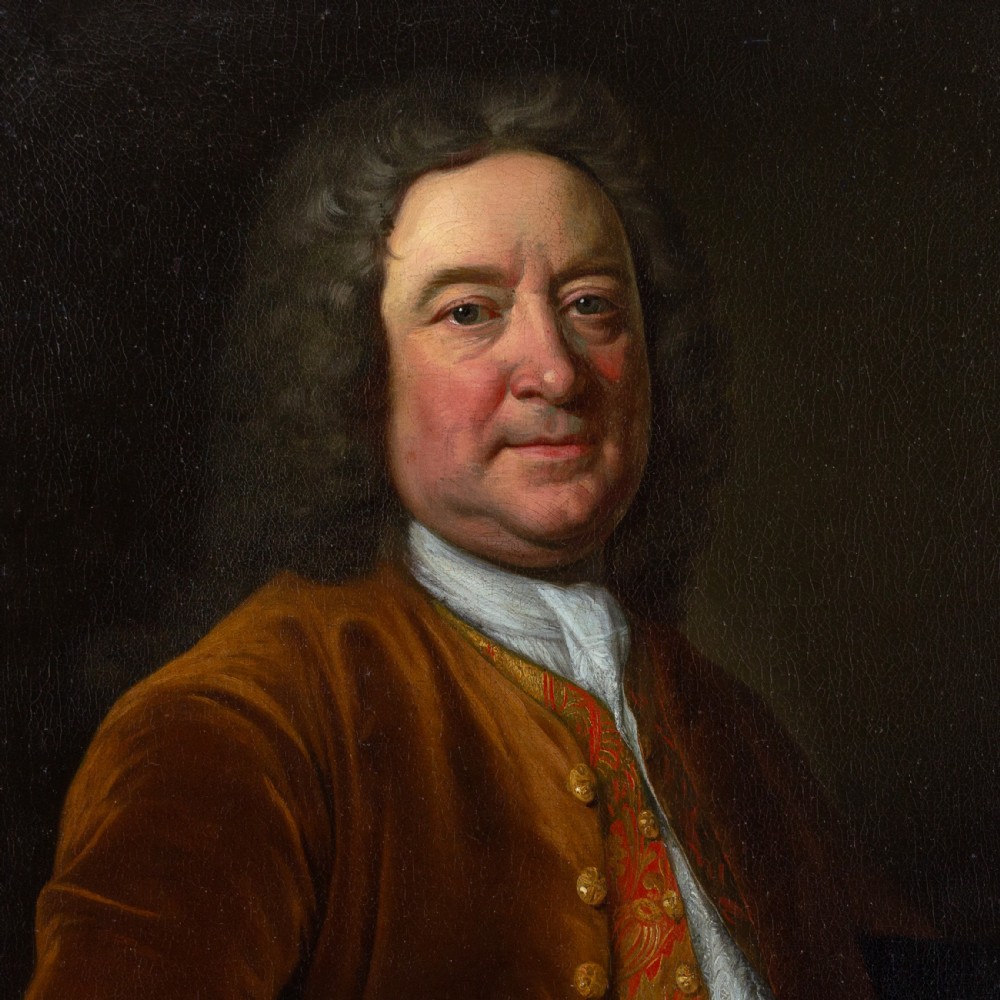
Highmore's handling here is masterly. The modelling of the face is carefully constructed through gradual tonal transitions, giving weight and solidity to the features. The flesh tones are warm, with a gentle flush across the cheeks, while the eyes are steady and observant. The wig, softly curled and falling to the shoulders, is treated with a subdued rhythm, avoiding excessive flourish.

This approach places the work within a particular moment in British portraiture. In the early decades of the 18th century, the influence of Sir Anthony van Dyck still shaped conventions of pose and dress, yet a more observational mode was emerging. Portraits tended to focus on the articulation of character - particularly among the professional and administrative classes who formed the backbone of county society.

Thomas Marsh belongs precisely to that world. As Lieutenant-Colonel of the Militia of the Cinque Ports, Captain of Sandown Castle, Deputy Lieutenant of Dover Castle, and a Justice of the Peace for Kent, he occupied a position of real operational authority. The absence of overt display aligns with this identity. His authority is implied.

Marsh lived at Nethersole House in Canterbury and this further supports our attribution to Joseph Highmore, who had strong links with the City, including during the early part of his career. Highmore’s documented connections to Canterbury and its surrounding intellectual and clerical networks provide a credible pathway for a commission of this kind. Portraits in this period often arose through networks, and Marsh’s position within Kent’s administrative and military hierarchy would have placed him within precisely the circles through which Highmore operated.

Aside from his training at Sir Godfrey Kneller’s Academy, Highmore's work was shaped by a highly analytical approach, informed by his study of geometry, anatomy, and perspective. His portraits often feature a high degree of technical modelling - with exact observation grounded in clear spatial logic. These qualities are evident here. The eyes, for example, are rather astonishing in their complexity when viewed under magnification.

The dating of the work to circa 1725-1730 is supported by both costume and handling. The form of the coat, the style of the waistcoat, and the treatment of the cravat correspond closely to the fashions of the early Georgian period. The wig aligns with this timeframe, as does the restrained palette and absence of later 18th-century softness. While the paint surface itself, with its smooth transitions and disciplined structure, further supports an early 18th-century origin rather than a later revival.

Highmore is represented in numerous public collections, including at the V&A Museum, National Portrait Gallery, Tate Britain and The British Museum.

Held in a 19th-century carved giltwood frame in the Baroque revival taste.

Learn more about Joseph Highmore in our directory.

Medium: Oil on canvas

Overall size: 31” x 36” / 79cm x 92cm

Year of creation: c. 1727

Provenance: Almost certainly with the Marsh family of Nethers

Physical Dimensions
Height
92cm (36.22")
Width
79cm (31.10")
Depth
6cm (2.36")
Declaration

Brave Fine Art has dated this Georgian Portrait Oil Painting to the 18th Century.
Reference Numbers
Sellingantiques Reference
SA1209561
Dealers Internal Reference
BRV2275
Description
This early 18th-century oil painting by English artist Joseph Highmore (1692-1780) depicts Thomas Marsh Esq. (c.
1667-1739), a Kent landowner and senior militia officer, shown at approximately mid to late middle age.
Brave Fine Art
fig 1. An eighteenth-century oil painting depicting a gentleman in a brown coat and red embroidered waistcoat, housed within a carved gilt frame.
fig 1. Joseph Highmore (Attributed), Portrait of Thomas Marsh, Canterbury - Antique Oil Painting

Marsh is presented half-length against a dark, neutral ground, his figure turned slightly to the left while his gaze meets the viewer with gentle assurance. He wears a rich brown coat fastened with gilt buttons over a patterned waistcoat of warm red and gold, its surface subtly animated with woven ornament. At his neck, a crisp white cravat is tied with measured formality. His right arm extends outward, resting beyond the picture plane, while his left hand is drawn inward toward his waist - a confident pose that conveys authority without veering into theatricality.
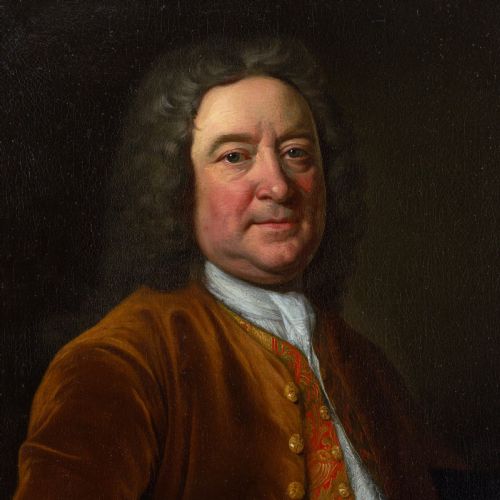
fig 2. An eighteenth-century oil painting depicting a gentleman in a brown coat and red embroidered waistcoat, housed within a carved gilt frame.
fig 2. Joseph Highmore (Attributed), Portrait of Thomas Marsh, Canterbury - Antique Oil Painting

Highmore's handling here is masterly. The modelling of the face is carefully constructed through gradual tonal transitions, giving weight and solidity to the features. The flesh tones are warm, with a gentle flush across the cheeks, while the eyes are steady and observant. The wig, softly curled and falling to the shoulders, is treated with a subdued rhythm, avoiding excessive flourish.
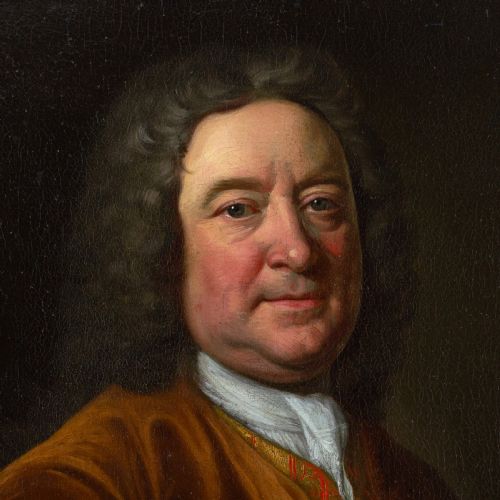
fig 3. An eighteenth-century oil painting depicting a gentleman in a brown coat and red embroidered waistcoat, housed within a carved gilt frame.
fig 3. Joseph Highmore (Attributed), Portrait of Thomas Marsh, Canterbury - Antique Oil Painting

This approach places the work within a particular moment in British portraiture. In the early decades of the 18th century, the influence of Sir Anthony van Dyck still shaped conventions of pose and dress, yet a more observational mode was emerging. Portraits tended to focus on the articulation of character - particularly among the professional and administrative classes who formed the backbone of county society.
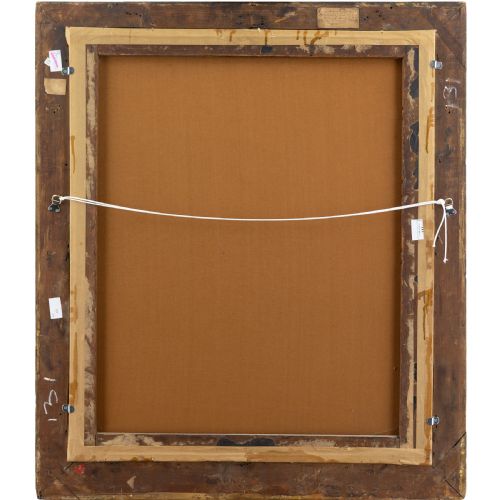
fig 4. An eighteenth-century oil painting depicting a gentleman in a brown coat and red embroidered waistcoat, housed within a carved gilt frame.
fig 4. Joseph Highmore (Attributed), Portrait of Thomas Marsh, Canterbury - Antique Oil Painting

Thomas Marsh belongs precisely to that world. As Lieutenant-Colonel of the Militia of the Cinque Ports, Captain of Sandown Castle, Deputy Lieutenant of Dover Castle, and a Justice of the Peace for Kent, he occupied a position of real operational authority. The absence of overt display aligns with this identity. His authority is implied.
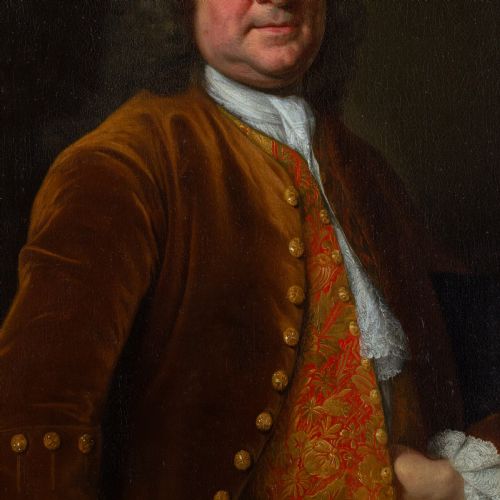
fig 5. An eighteenth-century oil painting depicting a gentleman in a brown coat and red embroidered waistcoat, housed within a carved gilt frame.
fig 5. Joseph Highmore (Attributed), Portrait of Thomas Marsh, Canterbury - Antique Oil Painting

Marsh lived at Nethersole House in Canterbury and this further supports our attribution to Joseph Highmore, who had strong links with the City, including during the early part of his career. Highmore’s documented connections to Canterbury and its surrounding intellectual and clerical networks provide a credible pathway for a commission of this kind. Portraits in this period often arose through networks, and Marsh’s position within Kent’s administrative and military hierarchy would have placed him within precisely the circles through which Highmore operated.
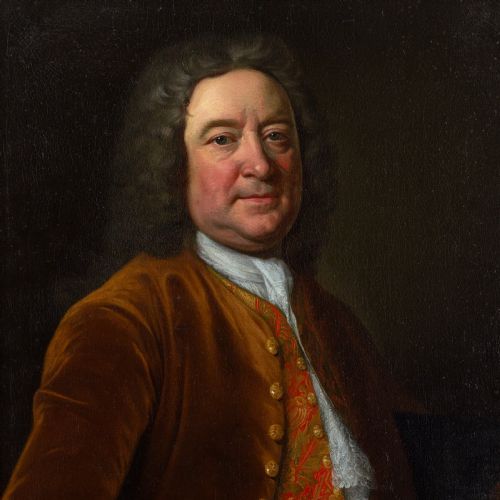
fig 6. An eighteenth-century oil painting depicting a gentleman in a brown coat and red embroidered waistcoat, housed within a carved gilt frame.
fig 6. Joseph Highmore (Attributed), Portrait of Thomas Marsh, Canterbury - Antique Oil Painting

Aside from his training at Sir Godfrey Kneller’s Academy, Highmore's work was shaped by a highly analytical approach, informed by his study of geometry, anatomy, and perspective. His portraits often feature a high degree of technical modelling - with exact observation grounded in clear spatial logic. These qualities are evident here. The eyes, for example, are rather astonishing in their complexity when viewed under magnification.

The dating of the work to circa 1725-1730 is supported by both costume and handling. The form of the coat, the style of the waistcoat, and the treatment of the cravat correspond closely to the fashions of the early Georgian period. The wig aligns with this timeframe, as does the restrained palette and absence of later 18th-century softness. While the paint surface itself, with its smooth transitions and disciplined structure, further supports an early 18th-century origin rather than a later revival.

Highmore is represented in numerous public collections, including at the V&A Museum, National Portrait Gallery, Tate Britain and The British Museum.

Held in a 19th-century carved giltwood frame in the Baroque revival taste.

Learn more about Joseph Highmore in our directory.

Medium: Oil on canvas

Overall size: 31” x 36” / 79cm x 92cm

Year of creation: c. 1727

Provenance: Almost certainly with the Marsh family of Nethers

Height
92cm (36.22")
Width
79cm (31.10")
Depth
6cm (2.36")
Date of Manufacture

Brave Fine Art has dated this Georgian Portrait Oil Painting to the 18th Century.

Reference Numbers
Sellingantiques Ref
SA1209561
Dealers Internal Ref
BRV2275
Brave Fine Art
Brave Fine Art
Sellingantiques verified Since Nov 2018

Exquisite antique paintings that capture the imagination.

Dealer Profile

You can view the stock and full dealer information on the Brave Fine Art Profile Page
PDF SHARE
SAVE
An eighteenth-century oil painting depicting a gentleman in a brown coat and red embroidered waistcoat, housed within a carved gilt frame.
1 / 7
Archive I An eighteenth-century oil painting depicting a gentleman in a brown coat and red embroidered waistcoat, housed within a carved gilt frame.

Joseph Highmore (Attributed), Portrait Of Thomas Marsh, Canterbury - Antique Oil Painting
Archive II An eighteenth-century oil painting depicting a gentleman in a brown coat and red embroidered waistcoat, housed within a carved gilt frame. View II
Archive III An eighteenth-century oil painting depicting a gentleman in a brown coat and red embroidered waistcoat, housed within a carved gilt frame. View III
Archive IV An eighteenth-century oil painting depicting a gentleman in a brown coat and red embroidered waistcoat, housed within a carved gilt frame. View IV
Archive V An eighteenth-century oil painting depicting a gentleman in a brown coat and red embroidered waistcoat, housed within a carved gilt frame. View V
Archive VI An eighteenth-century oil painting depicting a gentleman in a brown coat and red embroidered waistcoat, housed within a carved gilt frame. View VI
Archive VII An eighteenth-century oil painting depicting a gentleman in a brown coat and red embroidered waistcoat, housed within a carved gilt frame. View VII
FURTHER BROWSING

Visitors also looked at these ⇣

Enlarged Archival View
Telephone 01684 215986
Location
21 Enterprise Way
Arle Road
Cheltenham
Cotswolds
GL51 8LZ
United Kingdom

Under appointment only.
Verified Since Nov 2018
Items For Sale 68
Items Sold 1,832
Brave Fine Art
Brave Fine Art
Verified Since Nov 2018
View Dealer Info
Location: 21 Enterprise Way, Arle Road, Cheltenham, Cotswolds, GL51 8LZ, United Kingdom, , Under appointment only.
Verified
Nov 2018
For Sale
68
Sold
1,832
An eighteenth-century oil painting depicting a gentleman in a brown coat and red embroidered waistcoat, housed within a carved gilt frame.
Joseph Highmore (Attributed), Portrait Of Thomas Marsh, Canterbury - Antique Oil Painting
Ref: SA1209561
An eighteenth-century oil painting depicting a gentleman in a brown coat and red embroidered waistcoat, housed within a carved gilt frame.
Detail View 1
Detail View 3
Detail View 4
Detail View 5
Detail View 6
Detail View 7
Archival Detail
Every single antique dealer on our platform is individually approved by our internal team. We verify their professional trade history, ethical standards, and photographic quality to ensure a secure, high-standard buying environment. Upon joining, every dealer agrees to a strict 9-point code of conduct. While issues can occasionally arise, our dealers typically resolve them swiftly and directly with the buyer. In fact, since our founding in 2002, Sellingantiques has only had to step in to help resolve an issue on roughly five occasions—a true testament to the quality of our dealers and their dedication to your happiness.
Our dealers are highly experienced in packing and shipping fragile, high-value antiques. Because you are in direct contact with the dealer, you will be able to easily go through all available shipping and insurance options together to ensure your item arrives safely.
Antiques are the ultimate green purchase. By choosing historical pieces over newly manufactured goods, you completely eliminate the carbon footprint of modern mass production while preserving exceptional, timeless craftsmanship.

Georgian portraiture is defined by formal compositions depicting gentry and nobility, executed primarily in oil on canvas. The period saw an emphasis on realistic facial rendering alongside detailed presentation of contemporary costume, such as powdered wigs, lace cravats, and velvet outerwear.

Artists from this period typically applied oil pigments mixed with natural binders onto hand-stretched linen canvases. Frames were constructed from carved timber coated with gesso and layered with gold leaf gilding.

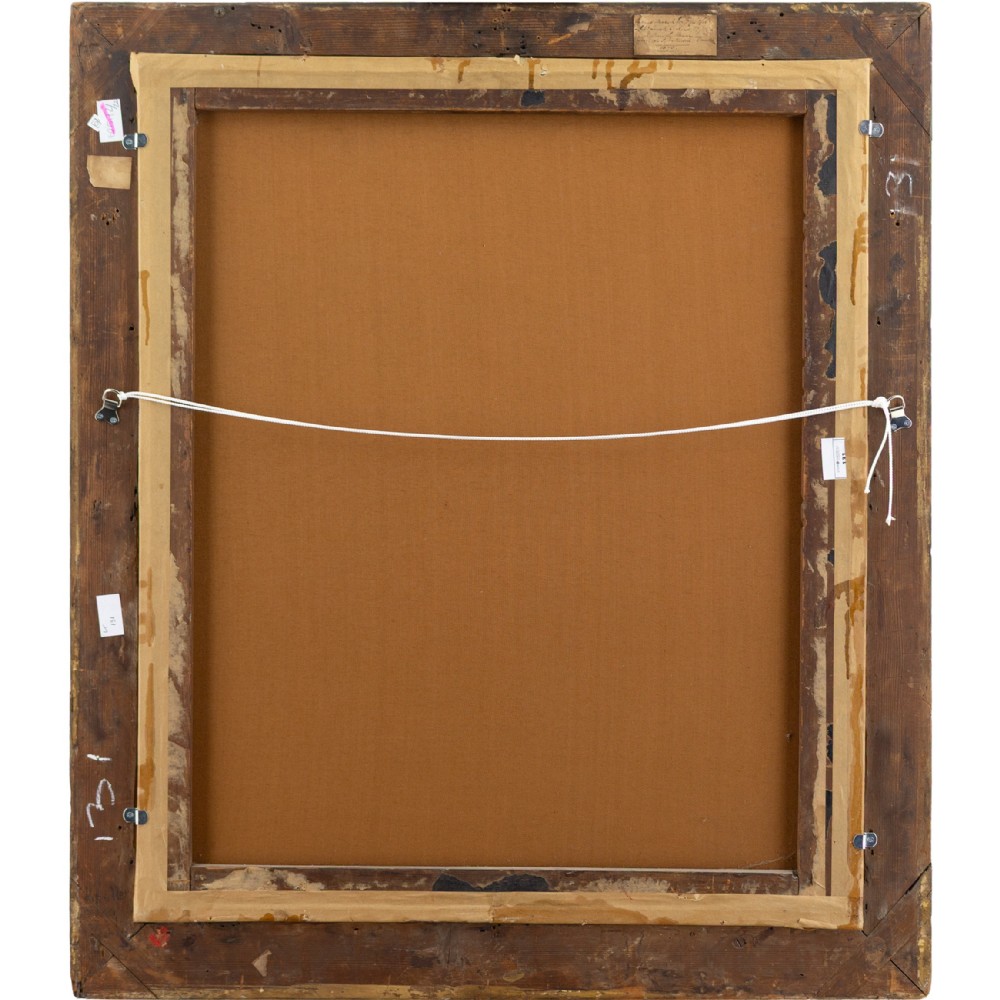
Authentic period paintings show natural signs of age, including a fine network of surface cracking known as craquelure, canvas oxidisation on the reverse, and period-correct joinery on the wooden stretcher bars and carved frame.

Large framed portraits function as anchor points when positioned centrally above a fireplace mantelpiece, sideboard, or within a dedicated gallery wall installation. Pairing period portraiture with neutral interior walls highlights the deep tones and gilded frames of the artwork.

Oil paintings require a stable environment free from rapid temperature fluctuations and high humidity. Direct sunlight should be avoided to prevent pigment fading, and cleaning should strictly be limited to light dusting with a soft, dry brush or professional conservator treatment.
items
Add keywords to the filter
Price
£100
£250000
Era
Movements
Material
Origin
Stock Location
Freshness
Online Payments
Categories