24,243  PAGES BROWSED TODAY PAGES TODAY • 39 ANTIQUES UPLOADED TODAYNEW ARRIVALS
GIFTS
39 ITEMS ADDED TODAY
Sort Order
Items Per Page
Antiques dealer?
Join as a Seller
Browse Categories
Sort order
Relevant Links
Items per page
ID #SA1094836
SOLD
Email Phone
Save
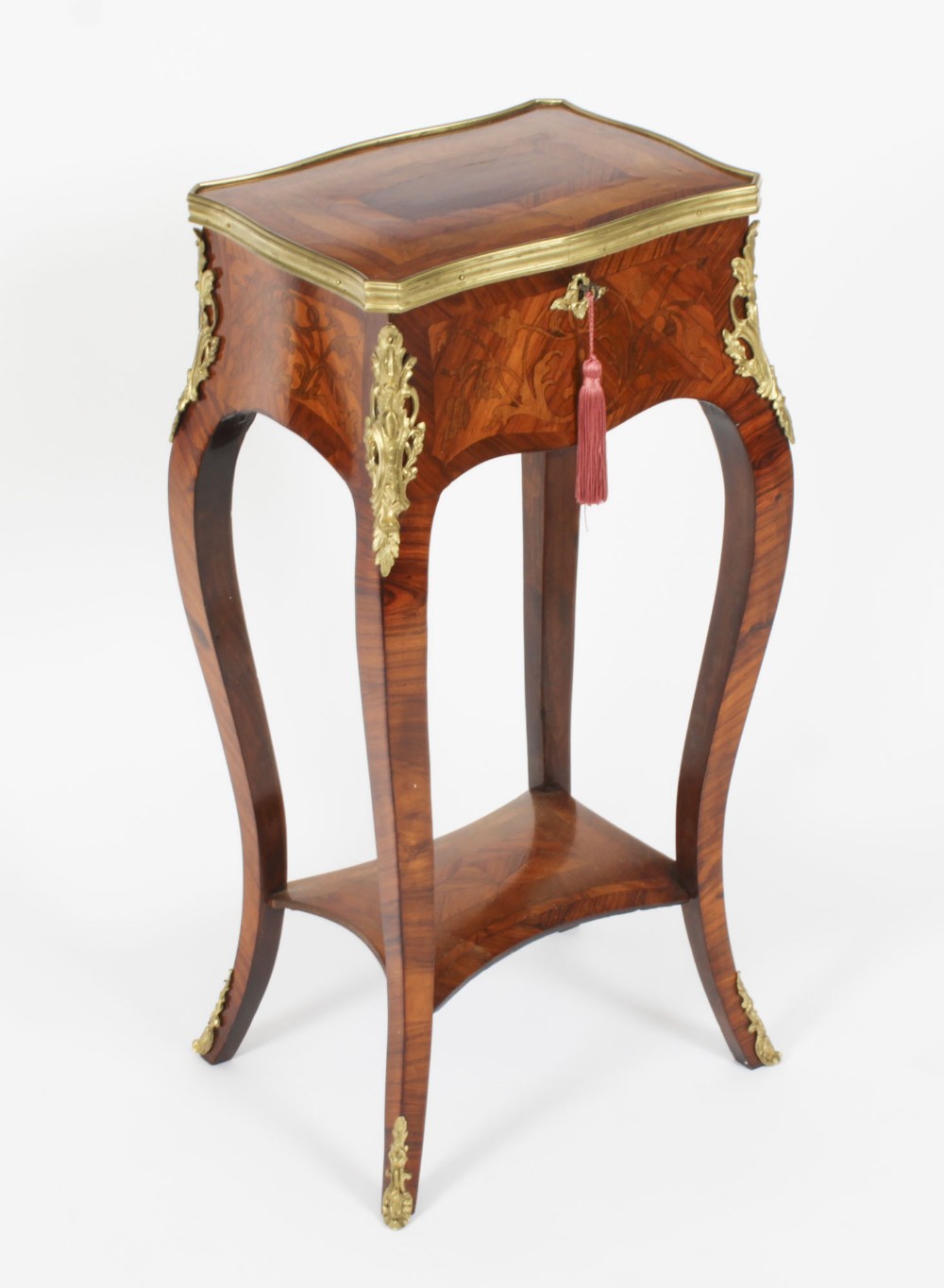
Antique French Parquetry & Marquetry Occasional Table Casket 19th C
Sold by Regent Antiques
sold SA1094836
Sorry, but this item has been sold.
Regent Antiques

Regent Antiques

Sellingantiques Verified Since Sep 2016
Browse dealers 642 items
  • About Us
    We specialise in english and continental furniture, silver, porcelain and decorative items.
  • Trade Associations
    Regent Antiques is a registered member of LAPADA  CINOA
Id #SA1094836
PDF SHARE
SAVE

Antique French Parquetry & Marquetry Occasional Table Casket 19th C

19th century
Sold 7 October 2024 · Regent Antiques
This “Antique French Parquetry & Marquetry Occasional Table Casket 19th C” found a buyer.

It was listed by Regent Antiques. Sold pieces stay on Sellingantiques as a record of what has passed through, and the next one is rarely far away.

Description

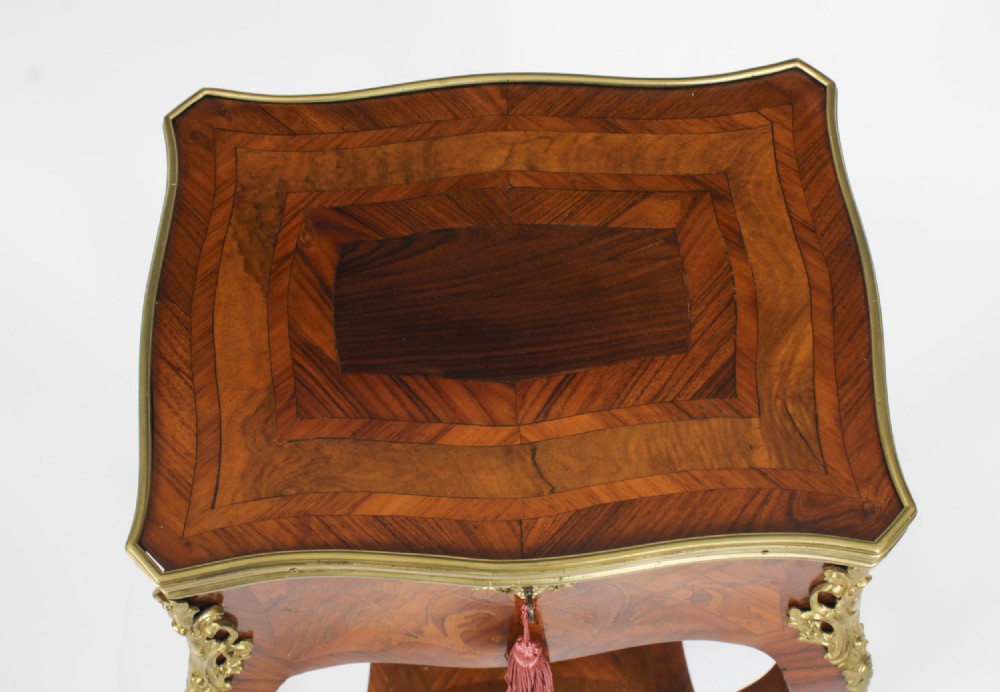
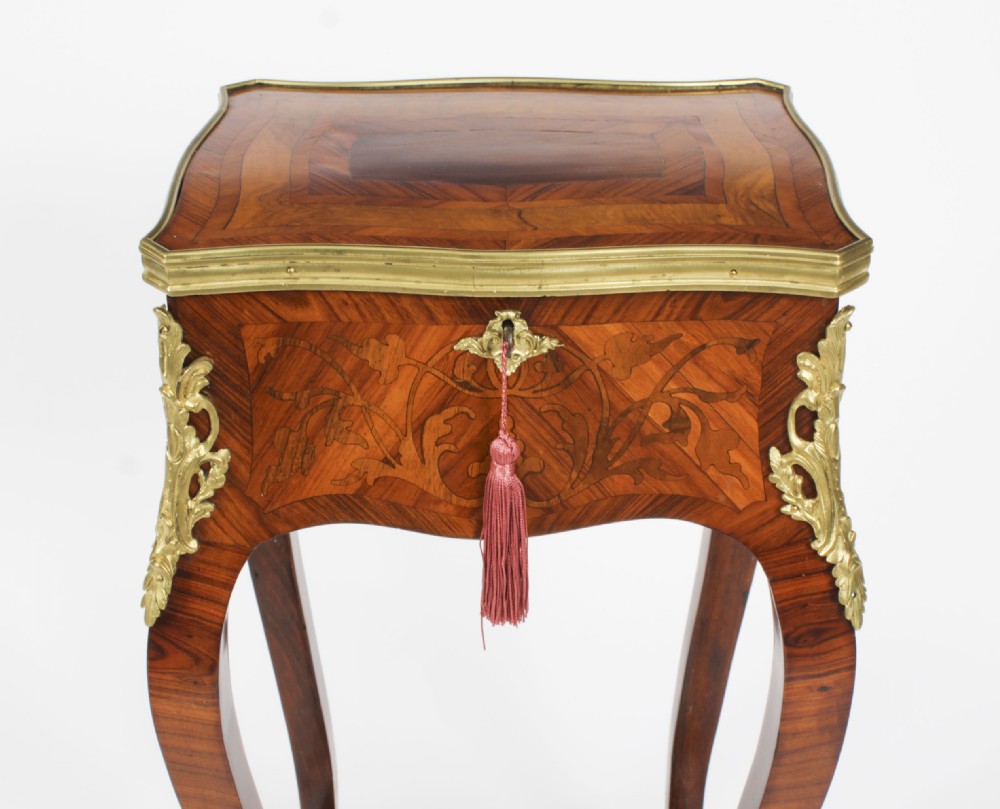
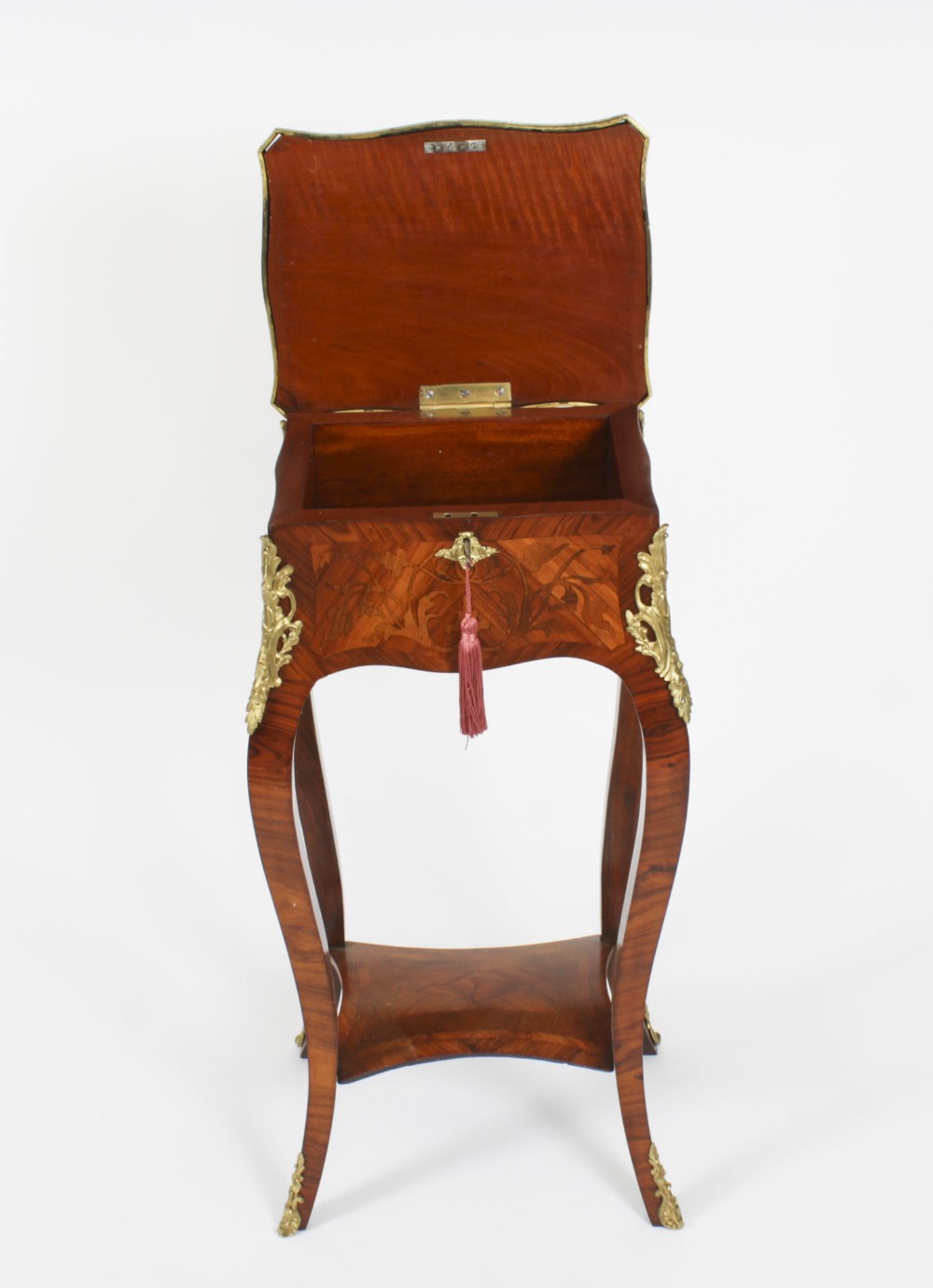
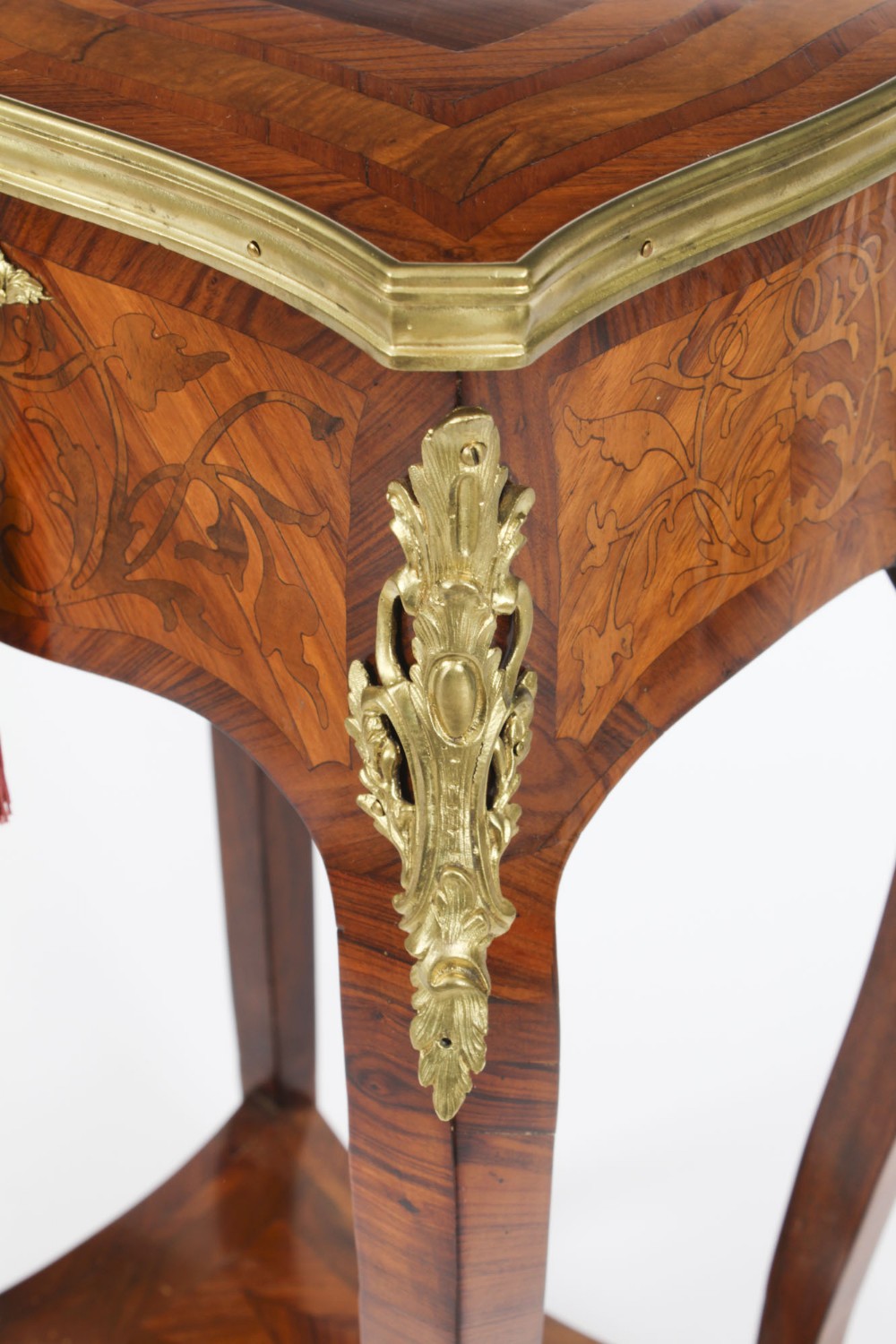
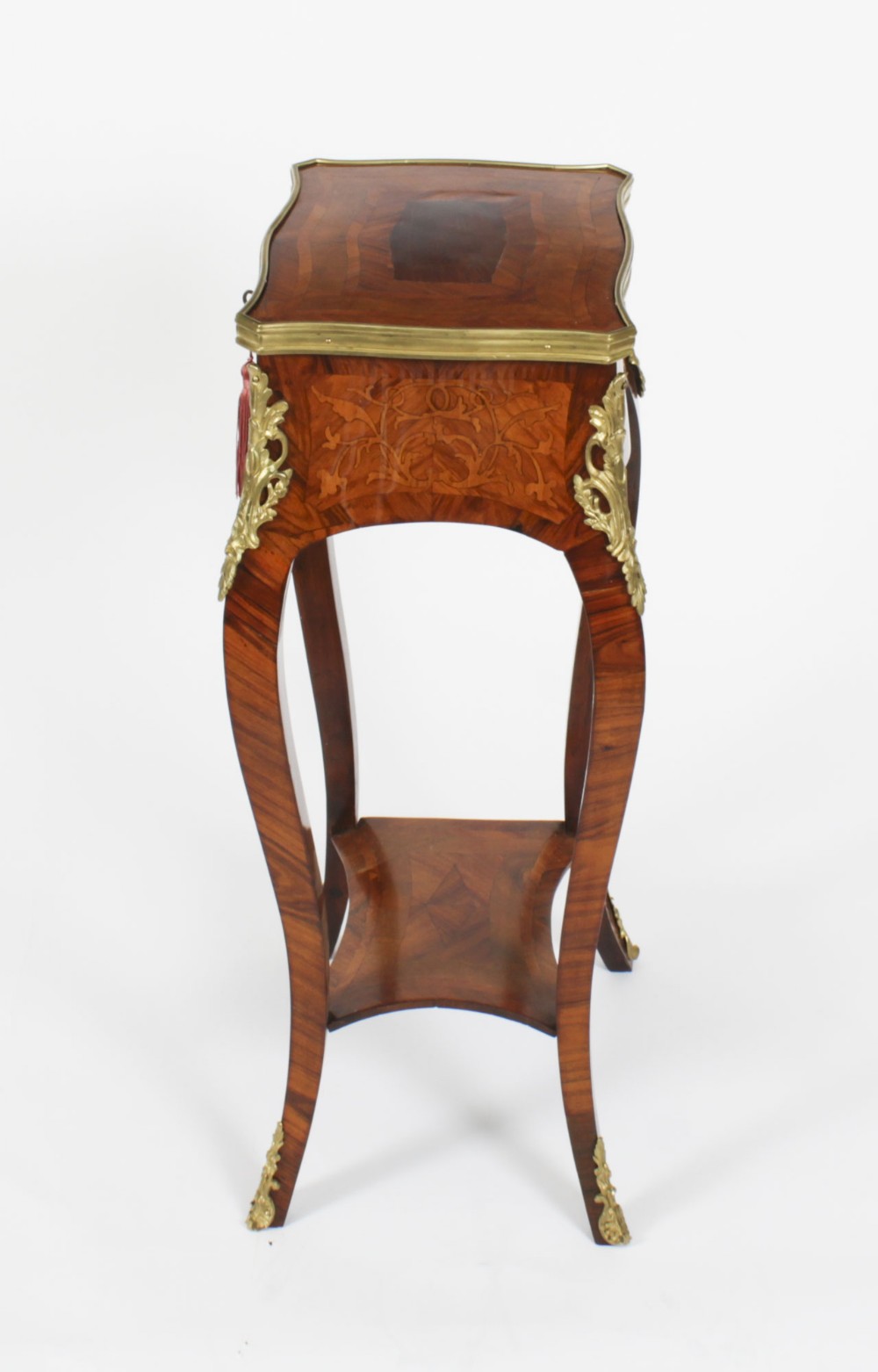
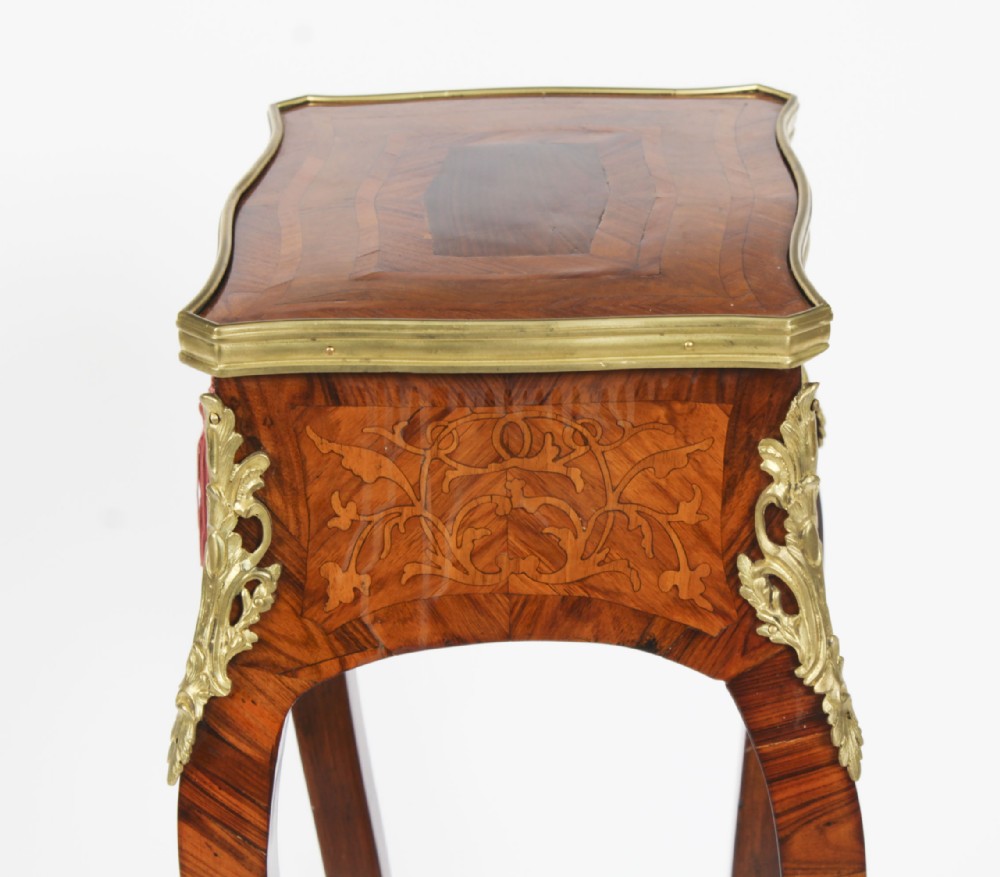
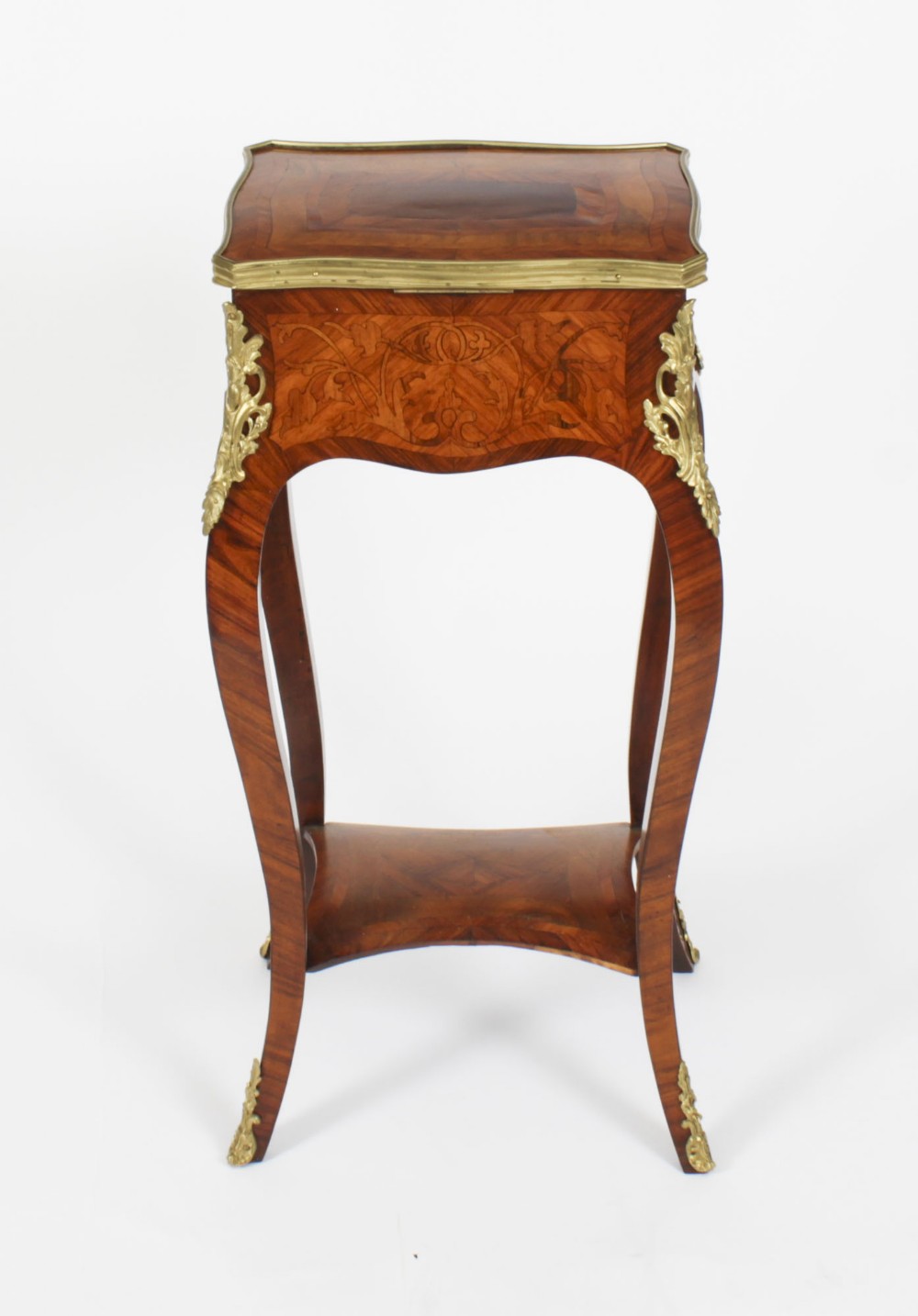
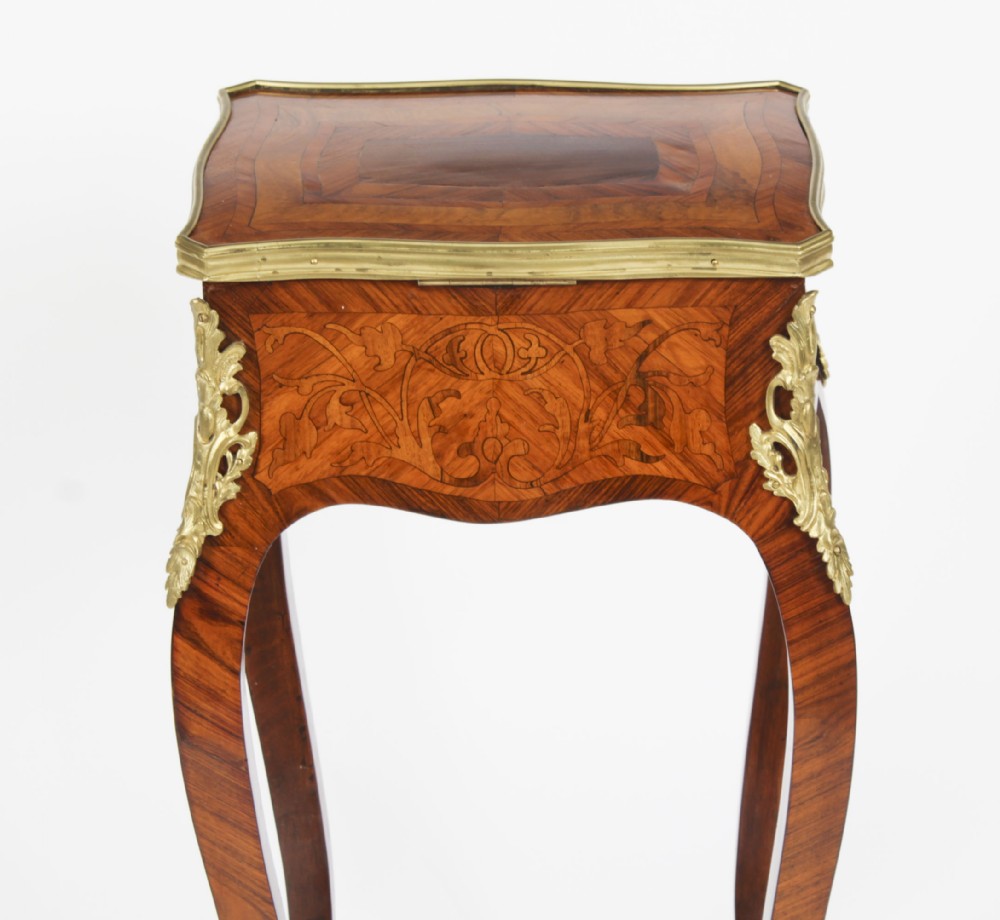
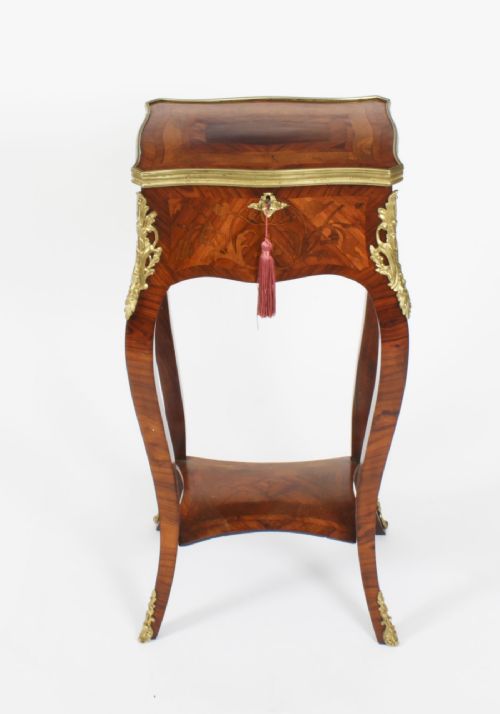
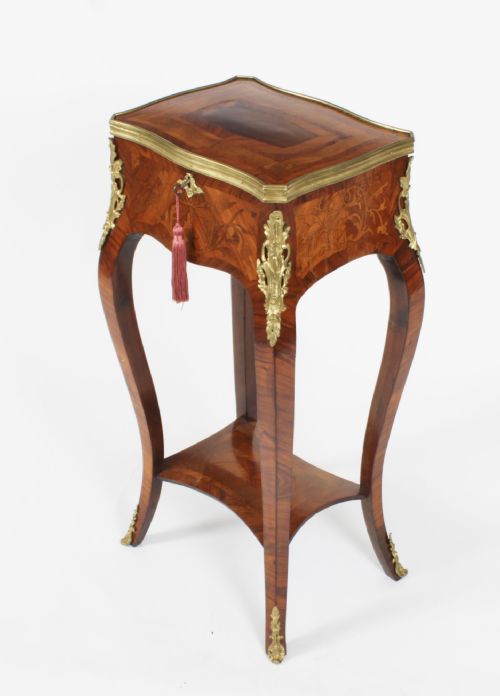
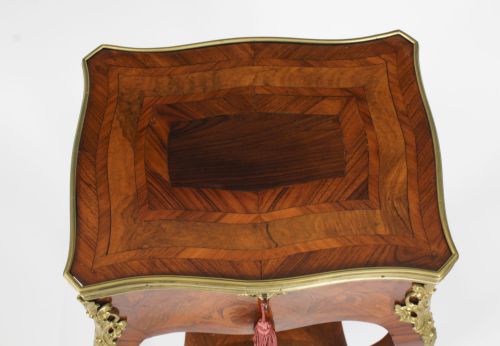
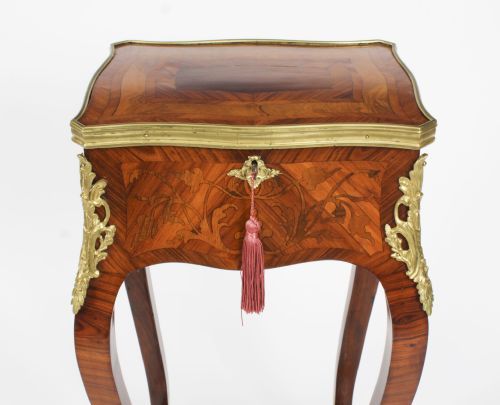
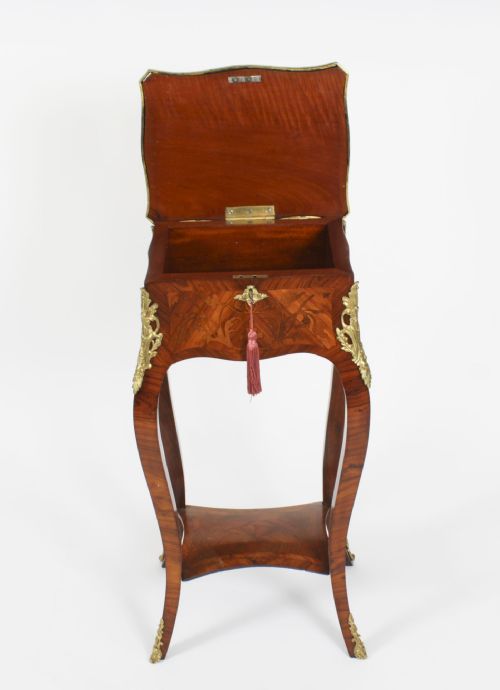
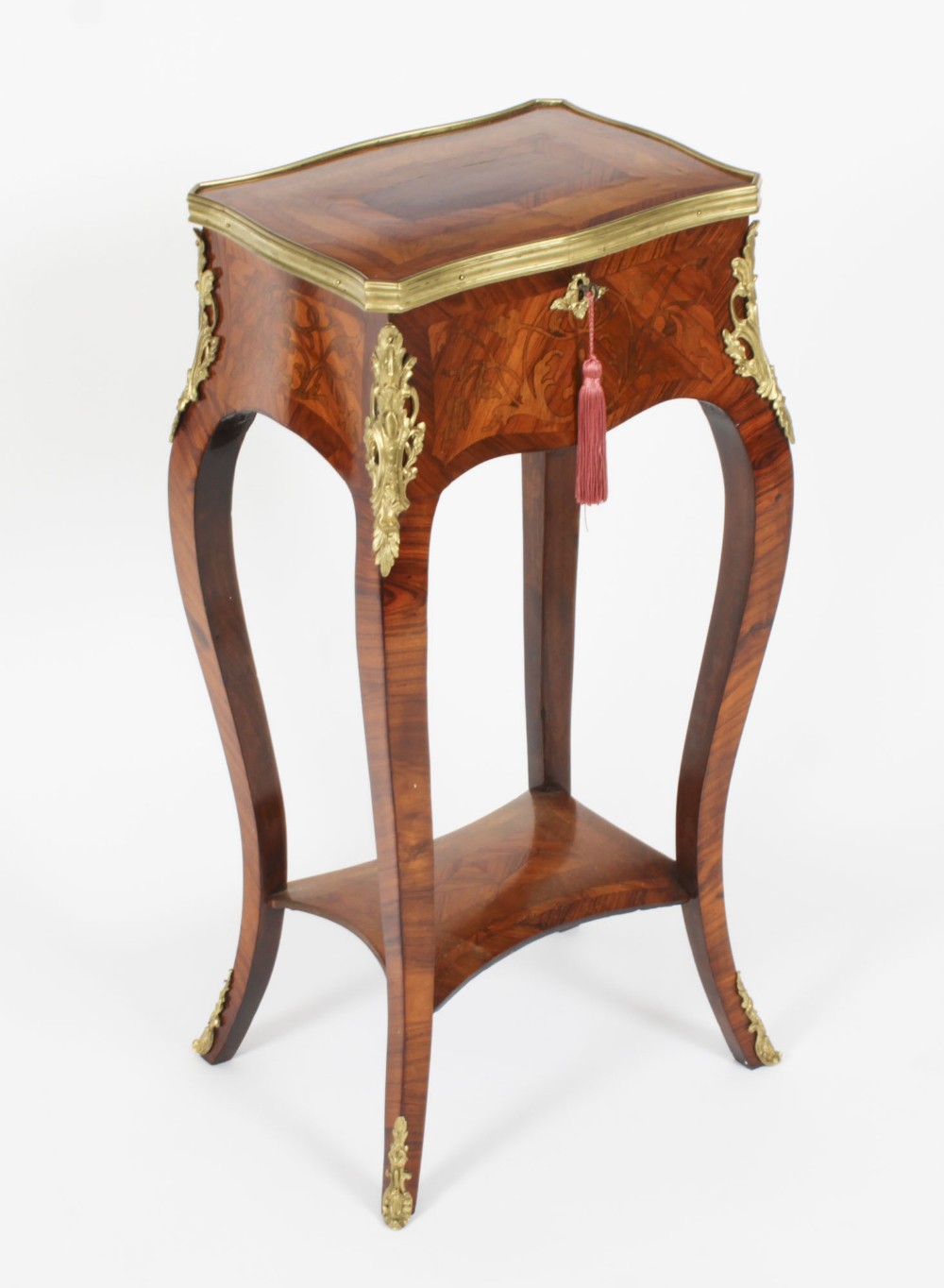
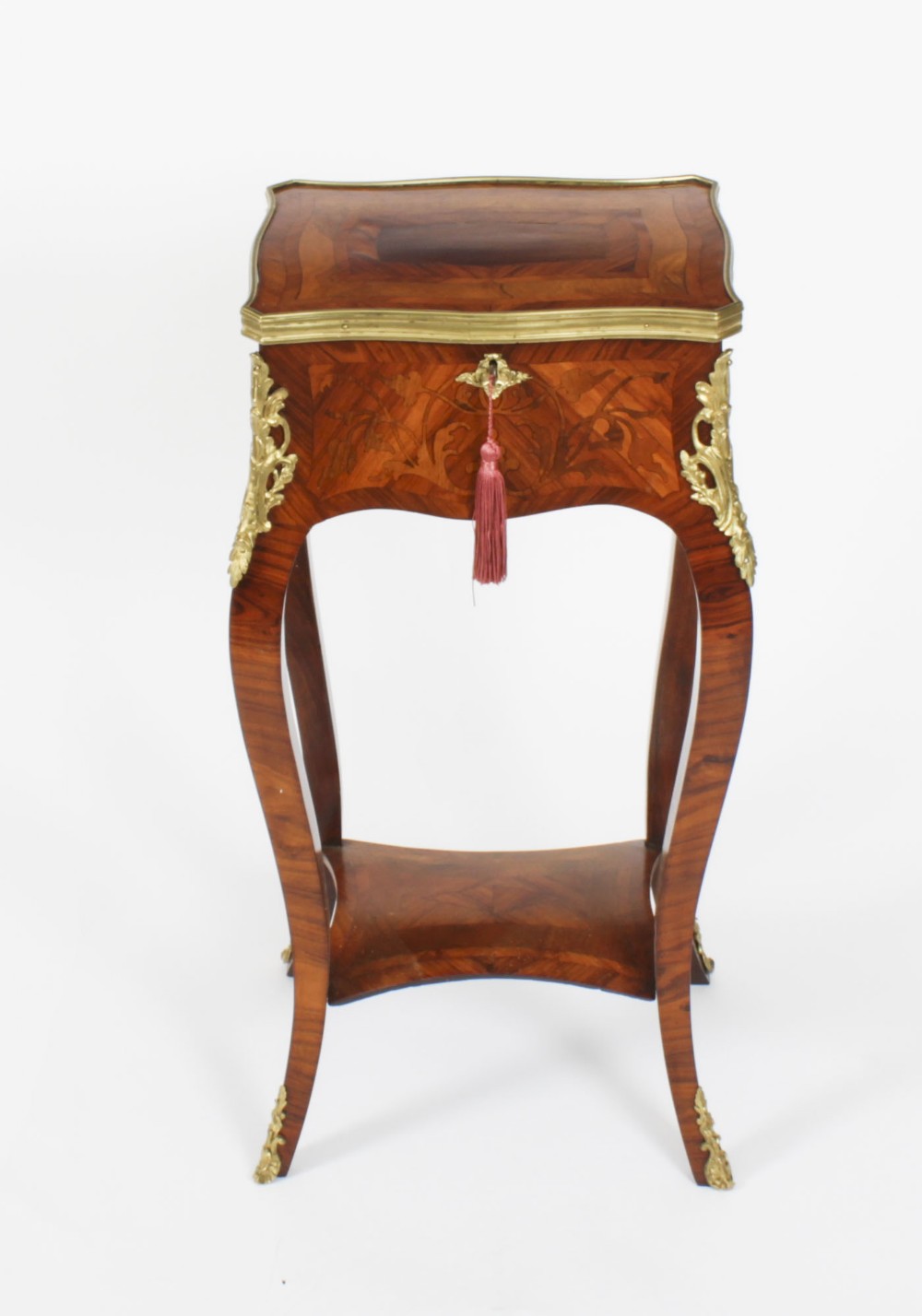
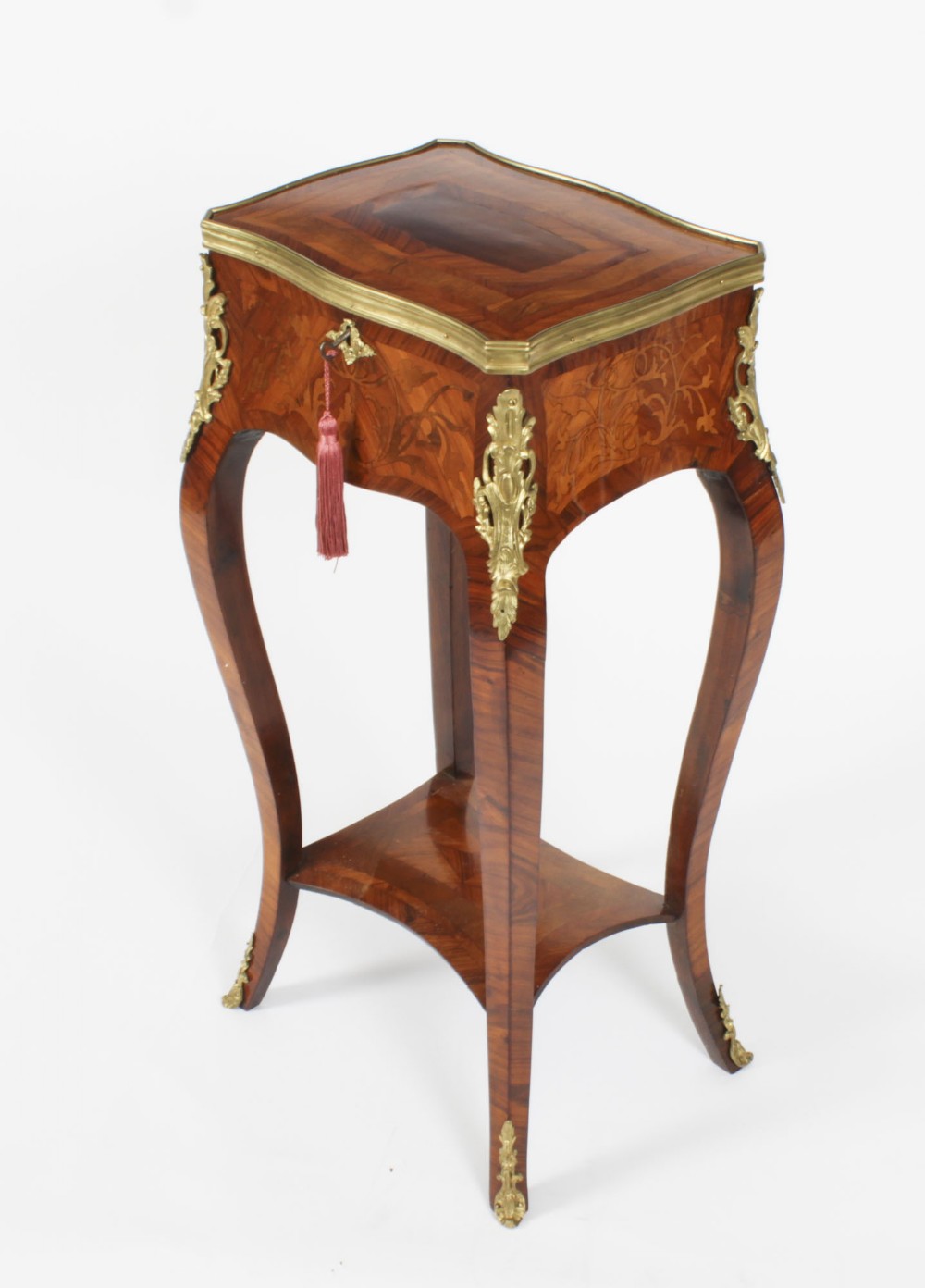
This is a beautiful antique French Louis Revival parquetry and marquetry ormolu mounted serpentine side table, circa 1850 in date.

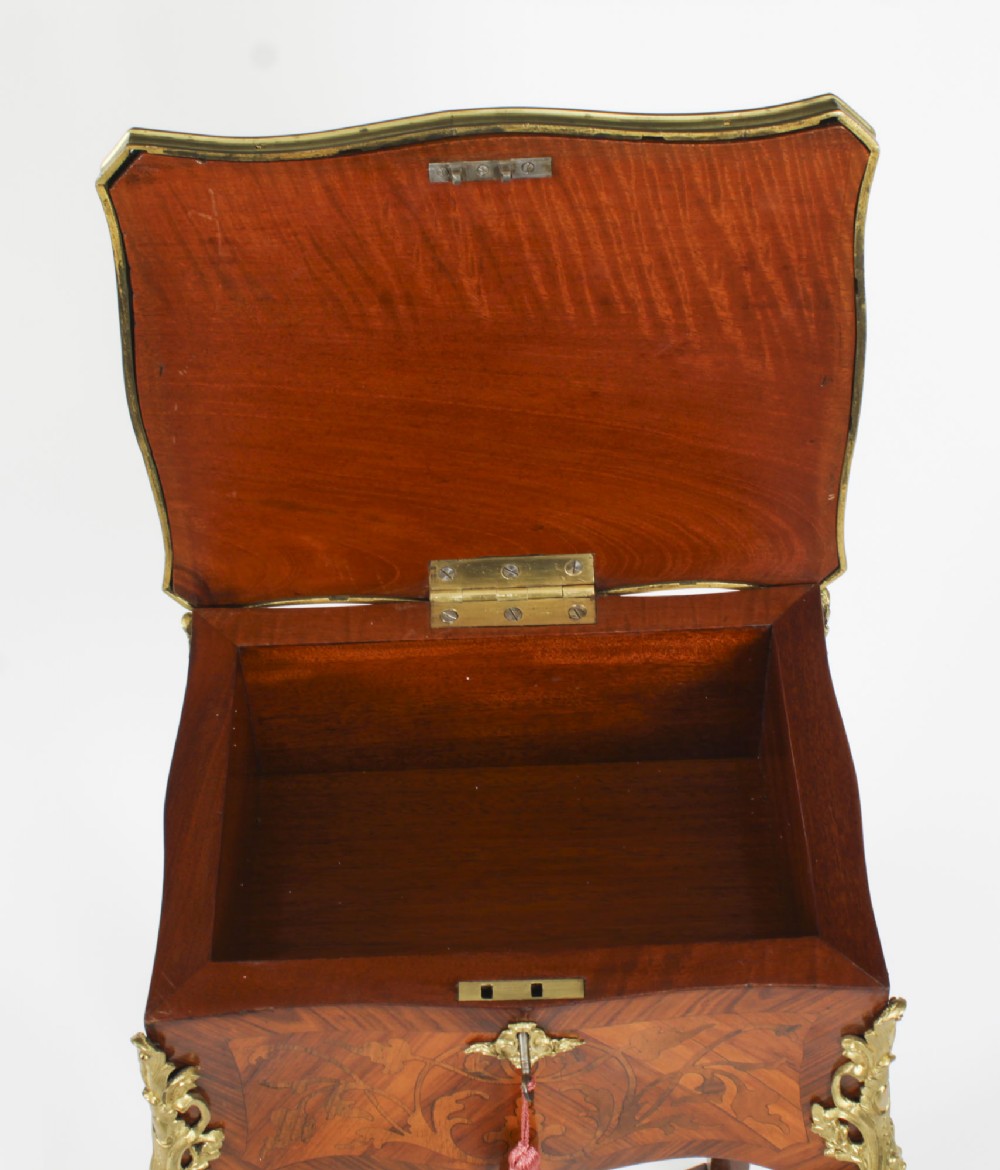
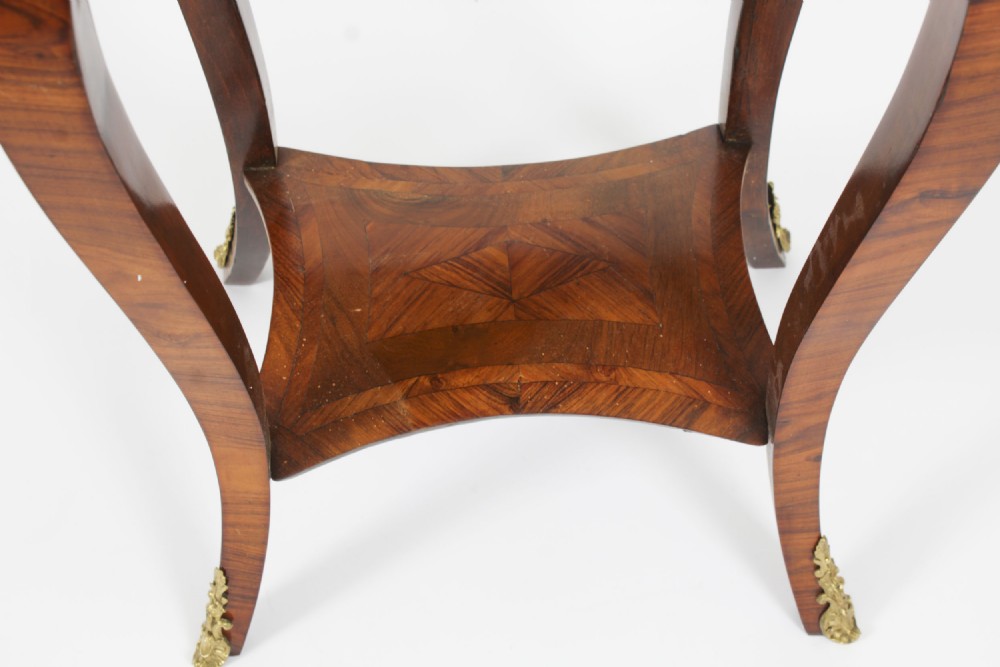
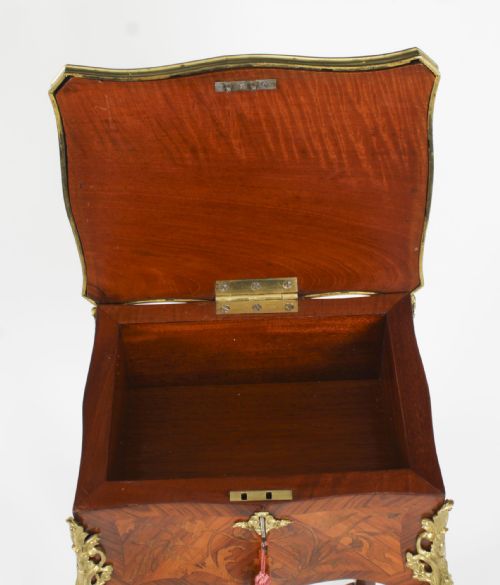
The ormolu banded lid has a Horne's patent hinge with beautiful banded parquetry decoration opening to a casket for jewellery, etc. It features matched veneers inlaid with scrolling leaves and the cabriole legs are united by an incurved undertier.
Complete with the original working lock and key.

Add an elegant touch to any room with this delightful side table casket.

Condition:

In really excellent condition having been beautifully cleaned, polished and waxed in our workshops, please see photos for confirmation.
Dimensions in cm:

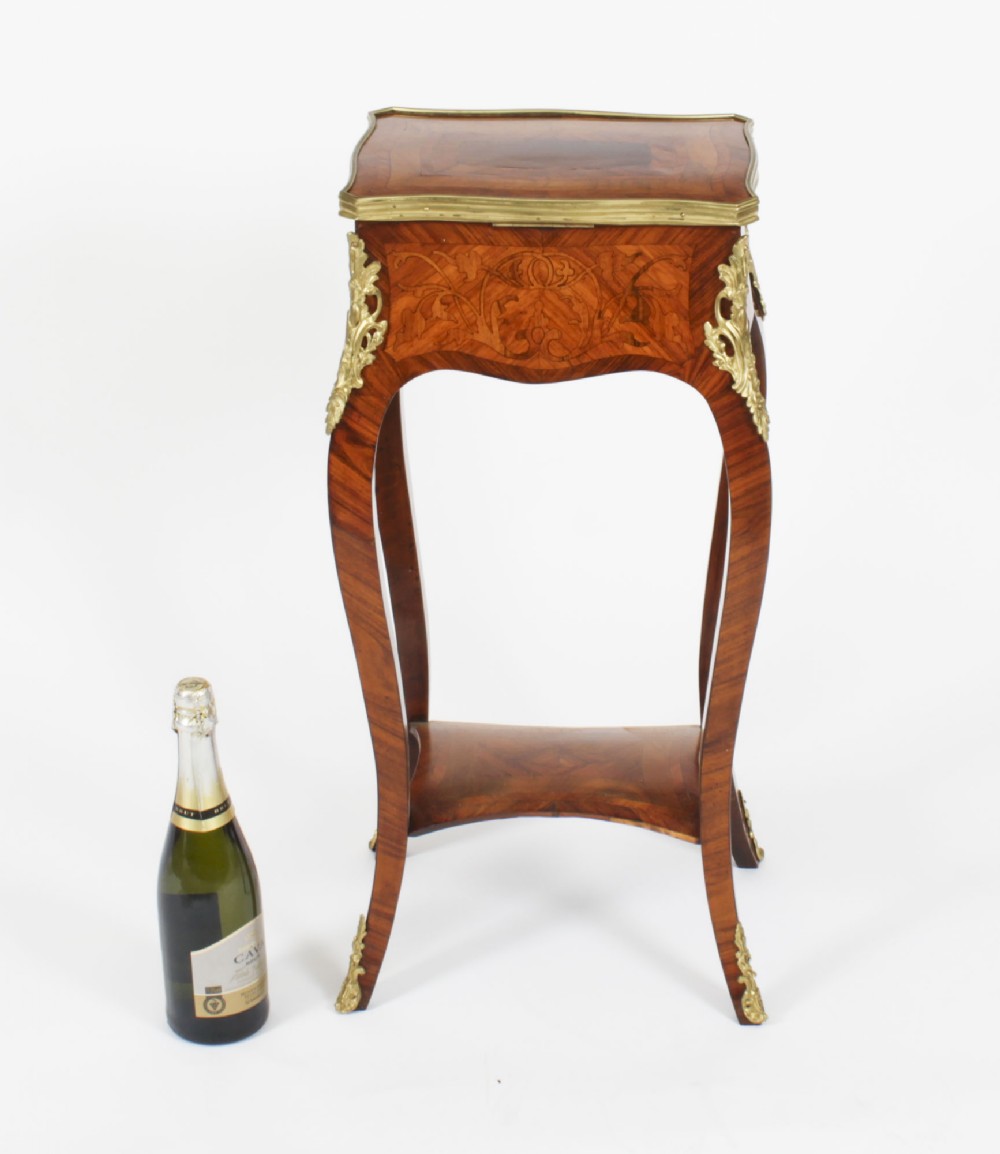
Height 72 cm x Width 35 cm x Depth 28 cm

Dimensions in inches:

Height 2 foot, 4 inches x Width 1 foot, 2 inches x Depth 11 inches

Parquetry - is a geometric mosaic of wood pieces used for decorative effect. The two main uses of parquetry are as veneer patterns on furniture and block patterns for flooring. Parquetry patterns are entirely geometrical and angular—squares, triangles, lozenges.
The word derives from the Old French parchet , literally meaning "a small enclosed space". Large diagonal squares known as parquet de Versailles were introduced in 1684 as parquet de menuiserie to replace the marble flooring that required constant washing, which tended to rot the joists beneath the floors.
Such parquets en lozange were noted by the Swedish architect Daniel Cronström at Versailles and at the Grand Trianon in 1693. Timber contrasting in color and grain, such as oak, walnut, cherry, lime, pine, maple etc. are sometimes employed; and in the more expensive kinds richly coloured tropical hardwoods are also used.
Marquetry

is decorative artistry where pieces of material of different colours are inserted into surface wood veneer to form intricate patterns such as scrolls or flowers.

The technique of veneered marquetry had its inspiration in 16th century Florence. Marquetry elaborated upon Florentine techniques of inlaying solid marble slabs with designs formed of fitted marbles, jaspers and semi-precious stones. This work, called opere di commessi, has medieval parallels in Central Italian "Cosmati"-work of inlaid marble floors, altars and columns. The technique is known in English as pietra dura, for the "hardstones" used: onyx, jasper, cornelian, lapis lazuli and colored marbles. In Florence, the Chapel of the Medici at San Lorenzo is completely covered in a colored marble facing using this demanding jig-sawn technique.
Techniques of wood marquetry were developed in Antwerp and other Flemish centers of luxury cabinet-making during the early 16th century. The craft was imported full-blown to France after the mid-seventeenth century, to create furniture of unprecedented luxury being made at the royal manufactory of the Gobelins, charged with providing furnishings to decorate Versailles and the other royal residences of Louis XIV. Early masters of French marquetry were the Fleming Pierre Golle and his son-in-law, André-Charles Boulle, who founded a dynasty of royal and Parisian cabinet-makers (ébénistes) and gave his name to a technique of marquetry employing brass with pewter in arabesque or intricately foliate designs.

Our reference: A1849

Date of Manufacture

Regent Antiques has dated this French Parquetry Occasional Table to the 1850s.

Physical Dimensions
Height
72cm (28.35")
Width
35cm (13.78")
Depth
28cm (11.02")
Reference Numbers
Sellingantiques Reference
SA1094836
Dealers Internal Reference
A1849
Description
This is a beautiful antique French Louis Revival parquetry and marquetry ormolu mounted serpentine side table, circa 1850 in date.
“
The ormolu banded lid has a Horne's patent hinge with beautiful banded parquetry decoration opening to a casket for jewellery, etc.
Regent Antiques

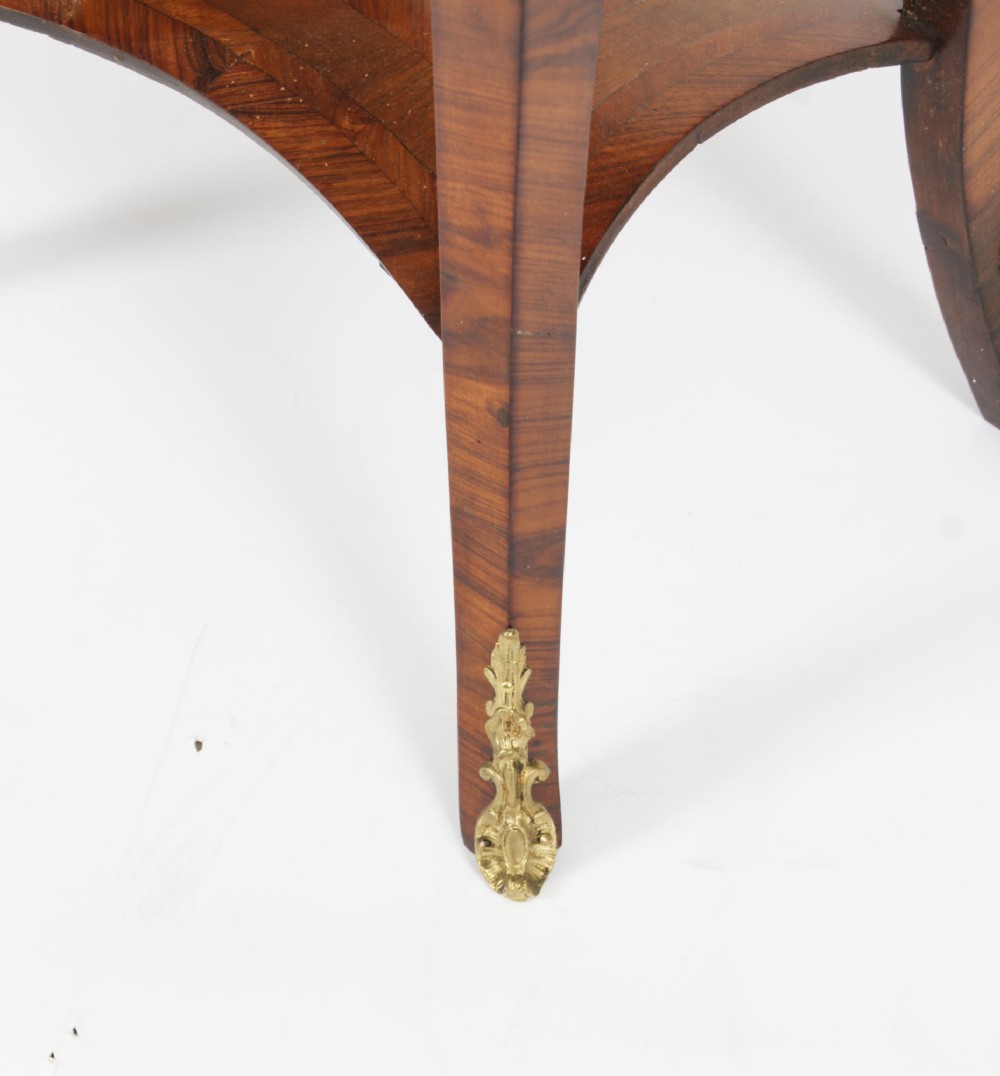
It features matched veneers inlaid with scrolling leaves and the cabriole legs are united by an incurved undertier.

fig 1. An antique French parquetry and marquetry occasional table with cabriole legs, brass mounts, and an integrated compartment casket.
fig 1. Antique French Parquetry & Marquetry Occasional Table Casket 19th C

Complete with the original working lock and key.

Add an elegant touch to any room with this delightful side table casket.

Condition:

In really excellent condition having been beautifully cleaned, polished and waxed in our workshops, please see photos for confirmation.

fig 2. An antique French parquetry and marquetry occasional table with cabriole legs, brass mounts, and an integrated compartment casket.
fig 2. Antique French Parquetry & Marquetry Occasional Table Casket 19th C

Dimensions in cm:

Height 72 cm x Width 35 cm x Depth 28 cm

Dimensions in inches:

Height 2 foot, 4 inches x Width 1 foot, 2 inches x Depth 11 inches

Parquetry - is a geometric mosaic of wood pieces used for decorative effect. The two main uses of parquetry are as veneer patterns on furniture and block patterns for flooring. Parquetry patterns are entirely geometrical and angular—squares, triangles, lozenges.

fig 3. An antique French parquetry and marquetry occasional table with cabriole legs, brass mounts, and an integrated compartment casket.
fig 3. Antique French Parquetry & Marquetry Occasional Table Casket 19th C

The word derives from the Old French parchet , literally meaning "a small enclosed space". Large diagonal squares known as parquet de Versailles were introduced in 1684 as parquet de menuiserie to replace the marble flooring that required constant washing, which tended to rot the joists beneath the floors.

fig 4. An antique French parquetry and marquetry occasional table with cabriole legs, brass mounts, and an integrated compartment casket.
fig 4. Antique French Parquetry & Marquetry Occasional Table Casket 19th C

Such parquets en lozange were noted by the Swedish architect Daniel Cronström at Versailles and at the Grand Trianon in 1693. Timber contrasting in color and grain, such as oak, walnut, cherry, lime, pine, maple etc. are sometimes employed; and in the more expensive kinds richly coloured tropical hardwoods are also used.

fig 5. An antique French parquetry and marquetry occasional table with cabriole legs, brass mounts, and an integrated compartment casket.
fig 5. Antique French Parquetry & Marquetry Occasional Table Casket 19th C

Marquetry

is decorative artistry where pieces of material of different colours are inserted into surface wood veneer to form intricate patterns such as scrolls or flowers.

The technique of veneered marquetry had its inspiration in 16th century Florence. Marquetry elaborated upon Florentine techniques of inlaying solid marble slabs with designs formed of fitted marbles, jaspers and semi-precious stones. This work, called opere di commessi, has medieval parallels in Central Italian "Cosmati"-work of inlaid marble floors, altars and columns. The technique is known in English as pietra dura, for the "hardstones" used: onyx, jasper, cornelian, lapis lazuli and colored marbles. In Florence, the Chapel of the Medici at San Lorenzo is completely covered in a colored marble facing using this demanding jig-sawn technique.

fig 6. An antique French parquetry and marquetry occasional table with cabriole legs, brass mounts, and an integrated compartment casket.
fig 6. Antique French Parquetry & Marquetry Occasional Table Casket 19th C

Techniques of wood marquetry were developed in Antwerp and other Flemish centers of luxury cabinet-making during the early 16th century. The craft was imported full-blown to France after the mid-seventeenth century, to create furniture of unprecedented luxury being made at the royal manufactory of the Gobelins, charged with providing furnishings to decorate Versailles and the other royal residences of Louis XIV. Early masters of French marquetry were the Fleming Pierre Golle and his son-in-law, André-Charles Boulle, who founded a dynasty of royal and Parisian cabinet-makers (ébénistes) and gave his name to a technique of marquetry employing brass with pewter in arabesque or intricately foliate designs.

Our reference: A1849

Date of Manufacture

Regent Antiques has dated this French Parquetry Occasional Table to the 1850s.

Height
72cm (28.35")
Width
35cm (13.78")
Depth
28cm (11.02")
Reference Numbers
Sellingantiques Ref
SA1094836
Dealers Internal Ref
A1849
Regent Antiques
Regent Antiques
Sellingantiques verified Since Sep 2016

We specialise in english and continental furniture, silver, porcelain and decorative items.

Dealer Profile

You can view the stock and full dealer information on the Regent Antiques Profile Page

Trade Associations

Regent Antiques is a registered member of LAPADA  CINOA
PDF SHARE
SAVE
An antique French parquetry and marquetry occasional table with cabriole legs, brass mounts, and an integrated compartment casket. SOLD6+ MONTHS AGO
1 / 16
Archive I An antique French parquetry and marquetry occasional table with cabriole legs, brass mounts, and an integrated compartment casket. SOLD6+ MONTHS AGO

Antique French Parquetry & Marquetry Occasional Table Casket 19th C
Archive II An antique French parquetry and marquetry occasional table with cabriole legs, brass mounts, and an integrated compartment casket. View II
Archive III An antique French parquetry and marquetry occasional table with cabriole legs, brass mounts, and an integrated compartment casket. View III
Archive IV An antique French parquetry and marquetry occasional table with cabriole legs, brass mounts, and an integrated compartment casket. View IV
Archive V An antique French parquetry and marquetry occasional table with cabriole legs, brass mounts, and an integrated compartment casket. View V
Archive VI An antique French parquetry and marquetry occasional table with cabriole legs, brass mounts, and an integrated compartment casket. View VI
Archive VII An antique French parquetry and marquetry occasional table with cabriole legs, brass mounts, and an integrated compartment casket. View VII
Archive VIII An antique French parquetry and marquetry occasional table with cabriole legs, brass mounts, and an integrated compartment casket. View VIII
Archive IX An antique French parquetry and marquetry occasional table with cabriole legs, brass mounts, and an integrated compartment casket. View IX
Archive X An antique French parquetry and marquetry occasional table with cabriole legs, brass mounts, and an integrated compartment casket. View X
Archive XI An antique French parquetry and marquetry occasional table with cabriole legs, brass mounts, and an integrated compartment casket. View XI
Archive XII An antique French parquetry and marquetry occasional table with cabriole legs, brass mounts, and an integrated compartment casket. View XII
Archive XIII An antique French parquetry and marquetry occasional table with cabriole legs, brass mounts, and an integrated compartment casket. View XIII
Archive XIV An antique French parquetry and marquetry occasional table with cabriole legs, brass mounts, and an integrated compartment casket. View XIV
Archive XV An antique French parquetry and marquetry occasional table with cabriole legs, brass mounts, and an integrated compartment casket. View XV
Archive XVI An antique French parquetry and marquetry occasional table with cabriole legs, brass mounts, and an integrated compartment casket. View XVI
FURTHER BROWSING

Visitors also looked at these ⇣

Enlarged Archival View
Location
Manor Warehouse
318 Green Lanes
London
N4 1BX
United Kingdom
Verified Since Sep 2016
Items For Sale 642
Items Sold 2,745
Regent Antiques
Regent Antiques
Verified Since Sep 2016
View Dealer Info
Location: Manor Warehouse, 318 Green Lanes, London, N4 1BX, United Kingdom
Verified
Sep 2016
For Sale
642
Sold
2,745
An antique French parquetry and marquetry occasional table with cabriole legs, brass mounts, and an integrated compartment casket.
Antique French Parquetry & Marquetry Occasional Table Casket 19th C
Ref: SA1094836
An antique French parquetry and marquetry occasional table with cabriole legs, brass mounts, and an integrated compartment casket.
Detail View 1
Detail View 2
Detail View 3
Detail View 4
Detail View 5
Detail View 6
Detail View 7
Detail View 8
Detail View 9
Detail View 10
Detail View 11
Detail View 12
Detail View 13
Detail View 14
Detail View 15
Archival Detail
Every single antique dealer on our platform is individually approved by our internal team. We verify their professional trade history, ethical standards, and photographic quality to ensure a secure, high-standard buying environment. Upon joining, every dealer agrees to a strict 9-point code of conduct. While issues can occasionally arise, our dealers typically resolve them swiftly and directly with the buyer. In fact, since our founding in 2002, Sellingantiques has only had to step in to help resolve an issue on roughly five occasions—a true testament to the quality of our dealers and their dedication to your happiness.
Our dealers are highly experienced in packing and shipping fragile, high-value antiques. Because you are in direct contact with the dealer, you will be able to easily go through all available shipping and insurance options together to ensure your item arrives safely.
Antiques are the ultimate green purchase. By choosing historical pieces over newly manufactured goods, you completely eliminate the carbon footprint of modern mass production while preserving exceptional, timeless craftsmanship.
Written by Sellingantiques from the dealer’s photographs and listing
  • ObjectOccasional Tables
  • Period19th century
  • StyleFrench Antique
  • MaterialWalnut, Rosewood, Kingwood, Brass, Ormolu
  • ColourWarm Brown
  • MotifsCabriole legs, Floral marquetry, Ormolu mounts, Geometric parquetry
  • SizeH 72 cm (28 in) x W 35 cm (14 in) x D 28 cm (11 in)

French parquetry and marquetry involve the precise application of wood veneers to furniture surfaces, creating geometric patterns or pictorial designs using contrasting timber species.

These pieces typically utilised a carcase of native timber such as oak or pine, veneered with exotic woods like kingwood, tulipwood, and walnut, and accented with gilt bronze or brass mounts.

Authentic pieces often exhibit hand-cut veneers with slight irregularities, traditional animal protein glues, hand-chiselled bronze mounts, and signs of age-appropriate oxidisation and wear within the timber grain.

Pairing highly decorative historical items with minimalist contemporary furniture creates a balanced contrast, allowing the intricate wood grain and metal mounts to serve as focal points without overwhelming the space.

Maintain stable indoor humidity levels away from direct sunlight and heat sources to prevent veneer cracking, and apply microcrystalline wax sparingly to protect the polished wood finish.
items
Add keywords to the filter
Price
£100
£250000
Era
Period
Style
Material
Origin
Stock Location
Recently Added
Online Payments
Categories