







Yomut Storage Bag
These yomut storage bag examples are nomadic Central Asian tribal weavings valued for their rich wool geometry and enduring utility.
Yomut Storage Bag
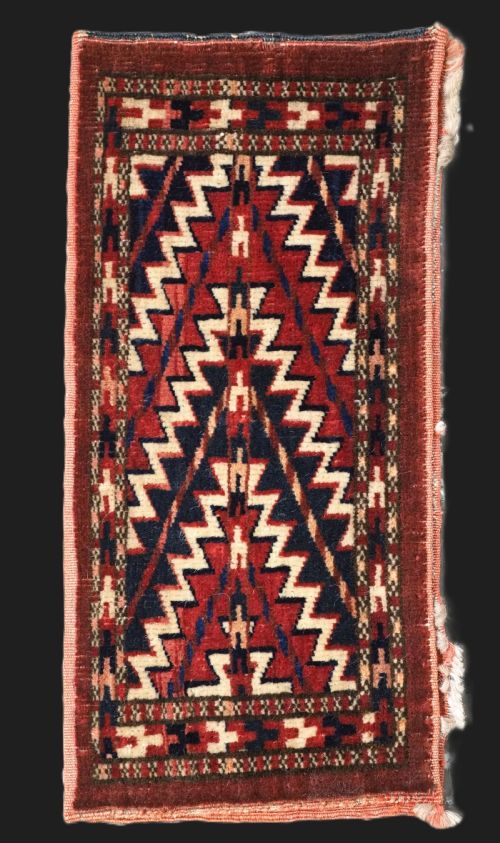
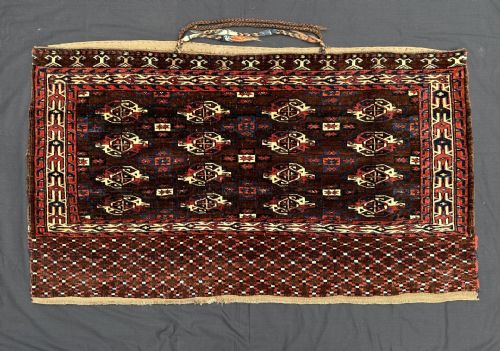
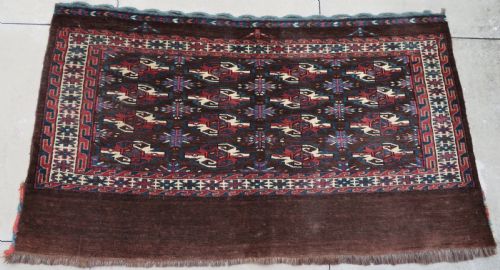
A yomut storage bag is a nomadic Central Asian tribal textile originating from the Trans-Caspian steppes and Turkmenistan. When searching for this phrase, you encounter pieces intended for utility within tribal dwellings, ranging from complete bags to surviving bag faces.
The most common formats on this page include torba face pieces, spindle bags known as igsalyk, mafrash variants, and larger chuval storage sacks. These objects showcase distinct tribal patterns associated with Turkmen nomadic heritage.
The periods represented stretch across the late nineteenth and early twentieth centuries, capturing traditional weaving practices before widespread commercial dye introduction. Each textile reflects the specific functional requirements of Turkmen daily life.
What varies in quality
Quality in a yomut storage bag rests on the density of the weave and the clarity of the tribal motifs, such as the kepse gul or multi-gul layouts. Tighter knotting and finer wool preparation yield a crisper graphic punch across the surface.
The presence of complete original backs and intact plain weave sections elevates the integrity of the piece. Surviving structural components provide a more complete picture of traditional Turkmen nomadic craftsmanship.
Yomut Storage Bag Retail Price Guide 2026
Typical asking prices for yomut storage bag among the pieces listed under this phrase on Sellingantiques today, from the lower quarter to the upper quarter. They describe what is for sale here now, not the wider market.
Materials recorded across these items are strictly limited to wool, natural dyes, hand-spun wool, and dyed yarn.
The Yomut Storage Bag Glossary
- Torba
- A small Turkmen storage bag traditionally used for domestic storage inside a yurt. These pieces often feature prominent gul designs on the face.
- Chuval
- A large tent storage bag produced by Turkmen tribes for bedding and heavy household goods. They are frequently encountered as complete examples or framed wall art.
- Igsalyk
- A specific Turkmen spindle bag designed to hold spinning tools and wool supplies. They typically display a narrow vertical format with a plain weave back.
- Gul
- A medallion motif repeated across Turkmen carpets and storage bags to identify specific tribal lineages. Different variations distinguish Yomut work from other regional groups.
- Kepse
- A specific geometric gul pattern frequently utilised by Yomut weavers. The design creates a repeating lattice structure across the textile face.
Yomut Storage Bag: Frequently Asked Questions
How were these bags used originally?
Nomadic families utilised these containers to store clothing, wool, utensils, and bedding inside portable tents across the Trans-Caspian steppes. Their sturdy construction protected contents from dust and dampness on the ground.
Many examples were hung against lattice walls or stacked within the dwelling to keep living spaces organised.
How do I hang a storage bag on the wall?
Displaying these textiles safely involves supporting the weight evenly across the top edge using a padded sleeve or discreet conservation mounts. Avoid hanging them by isolated points which can strain the historical wool foundation.
Keeping them away from direct sunlight preserves the natural dyes and prevents the animal fibres from drying out over time.
How can I tell the age of a Turkmen bag?
Dating relies on examining the wool quality, the composition of the natural dyes, and the structural style characteristic of late nineteenth and early twentieth-century tribal production. Earlier examples often show softer handle and specific regional gul proportions.
Comparing structural details against documented nineteenth-century Turkmen pieces helps narrow down the period of manufacture.