



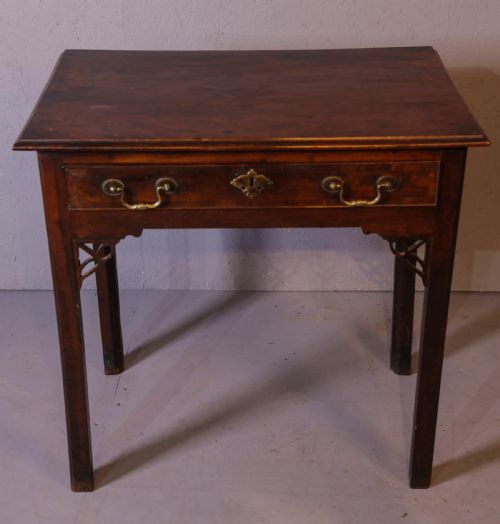


Yew Wood Writing Table
These yew wood writing table pieces combine rich grain and practical surfaces, offering a warm focal point for any study.
Yew Wood Writing Table
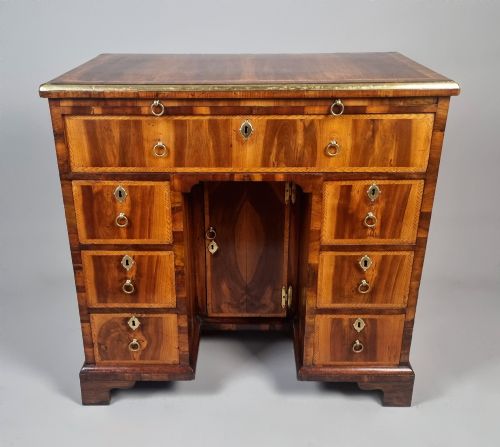
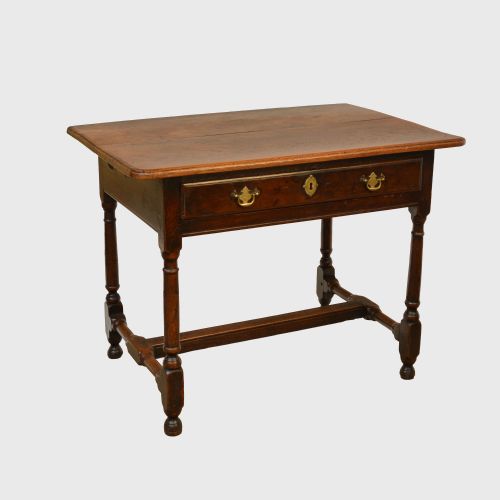
A yew wood writing table represents a distinct form of antique furniture designed for correspondence and paperwork, shaped by centuries of cabinet-making traditions. Buyers searching for a yew wood writing table encounter various historical expressions, ranging from early eighteenth-century examples to later revival pieces.
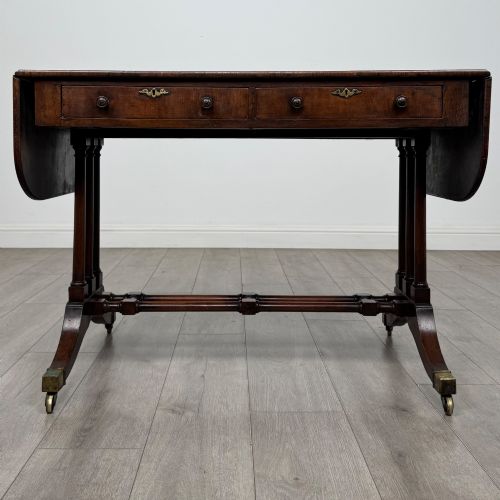
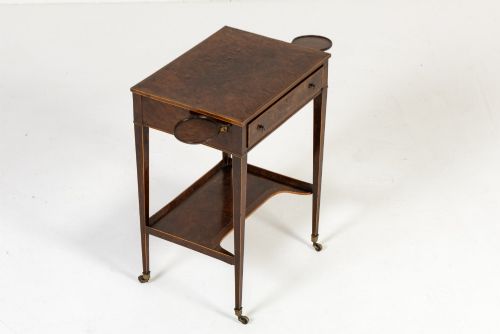
The pieces listed on this page encompass related forms such as bureau desks, dressing tables, side tables, and sofa tables. These items demonstrate the versatility of the timber across different stylistic periods including Georgian, Regency, and Victorian eras.
How they were made
Craftsmen utilised solid timber and decorative veneers of yew, burr yew, and figured elm, frequently combining them with secondary woods like oak. Surfaces often feature featherbanding and brass hardware to accentuate the natural figuring of the wood.
Construction techniques evolved from early regional country work to refined urban cabinet-making, incorporating dovetailed drawers and drop-leaf mechanisms. The integration of glass panels appears in specialised display variations.
Yew Wood Writing Table Retail Price Guide 2026
Typical asking prices for yew wood writing table among the pieces listed under this phrase on Sellingantiques today, from the lower quarter to the upper quarter. They describe what is for sale here now, not the wider market.
One display table carries later sign-writing for Breitling watches, uniting fine eighteenth-century veneer traditions with twentieth-century aviation chronometry.
What varies in quality
The visual appeal depends largely on the selection and matching of the timber grain, particularly where burr yew or figured veneers are employed. Finer pieces display careful grain orientation and subtle decorative banding that enhances the natural depth of the wood.
Proportion and stylistic cohesion distinguish exceptional examples from simpler vernacular pieces. The integration of original brass fittings and the preservation of patination significantly influence the character of each piece.
The Yew Wood Writing Table Glossary
- Burr yew
- A growth deformity in the yew tree that produces intricate, swirling grain patterns highly valued for decorative veneering. This material creates deeply figured surfaces on tabletops and drawer fronts.
- Featherbanding
- A form of inlay consisting of small pieces of veneer arranged in a herringbone pattern within a contrasting border. It frames drawer fronts and tabletops on eighteenth-century furniture.
- Sofa table
- A type of Pembroke table traditionally placed in front of a sofa, featuring drop leaves and usually two small drawers. Regency examples frequently incorporate crossbanded timbers.
- Bureau on stand
- An early form comprising a sloping desk compartment resting upon an open-legged table base. This configuration precedes the fully enclosed bureau bookcase.
Yew Wood Writing Table: Frequently Asked Questions
What periods do these tables span?
The selection includes pieces from the early eighteenth century through the Georgian and Regency periods, alongside later Victorian and nineteen-twenties interpretations. Each era brings distinct proportions and decorative treatments to the furniture.
Cabinet-makers of different centuries adapted traditional forms to suit changing domestic requirements while maintaining the use of distinctive native timbers.
Where were these tables used?
These tables served primarily in private studies, libraries, and withdrawing rooms for letter writing, accounts, and reading. Their compact proportions made them adaptable to various residential settings.
Side tables and display pieces also functioned in parlours to hold decorative objects or writing accessories.
How do I identify a Georgian piece?
Georgian furniture often displays restrained classical proportions, robust secondary timbers such as oak, and hand-cut dovetails. Details like featherbanding and brass batwing handles are characteristic of the period.
Construction methods reflect the work of traditional joiners prior to heavy industrialization.