


Yellow Wood Table
A yellow wood table brings warmth to a room through painted finishes and bright tones.
Yellow Wood Table
When you search for a yellow wood table, you encounter pieces finished in ochre lacquer, original ochre paint, or bright timber tones. These items cross various historical periods, including Georgian, Regency, Victorian, and the early twentieth century.
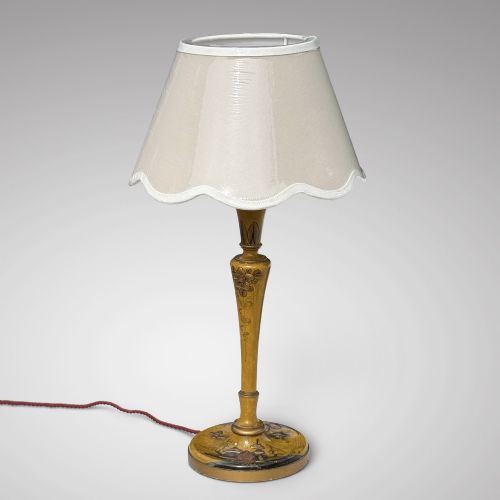
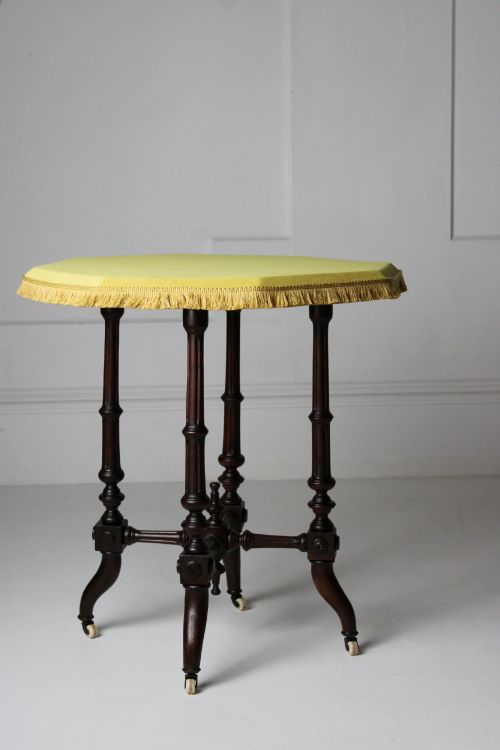
The selection on this page leans heavily toward side tables, occasional tables, console tables, and table lamps rather than large dining furniture. Many of these examples display decorative painted surfaces, faux bamboo, or Chinoiserie motifs rather than plain timber.
Origins stretch from English workshops to Anglo-Indian and Kashmiri traditions, demonstrating a rich variety of decorative styles. A buyer finds pieces that function as compact surfaces, bedside stands, or decorative focal points within a room.
How they were made
Construction relies on traditional timbers such as mahogany, pine, and walnut, often shaped into pedestals, turned legs, or cylinder cupboards. Artisans selected these woods for stability before applying decorative treatments.
Surface decoration defines this group, utilising hand-painted finishes, lacquer work, and faux graining to achieve distinct colour and pattern. Details like brass mounts, fabric upholstery, and turned faux bamboo elements appear across the periods.
Listings feature items from the Georgian, Regency, and Victorian periods, alongside early twentieth-century examples in painted wood and mahogany.
What varies in quality
The integrity of the original painted surface or lacquer work dictates the distinction between standard examples and finer pieces. Surviving pigment with minimal later overpainting preserves the historical character of the object.
Joinery execution and the crispness of turned or carved details separate routine vernacular items from more accomplished cabinet work. Well-fitted drawers, stable pedestals, and intact decorative hardware indicate superior craftsmanship.
James Shoolbred
The Yellow Wood Table Glossary
- Faux bamboo
- Wood turned and carved to imitate natural bamboo stalks. This technique was popular during the Regency and Victorian periods.
- Demi-lune
- A half-moon shaped piece of furniture designed to stand flush against a wall. Console tables frequently adopt this format.
- Ochre
- An earthy yellow pigment used historically for paints and decorative finishes on furniture. It provides the warm tone seen on several tables here.
- Work table
- A small specialised table equipped with compartments or a bag for sewing and needlework. These often date from the Georgian and Victorian eras.
Yellow Wood Table: Frequently Asked Questions
Are these tables purely decorative?
While many examples feature striking painted finishes and lacquer work, they were built as functional items for domestic use. Side tables, work stands, and console tables serve practical roles as display surfaces or storage.
Over time, their decorative qualities often take precedence in a modern interior, yet their original utility remains intact for everyday placement.
How do I identify a Regency painted piece?
Regency items often display classical restraint combined with decorative surface treatments like faux bamboo or specific colour palettes. Proportions tend to be refined, referencing Neoclassical design principles.
Examining the underlying timber and the nature of the paint layer helps distinguish genuine period pieces from later revivals.
What is an Anglo-Indian table?
Anglo-Indian pieces reflect the stylistic exchange between British design tastes and Indian craftsmanship during the nineteenth century. They frequently incorporate dense carving, distinct timbers, and elaborate ornamentation.
These items brought exotic materials and regional techniques into British homes, creating a distinct visual contrast with standard domestic furniture.
How should I care for painted wood?
Painted and lacquered surfaces require gentle handling to preserve the historic finish. Dusting with a dry, soft cloth prevents the accumulation of particles without damaging the pigment.
Keep these pieces away from direct sunlight and sudden humidity changes to protect the paint and timber from cracking or fading.