


Yellow Gold Medal Pendant
A yellow gold medal pendant brings together portraiture, devotion and personal history in miniature form.
Yellow Gold Medal Pendant
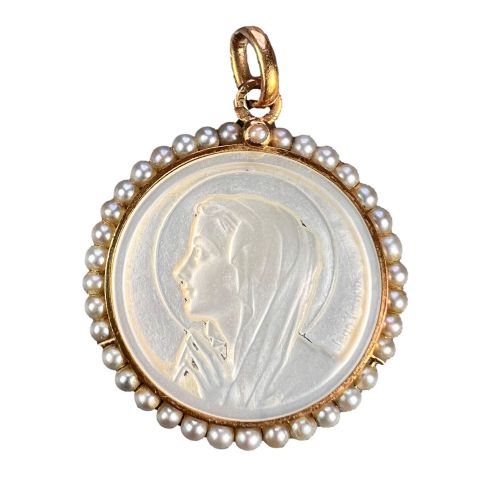
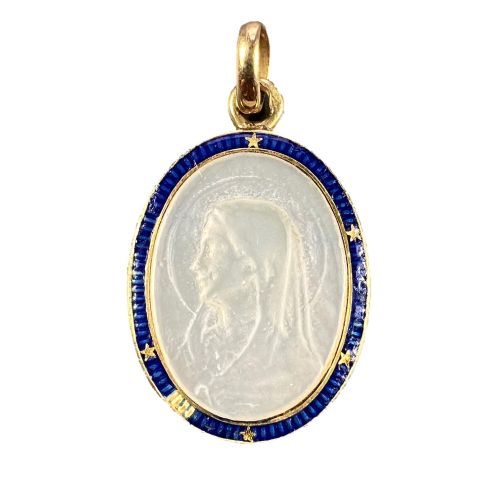
A yellow gold medal pendant is a small wearable disc, cross or plaque stamped, cast or engraved with religious figures, zodiac signs or commemorative subjects. The vast majority originate from France during the late nineteenth and early twentieth centuries, spanning periods from the late Victorian era through the Art Nouveau and Art Deco movements.
Religious subjects dominate the selections, frequently depicting the Virgin Mary, the Madonna and Child, Saint Christopher or the Sacred Heart. Buyers also encounter floral motifs, angels, cherubs and zodiac signs alongside civic and masonic awards.
These items serve equally as devotional tokens, protective talismans and personal ornaments. Most examples measure between small charm dimensions and substantial pendant sizes designed to be worn on a chain around the neck.
Materials and Construction
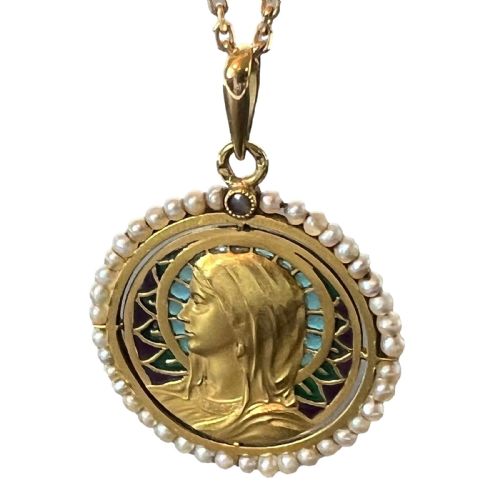
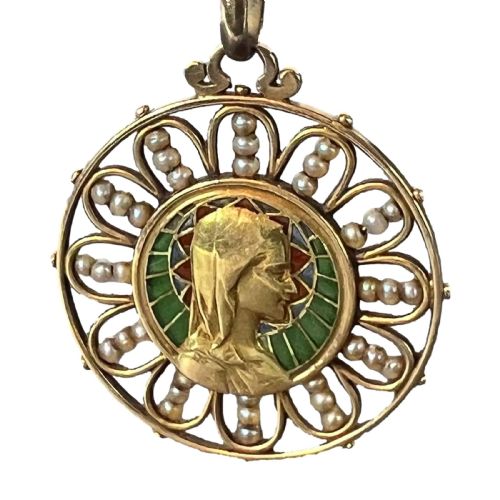
The foundation metal is predominantly 18ct yellow gold, supplemented by occasional uses of 9ct gold, rose gold and white gold accents. Goldsmiths frequently combined high-purity gold with hand-applied coloured enamel or translucent plique-a-jour enamel to highlight robes, halos and floral wreaths.
Surface decoration relies heavily on detailed relief stamping and sculptural modelling executed by named medallists. Seed pearls, mother of pearl and small diamonds occasionally appear flush-set or wired into the gold borders and backgrounds of the design.
Several medals depict Saint Christopher enduring a lightning strike, offering celestial insurance against early motoring hazards.
Assessing Quality
The standard of a yellow gold medal pendant is defined primarily by the crispness of the strike and the artistic execution of the relief carving. Signed works by recognised medallists display finer anatomical detail in faces and drapery compared to uncredited mass-produced alternatives.
The integration of secondary materials such as plique-a-jour enamel, seed pearls or hand-chased borders elevates the technical complexity of the piece. Preservation of the original surface patina and the absence of distortion to the thin gold edges distinguish superior survivals.
Emile Monier·Paul Brandt·Mazzoni·Pageli Perriat·Dropsy·Guilbert·Vernon·Sellier·Rasumny·Ovide Yencesse·Tairac·Lasserre·Bouix·Becker·Tricard·Augis·Lavrillier·Perroud
The Yellow Gold Medal Pendant Glossary
- Plique-a-jour
- An enamelling technique where enamel is applied to open cells without a backing, allowing light to shine through the transparent colours much like stained glass.
- Medallion
- A large metal coin or plaque struck to commemorate a person, place or event, adapted with a loop to be worn as jewellery.
- Relief
- Sculptural projection from a flat background surface, defining the figures and motifs on the face and reverse of the medal.
- Miraculous Medal
- A specific devotional medal depicting the Virgin Mary based on the apparitions reported by Catherine Labouré in nineteenth-century Paris.
- Hallmark
- A small official stamp marked into the gold to indicate metal purity and country of origin.
Yellow Gold Medal Pendant: Frequently Asked Questions
What is a yellow gold medal pendant?
It is a wearable metal disc or plaque made from gold, featuring sculpted religious figures, symbols or portraits on the surface. These pieces combine the function of a keepsake with the artistry of traditional medallic sculpture.
Most examples include an integrated loop for suspension from a neck chain. They reflect the personal devotions and aesthetic tastes of their original owners.
How do I wear these pendants?
These items hang from fine or medium gold chains, worn singly or layered with other small charms. Their lightweight construction makes them suitable for daily wear against the skin.
Care should be taken with enamelled or pearl-set varieties to avoid impact against harder metals. Regular checks on the suspension ring ensure secure attachment to your chain.
How can I tell the period?
Stylistic cues such as flowing Art Nouveau linework or geometric Art Deco borders provide the initial indication of age. French assay marks stamped into the gold offer more precise chronological boundaries.
Maker signatures also help place a piece within the working years of a specific workshop or artist. Comparing the lettering style and relief depth assists in confirming the era of manufacture.
Were these always worn for religion?
While religious iconography forms the majority of subjects, many pieces served secular purposes. Examples include zodiac signs, hunting scenes, sports awards and masonic tokens.
Even devotional pieces often doubled as artistic expressions or protective travel talismans for the wearer. Saint Christopher medals, for instance, were frequently carried by motorists and travellers.